
Partition suit in Bangladesh: dividing joint family land from plaint to final decree, step by step
A partition suit in Bangladesh is a civil suit in which one co-sharer asks the court to declare every co-owner's share in joint property and divide it so each holds a separate portion. It runs in two stages. First comes a preliminary decree fixing the shares, then an Advocate Commissioner divides the land by metes and bounds and the court passes a final decree.
The Partition Act 1893 lets the court order a sale where physical division is impractical.
- Where it starts
- Family discussion or a registered amicable partition deed (in notified districts, pre-case mediation at the District…
- Main law
- Code of Civil Procedure 1908 (s.2(2), s.54, s.89A, s.96, s.97, Order XX rule 18, Order XXVI rules 13-14); Partition Act 1893…
- Typical duration
- 2 to 5 years to a preliminary decree in a contested suit, then 1 to 3 years for commission and final decree; appeals…
- Who can file
- Any co-owner or co-heir with a share in the joint property, or a purchaser of a co-sharer's share; every other…
Partition suit in Bangladesh: walk through every stage
Press next, use your arrow keys or tap a court on the map. The gold marker shows where your case is, and the green trail shows the route it has taken. For the immersive version, play it full screen.
Read every step as text
 Step 1 · Before filing
Work out the family tree and shares
Every partition suit in Bangladesh starts with the genealogy. The lawyer traces the land from the recorded owner down to every living heir and purchaser, and calculates each share under the applicable personal law, for example Muslim faraiz rules or the Dayabhaga school for Hindus. All transfers by co-sharers since the owner's death must be traced as well. Errors here are the main reason suits are delayed or dismissed for defect of parties. The family can still agree a division at this stage.
Where: Family and co-sharers · Time: 2-8 weeks · Law: Muslim Personal Law (Shariat) Application Act 1937; Order I rule 3 CPC · Documents: Death certificates, Warish (heirship) certificate, Family tree chart, Deeds of any co-sharer who sold a share
Tip: Include daughters, widows and heirs living abroad. A missing co-sharer can come back years later and undo the decree as not binding on them.
 Step 2 · Before filing
Try an amicable partition by registered deed
Heirs can divide inherited land without going to court. Section 143B of the State Acquisition and Tenancy Act says heirs shall amicably partition the property after the owner's death. They do this through a partition instrument signed by all of them and registered under the Registration Act 1908, after which the Revenue-officer revises the khatian. Stamp duty and registration fees apply, so check the current schedule. An unregistered family arrangement may be argued in a later suit but is weaker evidence.
In districts notified under the Legal Aid Services law as amended in 2025-26 (12 at first, not Dhaka), a partition dispute within a Civil Judge's limit must first go to mediation at the District Legal Aid Office.
Where: Family and co-sharers · Time: 1-3 months · Law: s.143B State Acquisition and Tenancy Act 1950; Registration Act 1908; Stamp Act 1899; Legal Aid Services Act 2000, as amended in 2025-26 (pre-case mediation in notified districts) · Documents: Draft partition deed (batwara dalil), Khatians and title deeds, National ID of all parties, Plot-wise map of the agreed division
 Step 3 · Before filing
Collect land records and value the property
The lawyer obtains certified copies of every khatian, from CS and SA through RS and BS or city survey, plus mouza maps, mutation records and tax receipts for all the joint plots. These show which plots are joint and who is recorded. The plaintiff also needs a reasoned valuation of the property for the plaint, because the stated value decides which court has jurisdiction and where appeals go. Survey errors in the khatian may need a separate Land Survey Tribunal suit.
Where: AC Land office and record room · Time: 2-6 weeks · Law: s.143 State Acquisition and Tenancy Act 1950; Suits Valuation Act 1887; ss.18-19 Civil Courts Act 1887 · Documents: Certified khatians and mouza maps, Mutation khatian and DCR, Land development tax receipts, Valuation information (sub-registry mouza rate, recent sales)
 Step 4 · Filing, pleadings and mediation
File the plaint in the right court
The plaint sets out the genealogy, how each party got their share, the schedule of all joint properties, and a prayer for a preliminary decree declaring the plaintiff's share (saham) and a final decree allotting it. Every co-sharer must be a defendant. The forum depends on the value stated. Since 2021, a Civil Judge hears suits up to Tk 15 lakh and a Senior Civil Judge up to Tk 25 lakh, with higher values going to a Joint District Judge. These titles replaced Assistant and Senior Assistant Judge from November 2025.
Where: Civil court of first instance (Joint District Judge, Senior Civil Judge or Civil Judge) · Time: 1-2 weeks · Law: Order VII rule 1 CPC; s.16 CPC; ss.18-19 Civil Courts Act 1887; s.7(vi A) and Schedule II Court-fees Act 1870 · Documents: Plaint with genealogy and land schedule, Court fee, Vakalatnama, Copies of khatians and deeds
Tip: Include all the joint property in one suit. Courts generally dislike partial partition, and a suit covering only some plots can be dismissed or have to be amended.
 Step 5 · Filing, pleadings and mediation
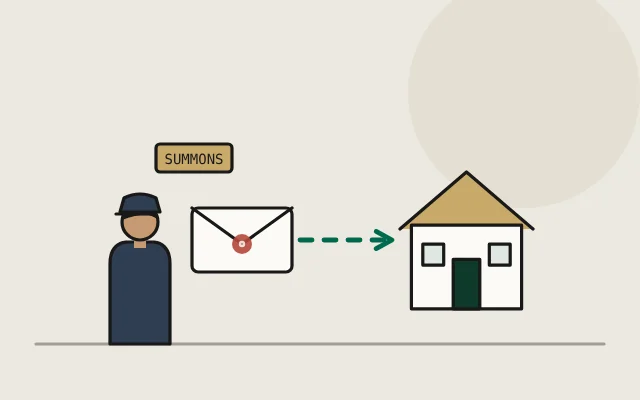
Summons to every co-sharer
The court issues summons to all defendants. After the 2026 CPC amendment, service can be effected by court process, registered post, courier and electronic means such as SMS and messaging apps, and the court may let the plaintiff serve summons personally. Heirs abroad and minors need special care. A guardian ad litem must be appointed for any minor defendant. Where a co-sharer dies during the suit, their heirs must be substituted within the time limit, or the suit may abate against them.
Where: Civil court of first instance (Joint District Judge, Senior Civil Judge or Civil Judge) · Time: 1-6 months · Law: Order V rules 9-9A CPC; Order XXXII CPC; Order XXII CPC · Documents: Process fees, Correct addresses and phone numbers, Application for guardian for minors, Substitution application on a death
- Step 6 · Filing, pleadings and mediation
Written statements and defendants' own saham
Defendants file written statements. In a partition suit, every party is effectively both plaintiff and defendant. A defendant can ask the court to allot their own separate share (saham) and usually pays court fee for it. Typical defences are that the land was already partitioned by an amicable arrangement or separate possession, that a co-sharer has lost rights by adverse possession, or that some plots are not joint at all.
Where: Civil court of first instance (Joint District Judge, Senior Civil Judge or Civil Judge) · Time: 1-4 months · Law: Order VIII rules 1-5 CPC; art.127 and art.144 Limitation Act 1908 · Documents: Written statements, Petition for separate saham with court fee, Documents of earlier amicable partition, if any
 Step 7 · Filing, pleadings and mediation
Mandatory mediation under section 89A
After written statements are filed, the court must try mediation or refer the dispute to the parties' lawyers, the Legal Aid Officer or a panel mediator. The parties name the mediator within 10 days, and mediation must finish within 60 days, extendable by 30. Partition disputes are well suited to settlement because families can agree who takes which plot. A settlement is written up and signed, and the court passes a compromise decree under Order XXIII. If mediation fails, the suit resumes.
Where: Civil court of first instance (Joint District Judge, Senior Civil Judge or Civil Judge) · Time: 2-3 months · Law: s.89A(1)-(8) CPC; Order XXIII rule 3 CPC · Documents: Mediation reference order, Settlement agreement with plot-wise allotment, Mediator's report
Tip: Attach a sketch map to any settlement. Agreements that say 'eastern half' without plot numbers and measurements cause fresh disputes at execution.
 Step 8 · Trial and preliminary decree
Issues and interim protection
If there is no settlement, the court frames issues. Typical issues are whether the suit is properly constituted with all co-sharers, whether the property is joint, what each party's share is, and whether there was an earlier partition. While the suit is pending, a party may seek a temporary injunction to stop construction, sale or changes to the land that would make division harder. A status quo order is common.
Where: Civil court of first instance (Joint District Judge, Senior Civil Judge or Civil Judge) · Time: 1-6 months · Law: Order XIV CPC; Order XXXIX rules 1-2 CPC; s.151 CPC · Documents: List of issues, Injunction petition with affidavit, if needed
 Step 9 · Trial and preliminary decree
Evidence on title, shares and possession
The plaintiff proves the genealogy, the chain of title, the khatians and possession through family members, neighbours and documents. Defendants prove any amicable partition, purchase or exclusive possession they rely on. Because the court decides everyone's share, each party's evidence affects all the others. The court may appoint a commissioner for a local investigation if the identity of plots is disputed. Evidence in a partition suit in Bangladesh often takes the longest of all the stages.
Where: Civil court of first instance (Joint District Judge, Senior Civil Judge or Civil Judge) · Time: 6-24 months · Law: Order XVIII CPC; Order XXVI rule 9 CPC; Evidence Act 1872 · Documents: Exhibited deeds, khatians and maps, Warish certificate, Tax receipts and possession evidence, Local investigation report, if ordered
 Step 10 · Trial and preliminary decree
Preliminary decree declaring the shares
After hearing arguments, the court gives judgment. If partition is due, it passes a preliminary decree declaring the rights and share of every party and directing partition by metes and bounds. A decree is preliminary when further proceedings are needed before the suit is fully disposed of. This decree is appealable and should be appealed now if it is wrong. Under s.97 CPC, a party who does not appeal the preliminary decree cannot dispute it later in an appeal against the final decree.
Where: Civil court of first instance (Joint District Judge, Senior Civil Judge or Civil Judge) · Time: 1-3 months after evidence · Law: s.2(2) CPC; Order XX rule 18(2) CPC; s.97 CPC · Documents: Certified copy of judgment and preliminary decree
Tip: Diarise the appeal deadline from the preliminary decree. Waiting for the final decree before complaining about the shares is the most expensive mistake in this process.
 Step 11 · Commission and final decree
If division is impractical: sale under the Partition Act
Where the nature of the property, the number of sharers or some other special circumstance means division cannot reasonably be made, the court may order a sale. It must be asked by shareholders holding half or more, and must find a sale more beneficial. Another sharer may then buy those shares at a court valuation. A family member can buy out an outsider who has bought into a family dwelling-house. Sales carry a reserve price, and the order counts as a decree.
Where: Civil court of first instance (Joint District Judge, Senior Civil Judge or Civil Judge) · Time: 3-12 months · Law: ss.2-4 Partition Act 1893; ss.6-9 Partition Act 1893 · Documents: Application under s.2 or s.3 Partition Act, Valuation report, Sale proclamation
 Step 12 · Commission and final decree
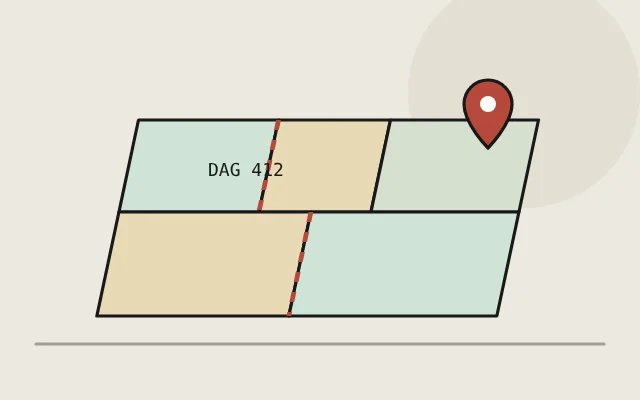
Advocate Commissioner divides the land
On an application for a final decree, the court issues a partition commission, usually to an Advocate Commissioner, with a survey-knowing assistant. The parties deposit the commission fees. The Commissioner gives notice, visits the land, measures it, divides it into the shares fixed by the preliminary decree and allots them. Where the court authorises it, the Commissioner can award payments to equalise values. If the land pays revenue as an undivided estate, s.54 CPC sends the partition to the Collector instead.
Where: Advocate Commissioner on the land · Time: 3-6 months · Law: Order XXVI rules 13-14 CPC; Order XXVI rules 15-18 CPC; s.54 CPC · Documents: Commission order and writ, Deposit of commission fees, Field book and sketch map, Notices to parties
 Step 13 · Commission and final decree
Commissioner's report, objections and final decree
The Commissioner files a report and map, within the time fixed by the court, showing each allotment by metes and bounds. Parties can object, for example that a share is lower-value land or blocks access to a road. The court hears objections and confirms, varies or sets aside the report, and if it sets the report aside it issues a new commission. On confirming, it passes the final decree, which is engrossed on stamp paper.
Where: Civil court of first instance (Joint District Judge, Senior Civil Judge or Civil Judge) · Time: 3-12 months · Law: Order XXVI rule 14(2)-(3) CPC; Order XX rule 18 CPC; s.2(15) Stamp Act 1899 · Documents: Commissioner's report and map, Objection petitions, Stamp paper for engrossing the final decree
 Step 14 · Possession and records
Execution: delivery of possession of each saham
If a co-sharer refuses to vacate the plot allotted to another, the decree-holder files an execution case. The court can deliver possession through its officer, with police help if needed. The 2026 CPC amendment added s.94A, letting the court direct executive and law enforcement agencies to assist and report back. New Order XXI rule 104 lets the decree be executed on an application in the suit record itself. The execution application must generally be made within three years of the final decree or appellate decree.
A partition suit in Bangladesh only pays off once possession is actually handed over.
Where: Advocate Commissioner on the land · Time: 3-18 months · Law: Order XXI rule 35 CPC; Order XXI rule 104 CPC; s.94A CPC; art.182 Limitation Act 1908 · Documents: Execution application, Certified final decree, Sketch map of allotted saham
 Step 15 · Possession and records
Mutation and new khatians
Finally, each party applies to the AC Land with a certified copy of the final decree to mutate their allotted plots into separate khatians in their own names, and starts paying land development tax on them. Under s.143 the Collector keeps the record up to date to reflect partitions and mutations. Without mutation, the court division is not reflected in the land records, which causes problems when the owner later sells or mortgages the land.
Where: AC Land office and record room · Time: 1-3 months · Law: s.143 State Acquisition and Tenancy Act 1950 · Documents: Mutation application, Certified final decree and map, National ID, Tax payment receipt
What if…? How the partition suit in Bangladesh can change course
Choose a scenario. The map animates the route up the hierarchy and, where a case is sent back, down to the lower court and up again.
What if a co-sharer appeals the decree?
- 1District Judge's Court
First appeal on facts and law
Appeals from a Civil Judge or Senior Civil Judge go to the District Judge, and from a Joint District Judge to the District Judge where the suit value is up to Tk 5 crore. Above that, they go to the High Court Division. The time limit is 30 days to the District Judge and 90 days to the High Court Division. The first appeal is a full rehearing, and the appellate court must also try mediation under s.89C. The District Judge may pass the appeal to an Additional District Judge.
6-30 monthss.96 CPCOrder XLI CPCs.21 Civil Courts Act 1887s.89C CPCarts.152 and 156 Limitation Act 1908
Where it ends up: The preliminary or final decree is affirmed, varied, reversed or sent back for retrial.
Can the appeal decision be revised?
- 1High Court Division
Civil revision to the High Court Division
Against the District Judge's decree in appeal, the losing party can apply to the High Court Division under s.115(1) CPC. It interferes only for an error of law resulting in an erroneous decision that causes a failure of justice. Orders of the trial court that cannot be appealed, such as refusing to add a party, go first to the District Judge under s.115(2). From there they reach the High Court Division only with leave under s.115(4).
1-4 yearss.115(1), (2), (4) CPC
Where it ends up: The rule is discharged, or made absolute and the decree is corrected or sent back.
Can the trial court review its own decree?
- 1Civil court of first instance (Joint District Judge, Senior Civil Judge or Civil Judge)
Review under Order XLVII
A party may ask the same court to review its decree if they discover new and important evidence they could not produce with due diligence, or if there is an error apparent on the face of the record, for example a share miscalculated in the decree. The application is filed within 90 days. Review is not a re-argument of the case, and an order rejecting it cannot be appealed.
1-6 monthss.114 CPCOrder XLVII rules 1-9 CPCart.173 Limitation Act 1908
Where it ends up: The decree is corrected on review, or the application is rejected and the decree stands.
What if the trial court is unsure about a point of law?
- 1High Court Division
Reference to the High Court Division
Where a question of law or usage having the force of law arises in a suit whose decree is not appealable, and the court has a reasonable doubt, it may state a case and refer it to the High Court Division. Because partition decrees are appealable, this is rarely used. It might arise on an unusual point of personal law affecting shares in a small, non-appealable matter.
6-18 monthss.113 CPCOrder XLVI rules 1-3 CPC - 2Civil court of first instance (Joint District Judge, Senior Civil Judge or Civil Judge)
Decision in line with the opinion
The High Court Division answers the question and returns the record. The trial court then decides the suit in conformity with that opinion. Meanwhile, the court may proceed with the suit but cannot execute any decree contingent on the reference until the High Court Division's judgment arrives. The answer then binds the parties in that suit.
1-3 monthsOrder XLVI rules 2-3 CPC
Where it ends up: The suit is decided below in line with the High Court Division's answer.
What if the appeal court sends the suit back?
- 1District Judge's Court
Decree set aside and case remanded
Partition suits are often remanded where a necessary co-sharer was left out, the genealogy was not properly proved or the court decided only a preliminary point. The appellate court sends the suit back under Order XLI rules 23 or 25 with directions, for example to add parties and retry the issue of shares. Since 2026, rule 24 says it shall decide the case itself where the evidence is sufficient.
Part of the appealOrder XLI rules 23-25 CPCOrder XLIII rule 1(u) CPC - 2Civil court of first instance (Joint District Judge, Senior Civil Judge or Civil Judge)
Retrial, new decree and a fresh appeal
The trial court restores the suit under its old number, adds parties or takes evidence as directed, and passes a new preliminary decree. Earlier evidence remains on record subject to objections. The losing side can appeal again to the District Judge. A District Judge's remand order cannot be appealed to the High Court Division, because second appeals were abolished. It can be challenged only by civil revision under s.115(1).
6-24 monthsOrder XLI rule 23 CPCs.115(1) CPCs.96 CPC
Where it ends up: The suit goes back down for a fresh decree and can come back up on a new appeal.
Can the case reach the Appellate Division?
- 1Appellate Division of the Supreme Court
Civil petition for leave to appeal
Against a High Court Division judgment in a first appeal or civil revision, the losing party files a civil petition for leave to appeal under Article 103 of the Constitution. If leave is granted, a civil appeal is heard on the points allowed. The Appellate Division's judgment binds all courts, and review under Article 105 is available only on very narrow grounds.
1-4 yearsArticle 103 ConstitutionArticle 105 ConstitutionArticle 111 Constitution
Where it ends up: The Appellate Division's decision is final, and the case returns to the trial court for any remaining final decree or execution.
How the partition suit in Bangladesh moves up the court hierarchy
A partition suit in Bangladesh starts in the civil court whose pecuniary limit covers the value stated in the plaint. Under the Civil Courts Act 1887 as amended in 2021, and with the 2026 renaming of judges, a Civil Judge hears suits up to Tk 15 lakh, a Senior Civil Judge up to Tk 25 lakh and a Joint District Judge anything above that. Appeals from a Civil Judge or Senior Civil Judge always go to the District Judge.
Appeals from a Joint District Judge go to the District Judge if the suit value is up to Tk 5 crore, and otherwise to the High Court Division. The District Judge can assign appeals to an Additional District Judge. A first appeal is a full rehearing on facts and law, so findings on genealogy and possession can be reopened. Above that, the High Court Division sits mainly in civil revision under s.115 on errors of law, or hears high-value first appeals. The Appellate Division decides only with leave under Article 103.
- Appellate DivisionAppellate Division of the Supreme Court
- High Court DivisionHigh Court Division
- Appellate levelDistrict Judge's Court
- First instanceCivil court of first instance (Joint District Judge, Senior Civil Judge or Civil Judge)
- Start · outside courtFamily and co-sharers · AC Land office and record room · Advocate Commissioner on the land
Where your case is heard
Addresses are for Dhaka. Every district has equivalent courts at its own district judgeship.
Supreme Court of Bangladesh (Appellate Division and High Court Division)
Supreme Court of Bangladesh, Shahbag, Ramna, Dhaka-1000Hears appeals, revisions, references, writ petitions under Article 102, company matters and death references (High Court Division), and appeals by leave from the High Court Division (Appellate Division).
Both Divisions sit in the Supreme Court complex; many High Court Division benches sit in the Annex Building. Check the daily cause list for the bench and court room. Postal contact is the Registrar General, Supreme Court of Bangladesh, Ramna, Dhaka-1000.
Court of the District and Sessions Judge, Dhaka (Dhaka Judge Court)
Dhaka Judge Court premises, 16 Johnson Road, Sadarghat, DhakaSeat of the Dhaka District Judge and Additional District Judges (civil appeals, probate, district-level civil and sessions work outside the metropolitan area) and the civil courts of first instance (Joint District Judge, Senior Civil/Assistant Judge courts).
Official judiciary portal gives '16 Johnson Road, Sadarghat, Dhaka'. Many civil courts (Additional District Judge courts, Joint District Judge and Senior Assistant Judge courts, Artha Rin Adalat No.1, insolvency court) are in the new 8-storey District Judge Court building in the same premises. The 2026 judgeship list names the first-instance civil courts 'Senior Civil Judge' / 'Civil Judge' (formerly Senior Assistant Judge / Assistant Judge); some pages still use the old names. Every district has an equivalent court at its district judgeship.
Family and co-sharers
Where this happens depends on your district or the office concerned. Ask us for the exact courtroom and address.
AC Land office and record room
Where this happens depends on your district or the office concerned. Ask us for the exact courtroom and address.
Advocate Commissioner on the land
Where this happens depends on your district or the office concerned. Ask us for the exact courtroom and address.
How long each stage takes
These are indicative ranges based on typical Dhaka practice. Adjournments, case backlogs and appeals can stretch them.
Documents checklist and key terms
Tick off what you have. Your ticks stay saved in this browser. Bring the list to your first meeting with your lawyer.
- Co-sharer
- A person who owns an undivided share in joint property, for example as an heir or a buyer of a share.
- Saham
- The separate portion allotted to a party in a partition suit. It is also used for a party's prayer for a separate allotment.
- Ejmali
- Joint, undivided land held in common by co-sharers.
- Preliminary decree
- A decree declaring each party's share and directing partition, with further steps still to come (Order XX rule 18(2) CPC).
- Final decree
- The decree allotting specific plots by metes and bounds after the commissioner's report is confirmed.
- Advocate Commissioner
- A lawyer appointed by the court under Order XXVI rule 13 to survey and divide the land and report.
- Metes and bounds
- Physical boundaries and measurements defining each allotted plot on the ground.
- Owelty
- Money one sharer pays another to equalise values where plots of equal size are not of equal worth (Order XXVI rule 14(1) CPC).
- Batwara dalil
- A registered deed of amicable partition among co-sharers.
Partition suit in Bangladesh: common questions
Is there a time limit for a partition suit in Bangladesh?
Do I have to include every co-sharer?
What is the difference between the preliminary and final decree?
Can the court sell the property instead of dividing it?
Which court will hear my case?
Can we settle the partition suit in Bangladesh midway?
How much does a partition suit cost?
What happens after the final decree?
Law and sources
- The Partition Act 1893, Laws of Bangladesh
- The Partition Act 1893, mirror text
- The Code of Civil Procedure 1908
- The Civil Courts Act 1887 (pecuniary limits as amended 2021 and 2026)
- The State Acquisition and Tenancy Act 1950
- The Court-fees Act 1870
- The Limitation Act 1908
- Supreme Court of Bangladesh: judgments
- Pre-litigation mediation to begin in 12 districts (Dhaka Tribune, September 2025)
This Case Journey is a general guide to procedure in Bangladesh as of October 2026. It is not legal advice. Procedure, fees and time limits change, and every case turns on its own facts. Timelines are indicative. Speak to a lawyer about your own matter.
Run this case from outside Bangladesh
You can usually start and run this case without travelling. You sign a power of attorney abroad, the Bangladesh High Commission or Embassy attests it, and your attorney and lawyer act for you in Dhaka. Some steps, such as giving evidence in person, may still need you or a commission. See how a case runs through a power of attorney →
Want to know where your case stands?
Book a consultation. A TRW lawyer will place your matter on this map, explain the next step and the realistic timeline, and tell you what to prepare.