
Section 145 CrPC case in Bangladesh: the full journey, step by step
A section 145 CrPC case in Bangladesh is a summary proceeding before an Executive Magistrate to keep the peace where a dispute over land, water, buildings, crops or fisheries threatens violence. The Magistrate does not decide who owns the property, only who was in actual possession on the date of the preliminary order, and protects that party until a civil court decides otherwise.
The order can be challenged by criminal revision, but the lasting answer on title and possession always comes from the civil court.
- Where it starts
- Court of the District Magistrate or a specially empowered Executive Magistrate, usually at the Deputy Commissioner's…
- Main law
- Code of Criminal Procedure 1898 ss.144-148, 435, 439, 439A and 561A; Specific Relief Act 1877 ss.8, 9 and 42; Code of Civil…
- Typical duration
- Indicative 6 to 18 months for the Magistrate's proceeding in Dhaka, 6 to 24 months for each revision, and several years…
- Who can file
- Any party to the possession dispute, or the police, can set the proceeding in motion; the Magistrate can also act on…
Section 145 CrPC case in Bangladesh: walk through every stage
Press next, use your arrow keys or tap a court on the map. The gold marker shows where your case is, and the green trail shows the route it has taken. For the immersive version, play it full screen.
Read every step as text
 Step 1 · Before filing
Decide whether s.145 is the right tool
A section 145 CrPC case in Bangladesh fits only where two conditions meet. There must be a real dispute about actual possession of land, water or their produce, and that dispute must be likely to cause a breach of the peace. It does not decide title. If the real issue is ownership, or nobody is threatening violence, the proper route is a civil suit. A person dispossessed within the last six months can also sue for summary restoration under s.9 of the Specific Relief Act.
If a civil court is already dealing with possession and has made an order, the Magistrate should not run a parallel case.
Where: Lawyer's chamber · Time: 1-3 days · Law: s.145(1) CrPC; s.9 Specific Relief Act 1877; s.42 Specific Relief Act 1877 · Documents: Title deeds, Record of rights (khatian), Copies of any pending civil suit
Tip: Disclose any pending civil suit in the petition. Hiding it is a common reason for proceedings to be quashed later.
 Step 2 · Before filing
Gather proof of actual possession
Because the Magistrate looks only at who is physically in possession, the most useful evidence is practical, not legal. This includes land development tax receipts (DCR), utility bills, receipts from tenants or sharecroppers, cultivation records, photographs and video of the property with dates, and statements of neighbours. Title deeds and khatians help only to show that possession is likely, not to prove it. If you have been pushed out recently, record the date and manner of dispossession, because the law gives special protection to someone forcibly dispossessed within two months before the preliminary order.
Where: Disputed land or property · Time: 1-2 weeks · Law: s.145(4) CrPC; s.145(4) first proviso CrPC · Documents: DCR and land development tax receipts, Utility bills, Tenant or barga receipts, Dated photographs, Witness list
Tip: A single recent photograph is weak evidence. A series over months, with witnesses who can date them, is much stronger.
 Step 3 · Petition and preliminary order
Inform the police
Where there are threats or a clash, the party should record a general diary (GD) entry or an FIR at the police station. The Magistrate can act on a police report or any other information, and in practice often asks the police to report on whether a breach of the peace is likely before making a preliminary order. The police may also send a report on their own initiative under the police regulations. A police report showing real tension on the ground carries considerable weight.
If an offence has already happened, such as trespass or assault, a separate criminal case can proceed alongside.
Where: Police station (thana) · Time: 1-4 weeks · Law: s.145(1) CrPC; s.154 CrPC; s.155 CrPC · Documents: GD entry or FIR copy, Police report
Tip: Keep the GD number. Magistrates routinely ask whether the police have been told about the threat.
 Step 4 · Petition and preliminary order
File the petition before the Executive Magistrate
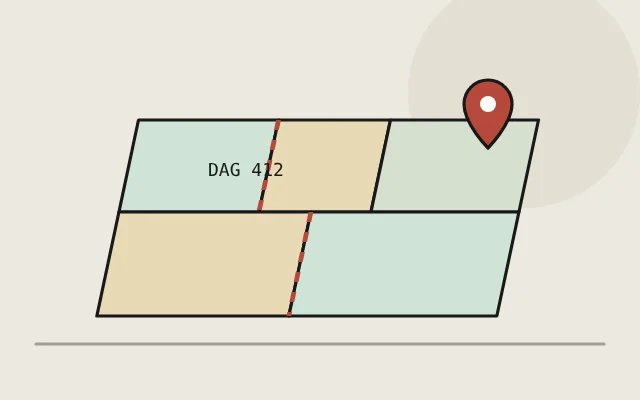
The petition is filed before the District Magistrate (the Deputy Commissioner) or an Executive Magistrate specially empowered by the government, usually the Additional District Magistrate's court at the Collectorate. Since the separation of the judiciary in 2007, these proceedings belong to Executive Magistrates, not Judicial Magistrates. The petition describes the property by mouza, dag and khatian numbers, sets out the facts of possession and the threat, names the opposing parties and attaches the main documents. It is usually supported by an affidavit.
Where: Executive Magistrate's Court, Deputy Commissioner's Office, Dhaka · Time: 1 day to file · Law: s.145(1) CrPC; s.10 CrPC · Documents: Petition with affidavit, Schedule of property, Copies of supporting documents, Court-fee stamp
Tip: Describe the property precisely with mouza, JL, khatian and dag numbers and boundaries. Vague descriptions make orders unenforceable.
 Step 5 · Petition and preliminary order
Preliminary order under s.145(1)
If satisfied from the police report or other information that a dispute likely to cause a breach of the peace exists, the Magistrate makes a written preliminary order. It must state the grounds for that satisfaction. The order requires the parties to appear, in person or through a lawyer, on a fixed date and to file written statements of their claims about actual possession. An order without recorded grounds is a recognised defect and can be set aside in revision. The date of this order is crucial, because possession is judged as at that date.
Where: Executive Magistrate's Court, Deputy Commissioner's Office, Dhaka · Time: 1-4 weeks after filing · Law: s.145(1) CrPC · Documents: Preliminary order, Police report
Tip: Get a certified copy of the preliminary order and check that it records the grounds and the date clearly.
 Step 6 · Petition and preliminary order
Service and publication of the order
A copy of the preliminary order is served on the parties named by the Magistrate in the same way as a summons. At least one copy must also be fixed in a conspicuous place at or near the disputed property, so that anyone else with an interest can come forward. People not originally named, such as other co-sharers or tenants, may apply to be added as parties. If service is not proved, the Magistrate should not proceed against the absent party.
Where: Disputed land or property · Time: 2-6 weeks · Law: s.145(3) CrPC; ss.68-71 CrPC · Documents: Service return, Proof of affixation
Tip: Photograph the affixed notice on the property with a date. It answers later claims that the order was never published.
 Step 7 · Interim protection
Interim protection: s.144 order or emergency attachment
Where violence seems imminent, the Magistrate may first issue a temporary prohibitory order under s.144, for example forbidding both sides from entering the land or building on it. Such an order cannot normally last more than two months, and s.144 does not apply inside a metropolitan area such as Dhaka city, where comparable prohibitory orders come from the Police Commissioner under metropolitan police law. Within the s.145 proceeding itself, if the Magistrate considers the case an emergency, they may attach the property at any time pending the decision.
Attachment takes the property out of both parties' hands, and the police or a receiver then holds it. Parties may also be bound over to keep the peace under s.107.
Where: Executive Magistrate's Court, Deputy Commissioner's Office, Dhaka · Time: Days to 2 months · Law: s.144(6)-(7) CrPC; s.145(4) second proviso CrPC; s.145(10) CrPC; s.107 CrPC · Documents: Section 144 order, Attachment order, Police compliance report
Tip: Attachment is a drastic step. The party in actual possession should argue that their possession is clear and no emergency exists.
 Step 8 · Interim protection
Receiver and perishable crops
When the property is attached, the Magistrate may appoint a receiver, unless a civil court has already appointed one. The receiver acts under the Magistrate's control with the powers of a receiver under the Code of Civil Procedure, such as collecting rents or harvesting crops. If a civil court later appoints its own receiver, the Magistrate's receiver must hand over possession and is discharged. Crops or produce liable to speedy decay can be ordered to be kept safely or sold, and the money is held until the case ends.
Where: Disputed land or property · Time: For the life of the attachment · Law: s.146(2) CrPC; s.145(8) CrPC; Order XL CPC · Documents: Receiver appointment order, Receiver's accounts, Sale record for crops
Tip: Ask for the receiver's accounts to be filed regularly. Disputes over rents collected during attachment are common.
 Step 9 · Inquiry into actual possession
Written statements and evidence
Each party files a written statement setting out its claim to actual possession on the date of the preliminary order, with documents. Evidence is commonly placed by affidavits of the parties and their witnesses, and the Magistrate may examine witnesses. Either party can ask the Magistrate to summon a witness or require a document to be produced. The Magistrate must decide without reference to the merits of anyone's claim to a right to possess, and title documents are relevant only as background showing which party's possession is more probable.
Where: Executive Magistrate's Court, Deputy Commissioner's Office, Dhaka · Time: 2-6 months · Law: s.145(1) CrPC; s.145(4) CrPC; s.145(9) CrPC · Documents: Written statements, Affidavits of witnesses, Documentary evidence
Tip: Focus every affidavit on possession: who lives there, who cultivates, who collects rent. Long arguments about title rarely help in this forum.
 Step 10 · Inquiry into actual possession
Local inquiry
Where it helps to see the property, the District Magistrate can depute a subordinate Magistrate, often with the assistance of the Assistant Commissioner (Land) or a survey officer, to make a local inquiry. The deputed officer visits the site, notes who is in occupation, what is growing or built, and may speak to neighbours, then submits a written report. That report can be read as evidence in the case, so both parties should attend the inquiry and make their points on the spot. The Magistrate can also decide who bears the inquiry costs.
Where: Disputed land or property · Time: 2-8 weeks · Law: s.148(1)-(2) CrPC · Documents: Local inquiry report, Sketch map
Tip: Attend the local inquiry with your witnesses and documents. Objections are much harder to raise once the report is filed.
- Step 11 · Inquiry into actual possession
Hearing and the no-dispute option
The Magistrate reads the statements, hears the parties, receives their evidence and considers the local inquiry report. Any party may show that no dispute likely to cause a breach of the peace exists or ever existed, for example because the opposing side has given up its claim or the parties have settled. If the Magistrate accepts that, the preliminary order must be cancelled and all further proceedings stopped. Otherwise the preliminary order remains final on this point, and the Magistrate proceeds to decide possession.
Where: Executive Magistrate's Court, Deputy Commissioner's Office, Dhaka · Time: 1-3 months · Law: s.145(4) CrPC; s.145(5) CrPC · Documents: Written arguments, Settlement deed, if any
Tip: A written settlement filed at this stage can end the proceeding quickly under s.145(5).
 Step 12 · Final order and the civil court
Final order on actual possession
If the Magistrate decides that a party was in actual possession on the date of the preliminary order, they declare that party entitled to possession until evicted in due course of law, and forbid all disturbance of it. If a party was forcibly and wrongfully dispossessed within the two months before the order, the Magistrate can treat that party as in possession and restore them to it. This is the core outcome of a section 145 CrPC case in Bangladesh, but it does not decide ownership and gives way to any civil court decree.
Where: Executive Magistrate's Court, Deputy Commissioner's Office, Dhaka · Time: Order usually 2-6 weeks after hearing · Law: s.145(6) CrPC; s.145(4) first proviso CrPC · Documents: Final order, Certified copy
Tip: The winning party should still file or defend a civil suit. A s.145 order protects possession only until a civil court rules.
- Step 13 · Final order and the civil court
If no one is found in possession: attachment
If the Magistrate decides that none of the parties was in possession, or cannot decide which one was, the property may be attached until a competent civil court determines the rights of the parties or the person entitled to possession. A receiver may be appointed. The Magistrate can withdraw the attachment at any time once satisfied there is no longer any likelihood of a breach of the peace. In practice, attachment pushes the parties to file a civil suit quickly.
Where: Executive Magistrate's Court, Deputy Commissioner's Office, Dhaka · Time: Until the civil court decides · Law: s.146(1) CrPC; s.146(1) proviso CrPC; s.146(2) CrPC · Documents: Attachment order, Receiver appointment
Tip: If the property is attached, file the civil suit without delay and ask the civil court to take over through its own receiver.
- Step 14 · Final order and the civil court
Enforcing the order
The police enforce the final order and any attachment, and the Magistrate can direct them to restore a dispossessed party. Anyone who knowingly disobeys a lawful order of a public servant, such as a s.144 or s.145(6) order, commits an offence under s.188 of the Penal Code. Fresh violence can lead to a separate criminal case or to security proceedings under s.107. The protected party should keep a copy of the order on the property and report any interference immediately.
Where: Police station (thana) · Time: As needed · Law: s.145(6) CrPC; s.188 Penal Code 1860; s.107 CrPC · Documents: Certified copy of final order, Complaint of disobedience
Tip: Send a copy of the final order to the police station and keep the receiving stamp.
- Step 15 · Final order and the civil court
The civil court decides title and possession
The final word belongs to the civil court. The losing party, or a party whose property is attached, can sue for declaration of title and recovery of possession. A suit under s.9 of the Specific Relief Act, filed within six months of dispossession, restores possession summarily without deciding title. Suits valued up to Tk 15 lakh go to a Civil Judge, up to Tk 25 lakh to a Senior Civil Judge, and above that to a Joint District Judge.
A civil decree overrides the Magistrate's order, and a civil court receiver replaces any receiver appointed by the Magistrate.
Where: Civil court: Civil Judge, Senior Civil Judge or Joint District Judge · Time: 2-6 years · Law: s.8 Specific Relief Act 1877; s.9 Specific Relief Act 1877; s.42 Specific Relief Act 1877; ss.18-19 Civil Courts Act 1887 (as amended 2021 and 2026); s.146(2) proviso CrPC · Documents: Plaint, Ad valorem court fee, Certified copy of the s.145 order
Tip: Since November 2025 the former Assistant Judge and Senior Assistant Judge courts are called Civil Judge and Senior Civil Judge courts.
What if…? How the section 145 CrPC case in Bangladesh can change course
Choose a scenario. The map animates the route up the hierarchy and, where a case is sent back, down to the lower court and up again.
Is there an appeal against a s.145 order?
- 1Executive Magistrate's Court, Deputy Commissioner's Office, Dhaka
No appeal from the Magistrate's order
The CrPC gives no appeal against a preliminary or final order under s.145, because the proceeding is a summary police measure and does not decide rights. The remedy against the order itself is criminal revision. The real appeal route opens in the civil suit that follows, where the losing side can appeal against the civil court's decree.
Not applicabless.404-417 CrPCs.145(6) CrPC - 2District and Sessions Judge's Court, Dhaka
Civil appeal against the decree
From a civil court decree, the first appeal lies to the District Judge where the suit value is up to Tk 5 crore, and to the High Court Division above that. The time limit is 30 days to the District Judge and 90 days to the High Court Division. A first appeal rehears facts and law. A decree in a s.9 Specific Relief Act suit cannot be appealed and is challenged only by civil revision.
1-4 yearss.96 CPCs.21 Civil Courts Act 1887Articles 152 and 156 Limitation Act 1908s.9 Specific Relief Act 1877s.115 CPC
Where it ends up: Possession is finally settled by the civil appellate court, whose decree prevails over the Magistrate's order.
What if a party challenges the Magistrate's order?
- 1District and Sessions Judge's Court, Dhaka
Criminal revision before the Sessions Judge
All Executive Magistrates are treated as inferior to the Sessions Judge for revision. A party aggrieved by a preliminary order without grounds, an attachment or a final order can file a criminal revision. The Sessions Judge checks legality, propriety and regularity, including whether there was a real likelihood of a breach of the peace and whether the inquiry kept to actual possession. The CrPC sets no fixed time limit, but delay must be explained. Once a party has used this route, the decision is final for them.
6-18 monthss.435(1) CrPC and Explanations.439A CrPCs.440 CrPC - 2High Court Division
High Court Division: direct revision or quashing
A party may instead file revision directly in the High Court Division. After a Sessions Judge's revisional order, a second revision is barred, so the only route is an application under s.561A to prevent abuse of process. A common example is where the Magistrate continued even though a civil court was already dealing with possession of the same land. The court may stay the Magistrate's order meanwhile.
6-24 monthss.439 CrPCs.439(4) CrPCs.561A CrPC
Where it ends up: The s.145 order is upheld, set aside, or sent back for a fresh decision.
Can the Magistrate review or recall the order?
- 1Executive Magistrate's Court, Deputy Commissioner's Office, Dhaka
No review; limited power to cancel or withdraw
Once the Magistrate has signed a final order under s.145(6), they cannot review it on the merits. The CrPC bars criminal courts from altering signed judgments except for clerical errors. Before the final order, however, the Magistrate must cancel the proceeding if shown that no dispute exists. After an attachment under s.146(1), the Magistrate may withdraw it once there is no longer a likelihood of a breach of the peace.
Weekss.369 CrPCs.145(5) CrPCs.146(1) proviso CrPC - 2Appellate Division of the Supreme Court
Review only in the Appellate Division
A true review exists only in the Appellate Division, of its own judgment or order. In a criminal proceeding such as this, the ground is an error apparent on the face of the record. The petition must be filed within thirty days with a certified copy. A review is not a fresh hearing of the possession dispute.
3-12 monthsArticle 105 ConstitutionOrder XXVI rules 1-2 Supreme Court (Appellate Division) Rules 1988
Where it ends up: Errors in the Magistrate's order are corrected through revision, not review.
Can the Magistrate refer the dispute to the civil court?
- 1Executive Magistrate's Court, Deputy Commissioner's Office, Dhaka
No formal reference to the civil court
Bangladesh's CrPC has no procedure for a Magistrate to refer a possession question to a civil court for decision. The reference procedure in criminal matters between subordinate courts and the High Court Division has also been omitted. Instead, where the Magistrate cannot decide possession, s.146(1) attaches the property until a competent civil court determines the parties' rights, which leaves the parties to file the civil suit.
Not applicables.146(1) CrPCss.432-433 CrPC (omitted) - 2Civil court: Civil Judge, Senior Civil Judge or Joint District Judge
Civil suit takes over
One of the parties files a suit for declaration and recovery of possession, or for injunction. The civil court can appoint its own receiver, and the Magistrate's receiver must then hand over possession. Within a civil suit, a subordinate court can refer a doubtful question of law to the High Court Division under s.113 and Order XLVI of the CPC, though this is rare in possession cases.
2-6 yearss.146(2) proviso CrPCs.113 CPCOrder XLVI CPCOrder XL CPC
Where it ends up: The civil court decides title and possession, and the Magistrate's attachment ends.
What if the revision court sends the case back?
- 1District and Sessions Judge's Court, Dhaka
Order set aside and sent back
If the Sessions Judge finds that the Magistrate decided title instead of possession, ignored the two-month dispossession rule, or did not consider the local inquiry report, the order can be set aside and the case sent back for fresh disposal. The revisional order explains what the Magistrate must reconsider and whether fresh evidence may be taken.
Within the revisions.439A(1) CrPCs.439(1) CrPCs.423 CrPC - 2Executive Magistrate's Court, Deputy Commissioner's Office, Dhaka
Fresh decision by the Magistrate
The Executive Magistrate rehears the matter on the points identified, may hold a fresh local inquiry, and passes a new final order on possession. Any interim attachment or s.144 order may continue in the meantime if the risk of violence remains. The parties should keep evidence focused on possession at the date of the original preliminary order.
2-6 monthss.145(4) CrPCs.145(6) CrPCs.148 CrPC - 3District and Sessions Judge's Court, Dhaka
Back up on revision
The party who loses after the remand can again seek revision. If that party had already used a revision before the Sessions Judge, the new order is usually challenged in the High Court Division under s.561A, because s.439A(2) makes the Sessions Judge's decision final for that party. Delay at this stage should be avoided.
6-18 monthss.435 CrPCs.439A(2) CrPCs.561A CrPC
Where it ends up: After the fresh order, the case can climb again through revision to the Sessions Judge or the High Court Division.
Can a s.145 dispute reach the Appellate Division?
- 1Appellate Division of the Supreme Court
Criminal petition for leave to appeal
A party who loses in the High Court Division on a revision or a s.561A application can file a criminal petition for leave to appeal in the Appellate Division within thirty days. Leave is granted only where a substantial question of law arises, such as the Magistrate's jurisdiction while a civil suit is pending. Many such petitions are disposed of by directing the parties to the civil court.
1-3 yearsArticle 103 ConstitutionOrder XXIV rule 2 Supreme Court (Appellate Division) Rules 1988 - 2Appellate Division of the Supreme Court
Appellate Division decision
If leave is granted, the appeal is heard and the Appellate Division's decision binds all courts. It usually confirms that the civil court is the proper place to settle title. In the parallel civil suit, a separate civil petition for leave to appeal lies within sixty days of the High Court Division's judgment.
1-3 yearsArticle 111 ConstitutionOrder XIII rule 1 Supreme Court (Appellate Division) Rules 1988
Where it ends up: The Appellate Division's decision is final, while the civil suit settles ownership.
How the section 145 CrPC case in Bangladesh moves up the court hierarchy
A section 145 CrPC case in Bangladesh starts and usually ends at the lowest tier: the court of the District Magistrate or a specially empowered Executive Magistrate. There is no value threshold, because the proceeding concerns only peace and actual possession. No appeal lies. Instead, a party can seek criminal revision before the Sessions Judge, who examines legality and propriety but does not rehear the facts. Alternatively, a party can go directly to the High Court Division in revision.
A party who has already used revision before the Sessions Judge can reach the High Court Division only under s.561A. The Appellate Division hears the matter only if it grants leave. Running alongside is the civil court hierarchy, which decides title. A Civil Judge hears suits valued up to Tk 15 lakh, a Senior Civil Judge up to Tk 25 lakh, and a Joint District Judge above that. Appeals go to the District Judge up to Tk 5 crore and to the High Court Division above it.
- Appellate DivisionAppellate Division of the Supreme Court
- High Court DivisionHigh Court Division
- Appellate levelDistrict and Sessions Judge's Court, Dhaka
- First instanceExecutive Magistrate's Court, Deputy Commissioner's Office, Dhaka · Civil court: Civil Judge, Senior Civil Judge or Joint District Judge
- Start · outside courtLawyer's chamber · Police station (thana) · Disputed land or property
Where your case is heard
Addresses are for Dhaka. Every district has equivalent courts at its own district judgeship.
Supreme Court of Bangladesh (Appellate Division and High Court Division)
Supreme Court of Bangladesh, Shahbag, Ramna, Dhaka-1000Hears appeals, revisions, references, writ petitions under Article 102, company matters and death references (High Court Division), and appeals by leave from the High Court Division (Appellate Division).
Both Divisions sit in the Supreme Court complex; many High Court Division benches sit in the Annex Building. Check the daily cause list for the bench and court room. Postal contact is the Registrar General, Supreme Court of Bangladesh, Ramna, Dhaka-1000.
Court of the District and Sessions Judge, Dhaka (Dhaka Judge Court)
Dhaka Judge Court premises, 16 Johnson Road, Sadarghat, DhakaSeat of the Dhaka District Judge and Additional District Judges (civil appeals, probate, district-level civil and sessions work outside the metropolitan area) and the civil courts of first instance (Joint District Judge, Senior Civil/Assistant Judge courts).
Official judiciary portal gives '16 Johnson Road, Sadarghat, Dhaka'. Many civil courts (Additional District Judge courts, Joint District Judge and Senior Assistant Judge courts, Artha Rin Adalat No.1, insolvency court) are in the new 8-storey District Judge Court building in the same premises. The 2026 judgeship list names the first-instance civil courts 'Senior Civil Judge' / 'Civil Judge' (formerly Senior Assistant Judge / Assistant Judge); some pages still use the old names. Every district has an equivalent court at its district judgeship.
Office of the Deputy Commissioner (District Magistrate), Dhaka
Dhaka (exact address not confirmed)District administration: land revenue and record-correction appeals, certificate cases, acquisition, executive magistracy and mobile courts for Dhaka district.
The official street address could not be read from dhaka.gov.bd (its contact pages did not load); the judiciary portal confirms office phone 02-223389786. Confirm the address before visiting. Every district has a Deputy Commissioner's office at the district headquarters.
Lawyer's chamber
Where this happens depends on your district or the office concerned. Ask us for the exact courtroom and address.
Police station (thana)
Where this happens depends on your district or the office concerned. Ask us for the exact courtroom and address.
Disputed land or property
Where this happens depends on your district or the office concerned. Ask us for the exact courtroom and address.
How long each stage takes
These are indicative ranges based on typical Dhaka practice. Adjournments, case backlogs and appeals can stretch them.
Documents checklist and key terms
Tick off what you have. Your ticks stay saved in this browser. Bring the list to your first meeting with your lawyer.
- Actual possession
- Physical control of the property on the date of the preliminary order, regardless of who owns it.
- Preliminary order
- The written order under s.145(1) recording the grounds for the Magistrate's satisfaction and calling the parties to file statements.
- Breach of the peace
- Violence or a real threat of it; without this likelihood, s.145 cannot be used.
- Attachment
- Taking the property out of the parties' hands and holding it, through the police or a receiver, until a decision.
- Receiver
- A person appointed to manage attached property, collect rents and preserve crops under the Magistrate's control.
- Local inquiry
- A site visit by a deputed Magistrate under s.148, whose report can be read as evidence.
- Executive Magistrate
- A magistrate from the administrative service who handles preventive matters such as ss.144 and 145, as distinct from Judicial Magistrates who try offences.
- Section 9 suit
- A summary civil suit under the Specific Relief Act to recover possession lost within six months, without deciding title.
Section 145 CrPC case in Bangladesh: common questions
Does a section 145 CrPC case in Bangladesh decide who owns the land?
Who hears a s.145 case?
What if I was thrown off my land just before the case?
Can I appeal against a s.145 order?
Can the Magistrate proceed if a civil suit is already pending?
What happens if the Magistrate cannot decide who is in possession?
How long does a section 145 CrPC case in Bangladesh take?
What are the most common mistakes in a section 145 CrPC case in Bangladesh?
Law and sources
- Code of Criminal Procedure 1898, Chapter XII (ss.145-148), Bangladesh Laws
- Code of Criminal Procedure 1898, Laws of Bangladesh mirror
- Specific Relief Act 1877, Bangladesh Laws
- Civil Courts Act 1887, Bangladesh Laws
- Code of Civil Procedure 1908, Bangladesh Laws
- Limitation Act 1908, Bangladesh Laws
- Supreme Court of Bangladesh
- Dhaka Judgeship
This Case Journey is a general guide to procedure in Bangladesh as of October 2026. It is not legal advice. Procedure, fees and time limits change, and every case turns on its own facts. Timelines are indicative. Speak to a lawyer about your own matter.
Run this case from outside Bangladesh
You can usually start and run this case without travelling. You sign a power of attorney abroad, the Bangladesh High Commission or Embassy attests it, and your attorney and lawyer act for you in Dhaka. Some steps, such as giving evidence in person, may still need you or a commission. See how a case runs through a power of attorney →
Want to know where your case stands?
Book a consultation. A TRW lawyer will place your matter on this map, explain the next step and the realistic timeline, and tell you what to prepare.