
Child custody case in Bangladesh: the full journey, step by step
A child custody case in Bangladesh is heard by the Family Court under the Family Courts Act 2023, which for this purpose acts as the District Court under the Guardians and Wards Act 1890 and decides who keeps the child, who is guardian and what contact the other parent has.
The court applies the parties' personal law, such as the mother's right of hizanat under Muslim law, but the welfare of the child is the deciding test. This journey covers pre-case mediation, interim custody, trial, decree and enforcement, appeal to the Family Appellate Court, High Court Division revision and habeas corpus.
- Where it starts
- Family Court (presided over by a Civil Judge or Senior Civil Judge) for the place where the child ordinarily resides…
- Main law
- Family Courts Act 2023 (ss.4-8, 11-21, 25, 27-28); Guardians and Wards Act 1890 (ss.7, 9, 10, 12, 17, 19, 25, 26); Muslim…
- Typical duration
- interim custody orders in 2 weeks to 3 months; Family Court decision in 6-24 months; 2-5 years or more with appeal and…
- Who can file
- Either parent, a grandparent or other relative entitled under personal law, or any person interested in the child's…
Child custody case in Bangladesh: walk through every stage
Press next, use your arrow keys or tap a court on the map. The gold marker shows where your case is, and the green trail shows the route it has taken. For the immersive version, play it full screen.
Read every step as text
 Step 1 · Before filing
First advice on custody and guardianship
At the start of any child custody case in Bangladesh, the lawyer separates two questions that are often confused: custody (who the child lives with) and guardianship (who makes legal decisions and manages property). Under Muslim law the father is the natural guardian, while the mother has hizanat, the right to physical custody, of a son until seven and a daughter until puberty. Courts in Bangladesh treat these rules as a starting point only; the welfare of the child is the deciding test. The lawyer also checks for urgent risks such as removal abroad.
Where: Lawyer's chamber · Time: 1-2 weeks · Law: s.17 Guardians and Wards Act 1890; s.19 Guardians and Wards Act 1890; Abu Bakar Siddique v S.M.A. Bakar, 38 DLR (AD) 106 · Documents: Child's birth certificate, Marriage and divorce papers, Evidence of the child's current living arrangements
Tip: If you fear the child is about to be taken abroad, say so at the first meeting; the urgent application comes before everything else.
 Step 2 · Before filing
Pre-case mediation at the legal aid office
In districts notified under the amended legal aid law, family disputes within the Family Court's jurisdiction, including custody, must first go to the District Legal Aid Office for mediation before a suit can be filed. The legal aid officer calls both parents and tries to agree custody, visiting time and maintenance. A settlement certified by the Chief Legal Aid Officer has the force of a court decree. If mediation fails, a report is issued and must be filed with the suit; time spent in mediation does not count against limitation.
Check whether your district is notified.
Where: District Legal Aid Office (pre-case mediation) · Time: 1-3 months · Law: ss.21B and 21C and Schedule, Legal Aid Services Act 2000 (inserted by the Legal Aid Services (Amendment) Act 2026, Act 45 of 2026); s.5 Family Courts Act 2023 · Documents: Mediation application, National ID cards, Mediation report or settlement
Tip: Mediation is free and private. Agreed visiting schedules made here tend to be followed better than imposed ones.
 Step 3 · Before filing
Prepare the petition and choose the court
The application must be made to the Family Court for the place where the child ordinarily resides. It states the child's name, sex, religion, date of birth and residence, who currently has custody, the near relatives, any property of the child, and why the order sought is for the child's welfare. The plaint lists witnesses and the documents relied on, with copies for each defendant. The court fee is a fixed Tk 200, whatever the case.
Where: Lawyer's chamber · Time: 1-2 weeks · Law: ss.9 and 10 Guardians and Wards Act 1890; s.6 Family Courts Act 2023; s.25 Family Courts Act 2023; s.27(1) Family Courts Act 2023 · Documents: Plaint or petition, List of witnesses, List of documents, Court fee of Tk 200
Tip: Documents not filed or listed with the plaint can be excluded later except in exceptional cases.
 Step 4 · Filing and urgent interim orders
File the suit in the Family Court
The suit is filed before the Family Court, presided over by a Civil Judge or Senior Civil Judge, and registered as a family suit for guardianship and custody. Where the Family Court acts under the Guardians and Wards Act it is treated as the District Court and follows that Act's procedure. Dhaka and Chattogram also run e-family courts. The court fixes a date, ordinarily within thirty days, for the defendant to appear.
Where: Family Court · Time: 1 day to file · Law: ss.4, 5(e) and 27 Family Courts Act 2023; s.25A Civil Courts Act 1887 (substituted 2026) · Documents: Filed plaint, Copies for service, Process fees and postage
Tip: Provide a correct e-mail address for the other parent; the 2023 Act allows service of summons by e-mail.
 Step 5 · Filing and urgent interim orders
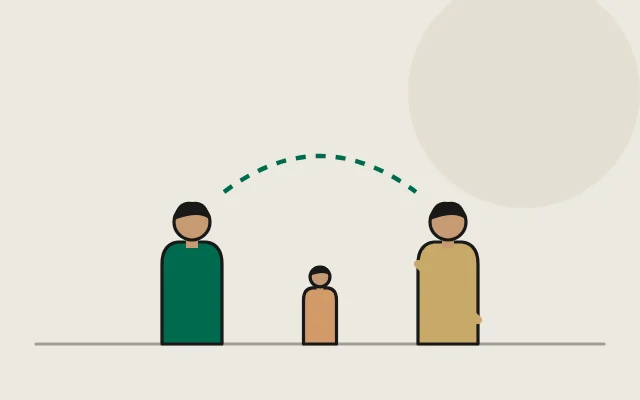
Urgent interim custody and travel restraint
With or soon after filing, the applicant can ask for interim orders. The court may direct the person holding the child to produce the child, give temporary custody to one parent, fix interim visits, and restrain removal of the child from the court's jurisdiction or from Bangladesh. Where the child is at risk, the court can act on affidavit evidence at any stage to stop the case from being defeated. A guardian appointed by the court cannot take the child out of the jurisdiction without leave.
Where: Family Court · Time: Days to 3 months · Law: s.21 Family Courts Act 2023; ss.12 and 26 Guardians and Wards Act 1890 · Documents: Application for interim custody with affidavit, Evidence of urgency (tickets, messages)
Tip: Ask specifically for an order to deposit the child's passport with the court if removal abroad is a real risk.
 Step 6 · Filing and urgent interim orders
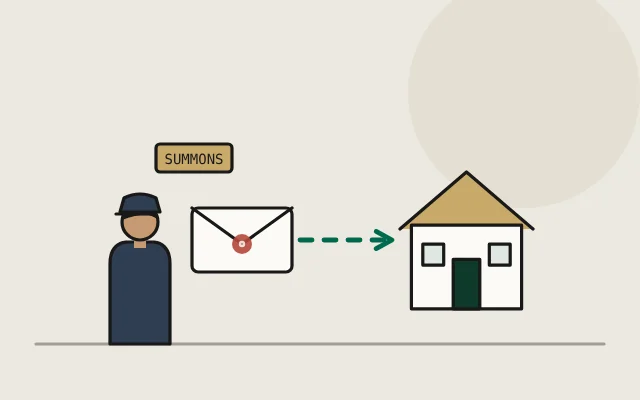
Summons and notices
The court issues summons to the defendant by process server and registered post with acknowledgment due, and by e-mail if an address is given. Under the guardianship law, notice also goes to the child's parents, the person with custody and anyone else the court thinks should be heard, and may be posted at the court and the child's residence. Service by post is deemed complete in defined circumstances, so the case is not held up indefinitely by an evasive party.
Where: Family Court · Time: 2-6 weeks · Law: s.7 Family Courts Act 2023; s.11 Guardians and Wards Act 1890 · Documents: Summons, Registered post acknowledgment, Service returns
Tip: Keep the address of the other parent up to date; a defective service is the commonest reason for an early adjournment.
- Step 7 · Pleadings and reconciliation
Written statement
On the date fixed, both parties appear and the defendant files a written statement with a list of witnesses and the documents relied on. The court can give one further date of up to twenty-one days if good cause is shown. If the defendant fails to appear after proper service, the court may proceed ex parte; an ex parte decree can be set aside on application within thirty days on sufficient cause. Pleadings can be amended later, but not to delay the case.
Where: Family Court · Time: 1-2 months · Law: ss.8, 9 and 10 Family Courts Act 2023 · Documents: Written statement, Defendant's witness list, Defendant's documents
Tip: Answer allegations about the child's welfare point by point; silence on a specific allegation looks like admission.
 Step 8 · Pleadings and reconciliation
Pre-trial hearing and reconciliation
Within thirty days of the written statement, the court holds a pre-trial hearing. The judge examines the plaint, written statement and documents, may hear the parties personally, identifies the points in dispute and tries to bring about a compromise, for example shared arrangements with weekend and holiday visits. If a settlement is reached, the court passes a compromise decree. If not, it frames issues and fixes a date for evidence within thirty days. Proceedings may be held in camera.
Where: Family Court · Time: 1-2 months · Law: ss.11, 12 and 15 Family Courts Act 2023 · Documents: Order framing issues, Compromise terms (if agreed)
Tip: Either party can ask for a closed hearing. If both ask, the court must hold it in camera.
- Step 9 · Pleadings and reconciliation
Interim visitation while the case runs
A child custody case in Bangladesh usually takes months, so the court will often make an interim contact order so the child keeps a relationship with the parent who does not have custody. Orders commonly set visits at the court premises, a relative's home or a neutral place, at fixed times, sometimes supervised, plus phone or video calls. Repeated obstruction of contact is noted by the court and can count against the obstructing parent when welfare is finally assessed.
Where: Family Court · Time: 2-6 weeks to obtain; continues during the case · Law: s.21 Family Courts Act 2023; s.12 Guardians and Wards Act 1890 · Documents: Visitation application, Proposed schedule
Tip: Keep a simple log of every visit kept or missed, with dates; it is useful evidence later.
 Step 10 · Trial
Evidence
In a contested child custody case in Bangladesh, each side calls its witnesses, typically the parents, grandparents, neighbours, teachers or a doctor. The Family Court decides its own procedure: witnesses speak in their own words, can be cross-examined, and the court may allow evidence by affidavit. The court can stop insulting or irrelevant questioning and ask questions itself. The Code of Civil Procedure and the Evidence Act do not formally apply, apart from the rules against parallel and repeated suits, so the court focuses on the facts relevant to welfare.
Where: Family Court · Time: 3-12 months · Law: ss.13 and 28 Family Courts Act 2023 · Documents: Witness affidavits, School and medical records, Photographs and messages
Tip: Ask the court to summon an unwilling witness within three days of issues being framed, as s.13(2) requires.
- Step 11 · Trial
Hearing the child
If the child is old enough to form an intelligent preference, the court may consider it. Judges usually speak with the child privately in chamber, away from both parents, to understand the child's routine, schooling, attachments and wishes. The preference is weighed, not obeyed: the court also considers the child's age, sex and religion, the character and capacity of each parent, the stability of each home, and any existing relationship with the proposed guardian.
Where: Family Court · Time: 1 hearing · Law: s.17(2)-(3) Guardians and Wards Act 1890 · Documents: Order recording the interview, School reports
Tip: Do not coach the child. Judges notice rehearsed answers, and it reflects badly on the parent responsible.
 Step 12 · Decision and enforcement
Final reconciliation attempt and judgment
After evidence, the Family Court makes a further attempt at compromise. If that fails, it pronounces judgment and gives notice to the parties within seven days. In this child custody case in Bangladesh, the court decides who will have custody, whether to appoint or declare a guardian, the visitation rights of the other parent and any conditions such as residence or travel. Courts have held that welfare can outweigh hizanat ages, so a mother who has remarried or a father may still receive custody where that best serves the child.
Where: Family Court · Time: Same day to a few weeks after evidence · Law: ss.14 and 16 Family Courts Act 2023; ss.7 and 17 Guardians and Wards Act 1890 · Documents: Signed judgment
Tip: Order a certified copy at once; the 30-day appeal period runs from the judgment, excluding only the copying time.
 Step 13 · Decision and enforcement
Decree
The court draws up the decree in the prescribed form and records it in the decree register. A custody decree is not final in the way a land decree is: because welfare can change, either parent can later apply to vary custody or visitation on new facts. A guardian appointed by the court needs the court's leave to take the child outside its jurisdiction, and can be removed for neglect or ill-treatment.
Where: Family Court · Time: 1-4 weeks · Law: s.17(1) Family Courts Act 2023; ss.12, 26 and 39 Guardians and Wards Act 1890 · Documents: Certified copy of decree, Certified copy of judgment
Tip: Keep certified copies with you when travelling with the child; airport and school staff may ask for them.
 Step 14 · Decision and enforcement
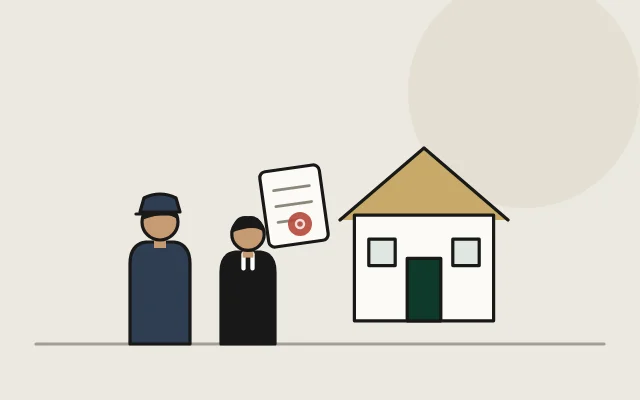
Enforcing custody
If the other side refuses to hand over the child, the decree-holder applies to the Family Court, which enforces a non-money decree with the powers of a civil court. Under the guardianship law the court can order the child's return and, to enforce it, use a Magistrate's search and recovery powers, with police assistance. Obstructing the court can also be punished as contempt of the Family Court, though the fine is capped at Tk 200. Recovery is usually carried out with care for the child, often at the court itself.
Where: Local police station · Time: 2 weeks to 6 months · Law: s.17(6) Family Courts Act 2023; s.25 Guardians and Wards Act 1890; s.100 Code of Criminal Procedure 1898; s.23 Family Courts Act 2023 · Documents: Execution application, Certified decree, Recovery order
Tip: Ask the court to arrange the handover at the court premises to keep the child away from police stations.
What if…? How the child custody case in Bangladesh can change course
Choose a scenario. The map animates the route up the hierarchy and, where a case is sent back, down to the lower court and up again.
What if a parent appeals the custody decision?
- 1Family Appellate Court (District Judge)
Appeal to the Family Appellate Court
Any judgment, decree or order of the Family Court, including orders made as District Court under the Guardians and Wards Act, is appealed to the Family Appellate Court, which is the District Judge's court until separate courts are set up. The appeal must be filed within thirty days, not counting the time to obtain copies, though the court may extend time for good reason. The District Judge may send it to an Additional District Judge or Joint District Judge.
File within 30 daysss.18, 19(1), (2) and (6) and 27(2) Family Courts Act 2023 - 2Family Appellate Court (District Judge)
Hearing the appeal
The appellate court rehears the matter on facts and law, can make interim custody orders while the appeal is pending, and may affirm, vary or reverse the decision. Its order is sent to the Family Court, which amends its decree accordingly. The old direct appeal to the High Court Division under the Guardians and Wards Act no longer applies.
6-24 monthsss.19(5) and 21 Family Courts Act 2023s.47 Guardians and Wards Act 1890 (displaced by s.27(2) FCA 2023)
Where it ends up: The Family Appellate Court confirms or changes the custody order, and the Family Court gives effect to it.
Can the High Court Division review the appellate decision?
- 1High Court Division
Civil revision in the High Court Division
There is no further appeal from the Family Appellate Court. In practice the High Court Division entertains civil revisions under section 115(1) of the Code of Civil Procedure against Family Appellate Court judgments in custody and guardianship cases, as many reported decisions show. The court issues a Rule, may make interim custody or visitation orders, and examines whether an error of law, such as ignoring welfare, caused a failure of justice.
File within about 90 days; 6 months to 3 yearss.115(1) CPCs.20 Family Courts Act 2023
Where it ends up: The High Court Division affirms, varies or sets aside the custody order, or sends it back.
Can the Family Court reconsider its own custody order?
- 1Family Court
Reconsideration on changed circumstances
The Family Courts Act 2023 excludes the Code of Civil Procedure, so a formal review under Order XLVII is not the usual route. Instead, because a custody order rests on the child's welfare, a parent may apply to the court on new facts, such as remarriage, relocation, neglect or the child growing older, to vary custody, visitation or guardianship, or to remove a guardian who ill-treats or neglects the child.
3-12 monthss.28 Family Courts Act 2023ss.12, 25 and 39 Guardians and Wards Act 1890
Where it ends up: The Family Court keeps or changes the arrangements to fit the child's present welfare.
Is there a reference to the High Court Division in custody cases?
- 1High Court Division
No CPC reference; constitutional withdrawal instead
A reference under section 113 of the Code of Civil Procedure is not available because the Family Courts Act 2023 excludes the Code. The nearest equivalent is Article 110 of the Constitution: if a case in a subordinate court raises a substantial question of constitutional law, the High Court Division can withdraw it, decide that question and return the case with its judgment for the Family Court to finish.
6 months to 2 yearss.28 Family Courts Act 2023Article 110 Constitution
Where it ends up: The case returns to the Family Court, which decides it in line with the High Court Division's ruling.
What if the case is sent back to the Family Court?
- 1Family Appellate Court (District Judge)
Remand for a fresh welfare assessment
If the Family Court decided custody purely on hizanat ages without weighing welfare, failed to consider the child's preference, or decided without hearing a necessary party, the Family Appellate Court or the High Court Division may set the decision aside and send the case back with directions, for example to interview the child or take fresh evidence on each home.
1-3 monthss.19(5) Family Courts Act 2023s.17 Guardians and Wards Act 1890 - 2Family Court
Rehearing and a new decision
The Family Court rehears the points directed, keeps or adjusts interim custody meanwhile, and passes a fresh judgment. That new decision can again be appealed to the Family Appellate Court within thirty days, and then taken to the High Court Division in revision, so the case moves back up the same ladder it came down.
3-12 monthsss.14, 19 and 21 Family Courts Act 2023
Where it ends up: The Family Court issues a fresh custody decision, again open to appeal.
Can a custody case reach the Appellate Division?
- 1Appellate Division of the Supreme Court
Leave to appeal to the Appellate Division
Against the High Court Division's judgment in revision or habeas corpus, the losing party files a civil petition for leave to appeal, normally within sixty days. Leave is granted only on a substantial question of law. The Appellate Division can make interim arrangements for the child and its decision binds all courts; a review lies within thirty days only for an error apparent on the record.
File within 60 days; 6 months to 3 yearsArticles 103, 105 and 111 ConstitutionAppellate Division Rules 1988, Orders XIII and XXVI
Where it ends up: The Appellate Division's decision is final and the Family Court enforces it.
What if a child is being unlawfully held right now?
- 1High Court Division
Habeas corpus in the High Court Division
Where a child is held without lawful authority, for example snatched from the parent with lawful custody, a petition can be filed under Article 102(2)(b)(i) of the Constitution. The High Court Division orders the child produced in court, often within days, and decides interim custody on the child's welfare, as the Appellate Division did in Abdul Jalil v Sharon Laily Begum Jalil. It may then leave the parents to the Family Court.
Days to a few monthsArticle 102(2)(b)(i) ConstitutionMd. Abdul Jalil v Sharon Laily Begum Jalil, 50 DLR (AD) 55
Where it ends up: The child is produced and placed in interim custody, with the long-term question left to the Family Court or decided on appeal.
How the child custody case in Bangladesh moves up the court hierarchy
A child custody case in Bangladesh starts in the Family Court for the place where the child ordinarily resides. Unlike civil suits, there is no value threshold: every custody and guardianship case goes to the Family Court, presided over by a Civil Judge or Senior Civil Judge, after pre-case mediation where the district is notified. Appeals go to the Family Appellate Court, which is the District Judge's court, within thirty days; the District Judge may hand the appeal to an Additional or Joint District Judge.
That appeal is a rehearing on facts and law, and it now replaces the old direct appeal to the High Court Division under the Guardians and Wards Act. The High Court Division then exercises revisional jurisdiction, limited to errors of law causing failure of justice, and separately hears habeas corpus petitions where a child is unlawfully held. The Appellate Division hears matters only by leave.
- Appellate DivisionAppellate Division of the Supreme Court
- High Court DivisionHigh Court Division
- Appellate levelFamily Appellate Court (District Judge)
- First instanceFamily Court
- Start · outside courtLawyer's chamber · District Legal Aid Office (pre-case mediation) · Local police station
Where your case is heard
Addresses are for Dhaka. Every district has equivalent courts at its own district judgeship.
Supreme Court of Bangladesh (Appellate Division and High Court Division)
Supreme Court of Bangladesh, Shahbag, Ramna, Dhaka-1000Hears appeals, revisions, references, writ petitions under Article 102, company matters and death references (High Court Division), and appeals by leave from the High Court Division (Appellate Division).
Both Divisions sit in the Supreme Court complex; many High Court Division benches sit in the Annex Building. Check the daily cause list for the bench and court room. Postal contact is the Registrar General, Supreme Court of Bangladesh, Ramna, Dhaka-1000.
Court of the District and Sessions Judge, Dhaka (Dhaka Judge Court)
Dhaka Judge Court premises, 16 Johnson Road, Sadarghat, DhakaSeat of the Dhaka District Judge and Additional District Judges (civil appeals, probate, district-level civil and sessions work outside the metropolitan area) and the civil courts of first instance (Joint District Judge, Senior Civil/Assistant Judge courts).
Official judiciary portal gives '16 Johnson Road, Sadarghat, Dhaka'. Many civil courts (Additional District Judge courts, Joint District Judge and Senior Assistant Judge courts, Artha Rin Adalat No.1, insolvency court) are in the new 8-storey District Judge Court building in the same premises. The 2026 judgeship list names the first-instance civil courts 'Senior Civil Judge' / 'Civil Judge' (formerly Senior Assistant Judge / Assistant Judge); some pages still use the old names. Every district has an equivalent court at its district judgeship.
Family Courts, Dhaka
Dhaka Judge Court premises, 16 Johnson Road, Sadarghat, DhakaHears suits for dissolution of marriage, restitution of conjugal rights, dower, maintenance, and guardianship and custody of children under the Family Courts Ordinance 1985 / Family Courts Act 2023.
Family courts are Assistant Judge (Civil Judge) courts. The judgeship portal lists Family Court-05, Dhaka, and shows the 2nd and 3rd Additional Family Courts on the ground floor of the new 8-storey District Judge Court building; the exact room of each numbered family court is not published, so check the cause list. Every district has family courts at its district judgeship.
Lawyer's chamber
Where this happens depends on your district or the office concerned. Ask us for the exact courtroom and address.
District Legal Aid Office (pre-case mediation)
Where this happens depends on your district or the office concerned. Ask us for the exact courtroom and address.
Dhaka Metropolitan Police (DMP) Headquarters
36 Minto Road, DhakaHeadquarters of the Dhaka Metropolitan Police; FIRs are lodged at the local police station, not here.
Emergency: 999. For a case, go to the police station with jurisdiction over the place of occurrence.
How long each stage takes
These are indicative ranges based on typical Dhaka practice. Adjournments, case backlogs and appeals can stretch them.
Documents checklist and key terms
Tick off what you have. Your ticks stay saved in this browser. Bring the list to your first meeting with your lawyer.
- Hizanat
- The right to physical custody of a young child under Muslim law, held by the mother for a son until seven and a daughter until puberty, subject to the child's welfare.
- Guardian of the person
- The person with legal authority over the child's upbringing and decisions; under Muslim law the father is the natural guardian.
- Welfare of the minor
- The paramount consideration in every custody decision, judged by age, sex, religion, each carer's character and capacity, and the child's own preference (s.17 Guardians and Wards Act).
- Interim custody
- A temporary order on where the child lives while the case is pending (s.12 Guardians and Wards Act; s.21 Family Courts Act 2023).
- Visitation
- Contact time ordered for the parent who does not have custody, sometimes supervised.
- Family Appellate Court
- The District Judge's court hearing appeals from the Family Court under s.18 Family Courts Act 2023.
- Habeas corpus
- A High Court Division order under Article 102 requiring a person holding someone, including a child, to produce them and justify the detention.
- In camera
- A hearing held in private, closed to the public, which the Family Court can order and must order if both parties ask.
Child custody case in Bangladesh: common questions
Who gets custody in a child custody case in Bangladesh?
Which court hears custody cases?
Do I have to try mediation first?
How quickly can I get interim custody or stop the child being taken abroad?
Does a mother lose custody if she remarries?
Will the judge listen to my child?
How long does a child custody case in Bangladesh take?
Can a custody order be changed later?
Law and sources
- Family Courts Act 2023 (Act No. 26 of 2023)
- Guardians and Wards Act 1890
- Constitution of the People's Republic of Bangladesh
- Civil Courts Act 1887 (s.25A, 2026 renaming of civil judges)
- High Court Division, Civil Revision No. 3958 of 2024 (hizanat and welfare of minors)
- High Court Division, Civil Revision No. 267 of 2023 (custody, Family Appeal from Dhaka)
- High Court Division, Civil Revision No. 3850 of 2023 (custody of minor children)
- The Business Standard: Family Courts Bill 2023 passed in parliament
- UNB: Govt moves to fast-track lower court cases (Legal Aid Services (Amendment) Act 2026, e-family courts)
This Case Journey is a general guide to procedure in Bangladesh as of October 2026. It is not legal advice. Procedure, fees and time limits change, and every case turns on its own facts. Timelines are indicative. Speak to a lawyer about your own matter.
Run this case from outside Bangladesh
You can usually start and run this case without travelling. You sign a power of attorney abroad, the Bangladesh High Commission or Embassy attests it, and your attorney and lawyer act for you in Dhaka. Some steps, such as giving evidence in person, may still need you or a commission. See how a case runs through a power of attorney →
Want to know where your case stands?
Book a consultation. A TRW lawyer will place your matter on this map, explain the next step and the realistic timeline, and tell you what to prepare.