
TRW Blog
Private-sector maternity benefit rose to 120 days in 2026 and is now calculated on gross wage. Public servants get six months, fathers get nothing by statute, and export processing zones still apply the old rules.
Maternity leave in Bangladesh: what changed in 2026
Maternity leave in Bangladesh for private-sector workers is now 120 days of paid maternity benefit: 60 days before the expected date of delivery and 60 days after it. The Bangladesh Labour (Amendment) Act 2026, Act No 43 of 2026 dated 10 April 2026, replaced the old eight weeks on each side and also changed how the benefit is calculated, so a 2025 payroll policy is now wrong on both counts.[1] [5]
This guide sets out who qualifies, how notice works, what the benefit is worth, the limited protection against dismissal, how public-sector leave differs, whether fathers get anything, and the separate rules in export processing zones.
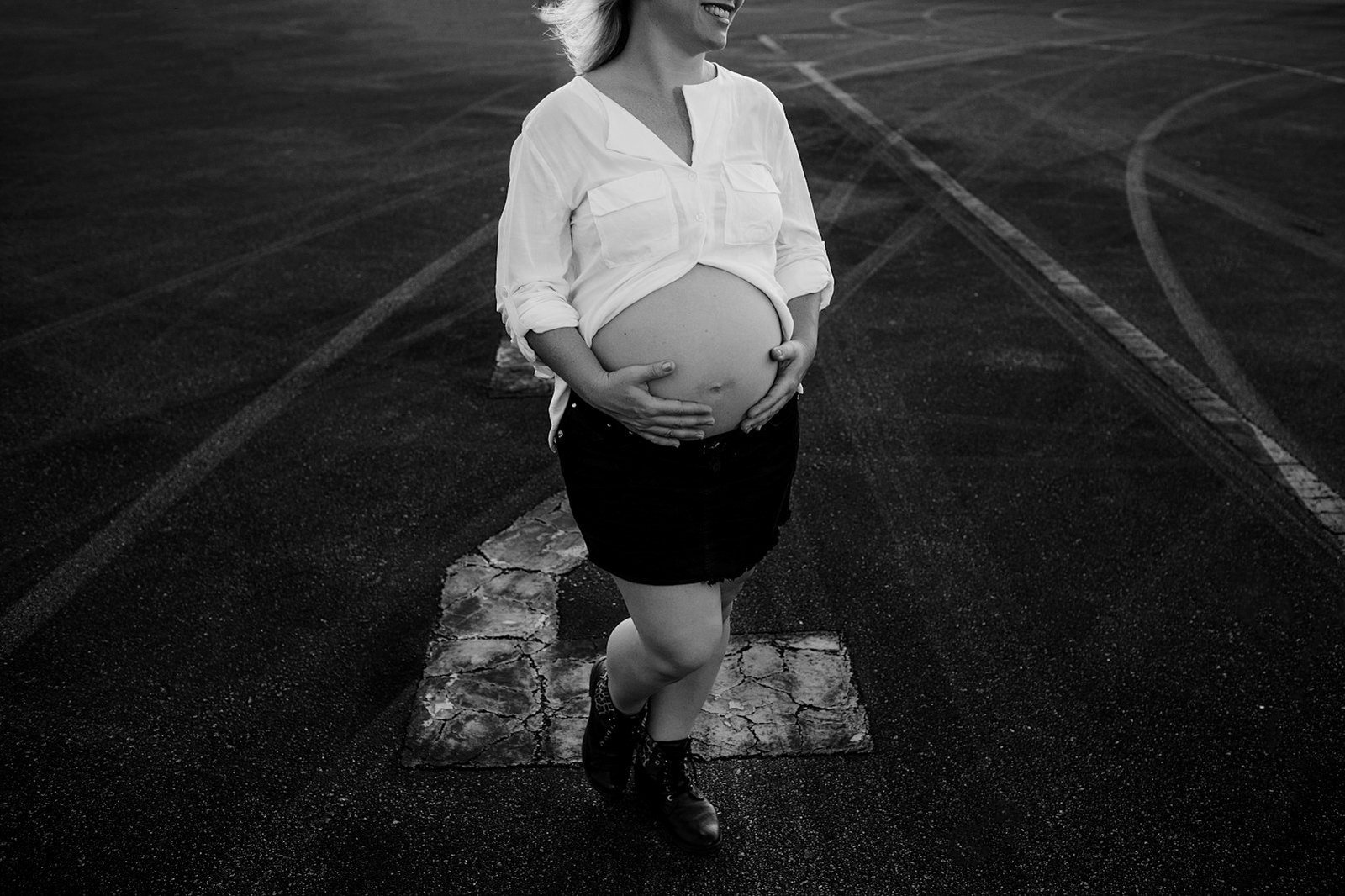
Summary: A woman worker with at least six months' service under her employer immediately before delivery, and fewer than two surviving children, is entitled to 120 days' maternity benefit at her full average wage, now calculated as her last fixed monthly gross wage divided by 26. Government servants receive six months. There is no statutory paternity leave. Export processing zones still apply eight weeks on each side of delivery.
Key point: The 2026 Act moved the maternity benefit base from an average of the previous three months' earnings to the last fixed monthly gross wage divided by 26, and raised the fine for depriving a worker of maternity benefit to between Tk 50,000 and Tk 1 lakh.[3] [6]
At a glance
120 days
60 days before the expected delivery date and 60 days after it, replacing eight weeks on each side.
Eligibility
Six months' work under the employer immediately before delivery and fewer than two surviving children.
Full pay
Daily rate is the last fixed monthly gross wage divided by 26, paid in cash, to a bank account or by EFT.
Public sector
Government servants receive six months' maternity leave under the Bangladesh Service Rules.
EPZ
Zone enterprises still follow the EPZ Labour Act 2019: eight weeks before and eight weeks after delivery.
Table of Contents
Maternity leave in Bangladesh after the 2026 amendment
The Labour Act calls the entitlement "maternity benefit" (prosuti kalyan suvidha). It combines a right to be absent from work with a right to be paid for the whole period. Section 46 now entitles every woman worker to the benefit for 60 days immediately before the expected day of delivery and 60 days immediately after it, and makes the employer bound to provide it.[1]
The change began with the 2025 Labour Ordinance and was confirmed by Parliament in Act No 43 of 2026, which amended sections 45 to 50, the whole maternity chapter.[5] Our guide to the Labour Act amendment 2025 Bangladesh covers the wider reform.
Who qualifies
A woman worker qualifies if she has worked under the same employer for at least six months immediately before the day of delivery.[1] The benefit is not payable if, at the time of delivery, she already has two or more surviving children, although she may still take any other leave due to her.[1] That two-child rule survived the 2026 amendment unchanged, so employers should apply it, but carefully and with records.
Who counts as a worker
The entitlement attaches to "workers". The 2026 Act widened that definition so that only persons responsible for the management or control of the establishment fall outside it. Many professional and supervisory staff are therefore covered. Senior women managers outside the Act depend on their contract and company policy, which should match or exceed the statutory benefit.

Notice and timing
A pregnant worker gives notice, orally or in writing, that she expects to deliver within 60 days, and names the person who will receive the benefit if she dies. If she gives no notice before the birth, she must inform the employer within seven days of delivery.[2]
When leave starts
Once notice is received, the employer must allow her to be absent for up to 120 days on full benefit. Where notice is given before the birth, the absence runs from the day after the notice; where it is given after the birth, it runs from the date of delivery.[2] Leave cannot be refused, deferred or made conditional on finding cover.
When the employer must pay
The worker chooses how she is paid. With a registered medical practitioner's certificate that delivery is expected within 60 days, the pre-delivery portion is paid within three working days of the certificate and the rest within three working days of proof of birth. Alternatively, the pre-delivery portion is paid within three working days of proof of birth and the rest within 60 days, or the whole sum is paid within three working days of proof of birth.[2]
Proof and miscarriage
Proof of birth may be an attested extract from the birth register, a registered medical practitioner's certificate or other proof acceptable to the employer, and must be produced within three months of delivery. A worker who miscarries before her scheduled maternity leave is not entitled to maternity benefit, but may take leave on health grounds.[2]
How much maternity benefit is paid
Maternity benefit is paid at the worker's daily, weekly or monthly average wage. Since 2026, the daily average is calculated by dividing her last fixed monthly gross wage by 26, and payment may be made in cash, into a bank account or by electronic fund transfer.[3] The previous rule averaged total wages over the three months before notice by the days actually worked, which penalised workers with absences or short months.
A worked example
A worker with a fixed gross monthly wage of Tk 26,000 has a daily rate of Tk 1,000. Her 120 days are worth Tk 1,20,000, paid on the schedule she chooses.[3] Termination payments use a narrower statutory wage base, so payroll systems that reuse one base for both will underpay maternity benefit.
Penalty for non-payment
An employer who deprives a woman worker of maternity benefit now faces a fine of at least Tk 50,000 and up to Tk 1 lakh, up from a maximum of Tk 25,000.[6] Unpaid benefit can also be recovered through the Labour Court. See our labour law compliance checklist for the related registers.

Protection from dismissal during maternity
Section 50 is narrower than many employers assume. If the employer gives a notice or order of discharge, dismissal, removal or other termination within six months before delivery or 60 days after it, and the notice or order has no sufficient cause, the worker is not deprived of the maternity benefit she would otherwise have received.[4]
What that means in practice
The section protects the benefit rather than banning dismissal outright. A termination in that window without sufficient cause still leaves the employer liable for the full benefit, plus the ordinary exit payments and the risk of a Labour Court finding that the termination was mala fide. A termination that looks connected to pregnancy is very hard to defend. The safe course is to defer any non-urgent exit and document any genuine misconduct or redundancy reason carefully. Our guide to hiring and firing laws in Bangladesh explains the routes.
Public sector versus private sector
Government servants are not governed by the Labour Act but by the Bangladesh Service Rules. Rule 197(1) was amended with effect from 9 January 2011 to give six months' maternity leave, from the date leave starts or from confinement, whichever is earlier, and the leave can be taken twice in a career.[8]
That gap matters for recruitment. Private-sector maternity leave in Bangladesh is 120 days, roughly four months, against six months in government service. Private employers can offer more than the statutory minimum by contract or policy, and those competing for experienced staff often should. Our guide to employee benefits in Bangladesh covers how to structure enhanced benefits.
Is there paternity leave in Bangladesh?
No statute gives private-sector fathers paternity leave. The 2026 Act, despite rewriting the maternity chapter, added no paternity provision.[5] In July 2024 the High Court Division issued a rule asking why guidelines for paternity leave should not be framed for all institutions, with respondents including the Cabinet, Public Administration and Law secretaries.[9] No guideline has yet been made law.
Employers are free to grant paternity leave by contract or policy. A written policy stating the number of days, eligibility and pay avoids inconsistent ad hoc decisions by line managers.

Maternity leave in Bangladesh export processing zones
Zone enterprises follow the Bangladesh EPZ Labour Act 2019. It still gives eight weeks before and eight weeks after delivery, 112 days in all, with the same six-month and two-child conditions. The benefit is calculated on average wages over the three months before notice, and the dismissal protection runs from six months before to eight weeks after delivery.[7]
EPZ reform remains on the agenda. In September 2026, commentary noted that the ILO had urged Bangladesh to complete outstanding labour reforms, including the EPZ regime, by March 2027.[10] Groups with plants inside and outside a zone currently need two maternity policies.
How Bangladesh compares
The table compares statutory maternity leave for private-sector employees.
| Jurisdiction | Length | Pay | Key condition |
|---|---|---|---|
| Bangladesh (Labour Act) | 120 days | Full gross wage | Six months' service; fewer than two surviving children |
| Bangladesh (government) | Six months | Full pay | Available twice in service |
| Bangladesh (EPZ) | 16 weeks | Average wage | Six months' service; fewer than two surviving children |
| United Kingdom | 52 weeks | Statutory pay for part | Eligibility tests for pay |
| Singapore | 16 or 12 weeks | Government-paid if eligible | Citizen child and service conditions |
| UAE | 60 days | 45 days full, 15 days half | Private sector |
| India | Up to 26 weeks | Average daily wage | 80 days' work in 12 months |
The UK offers 52 weeks of statutory maternity leave, with statutory pay for part of it.[11] Singapore gives 16 weeks of government-paid leave where the child is a citizen and other conditions are met, or 12 weeks otherwise.[12] The UAE gives 60 days, 45 on full pay and 15 on half pay, and five working days' parental leave.[13] India's Code on Social Security 2020 provides up to 26 weeks after 80 days' work.[14]
Employer checklist
Maternity leave in Bangladesh is a payroll, policy and documentation exercise. These steps keep an employer compliant.
Update the policy
Replace eight-week references with 60 days on each side and 120 days in total in contracts, handbooks and service rules.
Fix the payroll formula
Calculate the daily rate as the last fixed monthly gross wage divided by 26, not on basic wage or a three-month average.
Check eligibility
Confirm six months' service immediately before delivery and the number of surviving children, and record both.
Acknowledge notice
Log the date of notice, the expected delivery date and the nominee, and confirm the leave start date in writing.
Pay on time
Pay within three working days of the certificate or proof of birth, or on the schedule the worker chooses.
Freeze non-urgent exits
Avoid termination notices from six months before to 60 days after delivery unless there is clear, documented cause.
Run a separate EPZ policy
Apply eight weeks on each side and the three-month average wage inside export processing zones.
Where TRW acts as employer of record, we run maternity notices, payments and payroll under Bangladesh law for the client's team. Our employment and labour practice also reviews maternity and parental leave policies for private employers.
Frequently asked questions
How long is maternity leave in Bangladesh in 2026?
For private-sector workers under the Labour Act, 120 days: 60 days before the expected delivery date and 60 days after it, on full pay.[1]
Who is eligible for maternity benefit?
A woman worker who has worked for at least six months under her employer immediately before delivery and who has fewer than two surviving children at the time of delivery.[1]
Is maternity leave paid in full?
Yes. The daily rate is the last fixed monthly gross wage divided by 26, paid for the whole 120 days in cash, to a bank account or by EFT.[3]
What notice must a pregnant worker give?
Oral or written notice that she expects to deliver within 60 days, naming a nominee. If she gives none before the birth, she informs the employer within seven days of delivery.[2]
Can an employer dismiss a worker on maternity leave?
A notice or order of termination given without sufficient cause within six months before or 60 days after delivery does not deprive her of the benefit, and an unjustified termination can be challenged.[4]
What happens if the worker already has two children?
Maternity benefit is not payable if she has two or more surviving children at delivery, but she may take any other leave due to her.[1]
How long is maternity leave for government employees?
Six months under Rule 197(1) of the Bangladesh Service Rules, as amended in January 2011, available twice during service.[8]
Is there paternity leave in Bangladesh?
Not by statute for private-sector employees. A High Court rule issued in 2024 asked why paternity leave guidelines should not be framed, but employers grant paternity leave only by contract or policy.[9]
Does the 120-day rule apply in export processing zones?
No. The EPZ Labour Act 2019 still provides eight weeks before and eight weeks after delivery.[7]
What is the penalty for not paying maternity benefit?
A fine of at least Tk 50,000 and up to Tk 1 lakh, in addition to the worker's right to recover the unpaid benefit.[6]
Source register
Primary legal and regulatory sources
Materials checked on 25 October 2026. Confirm the current official text before relying on any provision.
- Bangladesh Labour Act 2006, section 46: right to maternity benefit (as amended in 2026) — Laws of Bangladesh
- Bangladesh Labour Act 2006, section 47: procedure for payment of maternity benefit (as amended in 2026) — Laws of Bangladesh
- Bangladesh Labour Act 2006, section 48: amount of maternity benefit (as amended in 2026) — Laws of Bangladesh
- Bangladesh Labour Act 2006, section 50: restriction on termination of a woman's employment — Laws of Bangladesh
- Bangladesh Labour (Amendment) Act 2026 (Act No 43 of 2026, 10 April 2026), table of sections — Laws of Bangladesh
- Bangladesh Labour (Amendment) Act 2026, section 61: amendment of section 286 (penalty) — Laws of Bangladesh
- Bangladesh EPZ Labour Act 2019 (Act No 2 of 2019), Chapter III, sections 29 to 34 — Laws of Bangladesh
- The Daily Star, 11 January 2011 — Maternity leave now 6 months
- Dhaka Tribune, 9 July 2024 — HC asks why paternity leave guidelines should not be framed
- Prothom Alo English, 29 September 2026 — Labour law: from paper to reality on the factory floor
- GOV.UK — Maternity pay and leave: leave
- Ministry of Manpower, Singapore — Maternity leave eligibility and entitlement
- Gulf News — Maternity and paternity leave in the UAE: all you need to know
- Press Information Bureau, Government of India, 22 November 2025 — Code on Social Security 2020
Related TRW assistance
Move from information to a defined next step
TRW updates maternity and parental leave policies, fixes payroll formulas, advises on terminations around pregnancy and acts as employer of record for foreign companies hiring in Bangladesh. Explore our employment and labour practice, contact our Dhaka team or book a consultation.











