
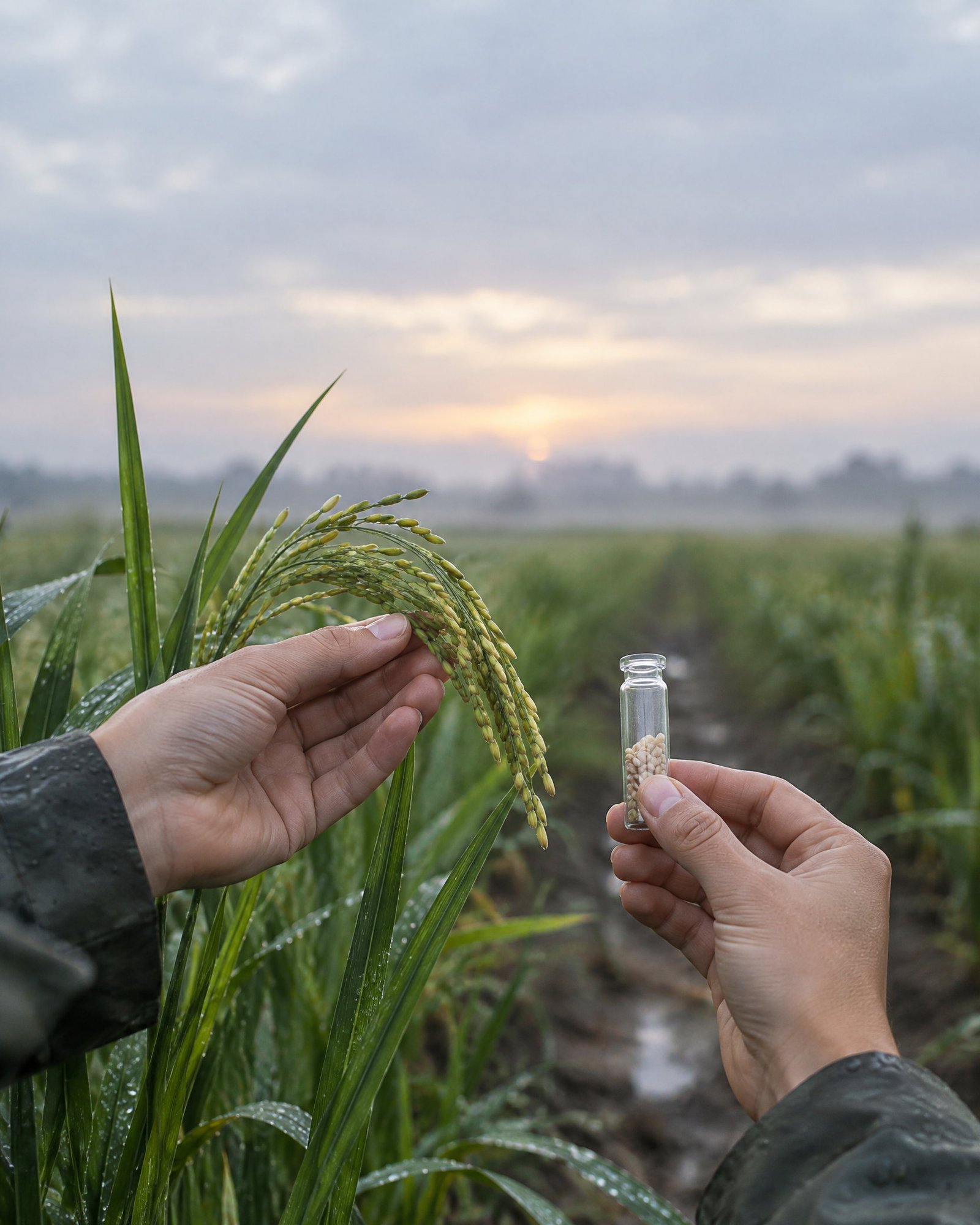
Plant Variety Protection in Bangladesh
Plant variety protection advice for seed companies, research institutes, agribusinesses and foreign breeders in Bangladesh: applications under the Plant Varieties Protection Act 2019, seed registration interfaces, farmers' rights, genetic resource rules and licensing that turns new varieties into lasting, fairly shared revenue.

- Review the variety
- Prepare and file
- Respond and secure
- License and protect
Understanding plant variety protection in Bangladesh
Developing a new rice, vegetable, jute or fruit variety can take many years of breeding, field trials and investment. Plant variety protection gives breeders a legal right over the propagating material of a new variety, so they can license it, recover their costs and fund the next breeding cycle. In Bangladesh, this right is governed by the Plant Varieties Protection Act 2019, which sits alongside seed, biodiversity and general intellectual property law. We advise breeders, seed companies, public research bodies and agribusiness investors on how these regimes fit together, as part of our technology, IP and data practice.
Plant variety protection is a distinct right. It is not a patent, a trade mark or a seed certification, and obtaining one does not automatically give the others. A protected variety may still need to be registered or released under the Seeds Act 2018 before seed of a notified crop can be marketed, and the brand under which seed is sold should be protected separately as a trade mark. Approved variety names, or denominations, must also be used on sale. We help clients plan each of these steps so none of them delays a commercial launch or a licensing deal.
Plant variety protection under the 2019 Act balances breeder and farmer interests. Breeders of varieties that meet the statutory criteria, which follow the internationally familiar tests of novelty, distinctness, uniformity and stability, can obtain exclusive rights for a fixed period. The Act also recognises farmers' rights, including traditional practices of saving, using and exchanging seed, and addresses the interests of communities whose knowledge or genetic resources contributed to a variety. The precise scope of these rights, and how the implementing rules and the registration authority apply them, should be checked for each crop and activity before decisions are made.
Provenance is increasingly important for breeders, buyers and regulators. A breeder may be asked to disclose the origin of the genetic material used, and access to genetic resources and associated traditional knowledge can be regulated under the Bangladesh Biological Diversity Act 2017, with benefit-sharing expectations where local resources were used. Foreign breeders and research partners should document material transfer agreements, breeding records and contributions from local institutes or farmers from the outset. Good records support plant variety protection applications, reduce the risk of challenge, and help investors, lenders and licensees understand exactly what they are acquiring.
Bangladesh is not a member of UPOV, the international union for plant variety protection, so plant variety protection granted abroad does not extend here and a Bangladesh application is needed. LDC graduation and trade negotiations may bring further change to the framework. We work with agronomists, seed technologists and counsel in the UK, US, UAE, China, India and Singapore on multi-country breeding and licensing programmes. To discuss a new variety, a licensing arrangement or a dispute about seed, contact our Dhaka office with the crop, the breeding history and your commercial plans for Bangladesh.
Core workstreams
Four clear stages
- 01Review the variety
- 02Prepare and file
- 03Respond and secure
- 04License and protect
Talk to a partner
Consultations in Dhaka or by video. Scope, team and fees are agreed in writing first.
Book →How we support breeders and agribusinesses

Eligibility and filing strategy
- Review the variety
- Prepare and file
- Respond and secure
- License and protect
Applications and DUS evidence
- Review the variety
- Prepare and file
- Respond and secure
- License and protect
Seed registration and market entry
- Review the variety
- Prepare and file
- Respond and secure
- License and protect
Genetic resources and benefit sharing
- Review the variety
- Prepare and file
- Respond and secure
- License and protect
Licensing and commercialisation
- Review the variety
- Prepare and file
- Respond and secure
- License and protect
Disputes and enforcement
- Review the variety
- Prepare and file
- Respond and secure
- License and protect
Eligibility and filing strategy
We assess whether a variety is likely to meet the statutory criteria for plant variety protection, including novelty in light of earlier sales, and whether the applicant is entitled to apply. We review breeding records, ownership and any public-sector or donor funding conditions, then plan the application timetable alongside seed registration, trials and launch so that commercial sales do not undermine novelty before filing. Funding conditions are checked first.
Applications and DUS evidence
We prepare plant variety protection applications, variety descriptions and supporting documents, and coordinate with breeders on distinctness, uniformity and stability evidence and any trial requirements. We propose denominations that meet the rules and do not conflict with existing names or trade marks, respond to objections from the registration authority and manage publication, oppositions and the grant of the certificate. Denomination searches are run early.
Seed registration and market entry
We advise on the separate requirements of seed law, including variety registration or release for notified crops, seed certification, dealer registration, labelling and import permits for seed and planting material. We map how these steps interact with plant variety protection so that a protected variety can actually be marketed, and that an approved variety is not left without exclusive rights when it reaches the market. Regulators are engaged in the right order.
Genetic resources and benefit sharing
We review the origin of breeding material, material transfer agreements and research collaboration terms, and advise on obligations under biodiversity law, including approvals for access to local genetic resources and benefit-sharing arrangements. Where farmers, communities or public institutes contributed knowledge or material, we help structure fair recognition and benefit sharing that supports the application and long-term relationships with those contributors. Records are kept for later audits.
Licensing and commercialisation
We draft licences for seed multiplication, production and sale, including royalties, territory, quality standards, record keeping and audit, as well as research and evaluation agreements, distribution contracts and technology transfer deals with foreign breeders. We address foreign exchange and tax steps for cross-border royalties, and how farmers' rights affect what a licensee can and cannot restrict in practice. Royalty reporting is kept simple. Audit rights should be exercisable on reasonable notice and limited to records relevant to royalty and quality compliance.
Disputes and enforcement
We act on unauthorised multiplication or sale of protected varieties, misuse of denominations, mislabelled or counterfeit seed and disputes between breeders, licensees and research partners. Options include demand letters, complaints to seed and agriculture authorities, civil proceedings and arbitration under licence agreements. We also defend clients facing allegations, including where farmers' rights or prior use are relevant to the case. Evidence is gathered before action.
Partner-led, on every matter.
Technology, IP & Data matters at TRW are led by partners, supported by associates, with one responsible lawyer from first advice to final outcome.
Meet the firm →



01What rights does plant variety protection give a breeder in Bangladesh?
Under the Plant Varieties Protection Act 2019, a breeder who obtains protection for a qualifying variety gains exclusive rights over specified acts involving the propagating material, such as production, sale and import, for a fixed period, subject to statutory exceptions. These rights allow the breeder to license seed companies, collect royalties and act against unauthorised multiplication. The rights are limited by farmers' rights and exceptions, including research and private non-commercial use. We explain the scope for the crop and business model before filing, so expectations are realistic. Protection here does not extend abroad, so other markets need separate protection.
02Is plant variety protection the same as registering a seed variety?
No. Plant variety protection is an intellectual property right that rewards the breeder. Variety registration or release under seed law is a regulatory step that controls which varieties of notified crops can be marketed, focused on performance and suitability for farmers. A variety may need both, and each has its own authority, procedure and evidence. Getting one does not give the other. We plan both processes together, so trial data and descriptions can be reused where permitted and neither step delays the launch, and so the client knows which body is responsible for each decision.
03Can farmers still save and exchange seed of a protected variety?
The 2019 Act recognises farmers' rights, which are generally understood to include saving, using, exchanging and in some circumstances selling farm-saved seed, but not selling it as branded seed of the protected variety. The exact boundaries depend on the statutory wording, implementing rules and the facts. Breeders and licensees should design their commercial models, labelling and enforcement strategies with these rights in mind, and avoid licence terms that attempt to restrict activities the law protects. We advise both breeders and farmer organisations on where the line is likely to fall in a specific case. Clear communication with farmer groups helps.
04Can a foreign breeder obtain plant variety protection in Bangladesh?
Foreign breeders can generally apply, usually through a local agent, subject to the eligibility rules in the Act and its implementing rules. Because Bangladesh is not a UPOV member, protection granted abroad does not extend here, and a Bangladesh application is required. Novelty must be assessed carefully, since earlier sales in Bangladesh or abroad can affect eligibility. Foreign breeders also need to consider seed import rules, local trials and the choice of a licensee for multiplication. We act as local counsel and coordinate the application with the breeder's international team and agronomists. Local trial partners need written terms.
05What records do we need for a strong plant variety protection application?
Keep breeding records showing parent lines, crosses, selection methods and dates, together with trial data supporting distinctness, uniformity and stability. Ownership documents should confirm who bred the variety and who holds the right to apply, especially where public institutes, universities, employees or foreign partners were involved. Records of first sale or disposal are needed to assess novelty. Material transfer agreements and records on the origin of genetic resources may be requested. We review these records before filing and fill gaps where possible, because missing evidence is far harder to reconstruct later. Plant variety protection depends on them.
06How do biodiversity rules affect plant variety protection?
Where a variety was bred using genetic resources or traditional knowledge from Bangladesh, access and benefit-sharing rules under the Bangladesh Biological Diversity Act 2017 may apply, and approvals or agreements may be required. Applicants may also be asked about the origin of the material they used. Failing to address these points can lead to objections or reputational damage, particularly for foreign breeders. We review the history of the breeding material and help structure compliant access and benefit-sharing arrangements before filing, rather than reacting to an objection later. Records of where material was collected and any permissions obtained should be kept.
07How should a seed multiplication and sales licence be structured?
A seed licence should define the protected variety, the licensed activities such as multiplication, processing and sale, the territory, exclusivity, quality and certification standards, royalties and reporting, audit rights, the use of denominations and trade marks, and termination. It should respect farmers' rights and comply with seed law requirements for certification and labelling. Cross-border licences need foreign exchange and withholding tax planning so royalties can be paid. We draft licences that give breeders real control over quality and revenue while remaining workable for local seed companies and their dealer networks across districts. Dealer obligations should be explicit.
08What can we do if our protected variety is being sold without a licence?
First gather evidence: samples, invoices, packaging, dealer details and, where needed, laboratory testing to show the material is the protected variety. We then assess whether the conduct is covered by farmers' rights or another exception, or is unauthorised commercial use. Options include a demand letter, complaints to agriculture and seed authorities about mislabelled or uncertified seed, civil proceedings for injunctions and damages, and contract claims against licensees. Proportionate, evidence-led action usually works best, and protects relationships with farmers and dealers that the business depends on. Speed matters in the selling season. Laboratory evidence can be decisive.
From first call to resolution.
- 01
Review the variety
We review the crop, breeding history, ownership, earlier sales and source of genetic material, and confirm whether plant variety protection, seed registration and trade mark filings are needed and in what order, given the launch plan. The client then receives a short plan setting out filings, evidence needed and a realistic order of work.
- 02
Prepare and file
We prepare the application, variety description, denomination and supporting evidence, address any biodiversity approvals, and file with the registration authority, coordinating any DUS trials and seed registration steps. Timelines are agreed with the breeder. Costs are agreed in advance.
- 03
Respond and secure
We respond to objections, manage publication and any opposition, secure the grant and record ownership correctly, then diarise renewal and maintenance obligations for the period of protection. Grant certificates are checked for accuracy. Maintenance fees and any reporting requirements are recorded in a calendar so that protection does not lapse.
- 04
License and protect
We draft multiplication, production and distribution licences, monitor the market for unauthorised seed, and take proportionate enforcement action that respects farmers' rights and the commercial relationships involved. Licensees are monitored through regular reporting. Strategy is reviewed each season.

“Demonstrates an extraordinary command over both domestic litigation and international arbitration.”
The Legal 500 Asia Pacific, Bangladesh: Dispute resolution, client feedback
Related reading.

Intellectual Property Law in Bangladesh: Legal Framework, Enforcement and Strategy for Businesses in 2026

Intellectual Property Infringement in Bangladesh: Enforcing Copyright, Patents, Designs and GIs in 2026

Import And Export Licensing In Bangladesh: 2026 Commercial Guide

Business Licenses in Bangladesh 2026: The Master Map of Registrations, Permits and Sector Licences
All insights →
What is plant variety protection and who can apply for it?
Which law governs plant variety protection in Bangladesh?
Is Bangladesh a member of UPOV, and why does it matter?
Can public research institutes and universities protect their varieties?
Do we also need a trade mark for our seed brand?
Can a grant of plant variety protection be challenged by others?
How long does plant variety protection last in Bangladesh?
How do we start a plant variety protection matter with TRW?
Protect the varieties your research created
Speak with the partners about plant variety protection in Bangladesh or across borders.
Book a consultation →











