
TRW Insight / Fintech & Payments
A US money transmitter licence is really a portfolio of licences: federal registration with FinCEN, then a separate licence from each state where customers are located, each with capital, bonding, liquidity and examination rules. Here is how the system works in 2026 and how companies get through it.
US money transmitter licensing: the 2026 position
US money transmitter licensing is the gate every payments, remittance, wallet and crypto business must pass before it can move customer funds in its own name. Unlike most countries, the United States has no single national payments licence for non-banks. Money transmission is regulated twice: by the federal government, which treats money transmitters as money services businesses (MSBs) for anti-money laundering purposes, and by the states, which license and supervise them for safety, soundness and consumer protection.
This guide explains both layers in depth: who needs a licence, what FinCEN registration involves, how state applications are assessed, the net worth, surety bond and permissible investment standards under the Money Transmission Modernization Act, ongoing reporting and examinations, changes of control, and the licensing models companies use to get to market before they hold every licence. For the wider picture of launching a fintech in the United States, including banking, tax and group structure, see TRW's companion guide to US fintech expansion.
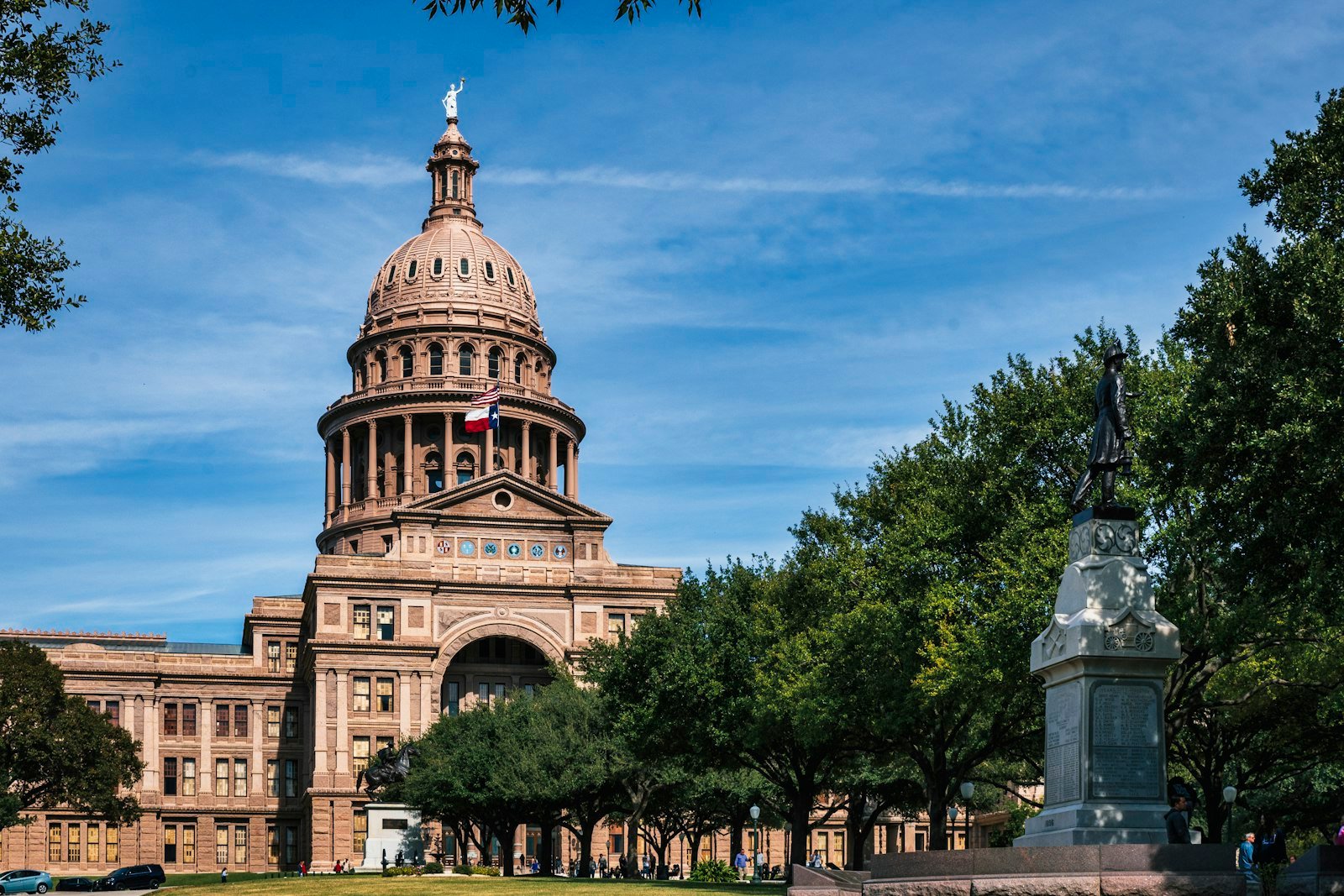
Summary: Money transmitters must register with FinCEN within 180 days and maintain an AML programme, and must hold a licence in every state where they serve customers unless an exemption applies. Forty-nine states and DC license money transmitters; Montana does not. Thirty-five states have adopted the Money Transmission Modernization Act in full or in part, which standardises tangible net worth at the greater of $100,000 or a tiered percentage of assets, and surety bonds between $100,000 and $500,000. Licensees file quarterly reports through NMLS and are examined, increasingly on a multistate basis.
Key point: Licensing follows the customer, not the company. A transmitter based in Florida that serves a sender in Ohio needs to deal with Ohio's law, and a crypto platform anywhere in the world that serves Californians needs to deal with California's Digital Financial Assets Law.
At a glance
Two layers
Federal MSB registration and AML duties under the Bank Secrecy Act, plus a state licence where each customer is located.
Net worth
Under the MTMA, the greater of $100,000 or a tiered share of total assets, starting at 3% of the first $100 million.
Surety bond
Under the MTMA formula, the greater of $100,000 or average daily transmission liability in the state, capped at $500,000.
Quarterly reporting
Licensees file the NMLS MSB Call Report covering financial condition, state activity, permissible investments and destination countries.
Criminal exposure
Operating without a required state licence or FinCEN registration can be a federal crime under 18 U.S.C. § 1960.
Table of Contents
What counts as money transmission
At federal level, a money transmitter is a person that provides money transmission services: accepting currency, funds or other value that substitutes for currency from one person and transmitting it to another location or person by any means.[2] The definition is deliberately functional. It does not matter whether the company calls itself a wallet, a platform, a marketplace or a technology provider; what matters is whether it receives value from one party and delivers it to another, or holds value with the power to move it.
State definitions are similar but not identical. Under the Money Transmission Modernization Act (MTMA), money transmission generally covers selling or issuing payment instruments or stored value, and receiving money for transmission. Some states include payroll processing; others expressly exclude it. Some states cover virtual currency within the money transmitter statute; others have separate regimes or none.[6]
Activities that usually trigger licensing
- domestic and international remittances, including app-based transfers;
- digital wallets that hold customer balances that can be sent to others;
- issuing or selling stored value and prepaid access products;
- bill payment services that collect from consumers and pay billers, unless an exemption fits;
- buying, selling, exchanging or custodying virtual currency for customers, in many states; and
- payroll and payout platforms that hold employer funds before paying workers, in states that include payroll.
Who needs a licence and who does not
Exemptions and exclusions
Banks, credit unions and their subsidiaries are generally exempt. Federal rules exclude a payment processor that facilitates the purchase of goods or services through a clearance and settlement system under an agreement with the seller.[2] The most important state exemption for platforms is the agent-of-payee exemption, which applies where a company collects money as the agent of a merchant or service provider and the customer's payment discharges the customer's debt to the payee. The MTMA includes this exemption, but states adopting the model have not always adopted it in the same terms.[9]
Authorised delegates
A business acting only as an authorised delegate, or agent, of a licensed money transmitter does not usually need its own licence. The licensee remains responsible for its agents, must supervise them and report them to regulators. Agent relationships are common in retail remittances, where shops collect cash for a licensed transmitter, and in embedded finance, where a platform offers a licensed partner's service.
Montana and the territories
Montana is the only state without a money transmitter licence, but its regulator warns that a business may still need another Montana licence depending on what it does.[7] Puerto Rico and other territories run their own regimes.
Federal layer: FinCEN MSB registration
Every money transmitter that is an MSB must register with FinCEN on Form 107 within 180 days after it is established, renew every two years by 31 December, and re-register within 180 days of certain events, including transfers of more than 10% of voting power or equity and increases of more than 50% in the number of agents.[1] Registration is free and electronic. A business that is an MSB only because it acts as an agent of another MSB does not register separately.[1]
Registration triggers the Bank Secrecy Act obligations: a written, risk-based AML programme with internal controls, a compliance officer, training and independent review; currency transaction reports; suspicious activity reports for transactions of $2,000 or more where the MSB knows or suspects illegality; and record keeping and travel rule requirements for transfers of $3,000 or more.[3] Sanctions compliance under OFAC runs alongside.
Registration is not approval
FinCEN does not vet business models when it receives Form 107. Appearing on FinCEN's MSB registrant search shows that a company filed; it does not show that the company is licensed in any state or that its programme is effective. Banks and partners know this, and so should founders who are tempted to market registration as a licence.
State layer: how licensing works
State regulators, usually banking or financial services departments, license money transmitters under state statutes. Most states accept and process applications through the Nationwide Multistate Licensing System (NMLS), which holds the company record, control persons, financial statements, bonds and filings.[10]
The MTMA and harmonisation
The Conference of State Bank Supervisors (CSBS) adopted the MTMA in 2021 as a single set of nationwide standards for net worth, surety bonds and permissible investments.[6] By August 2026, CSBS reported that 35 states had enacted it in full or in part, and that licensees in at least one adopting state account for about 99% of reported money transmission activity.[8] Illinois's adoption became fully effective on 1 January 2026, but few states have adopted a perfectly clean version: Massachusetts, for example, added exemptions for business payments and payroll processing.[9] In September 2026 CSBS introduced a formal guidance request process because differences in implementation had emerged.[8]
Multistate licensing and examination
States have built cooperative programmes to reduce duplication. Under the Multistate MSB Licensing Agreement programme, participating states share a common review of core application elements, leaving each state to review its own state-specific items. On the supervisory side, the "one company, one exam" approach has one state agency lead an examination team on behalf of many states, with other states encouraged to accept that exam instead of running independent ones.[11]
Prudential standards under the MTMA
| Standard | MTMA rule | Practical note |
|---|---|---|
| Tangible net worth | Greater of $100,000 or 3% of total assets up to $100 million, 2% of assets from $100 million to $1 billion, and 0.5% above $1 billion | Calculated under GAAP; intangible assets excluded; CSBS has issued guidance on virtual currency assets |
| Surety bond | Greater of $100,000 or 100% of average daily money transmission liability in the state over the last three months, capped at $500,000 | Lower requirement where tangible net worth exceeds 10% of total assets in some states |
| Permissible investments | At all times, permissible investments with a market value at least equal to outstanding money transmission obligations | Cash, deposits, government securities and certain receivables; held in trust for customers on insolvency |
CSBS's guidance confirms the tiered tangible net worth formula: the greater of $100,000 or 3% of assets for the first $100 million, then 2% of additional assets to $1 billion, with a lower rate above that.[12] Massachusetts's statute, adopted from the model, expresses the same tiers.[13] On bonds, Texas's general application requirements, for example, set money transmission bonds between $100,000 and $500,000 on the MTMA formula, with a $100,000 bond for licensees whose tangible net worth exceeds 10% of total assets.[14]
Non-MTMA states
States that have not adopted the model use their own formulas. Florida's statute, for instance, has long required a minimum net worth of $100,000 with additional amounts per location, and many older statutes scale bonds by locations or authorised delegates. Applicants must therefore build a state-by-state capital and bonding model rather than assume the MTMA everywhere.
The application file
A state application is an examination of the company before it opens. Regulators want to see a business that understands its money flows and can protect customer funds. A complete file typically includes:
- Business plan: products, customer types, states and corridors, projected volumes and revenue for at least three years.
- Flow of funds: diagrams showing every account, its owner and the timing of each movement, including settlement with partners.
- Financials: audited financial statements or an audited opening balance sheet, and evidence that net worth will be maintained.
- Control persons: biographical statements, fingerprints, credit and background checks for officers, directors and owners above the state's threshold.
- Compliance: the AML programme and risk assessment, OFAC policy, consumer complaint procedures, information security programme and business continuity plan.
- Agreements: bank, processor, custody, agent and vendor contracts.
- Bond: a surety bond in the state's form, usually filed electronically through NMLS.
What slows applications down
The most common causes of delay are incomplete control person filings, unexplained sources of capital, vague flows of funds, AML programmes copied from templates that do not match the business, and inconsistent answers across states. Foreign control persons add time for home-country background evidence and translations. Regulators send deficiency letters, and every round of questions resets part of the clock.
Timelines and costs
Individual states commonly take several months to a year to approve a first-time applicant; a full national footprint usually takes one to two years. Costs include state application and investigation fees, NMLS processing fees, bond premiums, the capital tied up to meet net worth and permissible investment requirements, audits, legal and compliance fees, and compliance staff and technology. Because fees, bonds and processing times change, applicants should confirm each state's current requirements on NMLS before budgeting.
| Workstream | Typical duration |
|---|---|
| Licensing analysis and state map | 2–6 weeks |
| Compliance programme and policies | 1–3 months |
| Audit and capitalisation | 1–3 months |
| First applications to approval | 4–12 months per state |
| National coverage | 12–24 months |
After licensing: reporting, examinations and change of control
The NMLS MSB Call Report
Licensees holding an MSB licence during a calendar quarter file the NMLS MSB Call Report.[10] It has four sections: company financial information, company and state-level transaction activity, permissible investments, and transaction destination country information.[15] The first quarter's report is due by 15 May and the second by 14 August, with the other quarters following the NMLS schedule.[16] Licensees also file annual audited financial statements, renew licences annually and keep the NMLS record current, including changes to control persons, branches and agents.
Examinations
States examine licensees for safety and soundness, AML compliance, consumer protection and information security, often in multistate teams under the one company, one exam approach.[11] FinCEN delegates BSA examination of non-bank financial institutions to the IRS, so an MSB can also expect IRS BSA examinations.
Change of control
Most states require prior approval before any person acquires control of a licensee, with control commonly presumed at 25% of voting power under the MTMA and at lower thresholds in some states. Fundraising rounds, secondary sales, holding company reorganisations and acquisitions can all trigger filings in every licensing state. Deal timetables must allow for regulatory approvals, and investment documents should include licensing conditions.
Licence models that work
Companies rarely start with fifty licences. The models below are used alone or in sequence.
| Model | Best for | Main risk |
|---|---|---|
| Bank sponsorship | Card, wallet and account products launched quickly through a chartered bank | The bank's risk appetite and regulatory pressure can end the programme |
| Licensed partner | Remittance and payout products using an existing licensee's network | Dependence on the partner; limited control of compliance and economics |
| Agent of payee | Marketplaces and platforms collecting for merchants | Exemption not recognised uniformly; contracts must be drafted precisely |
| Phased own licences | Companies building long-term payments businesses | Time and capital before national coverage |
| Acquiring a licensee | Groups that need coverage quickly | Change-of-control approvals in every state; inherited compliance history |
Each model has to be documented. Regulators and banks look for a written analysis explaining why a model is exempt or why the partner holds the regulated role, and they test whether operations match the paper.
Virtual currency and stablecoins
FinCEN treats exchangers and administrators of convertible virtual currency as money transmitters.[4] At state level, New York requires a BitLicense for virtual currency business activity, and California's Digital Financial Assets Law has required a licence or a complete pending application since 1 July 2026.[5] Other states cover virtual currency within their money transmitter laws, through the MTMA's optional virtual currency article, or not at all. Payment stablecoin issuance moves to the federal GENIUS Act framework from 18 January 2027, but intermediaries that transfer or custody stablecoins for customers remain within money transmission analysis. TRW covers the issuer rules in its GENIUS Act guide.
Enforcement and the cost of getting it wrong
Operating a money transmitting business without a required state licence, without FinCEN registration, or while transmitting funds known to derive from crime, is a federal crime punishable by up to five years' imprisonment.[17] FinCEN can impose civil penalties for failure to register and for BSA violations, and states can issue cease-and-desist orders, fines and restitution orders. Beyond penalties, an unlicensed history appears in later applications and bank diligence and can make future licensing harder.
Step-by-step licensing roadmap
- Document the flow of funds and obtain a written federal and state licensing analysis.
- Decide the go-to-market model: partner, exemption, phased licences or acquisition.
- Fix the long-term ownership structure before filing, to avoid change-of-control filings.
- Register with FinCEN within 180 days and adopt the AML and OFAC programmes.
- Capitalise the company and obtain audited financial statements.
- Prepare control person files, including home-country evidence for foreign individuals.
- File in priority states through NMLS, using the multistate programme where available.
- Answer deficiency letters quickly and consistently across states.
- After approval, calendar Call Reports, renewals, audits, bond renewals and exams.
- Plan every financing and acquisition around change-of-control approvals.
Working with TRW and US counsel
TRW supports groups licensing a US payments business from abroad with the home-country work regulators and banks ask for: corporate records, control person evidence, source-of-funds documentation, capital export approvals and group structuring. On US federal and state licensing law, TRW works alongside US-licensed counsel and coordinates the full project. This article is general information and does not create a lawyer-client relationship.
Frequently asked questions
Is there a single national money transmitter licence in the US?
No. Non-banks register with FinCEN and obtain separate state licences. Forty-nine states and DC license money transmitters; Montana does not.[7]
Does FinCEN registration count as a licence?
No. Form 107 registration is a federal filing that triggers AML obligations; it is not a state licence and FinCEN does not approve the business model.[1]
How much capital does a money transmitter need?
In MTMA states, tangible net worth of the greater of $100,000 or a tiered percentage of total assets, plus permissible investments covering outstanding customer obligations. Other states use their own formulas.[12]
How large is the surety bond?
Under the MTMA formula, the greater of $100,000 or 100% of average daily transmission liability in the state, capped at $500,000.[14]
How many states have adopted the MTMA?
CSBS reported 35 states had enacted it in full or in part as of August 2026.[8]
What reports must a licensee file?
The quarterly NMLS MSB Call Report, annual audited financial statements, licence renewals and updates to the NMLS record, plus BSA reports to FinCEN.[15]
Does raising money require regulatory approval?
It can. Acquiring control of a licensee, often presumed at 25% of voting power, requires prior approval in most states.
What happens if we operate without a licence?
Unlicensed money transmission can be a federal crime carrying up to five years' imprisonment, alongside FinCEN and state penalties.[17]
Source register
Primary legal and regulatory sources
Materials checked on 27 November 2026. Confirm the current official text before relying on any provision.
- FinCEN — Money Services Business (MSB) Registration
- 31 CFR § 1010.100 — General definitions — Legal Information Institute
- 31 CFR Part 1022 — Rules for money services businesses — Legal Information Institute
- FinCEN, FIN-2019-G001 — Convertible virtual currency business models
- California DFPI — Digital Financial Assets Law
- CSBS — Money Transmission Modernization Act
- Montana Division of Banking and Financial Institutions — Money transmitters
- Womble Bond Dickinson, September 2026 — CSBS MTMA guidance request process
- Chambers Global Practice Guides — Fintech 2026: USA trends and developments
- NMLS — Submission of MSB Call Report
- Massachusetts Division of Banks — MSB One Company, One Exam
- CSBS — MTMA implementation guidance on tangible net worth
- Massachusetts General Laws c.169B § 9 — Net worth, surety bond and permissible investments
- Texas Department of Banking — General application requirements for MSBs
- NMLS — Money Services Businesses Call Report
- NMLS — MSB Call Report quarterly filing schedule
- 18 U.S.C. § 1960 — Unlicensed money transmitting businesses — Legal Information Institute
Related TRW assistance
Move from information to a defined next step
TRW coordinates US licensing projects for foreign payments groups with US-licensed counsel. Read our guide to US fintech expansion or contact TRW to discuss your licensing plan.











