
TRW Insight / Aviation
Bangladesh's aviation rulebook is being rewritten in 2026, from new Civil Aviation Rules and a pending Act amendment to drone regulation and the Dhaka third terminal. Here is how the framework works now and what is still in draft.
Aviation law in Bangladesh: the 2026 framework
Aviation law in Bangladesh is being rewritten while the industry grows around it. In 2026 the government published draft Civil Aviation Rules to replace a rulebook dating from 1984, prepared for an ICAO audit, moved to amend the Civil Aviation Act 2017 to tackle ticket syndicates, and continued negotiating who will run the new third terminal at Dhaka. Airlines, airport investors, drone operators, travel businesses and satellite companies all face rules in transition.
This guide maps the framework as it stands in October 2026: the role of the Civil Aviation Authority of Bangladesh, airline and personnel licensing, airport regulation and the Hazrat Shahjalal International Airport third terminal, passenger rights under the Montreal Convention, drone rules, the space and satellite sector, foreign investment, and how aviation disputes are actually fought and enforced. It closes with a compliance sequence for new entrants and the developments to watch.

Summary: Aviation in Bangladesh is governed by the Civil Aviation Authority Act 2017, which creates CAAB, the Civil Aviation Act 2017 and the Civil Aviation Rules 1984, now being replaced by draft rules published in July 2026. Bangladesh has been a Montreal Convention party since 1 November 2022, drone use is controlled through CAAB permissions and security clearances, and satellite services are licensed by the BTRC. Several reforms are still drafts, so current status must be checked before acting.
Key point: CAAB is regulator, airport operator and service provider at the same time. That concentration of roles shapes everything from route approvals to unpaid-dues litigation, and it is why disputes with CAAB tend to be resolved by negotiation and by writ in the High Court Division rather than by ordinary suits.
At a glance
Regulator
CAAB is constituted under the Civil Aviation Authority Act 2017 (Act No. III of 2017) and issues Air Navigation Orders.
New rulebook
Draft Civil Aviation Rules 2026 would replace the Civil Aviation Rules 1984 ahead of an October 2026 ICAO audit.
Passenger liability
The Montreal Convention 1999 has been in force for Bangladesh since 1 November 2022, backed by a 2020 Act.
Drones
A 2020 guideline governs drone flights; draft 2024 regulations would require CAAB licences for all non-toy drones.
Third terminal
HSIA Terminal 3 was inaugurated in October 2023, but operator talks pushed opening to early 2027.
Table of Contents
What aviation law in Bangladesh covers
Aviation law in Bangladesh is not a single code. It is a stack of statutes, rules, orders and international conventions, each with its own regulator and pace of reform. Getting the map right is the first step in any aviation project, because an approval under one layer does not guarantee compliance with the next.
The statutory layers
- Civil Aviation Authority Act 2017: constitutes CAAB as a statutory body, sets out its powers over airports, air routes and air traffic, its governance and funding, and the power to issue Air Navigation Orders. It replaced the Civil Aviation Authority Ordinance 1985.[1]
- Civil Aviation Act 2017: the operating statute under which aviation rules are made and the law the government is now seeking to amend.[2] [4]
- Civil Aviation Rules 1984: the detailed technical rulebook, which the July 2026 draft rules would replace.[2]
- Carriage by Air legislation: the 2020 Act giving effect to the Montreal Convention 1999 for passenger, baggage and cargo claims.[8]
- Sector instruments: drone guidelines, travel agency regulation, and, for space, telecommunications licensing administered by the BTRC.
Why the 2026 reforms matter
Much of the framework is in motion at once. The draft Civil Aviation Rules 2026 were released for 21 days of comment in July 2026, with the government aiming to finalise them within two months, and industry sources warned that some provisions appeared inconsistent with ICAO standards.[2] In August 2026 the Civil Aviation and Tourism Minister, M Rashiduzzaman Millat, told Parliament that the government was moving to amend the Civil Aviation Act to improve transparency in ticket pricing.[4] Advice given on the 1984 Rules alone may be out of date within months.
The Civil Aviation Authority of Bangladesh
CAAB sits at the centre of aviation law in Bangladesh. Under the Civil Aviation Authority Act 2017 it manages and develops civil airports, controls air routes in Bangladeshi airspace, runs air traffic services, search and rescue, airport security and aviation safety programmes, and may enter into cooperation arrangements with other Chicago Convention states with government approval.[1]
Governance and funding
The Authority is led by a Chairman and six members, and a Board oversees it. Section 6 disqualifies people who lack aviation experience or hold a financial interest in an aviation enterprise. With government approval, CAAB may charge for navigation, passenger services, landing and parking, and for certificates and licences; it keeps its own fund, and its accounts are audited by the Comptroller and Auditor-General.[1]
Rule-making powers
The Act divides rule-making in three: the government makes rules, CAAB makes regulations with government approval, and the Chairman issues Air Navigation Orders consistent with the annexes to the Chicago Convention.[1] In practice, Air Navigation Orders and circulars carry much of the operational detail that airlines and maintenance organisations work to day to day, so a compliance review that stops at the statute will miss most of the obligations.
Military and defence aviation
The Act does not apply to airports and airfields used by the defence forces.[1] Projects at joint-use or defence-adjacent sites therefore need separate engagement with the military authorities, and civil aviation approvals will not by themselves resolve access, security or airspace questions there.
The regulator as creditor
Because CAAB also earns landing, parking and navigation charges, it is often an airline's largest creditor. By November 2024, airlines owed CAAB Tk 77.22 billion, and Tk 11.93 billion of that was owed by three defunct carriers.[14] That debt shapes how CAAB approaches restart applications, aircraft sales and new permissions, and any airline in arrears should expect its other applications to be linked to its payment plan.
Airlines, air operator certificates and personnel licensing
A Bangladeshi airline needs two kinds of permission: economic authority to carry passengers or cargo on particular routes, and technical approval in the form of an air operator certificate showing that it can fly safely. Both are administered by CAAB under the Civil Aviation Act 2017, the Civil Aviation Rules 1984 and the Air Navigation Orders, and CAAB charges fees for the certificates and licences it issues.[1]
How certification unfolds in practice
For a start-up carrier, certification is a staged process rather than a single application. The airline builds its management team and manuals, inducts aircraft, demonstrates its maintenance arrangements and runs proving flights before CAAB grants or expands the certificate. Delays most often come from aircraft induction, because the lease, import and registration of the first aircraft must align with the CAAB inspection timetable. New entrants should plan their capital requirement on the assumption that months will pass between taking delivery of the first aircraft and selling the first ticket.
Licensing of pilots, engineers and other personnel
Pilots, aircraft maintenance engineers, air traffic controllers and other safety-critical personnel hold licences or ratings issued or validated by CAAB. Foreign crew can be used, but their licences must be validated and their employment must also satisfy immigration and work-permit rules. Training organisations and maintenance organisations need their own approvals. Airlines should treat licence validity and recurrent training records as audit-critical, because an ICAO audit examines exactly those records.
Travel agents, GSAs and ticketing
Section 9(4) of the Civil Aviation Act 2017 requires a foreign airline's agent in Bangladesh to be wholly owned by a Bangladeshi citizen.[5] A draft Civil Aviation (Amendment) Ordinance 2025 proposed letting foreign airlines open their own offices or appoint one or more fully Bangladeshi-owned GSAs, requiring ground operators to register, giving the CAAB Chairman access to global distribution system data and power to set reasonable fares on routes with abnormal price rises, and making ticket hoarding a criminal offence punishable by two to five years' imprisonment, a fine of up to Tk 50 lakh, or both.[3]
It was a draft when reported, and by August 2026 the amendment was still in progress, alongside a revised Travel Agency (Registration and Control) Ordinance promulgated earlier in 2026.[4]
Airport regulation and the HSIA third terminal
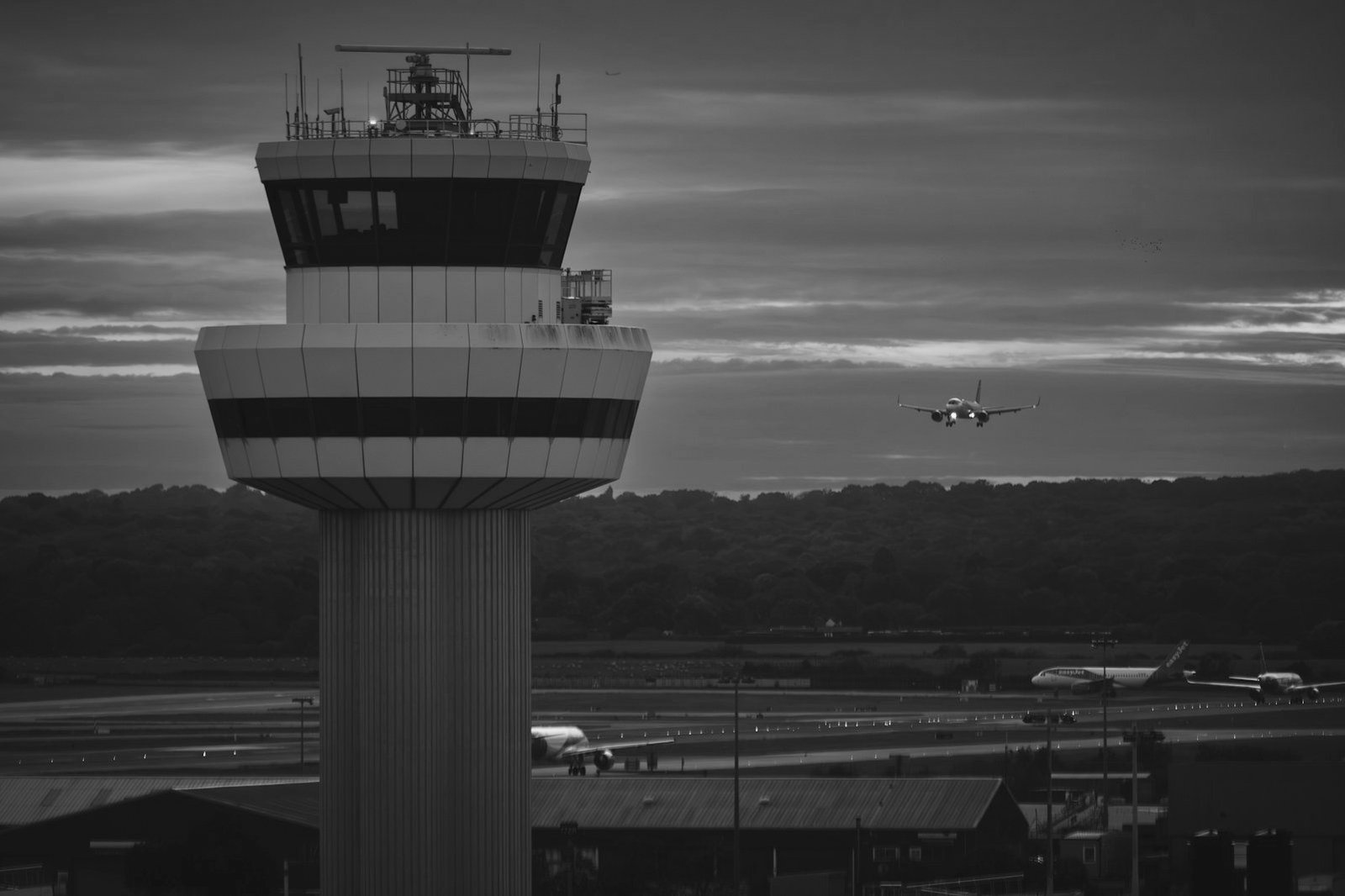
CAAB manages and develops Bangladesh's civil airports, and the most important airport project in the country shows how aviation law in Bangladesh interacts with public-private partnership law and politics. The third terminal at Hazrat Shahjalal International Airport cost more than Tk 21,000 crore with support from the Japan International Cooperation Agency and is expected to handle about 24 million passengers a year.[11]
Why the terminal is not yet open
The terminal was inaugurated in October 2023 but had not started operations by May 2026, because the operating arrangements were unresolved. CAAB was negotiating with a Japanese consortium of Japan Airport Terminal Company, Sumitomo Corporation, Nippon Koei and Narita International Airport Corporation over revenue sharing, fees and operational responsibilities, with the consortium to manage operations and CAAB to keep security control. CAAB then expected several months to finalise the agreement, up to a year of operational readiness trials and an opening in early 2027.[11]
What it means for airlines and contractors
Three practical consequences follow. Airlines planning schedules around new capacity should not assume Terminal 3 slots before 2027. Ground handlers, retailers, caterers and service providers should expect their concessions to be granted by, or negotiated with, the terminal operator once appointed, under contracts that sit within a PPP framework. And because CAAB keeps security control, security-related approvals will remain with the regulator whatever the commercial arrangement. Our aviation regulation and airport projects practice advises on concessions, PPP terms and regulatory approvals.
Passenger rights and carrier liability
Air passengers in Bangladesh are protected mainly by the international liability regime rather than by a stand-alone passenger rights code. Bangladesh signed the Montreal Convention 1999 on 28 May 1999 but ratified it only on 2 September 2022, and the Convention entered into force for Bangladesh on 1 November 2022.[7]
The 2020 Act
Parliament passed the Air Transport (Montreal Convention 1999) Bill on 17 November 2020, moved by the then State Minister for Civil Aviation and Tourism. As reported at passage, it provides compensation of US$160,000, about Tk 1.4 crore, for the death of a passenger, US$70 per kilogram for damaged baggage and US$27 per kilogram for damaged cargo, and covers injury and delay. An airline that breaches the law faces up to ten years' imprisonment, a fine of up to Tk 100 crore, or both.[8]
How claims actually work
The figures in the Act are best read as liability thresholds and limits rather than as automatic payments. A claimant must still prove the loss, and the Convention's strict notice and time-bar rules apply to baggage, cargo and delay claims. For international carriage, the Convention also decides where a claim may be brought, which can include the passenger's principal residence. The two years between the 2020 Act and the 2022 ratification create a genuine question about which regime governs international journeys in that window, and older claims should be analysed carefully.
Domestic passengers and consumer complaints
For refunds, overbooking, misleading fares and ticketing complaints, passengers generally rely on the contract of carriage, consumer protection law and CAAB's oversight of airlines and agents. The 2025 draft amendment's fare-control and refund provisions, including a refund of up to three times any excess fare charged by an agency, would add direct remedies if enacted.[3] Airlines should keep conditions of carriage, refund policies and fare displays in a form that will withstand a consumer complaint or a regulator's review.
Drones under aviation law in Bangladesh
Drone use is one of the most tightly policed areas of the sector, because security agencies, not only the aviation regulator, control permissions. Drone licence and clearance requirements should be treated as a project-critical path item, not paperwork.
The 2020 guideline
The cabinet approved the Drone Registration and Flying Guideline 2020 on 14 September 2020. It sets four categories of drone, allows certain flights for entertainment, state or military purposes without prior permission, and requires permission for commercial flights such as land surveys and for non-commercial work such as research surveys. Airspace is divided into green, yellow and red zones; red zones such as airports and military areas need prior permission from both the air traffic authority and the relevant installation authority.[9]
The 2024 draft regulations
Draft Drone Regulations 2024, published for comment in November 2024, would go further. All non-toy drones would need a CAAB licence and registration with a unique identification number, operators would need to be at least 16 with a certificate of competency, each flight would need CAAB authorisation with clearance from security agencies, and imports would need approval from the Ministries of Defence and Home Affairs. Toy drones under 250 grams without recording capability would be largely exempt.[10] The draft Civil Aviation Rules 2026 also include a framework for commercial and non-commercial drone operations.[2]
Practical advice for drone operators
Survey, mapping, media, agricultural and infrastructure-inspection businesses should build security clearances into project timelines, keep import approvals for each unit, and avoid red zones entirely without written permission. Clients commissioning drone work, including developers and utilities, should require contractors to warrant that permissions are in place, because an unauthorised flight near a sensitive site can lead to action under the Penal Code and aviation law.[10]
Space and satellites
Space activity in Bangladesh is commercial, state-led and growing. The country's communications satellite, originally named Bangabandhu Satellite-1, was renamed Bangladesh Satellite-1 by the interim government. It is operated by the state-owned Bangladesh Satellite Company Limited.[12]
The commercial picture
In June 2026 the Posts, Telecommunications and Information Technology Minister, Faqir Mahbub Anam, told Parliament that BSCL earned Tk 764.10 crore in revenue over the five fiscal years to 2024-25, with a cumulative net profit of Tk 163.97 crore; the 2022-23 loss followed the transfer of the satellite's assets to the company on 30 June 2022. Services include television broadcasting, direct-to-home, VSAT, overseas bandwidth sales and disaster communications. A feasibility study for Bangladesh Satellite-2, an Earth observation satellite, was under way, with three manufacturers' proposals under review.[12]
Satellite operator licensing
Satellite services are licensed by the Bangladesh Telecommunication Regulatory Commission rather than CAAB. In 2025 the BTRC issued Guidelines for Non-Geostationary Orbit Satellite Services Operators, and in April 2025 it recommended Starlink for a licence after committee review, subject to the telecom ministry's pre-approval, which is required under telecom law before the BTRC grants a licence. BIDA had approved Starlink's operations on 29 March 2025.[13] Foreign satellite operators should therefore plan for a three-way process: investment registration, BTRC licensing and ministry pre-approval. Our satellite operator licensing practice and guide to telecommunications law in Bangladesh explain the steps.
Where space disputes come from
Satellite and aerospace disputes follow the contracts: manufacturing and in-orbit delivery, launch services, ground segment supply, capacity leasing to broadcasters and ISPs, insurance of launch and in-orbit risk, and spectrum or landing-rights disputes with regulators. Contracts with foreign manufacturers and launch providers usually carry foreign law and international arbitration, while capacity and licensing disputes are domestic. TRW's space and satellite industry disputes practice handles both ends.

Safety oversight, security and the 2026 ICAO audit
Safety oversight is where aviation law in Bangladesh meets international scrutiny. ICAO audits a state's ability to oversee its own aviation system: its legislation, its regulations, the organisation and staffing of the regulator, licensing, operations, airworthiness, aerodromes, air navigation services and accident investigation. The audit scheduled for October 2026 is the reason the government accelerated the draft Civil Aviation Rules 2026.[2]
What the draft rules add
Beyond the drone framework, the draft introduces mandatory noise certification for Bangladesh-registered aircraft on international routes, requires airlines to prepare International Aviation Carbon Emission Reduction Plans, and expands CAAB's powers to protect aviation IT systems and communication networks from unlawful interference.[2] Each of these creates new documentation that an airline must hold and produce on inspection, and the carbon plan in particular will need input from fleet planning and finance teams, not only the safety department.
Aviation security
Airport security is a statutory CAAB function under the Civil Aviation Authority Act 2017, and CAAB is expected to keep security control at Terminal 3 even after a private operator is appointed.[1] [11] For airlines, ground handlers and concessionaires, that means two sets of obligations: commercial service levels owed to the operator, and security programmes, screening and access-control rules owed to the regulator. Contracts should allocate the cost of security changes clearly, because they are imposed by the regulator and cannot be negotiated away.
What operators should do now
Airlines, maintenance organisations and training providers should compare their manuals against the draft rules now rather than after finalisation, fill gaps in licensing and training records, and file comments where a draft provision departs from ICAO standards. A finding against the state in an ICAO audit can affect foreign regulators' view of Bangladeshi carriers, so the effort is commercial as well as regulatory.
Aircraft finance and the Cape Town Convention
Financiers and lessors look first at whether a jurisdiction protects their aircraft. Bangladesh acceded to the Aircraft Protocol to the Cape Town Convention on 15 December 2008, and it entered into force for Bangladesh on 1 April 2009.[6] That gives lessors access to the International Registry and the Protocol's remedies, although leases, deregistration rights, tax and foreign-exchange remittance still have to be documented carefully under Bangladeshi law. TRW's aircraft finance and leasing practice covers the detail.
Foreign investment and aviation law in Bangladesh
Foreign investors are welcome in most of the aviation value chain, but aviation law in Bangladesh still contains pockets of local-ownership protection. The clearest is the rule in section 9(4) of the Civil Aviation Act 2017 that a foreign airline's agent must be wholly owned by a Bangladeshi citizen, which has built a domestic GSA industry.[5] The 2025 draft amendment would relax it by allowing foreign carriers their own offices.[3]
Where foreign capital fits
Foreign capital is most active in airport PPPs, aircraft leasing and finance, maintenance and training organisations, ground services, catering, cargo terminals and satellite services. Each requires a separate check: investment registration, the sector regulator's licence, any security clearance, and foreign-exchange rules for capital and profit repatriation. Ownership rules for the adjacent logistics sectors are contested; in August 2026 stakeholders opposed a proposal to raise the foreign ownership ceiling in freight forwarding from 40 to 49 per cent.[5] Our guide to foreign investment law in Bangladesh and the note on investment approvals cover the general regime.
Aviation disputes and enforcement
Aviation disputes in Bangladesh fall into recognisable groups, and each has its own forum and pace. Understanding them is a core part of applying aviation law in Bangladesh to real matters, because the forum often matters more than the merits.
Regulator against airline
The most visible disputes are between CAAB and airlines over unpaid charges. CAAB has filed 15 money suits against United Airways, GMG Airlines and Regent Airways in courts across six cities; its panel lawyer said such suits take five to seven years if contested, and it remained uncertain whether the owners would be able to pay if CAAB won.[14] Meanwhile, 12 aircraft from defunct airlines sat at Dhaka while CAAB assessed the legality of selling them and banks sought a share of the proceeds.
Airline against regulator
Airlines, agents and concessionaires challenge CAAB decisions on permits, route allocations, suspensions, tender awards and charges. Because CAAB is a statutory authority, these challenges are usually brought by writ petition in the High Court Division under its judicial review jurisdiction, where procedural fairness, reasons and consistency with the statute matter as much as the merits. Our guide to aviation and aerospace disputes outlines the options.
Commercial and cross-border disputes
Leasing, maintenance, fuel supply, ground handling, PPP concessions and satellite contracts usually contain arbitration clauses, often with a foreign seat. The practical battle is then about interim protection in Bangladesh and enforcement of the eventual award against assets in the country. Our analysis of enforcing arbitral awards in Bangladesh covers that stage.
Passenger and cargo claims
Death, injury, baggage, cargo and delay claims follow the Montreal Convention regime for international carriage, with the 2020 Act providing the domestic framework.[8] Insurers and their reinsurers usually control the defence, and early evidence preservation, including flight data, maintenance records and witness statements, is essential.
The aviation regulators and institutions
A project governed by aviation law in Bangladesh usually touches more than one authority, and the BTRC joins the list as soon as satellite or communications services are involved.
Civil Aviation Authority of Bangladesh
Regulates civil aviation, manages civil airports and air navigation, issues Air Navigation Orders and certificates.
Ministry of Civil Aviation and Tourism
Sets policy, drafts rules and amendments, and approves CAAB regulations and charges.
HSIA Terminal 3 consortium and PPP Authority
Japanese consortium in talks to operate Terminal 3, with CAAB retaining security control.
BTRC and Bangladesh Satellite Company Limited
BTRC licenses satellite services; BSCL operates Bangladesh Satellite-1.
Ministries of Defence and Home Affairs
Clear drone imports and flights and govern defence airfields outside CAAB's statute.
High Court Division
Hears writ challenges to CAAB decisions, winding-up petitions and urgent commercial applications.
Compliance roadmap for new entrants
Whether launching an airline, an airport concession, a drone business or a satellite service, the sequence of approvals determines the timeline. The steps below reflect how we plan entry into the sector.
Map the regimes
Identify every layer that applies: CAAB, the Civil Aviation Act, rules and ANOs, BTRC for space, investment and security clearances.
Check current status
Confirm whether each instrument relied on is in force or still a draft, including the 2026 rules and the pending Act amendment.
Structure ownership
Confirm local-ownership rules such as section 9(4) for airline agents and register the investment where required.
Apply for permissions
File for the operator certificate, route authority, licence, drone permission or satellite licence, with security clearance where needed.
Prepare for inspection
Have manuals, personnel licences, training records and maintenance approvals ready for CAAB and ICAO-style audits.
Agree charges and contracts
Settle CAAB charges, airport concessions, ground handling and PPP terms in writing before operations start.
Run compliance
Track ANOs, circulars and fare or consumer rules, renew licences on time and keep CAAB dues current.
Plan for disputes
Choose forums, arbitration seats and interim-relief routes in contracts, and preserve evidence early when incidents occur.
The framework at a glance
The table below summarises the main regimes and their status in October 2026. On a phone, scroll it sideways.
| Area | Main instrument | Regulator | 2026 status |
|---|---|---|---|
| Regulator and airports | Civil Aviation Authority Act 2017 | CAAB | In force |
| Operations and safety | Civil Aviation Act 2017; Civil Aviation Rules 1984 | CAAB | Draft Civil Aviation Rules 2026 published July 2026 |
| Ticketing and agents | Civil Aviation Act 2017, s 9(4); travel agency ordinance | Ministry and CAAB | Act amendment in progress |
| Passenger and cargo liability | Montreal Convention 1999 and 2020 Act | Courts | Convention in force since 1 November 2022 |
| Drones | Drone guideline 2020 | CAAB and security agencies | Draft Drone Regulations 2024 pending |
| Aircraft finance | Cape Town Convention and Aircraft Protocol | CAAB and International Registry | In force since 1 April 2009 |
| Satellite services | BTRC licensing, NGSO guidelines 2025 | BTRC and telecom ministry | Licensing active |
What to watch in 2026 and 2027
Five developments will shape aviation law in Bangladesh over the next year. The draft Civil Aviation Rules 2026 and the ICAO audit scheduled for October 2026 will reset technical compliance.[2] The Civil Aviation Act amendment on ticketing, GSAs and fare control remains in progress.[4] The Terminal 3 operating agreement, targeted for an early 2027 opening, will define the commercial structure at Dhaka for a generation.[11] Final drone regulations would replace the 2020 guideline, the BTRC's NGSO licensing will shape satellite broadband competition, and the Bangladesh Satellite-2 decision will follow its feasibility study.[10] [12]
For businesses in the sector, the practical lesson is to check the status of every instrument before relying on it, to document approvals carefully, and to treat CAAB as both regulator and counterparty. To discuss a licensing, airport, drone, satellite or aviation dispute matter, contact our Dhaka team.
Frequently asked questions
Which law governs civil aviation in Bangladesh?
What does CAAB do?
CAAB manages civil airports, controls air routes, provides air traffic, search and rescue and airport security services, runs safety programmes, charges aviation fees and, through its Chairman, issues Air Navigation Orders.[1]
Is Bangladesh a party to the Montreal Convention?
Yes. Bangladesh ratified the Montreal Convention 1999 on 2 September 2022, and it entered into force for Bangladesh on 1 November 2022.[7]
How much compensation is payable for death in an air accident?
The 2020 Act passed by Parliament provides for compensation of US$160,000, about Tk 1.4 crore, for a passenger's death, subject to proof of loss and the Convention's rules.[8]
Do I need permission to fly a drone in Bangladesh?
When will Dhaka airport's third terminal open?
As of May 2026, CAAB expected an opening in early 2027, after the operator agreement with the Japanese consortium and operational readiness trials.[11]
Can a foreign airline appoint its own office in Bangladesh?
Who licenses satellite services in Bangladesh?
The BTRC, with telecom ministry pre-approval. Non-geostationary operators are licensed under the BTRC's NGSO guidelines issued in 2025.[13]
What is Bangladesh Satellite-1?
Bangladesh's communications satellite, originally named Bangabandhu Satellite-1 and renamed by the interim government. It is operated by Bangladesh Satellite Company Limited.[12]
How long does CAAB take to recover unpaid dues from airlines?
Slowly. CAAB's money suits against three defunct airlines were pending in several courts, and its panel lawyer said contested suits take five to seven years.[14]
Source register
Primary legal and regulatory sources
Materials checked on 23 October 2026. Confirm the current official text before relying on any provision.
- Bangladesh Gazette, 24 December 2017 — Civil Aviation Authority Act 2017 (Act No. III of 2017), English text
- Bangladesh Monitor, 24 July 2026 — Govt drafts new aviation rulebook ahead of ICAO audit
- Dhaka Tribune (UNB), 6 November 2025 — Govt plans ordinance to punish airline ticket syndicates
- Daily Observer, 30 August 2026 — Minister on zero tolerance for air ticket syndicates
- Dhaka Tribune, 2 August 2026 — Experts urge withdrawal of proposal to raise foreign ownership in freight forwarding
- UNIDROIT — Status list, Aircraft Protocol to the Cape Town Convention
- Netherlands Treaty Database — Montreal Convention 1999, parties (Bangladesh: ratified 2 September 2022, in force 1 November 2022)
- Jagonews24, 17 November 2020 — JS passes bill to ensure compensation for air passenger's death, injuries
- The Daily Star, 14 September 2020 — Flying drones for state, military and entertainment purposes needs no permission
- The Daily Star, 12 November 2024 — New drone regulations in draft: licence and clearance to be mandatory
- Bangladesh Monitor, 5 May 2026 — Dhaka Airport's Third Terminal opening pushed back to 2027
- Dhaka Tribune, 25 June 2026 — Minister: Bangladesh Satellite-1 earned Tk 163.97 crore
- The Daily Star, 27 April 2025 — BTRC approves licence for Starlink
- The Financial Express, 8 February 2025 — CAAB struggles to recover Tk 11.93b dues from three defunct airlines
Related TRW assistance
Move from information to a defined next step
TRW advises airlines, airport investors, drone operators, satellite companies and financiers on licensing, PPP concessions, compliance and disputes. Explore our aviation regulation and airport projects practice and aviation and aerospace disputes practice, or contact our Dhaka team.











