
TRW Insight / Bangladesh
The 2025 telecom policy does not cancel existing licences, but it changes what can be renewed, what new applicants can ask for and when the old categories stop. Licensees that plan their migration before the 30 June 2027 soft cut-off keep more of their term and their options.
Telecom licensing reform Bangladesh: what changes for licence holders
The telecom licensing reform Bangladesh began in September 2025 has moved from announcement to execution, and the hardest questions now belong to businesses that already hold a licence. The Telecommunications Network and Licensing Policy 2025 replaced the International Long Distance Telecommunication Service (ILDTS) Policy 2010 with a handful of broad categories and set 30 June 2027 as the soft cut-off for moving the market onto them.[1] For an ISP, a PSTN operator, a gateway, an exchange, a fibre network or a call centre, the reform decides whether the current authorisation migrates, merges, expires or simply stops being needed.
This guide answers one question: what happens to existing licences when the framework changes? It explains the new categories, maps every legacy licence to its destination and sets out what the soft cut-off means for licence terms, renewals and new applications. Our companion guides on telecommunications law in Bangladesh and the BTRC licence explain the statute, fees and application mechanics, and we link to them rather than repeat them.

Summary: The 2025 policy groups telecom licences into access (CMSP and FTSP), national infrastructure (NICSP), international connectivity (ICSP) and non-terrestrial (NTNSP) categories, with a light enlistment tier for telecom-enabled services. Existing licensees keep their current terms, but renewals and new applications move to the new categories once the new regime starts. IGW, IIG, ICX and NIX licences end on expiry, call centre, TVAS and vehicle-tracking authorisations are deregulated, and the final stage of migration begins no later than 30 June 2027, with firm cut-off dates still to be fixed for each legacy category.
Key point: The 30 June 2027 date is a soft cut-off, not a licence expiry date. It marks the latest start of the final migration stage, during which legacy and new categories overlap. A firm cut-off is to be set separately for each legacy category, taking account of licence validity, and as of 31 October 2026 we have found no published firm dates. Licensees that migrate early keep the unexpired balance of their current term.
At a glance
Five licence types
CMSP, FTSP, NICSP, ICSP and NTNSP licences, plus TESP enlistment, replace more than twenty legacy categories.
Four outcomes
Each legacy authorisation either migrates, merges into another licence, is discontinued on expiry or is deregulated.
Three stages
Policy approval, start of the new regime, then the final stage beginning no later than 30 June 2027.
Terms survive
Existing licensees may complete current terms, but renewal is available only in a new category once the new regime starts.
Still moving
A revised draft sent to the ministry on 24 May 2026 would rename and split several categories.
Table of Contents
Telecom licensing reform Bangladesh: where the framework stands in 2026
The policy was approved by the interim government's Advisory Council in early September 2025, which officials presented as collapsing 26 licence types and 3,299 permits into a few categories.[5] It was notified by the Posts and Telecommunications Division on 18 September 2025, repealed the ILDTS Policy 2010 and took effect immediately.[1] The statute beneath it changed too: Parliament enacted the Bangladesh Telecommunication (Amendment) Act 2026 as Act No. 51 of 2026, published on 10 April 2026.[2] The interim ordinance it followed returned most licensing decisions to the BTRC while leaving nationally significant licences with the ministry.[3]
Implementation has been slower than the policy text. The BTRC published consultation drafts of category guidelines in late 2025, and its guideline page now lists NICSP, ICSP, FTSP and CMSP guidelines alongside the legacy ones.[9] [10] After the February 2026 election, the elected government broadly accepted the reform but reopened parts of it, and a revised draft went to the ministry on 24 May 2026.[12] [13]
Why the transition matters more than the categories
The telecom licensing reform Bangladesh is undertaking is easy to describe as a new map; the commercial risk sits in moving from the old map to the new one. The policy deliberately avoids an overnight switch: it lets existing licensees finish their terms, but it changes what can be renewed and what new applicants can ask for.[1] Getting the timing wrong can leave an operator with a licence that cannot be renewed and no application in the right category.
The new licence categories: CMSP, FTSP, NICSP and ICSP
The policy organises the market by function rather than technology: Access Network Service Providers (ANSPs) serve end users under one of two licences, while infrastructure, international connectivity and satellites sit in separate layers.[1]
Cellular Mobile Service Provider (CMSP)
The CMSP licence authorises any cellular technology for voice, SMS, data and value-added services, is issued under a limited licensing model tied to spectrum availability, and is the category into which existing mobile operator licences are migrated. It also hosts the new Mobile Virtual Network Operator licence.[1]
Fixed Telecom Service Provider (FTSP)
The FTSP licence covers wired, fibre and fixed-wireless access and permits domestic and international voice, data, internet and value-added services on an open licensing model. A special District FTSP category allows internet and data services within one district only, buying international bandwidth from an ICSP or an FTSP.[1] Fixed voice, numbering and tariff questions under the FTSP are analysed in our guide to the VoIP licence in Bangladesh.
National Infrastructure and Connectivity Service Provider (NICSP)
The NICSP licence is facility-based. It authorises fibre transmission and towers, masts and poles for leasing primarily to other licensees, and may extend to domestic voice interconnection or internet peering for access operators.[1]
International Connectivity Service Provider (ICSP)
The ICSP licence carries all cross-border voice, data and internet connectivity for access operators, in facility-based or non-facility-based form, and the non-facility-based version is open to applicants without their own cables.[1] Routing, carrier contracts and gateway compliance are covered in our guide to international voice services in Bangladesh.
NTNSP, TESP and the separation rules
Satellite, non-terrestrial network and high-altitude platform services form the Non-Terrestrial Networks and Service Provider (NTNSP) category, while the Telecom Enabled Service Provider (TESP) enlistment covers SMS aggregation and other emerging services.[1] The layers are kept apart. NICSP and ICSP holders cannot obtain access licences, access and ICSP holders cannot obtain an NICSP licence, access and NICSP holders cannot obtain an ICSP licence, and a CMSP holder cannot hold an FTSP licence, although government-owned incumbents may be exempted.[1] These bars shape every migration decision for groups that own licences in more than one layer.
Migration, merger, discontinuation and deregulation distinguished
The policy actually applies four different treatments to legacy authorisations, and each carries different legal consequences.[1] Identifying which one applies is the first step in any telecom licensing reform Bangladesh transition plan.
Migration: a legacy licence moves into a new category
Migration means an existing licensee may apply to move into a corresponding new category, subject to that category's eligibility criteria and conditions.[1] The policy's migration table provides as follows:
- Submarine cable and international terrestrial cable licences move to the ICSP licence.
- Nationwide Telecommunication Transmission Network (NTTN) and tower sharing licences move to the NICSP licence.
- Cellular mobile operator licences move to the CMSP licence.
- PSTN licences and nationwide and divisional ISP licences, together with interested and eligible district ISPs, move to the FTSP licence.
- District, upazila and thana ISP licences move to the District FTSP licence.
- NGSO and satellite operator licences continue as a satellite service licence within the NTNSP category, and VSAT licences become a special category of fixed telecom service.
- SMS aggregator enlistment becomes TESP enlistment.
Migration is not automatic. In the BTRC's consultation draft for the FTSP licence, a migration application is treated as an application for a new licence and processed under the same procedure.[7]
Merger of permissions: IPTSP folds into the ISP licence
The Internet Protocol Telephony Service Provider (IPTSP) licence does not migrate on its own. The policy provides that IPTSP licences are to be merged with the corresponding ISP licence during migration, so the voice permission travels inside the new FTSP licence.[1] The FTSP consultation draft goes further and would allow an entity holding several ISP, IPTSP or PSTN licences to consolidate them into a single FTSP or District FTSP licence with BTRC approval; the NICSP draft does the same for NTTN and tower sharing licences.[7] [8]
Discontinuation: IGW, IIG, ICX and NIX end on expiry
International Gateway (IGW), International Internet Gateway (IIG), Interconnection Exchange (ICX) and National Internet Exchange (NIX) licences are marked "discontinued": the category ends when the current term expires, and the Mobile Number Portability licence continues only until its term runs out.[1] Holders are not barred from the market. They may apply for a new licence if they meet the eligibility criteria, alone or with local or foreign joint venture partners.[1]
Deregulation: no licence needed after expiry
Call centre registration certificates, vehicle tracking service licences and Telecom Value-Added Service (TVAS) registration certificates are deregulated. On expiry of the current term, the service may be provided without a licence, and access licensees become responsible for facilitating these services and for basic compliance monitoring.[1] What this means in practice for operators of contact centres is the subject of our guide to the call centre licence in Bangladesh.
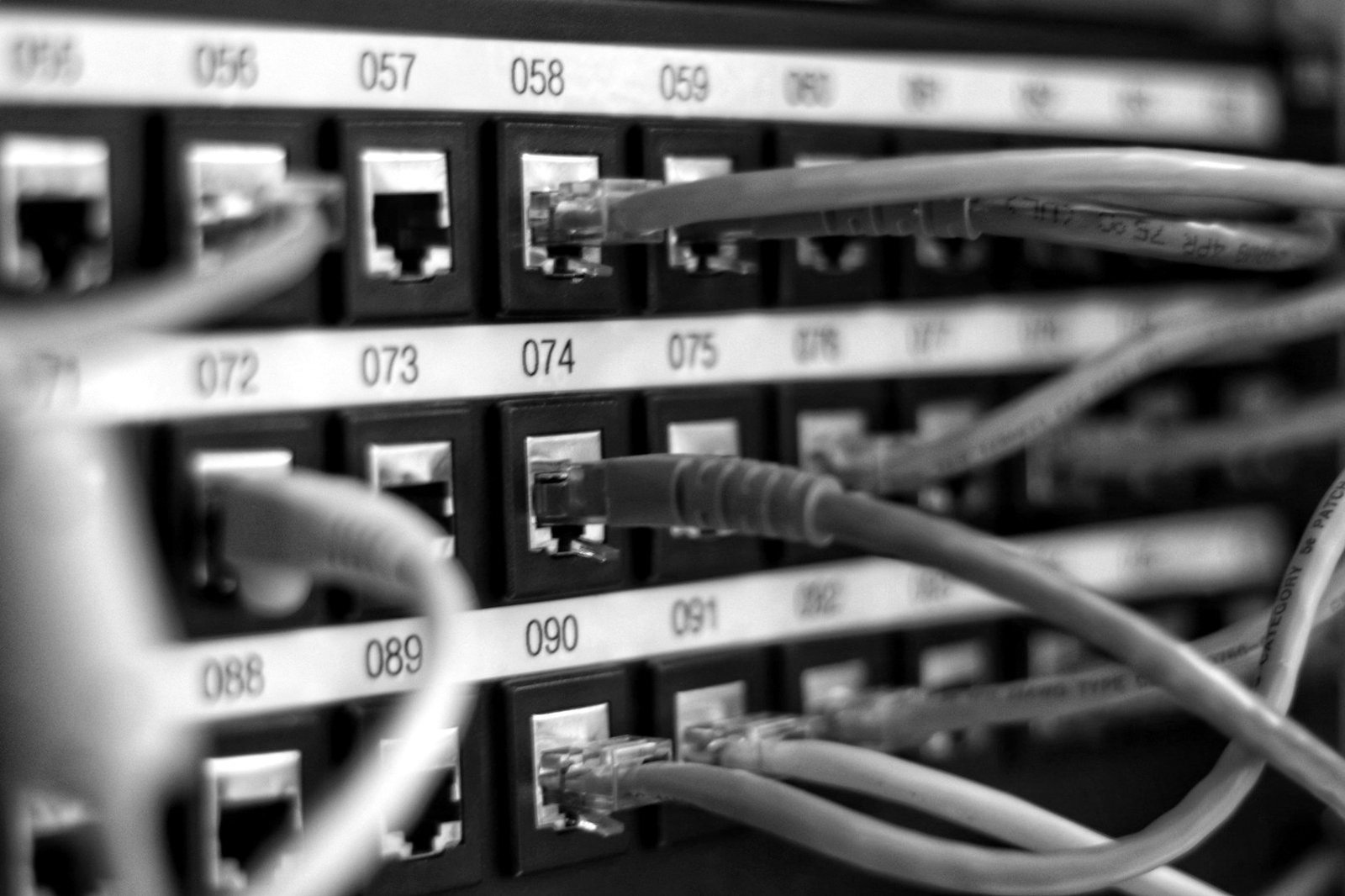
The telecom licensing reform Bangladesh roadmap and the 30 June 2027 soft cut-off
The policy adopts a three-stage migration roadmap: the reform policy takes effect; the new licensing regime starts; and the new categories become the only available options.[1] The April 2025 consultation draft had pencilled in enactment in 2025, voluntary migration by 2026 and phase-out of legacy licences by 2027.[4] The final text ties the stages to events rather than years, except for one date.
Stage 1: the policy takes effect
Stage 1 began on government approval. During it, the BTRC is to develop guidelines for the new categories and amend existing guidelines, licences, regulations and directives to align them with the policy.[1]
Stage 2: the new licensing regime starts
Stage 2 introduces the new categories, with the BTRC to issue guidelines immediately after approval. Once it begins, existing licensees may migrate along the policy's migration path, existing licensees may renew only under the new categories, and all new applications are considered only for the new categories.[1]
Stage 3: the soft cut-off and the firm cut-off
Stage 3 must commence no later than 30 June 2027, which the policy calls the soft cut-off date. During this stage most existing licensees are expected to have migrated, legacy and new categories overlap, and if every licence in a category migrates earlier, Stage 3 for that category starts earlier.[1] A firm cut-off date is to be set for each legacy category, taking account of licence validity and regulatory provisions.[1]
The soft cut-off is a programme milestone, not an expiry date for every licence. The firm cut-off is when a particular legacy category actually stops; until the BTRC publishes it, plan around your own expiry date, the soft cut-off and the rule that renewal is available only in a new category.
The dated milestones below are drawn from the policy, BTRC drafts and reporting on the 2026 revision. On a phone, scroll the table sideways.
| Date | Milestone | Effect on existing licences |
|---|---|---|
| 22 April 2025 | BTRC publishes draft reform policy for consultation | Draft roadmap: enactment 2025, voluntary migration by 2026, legacy phase-out by 2027 |
| Early September 2025 | Advisory Council approves the policy | IGW, IIG and ICX licences face discontinuation, mostly by 2027 |
| 18 September 2025 | Policy notified; ILDTS Policy 2010 repealed | Stage 1 begins; BTRC may amend legacy guidelines |
| October to November 2025 | Consultation drafts of FTSP, NICSP, CMSP and ICSP guidelines | Migration treated as a new application, with fee credit for unexpired terms |
| 10 April 2026 | Telecommunication (Amendment) Act 2026 published as Act No. 51 of 2026 | Multiple-licence bar applies to applicants |
| 13 May 2026 | NTTN licence approved under the legacy framework | Shows legacy grants continue, subject to later migration |
| 24 May 2026 | Revised draft policy sent to the ministry | Proposed renaming and splits; approval pending |
| Start of Stage 2 | New licensing regime starts | Renewals and new applications only in new categories; migration opens |
| 30 June 2027 | Soft cut-off: Stage 3 begins no later than this date | Overlap period; most licensees expected to have migrated |
| To be fixed by BTRC | Firm cut-off for each legacy category | Legacy category ends; check BTRC notices |
What telecom licensing reform Bangladesh means for an existing licence term
The starting point is continuity. All existing licensees may complete their current licensing terms, and licences issued under the ILDTS Policy 2010 remain valid and continue under their own guidelines, subject to the policy.[1] No legacy licence was cancelled by the policy itself.
The BTRC can still change the conditions
Continuity is qualified. The BTRC reserves the right to amend the licensing guidelines for existing licences where necessary under the policy to safeguard consumer welfare and competitiveness.[1] Expect interconnection, reporting and service conditions to move towards the new regime during the remaining term.
Legacy licences are still being issued
The legacy framework has not been switched off. On 13 May 2026 the government approved an NTTN licence for Bangla Phone, and the BTRC chairman said it was issued under the legacy framework and would be migrated when the licensing regime changes.[11] The report noted that the policy has no separate NTTN category and was under review by the new administration.[11] For anyone tracking telecom licensing reform Bangladesh operators must live with, the lesson is that legacy and new instruments will coexist for some time, and every legacy grant now carries a built-in migration question.
Carrying forward the unexpired term
Early movers are protected on duration. A licensee that migrates before its current licence expires carries forward the remaining duration of that licence, which is added to the validity of the new licence.[1] The FTSP consultation draft expresses the benefit in money terms as an adjustment of acquisition and annual fees already paid, based on the remaining duration.[7] Waiting until expiry forfeits that credit and compresses the timetable for a full new-licence application.
Renewal after the new regime starts
Renewal is where the telecom licensing reform Bangladesh licensees face bites hardest. Once Stage 2 begins, an existing licensee may renew only under the new categories.[1] A licensee nearing expiry is in substance applying for a different licence.
Migrate before expiry to keep operating
The FTSP consultation draft makes this explicit. An ISP or PSTN licensee that wants to continue after expiry must apply to migrate to the FTSP or District FTSP licence at any time before its licence expires, and legacy licensees may renew or migrate only into the new categories.[7] For a discontinued category there is nothing to renew into, so a gateway or exchange licensee must either qualify for a different new licence or wind down at expiry.
How new-category renewals will be judged
The new licences also change what renewal depends on. The policy ties renewal to rollout obligations and quality of service benchmarks.[1] Under the FTSP consultation draft, renewal would require an application at least 180 days before expiry, failing which the licence stands cancelled, and evaluation would weigh rollout performance, a clean record on fees, revenue share and reporting, and completion of the move from IPv4 to IPv6.[7]

New applications during the transition
For new entrants, the reform closes doors as well as opening them. Once the new regime starts, all new applications are considered only for the new categories.[1] The FTSP consultation draft states that the BTRC would no longer receive or process applications for nationwide, divisional, district, upazila or thana ISP licences or PSTN licences.[7] An applicant should therefore confirm which guideline is in force on the day it files.
Eligibility, surrender and the multiple-licence bar
Migration is subject to the same eligibility tests as a new application. Under the FTSP consultation draft, an applicant would have to surrender all other telecom licences before the FTSP licence is issued, a restriction extending to partners, directors, shareholders and beneficial owners, and migrating would irrevocably forfeit any claim to CMSP, NICSP or ICSP status.[7] The NICSP draft similarly requires a migrating licensee to surrender licences it or a commonly owned entity holds in the mobile, IPTSP, PSTN, IGW, IIG, submarine cable, international terrestrial cable, access or international layers.[8]
The statute adds its own bar. Under section 36 of the Telecommunication Act as amended in 2026, an individual or family members may not hold multiple active licences directly or indirectly, and the BTRC's revised draft would make those found holding several licences ineligible for new ICSP licences.[12] Groups with sister companies in several layers need restructuring before filing.
No waivers, but credit for recent investment
The policy rules out financial incentives, subsidies or waivers for migration: licensees must obtain new licences through fresh investment. A licensee that shows its capital investment under the previous licence has not depreciated beyond 20% of original book value may, however, receive consideration in the allocation of new licences in the appropriate category.[1] Asset registers and depreciation schedules should be ready before filing.
The cost of migrating
The policy itself is silent on fees; the numbers come from the category guidelines. Licence fees, revenue share and Social Obligation Fund rates for each category are explained in our BTRC licence guide. Three migration-specific points stand out from the consultation drafts.
First, migrating licensees may start paying earlier than fresh entrants. The NICSP draft would apply a 3% gross revenue share and a 1% Social Obligation Fund subscription to migrated licensees from the start of operation, while a fresh licensee would begin both from its third year, and fees already paid under NTTN and tower sharing licences would be adjusted as the BTRC directs.[8] Second, the FTSP draft proposed a 5.5% revenue share and a 1% Social Obligation Fund contribution, against which the ISP association said its members operate on margins of about 5 to 6 percent.[14] Third, the May 2026 revision would raise fees in at least one category.[12]
Model migration on the final guideline for the target category and treat the BTRC's current schedule as controlling; verify it before signing financing documents.
Discontinued gateways and exchanges: options for holders
The discontinued categories are where the reform has the sharpest commercial effect. When the policy was approved, Bangladesh had about 20 IGWs, more than 30 IIGs and more than 20 ICXs, almost all with licences due to expire by 2027.[6]
Re-entry through a new category
Holders of discontinued licences may apply for licences under the new regime if they meet the eligibility criteria, individually or through joint ventures, and re-entry with new investment is to be assessed on its merits.[1] For most gateway operators the natural target is a non-facility-based ICSP licence, but the cross-layer and multiple-licence bars must be cleared first.
Assets, contracts and interconnection
The BTRC is to issue directives or permissions for the orderly transfer, decommissioning or repurposing of infrastructure and assets of discontinued licences, through transparent commercial agreements with eligible licensees, and may permit entities that do not continue legacy services to transfer their facilities and equipment.[1] Before ICX licences expire, the BTRC must issue guidelines on voice interconnection, including traffic monitoring and revenue sharing; before NIX licences are deregulated, it must issue domestic peering guidelines.[1]
Foreign ownership and the three-year grace period
Ownership caps are part of the transition because existing companies must comply within a fixed window. The policy caps foreign equity at 85% for CMSP licensees, with at least 15% held locally through a joint venture, a listing or another BTRC-approved structure, and gives qualifying existing entities a grace period of up to three years from the date of policy approval.[1] NICSP licensees migrated from NTTN or tower sharing licences face a 65% cap with the same grace period, and ICSP licensees a 49% cap.[1]
The May 2026 revised draft would instead set a common 80% cap for ISP, TCSP, CMSP and facility-based ICSP licences.[12] Share transfers made to meet a cap need BTRC consent in their own right; structuring options are covered in our guide to foreign investment law in Bangladesh.

The 2026 revision: what may still change
Any plan built on the 2025 text must allow for the elected government's revision. In May 2026 the government was reported to be broadly accepting the interim-era reforms while introducing its own changes, including reducing the four ISP tiers to two, national and district, allowing divisional and upazila operators to migrate into that structure, and introducing a reseller model for unlicensed operators.[13] The BTRC sent its revised draft to the Posts and Telecommunications Division on 24 May 2026 for prior approval.[12]
That draft would split the FTSP licence into Internet Service Provider (Nationwide) and Internet Service Provider (District) categories, rename the NICSP licence the Tower and Connectivity Service Provider (TCSP) licence, divide the ICSP into facility-based and non-facility-based licences, and extend TCSP and CMSP validity from fifteen to twenty years.[12] Earlier, the GSMA had objected to a draft requirement that access operators divest existing tower and fibre assets by 30 June 2027, describing forced divestment as akin to expropriation.[9]
As of 31 October 2026 we have not found a published approval of the revised policy or published firm cut-off dates. The telecom licensing reform Bangladesh adopted therefore remains a moving target: check the BTRC's current guidelines and notices before filing, and draft applications so they can be re-papered if category names or terms change.
A migration plan for existing licensees
The steps below assume the licensee wants to continue in business after its current term.
Inventory every licence
List each BTRC licence, registration and enlistment held by the group, with expiry dates, guarantees and the policy treatment that applies.
Map the target category
Match each authorisation to its new category or confirm it is discontinued or deregulated, and check the cross-layer bars.
Clear group conflicts
Audit shareholders, directors and family holdings against the multiple-licence bar and decide which licences to surrender or restructure.
Quantify the carry-forward
Calculate the unexpired term and fees that migration now would preserve, and compare it with waiting to expiry.
Document the investment
Assemble asset registers, audited accounts and depreciation records to support consideration for undepreciated investment.
Review key contracts
Check interconnection, carrier, vendor, lease and financing contracts for licence-dependency, assignment and change-of-law clauses.
File and track cut-offs
Submit the migration application under the guideline in force well before expiry, then monitor BTRC notices for firm cut-off dates and the 2026 revision.
Mistakes to avoid in a telecom licensing reform Bangladesh transition
The most expensive mistake is treating 30 June 2027 as a deadline that can be met at the last minute: renewal is available only in the new categories, and a firm cut-off may fall before a licence's own expiry.[1]
The second is assuming migration is a formality. A migration application is assessed like a new application, with surrender and eligibility tests that can disqualify group companies.[7] [12] The third is confusing deregulation with freedom from all rules: a deregulated service still runs on an access operator's network and under that operator's compliance monitoring.[1] The fourth is building on draft numbers that have already been revised once.
If a licence is suspended, refused or not migrated on terms that appear unlawful, judicial review is available; our guide to challenging BTRC licence decisions by writ explains the route. Ongoing obligations after a successful migration are covered in our guide to BTRC compliance in Bangladesh. For transition planning and group restructuring, see our corporate and commercial advisory practice.
Frequently asked questions
Is my legacy BTRC licence cancelled by the 2025 policy?
No. Existing licensees may complete their current terms, and ILDTS-era licences remain valid under their own guidelines, although the BTRC may amend those guidelines to align them with the policy.[1]
What does the 30 June 2027 soft cut-off mean?
It is the latest date on which the final migration stage must begin. Legacy and new categories overlap during that stage, and a separate firm cut-off is to be set for each legacy category.[1]
Has the BTRC published firm cut-off dates for each legacy category?
Can I renew my ISP or PSTN licence in its current form?
Do I lose the unexpired part of my licence if I migrate early?
No. A licensee that migrates before expiry carries forward the remaining duration of its current licence, which is added to the validity of the new licence.[1]
What happens to an IPTSP licence under the reform?
It does not migrate separately. The policy merges IPTSP licences with the corresponding ISP licence during migration to the fixed telecom category.[1]
Can a former IGW, IIG or ICX operator stay in the market?
The category ends on expiry, but the holder may apply for a new-category licence if eligible, alone or through a joint venture, and the BTRC is to facilitate transfers of assets to eligible licensees.[1]
Will the government waive fees for licensees that migrate?
No. The policy rules out incentives, subsidies and waivers, although investment depreciated by no more than 20% of book value may earn consideration in licence allocation.[1]
Is a migration application easier than a fresh application?
Not necessarily. Under the FTSP consultation draft it is treated as a new-licence application, with full eligibility checks and surrender of other telecom licences held by the applicant or its affiliates.[7]
Could the licence categories change again before 2027?
Yes. A revised draft sent to the ministry on 24 May 2026 would split the FTSP licence into nationwide and district ISP licences, rename the NICSP as the TCSP and divide the ICSP into facility-based and non-facility-based licences.[12]
Source register
Primary legal and regulatory sources
Materials checked on 31 October 2026. Confirm the current official text before relying on any provision.
- Telecommunications Network and Licensing Policy 2025, Posts and Telecommunications Division notification of 18 September 2025, Bangladesh Gazette Extraordinary
- Legislative and Parliamentary Affairs Division — Laws enacted in 2026 (Bangladesh Telecommunication (Amendment) Act 2026, Act No. 51 of 2026)
- The Business Standard, 24 December 2025 — Bangladesh bans internet shutdowns, restores BTRC autonomy under amended telecom ordinance
- The Daily Star, 23 April 2025 — BTRC's new policy seeks to cut red tape
- The Financial Express, 5 September 2025 — Govt approves telecom policy 2025 to simplify licensing framework
- The Daily Star, 4 September 2025 — New telecom licensing policy approved, capping foreign ownership
- BTRC — Draft Regulatory and Licensing Guidelines for Fixed Telecom Service Provider in Bangladesh (consultation draft, 2025)
- BTRC — Draft Regulatory and Licensing Guidelines for National Infrastructure and Connectivity Service Provider (consultation draft, 2025)
- The Daily Star, 15 November 2025 — GSMA flags risks in draft telecom licensing rules
- BTRC — Guidelines page (NICSP, ICSP, FTSP and CMSP guidelines and legacy guidelines; updated 22 February 2026)
- The Daily Star, 18 May 2026 — Bangla Phone gets govt nod for NTTN licence
- Dhaka Tribune, 2 June 2026 — Major BTRC licensing overhaul aims to boost broadband, draws scrutiny from ISPs
- The Daily Star, 11 May 2026 — Broadband sector set for major overhaul
- The Daily Star, 28 October 2025 — BTRC wants 5.5% of revenue from broadband operators
Related TRW assistance
Move from information to a defined next step
TRW advises licensees, investors and lenders on licence migration strategy, group restructuring for the new categories, BTRC applications and challenges to licensing decisions. Explore our corporate and commercial advisory practice and constitutional and writ litigation practice, or contact TRW to plan your transition.











