
International Crimes Tribunal case in Bangladesh: the full journey, step by step
An International Crimes Tribunal case in Bangladesh is a prosecution under the International Crimes (Tribunals) Act 1973 for crimes against humanity, genocide, war crimes and related crimes, tried by a Tribunal of judges qualified to sit in the Supreme Court.
The Investigation Agency investigates, the Chief Prosecutor submits a formal charge, and the Tribunal tries the case under its own procedure, because the CrPC and the Evidence Act do not apply. The 2026 amending Act strengthened the rights of the accused and of victims, and every conviction, acquittal or sentence can be appealed directly to the Appellate Division within 30 days.
- Where it starts
- ICT Investigation Agency (on a complaint or information), then the Chief Prosecutor's formal charge before a Tribunal…
- Main law
- International Crimes (Tribunals) Act 1973 as amended, most recently by the International Crimes (Tribunals) (Amendment) Act 2026…
- Typical duration
- Investigation: months to years. Trial: about 1-3 years. Appeal: to be decided within 60 days of filing under s.21(4)…
- Who can file
- Any person may give information or complain to the Investigation Agency; only the Chief Prosecutor or an authorised…
International Crimes Tribunal case in Bangladesh: walk through every stage
Press next, use your arrow keys or tap a court on the map. The gold marker shows where your case is, and the green trail shows the route it has taken. For the immersive version, play it full screen.
Read every step as text
 Step 1 · Complaint and investigation
Identify a crime within the Tribunal's jurisdiction
The Tribunal tries individuals, groups, organisations and members of disciplined forces, auxiliary forces or intelligence agencies for crimes against humanity, crimes against peace, genocide, war crimes, Geneva Convention violations and other crimes under international law, including attempt, abetment, conspiracy, incitement, complicity and failure to prevent. A crime against humanity requires acts such as murder, torture or enforced disappearance committed as part of a widespread or systematic attack on civilians. The Act applies to citizens anywhere and to anyone if part of the crime happened in Bangladesh, and covers crimes before or after 1973.
Where: Victim, witness or complainant (with lawyer) · Time: Days to weeks · Law: ss.1(4), 3(1)-(3) and 4 International Crimes (Tribunals) Act 1973; s.3(2)(a) Explanation (Rome Statute Article 7(2) definitions) · Documents: Written account of the events, Names of victims and witnesses, Photos, videos and medical or death records
Tip: An isolated incident usually belongs in the ordinary courts or under the 2026 enforced disappearance or 2013 torture laws; the widespread or systematic element is what brings a case here.
 Step 2 · Complaint and investigation
Complain to the Investigation Agency
The Government may establish an Investigation Agency for crimes under the Act, and in practice complaints and information are lodged with it or with the Chief Prosecutor's Office. The complainant gives a written account with supporting material, and the Agency records the complaint and decides whether to open an investigation. Any investigation into crimes under section 3 is treated as one under the Act. Prosecutors may also act as investigation officers. This is the usual starting point of an International Crimes Tribunal case in Bangladesh.
Where: Investigation Agency of the International Crimes Tribunal · Time: Days · Law: s.8(1), (2) and (9) International Crimes (Tribunals) Act 1973 · Documents: Written complaint, Annexed evidence, ID documents of complainant
Tip: Keep copies of everything you hand over and a receipt showing the date the complaint was recorded.
 Step 3 · Complaint and investigation
Investigation and evidence gathering
Investigation officers can require any person acquainted with the facts to attend, examine them orally and record their statements. A person must answer even self-incriminating questions, but compelled answers cannot be used to arrest or prosecute that person. Failure to appear or answer is punishable with up to six months' simple imprisonment or a fine of up to Tk 2,000. Since the 2026 amendments, officers may also search places and seize documents under a seizure list prepared before two witnesses. The Agency then reports its findings to the Chief Prosecutor.
Where: Investigation Agency of the International Crimes Tribunal · Time: Months to years · Law: s.8(3)-(8) International Crimes (Tribunals) Act 1973; s.8(3A) International Crimes (Tribunals) Act 1973 (inserted by Act XIII of 2026) · Documents: Witness statements, Seizure lists, Digital records, Investigation report
Tip: Digital material such as CCTV, drone data and phone records is expressly admissible, so preserve original devices and metadata.
 Step 4 · Complaint and investigation
Statements and confessions before a Magistrate
Any Judicial or Metropolitan Magistrate may record a statement or confession by an accused during investigation or before trial. Before recording a confession the Magistrate must warn the accused that he need not confess and that it may be used against him, and must be satisfied it is voluntary. The accused has the right to remain silent without that silence counting against him. A statement recorded by a Magistrate or investigation officer from a witness who has since died or cannot be produced without unreasonable delay or expense may later be received in evidence.
Where: Judicial or Metropolitan Magistrate (recording statements and confessions) · Time: During investigation · Law: s.14(1)-(3) International Crimes (Tribunals) Act 1973; s.19(2) International Crimes (Tribunals) Act 1973 · Documents: Recorded statement or confession, Magistrate's certificate of voluntariness
Tip: Defence lawyers should check the record for the warning and for any sign the confession followed ill-treatment, which can make evidence inadmissible under s.19(1F).
 Step 5 · Formal charge and cognizance
Arrest, custody and bail
Any member of a Tribunal can issue a warrant for the arrest of a person charged with a crime under the Act, commit him to custody and authorise continued detention. An arrested person must be brought before the Tribunal within 24 hours, excluding travel time, and must not be detained arbitrarily. He is protected by the Torture and Custodial Death (Prevention) Act 2013. Applications for bail are made to the Tribunal under its Rules of Procedure, which allow release on conditions where justified.
The Tribunal can also freeze or confiscate assets to prevent flight or secure compensation.
Where: International Crimes Tribunal (Chairman and members) · Time: Within 24 hours of arrest; bail hearings as listed · Law: s.11(5) and (9) International Crimes (Tribunals) Act 1973; s.17(g)-(h) International Crimes (Tribunals) Act 1973; s.22 International Crimes (Tribunals) Act 1973 (Rules of Procedure) · Documents: Warrant of arrest, Production report, Bail application
Tip: Record the time of arrest precisely; the 24-hour production rule is a statutory right of the accused.
 Step 6 · Formal charge and cognizance
Formal charge by the Chief Prosecutor
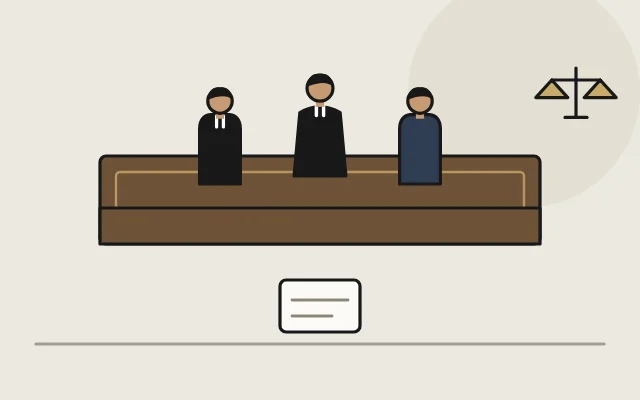
Proceedings formally begin only when the Chief Prosecutor, or a Prosecutor he authorises, submits formal charges against each accused. The charge must give the accused's particulars, the crime and enough detail to give fair notice. Once a formal charge is submitted, the person is disqualified from being or becoming a member of Parliament or a local government body, from appointment to the service of the Republic and from holding any other public office, unless later discharged or acquitted.
In an International Crimes Tribunal case in Bangladesh, this disqualification is one of the most significant immediate effects.
Where: Chief Prosecutor's Office · Time: After investigation; often months · Law: s.9(1) International Crimes (Tribunals) Act 1973; s.16(1) International Crimes (Tribunals) Act 1973; s.20C International Crimes (Tribunals) Act 1973 (inserted by Act XIII of 2026) · Documents: Formal charge, Investigation report, Supporting documents and witness statements
Tip: The accused should obtain the formal charge and documents early; s.16(2) requires copies or a fair chance to inspect them before trial.
 Step 7 · Formal charge and cognizance
Cognizance, appearance or trial in absentia
The Tribunal takes the formal charge into consideration and fixes a date for trial. If, before fixing that date, it has reason to believe the accused has absconded or is hiding so that he cannot be produced, it may try him in absence under the procedure in its Rules, which require public notice. In an absentia trial the Tribunal may engage counsel at Government expense to defend the accused and fix the fee.
A Tribunal can also transfer a case to another Tribunal at any stage, on its own motion or on the Chief Prosecutor's application.
Where: International Crimes Tribunal (Chairman and members) · Time: Weeks to months · Law: s.9(2) International Crimes (Tribunals) Act 1973; s.10A International Crimes (Tribunals) Act 1973; s.11A(1)-(2) International Crimes (Tribunals) Act 1973 · Documents: Order fixing trial date, Newspaper notices (absentia), Order appointing defence counsel
Tip: An absent accused who later surrenders should take advice quickly on what the Rules allow regarding the stage of proceedings.
- Step 8 · Charge and trial
Disclosure of evidence
At least three weeks before trial, the Chief Prosecutor must give the Tribunal a list of prosecution witnesses with their recorded statements and copies of documents relied on. Further witnesses can be added with permission and notice to the defence. The prosecutor must also disclose, as soon as practicable, any evidence suggesting innocence, mitigating guilt or affecting the credibility of prosecution evidence, subject to a Tribunal ruling where disclosure could prejudice an ongoing investigation. The defence lists its witnesses and documents when the trial begins and may add more with permission.
Where: International Crimes Tribunal (Chairman and members) · Time: At least 3 weeks before trial · Law: s.9(3)-(6) International Crimes (Tribunals) Act 1973; s.12(2)-(6) International Crimes (Tribunals) Act 1973; s.16(2) International Crimes (Tribunals) Act 1973 · Documents: Prosecution witness list and statements, Exculpatory material, Defence witness list
Tip: Defence counsel should apply in writing for exculpatory material and keep a record of what was disclosed and when.
 Step 9 · Charge and trial
Framing of charges and plea
After hearing both sides on the formal charge, the Tribunal frames the charges or, under its Rules, discharges the accused where no case is made out. At trial the charge is read out and each accused is asked whether he pleads guilty or not guilty. A guilty plea is recorded and the Tribunal may convict on it. Otherwise the prosecution makes an opening statement. Proceedings may be in Bangla or English, with an interpreter provided free where needed, and no oath is given to the accused.
Where: International Crimes Tribunal (Chairman and members) · Time: Weeks to months · Law: s.10(1)(a)-(d), (2), (3) and (5) International Crimes (Tribunals) Act 1973; s.16 International Crimes (Tribunals) Act 1973; s.17(f) International Crimes (Tribunals) Act 1973 · Documents: Charge framing order, Record of plea
Tip: Each charge should identify the specific mode of liability alleged under s.4, such as ordering, aiding or command responsibility.
 Step 10 · Charge and trial
Prosecution evidence and victim participation
Prosecution witnesses are examined, cross-examined and re-examined, and the Tribunal may question any witness or call for any document. Hearings are public but can be held in camera, recorded or broadcast with safeguards, and attended by UN and human rights observers. The Tribunal must protect witnesses and may hear them virtually where attendance cannot be secured. Victims, personally or through counsel, may take part where their views differ from the prosecution's, and the Tribunal records their perspective. Adjournments are allowed only in the interest of justice.
Where: International Crimes Tribunal (Chairman and members) · Time: Months · Law: ss.9A, 10(1)(e)-(h) and 10(4) International Crimes (Tribunals) Act 1973; ss.10B, 11(7), 13, 23A and 23B International Crimes (Tribunals) Act 1973 · Documents: Witness summonses, Exhibits, Protective measures orders
Tip: Victims who wish to participate should apply through counsel early so their views are on the record before the evidence closes.
- Step 11 · Charge and trial
Rules of evidence
The CrPC and the Evidence Act do not apply. Parties may submit any evidence, including digital data, CCTV, drone data and phone records, and the Tribunal rules on relevance and admissibility, giving reasons and weighing probative value against prejudice to a fair trial. Objections must be raised when evidence is submitted. Evidence obtained through violations of internationally recognised human rights is inadmissible if the violation casts substantial doubt on its reliability or would seriously damage the integrity of the proceedings.
The Tribunal takes judicial notice of facts of common knowledge and of UN and other official reports.
Where: International Crimes Tribunal (Chairman and members) · Time: Throughout the trial · Law: s.19(1)-(5) International Crimes (Tribunals) Act 1973; s.23 International Crimes (Tribunals) Act 1973 · Documents: Evidentiary rulings, Expert reports, Official and UN reports
Tip: Raise any objection at the moment the evidence is tendered; late objections are allowed only for issues not known at the time.
- Step 12 · Charge and trial
Defence case and rights of the accused
The accused may explain the charges, defend himself or be represented by counsel of his choice, call evidence, cross-examine prosecution witnesses, be tried without undue delay and have adequate time and facilities to prepare. Lawyer-client communications are privileged. The Tribunal may question the accused to let him explain evidence, and may draw inferences from refusal to answer, though he cannot be punished for it. With the Bar Council's permission, which should not be unreasonably withheld, foreign counsel may appear. Official position is no defence, and superior orders may only mitigate.
Where: International Crimes Tribunal (Chairman and members) · Time: Months · Law: s.17(a)-(e) International Crimes (Tribunals) Act 1973; ss.5, 11(2), 11(8) and 12(5) International Crimes (Tribunals) Act 1973 · Documents: Defence witness list, Defence exhibits, Application for foreign counsel
Tip: Apply early for any Bar Council permission for foreign counsel; the application can take time.
 Step 13 · Judgment and sentence
Summing up and judgment
The prosecution sums up first and the defence follows, with the prosecution replying if the defence called witnesses. The Tribunal then delivers its judgment and verdict, giving reasons. Each member may write a separate judgment, and the majority view prevails. On the day of judgment the Registrar must give the prosecution and the accused a sealed copy free of cost, which serves as the certified copy for appeal. In an International Crimes Tribunal case in Bangladesh, the date of this judgment starts the 30-day appeal clock.
Where: International Crimes Tribunal (Chairman and members) · Time: Weeks to months after closing · Law: s.10(1)(i)-(j) International Crimes (Tribunals) Act 1973; s.6(7) International Crimes (Tribunals) Act 1973; s.20(1), (2A) and (2B) International Crimes (Tribunals) Act 1973 · Documents: Judgment, Sealed copy under s.20(2A)
Tip: Collect the free sealed copy on the day; no separate certified copy application is needed for the appeal.
 Step 14 · Judgment and sentence
Sentence, compensation and organisational penalties
On conviction the Tribunal may impose death or any other punishment proportionate to the gravity of the crime. It may award compensation to victims, recoverable from the convicted person's present and future assets, with priority over other claims. If an organisation is proved to have committed or assisted crimes under the Act, the Tribunal can suspend or prohibit its activities, ban it, cancel its registration or licence and confiscate its property. Asset freezing orders may already be in place to support these orders.
Where: International Crimes Tribunal (Chairman and members) · Time: With the judgment · Law: s.20(2) International Crimes (Tribunals) Act 1973; s.20A International Crimes (Tribunals) Act 1973; s.20B International Crimes (Tribunals) Act 1973; s.11(9) International Crimes (Tribunals) Act 1973 · Documents: Sentence order, Compensation order, Asset freezing or confiscation orders
Tip: Victims should give the prosecution information about the convicted person's assets to support compensation recovery.
 Step 15 · Enforcement
Carrying out the sentence
Sentences are carried out in accordance with the Government's orders. In practice, death sentences have been carried out only after the appeal to the Appellate Division and any review petition were decided. A person sentenced to death may then seek clemency from the President, who has power to grant pardons, reprieves and respites and to remit, suspend or commute any sentence. No other court can question the Tribunal's orders except through the statutory appeal.
Where: International Crimes Tribunal (Chairman and members) · Time: After appeal and review · Law: s.20(3) International Crimes (Tribunals) Act 1973; s.24 International Crimes (Tribunals) Act 1973; Article 49 Constitution of Bangladesh · Documents: Final judgment, Mercy petition (if any)
Tip: Clemency petitions are decided by the President on the Government's advice; they are not a further court hearing.
Walk through it from your side
Pick your side. The step-by-step journey above and the full-screen player will then show what you do at every stage.
Victim / complainant
You want the crimes investigated, those responsible tried and, if they are convicted, compensation awarded. The prosecution must prove a crime within s.3, such as a crime against humanity committed as part of a widespread or systematic attack, and the accused's mode of liability. Your biggest risk is weak or poorly preserved evidence and missing the chance to put your views on the record before the evidence closes.
Identify a crime within the Tribunal's jurisdiction
You set down a full written account of what happened, with dates, places, victims and witnesses, and gather photos, videos, medical and death records. Your lawyer considers whether the facts show a widespread or systematic attack, which is what brings a case to the Tribunal rather than an ordinary court.
Watch outAn isolated incident usually belongs in the ordinary courts or under the 2026 disappearance or 2013 torture laws.
Complain to the Investigation Agency
You lodge your complaint and evidence with the Investigation Agency or the Chief Prosecutor's Office, keeping copies of everything you hand over and a dated receipt.
Watch outKeep originals of devices and files; the copies you hand over should not be your only record.
Investigation and evidence gathering
You attend when an investigation officer asks, give your statement and hand over any digital material with its metadata. If you fear for your safety, tell the Agency so that protective measures can be considered.
Watch outPreserve original phones, drives and footage; digital evidence is admissible but must be reliable.
Statements and confessions before a Magistrate
If you are a witness, a Magistrate may record your statement during the investigation. Give a careful, accurate account; if you later cannot attend the trial, this statement may be received in evidence.
Watch outMake sure the recorded statement reflects what you said before you sign it.
Arrest, custody and bail
If an accused is arrested, you or your counsel may tell the prosecution of any specific risk to witnesses or of flight, so that it can oppose bail with concrete material. Ask about protective measures if you feel threatened.
Watch outGeneral fears carry little weight; give the prosecution specific facts.
Formal charge by the Chief Prosecutor
The Chief Prosecutor decides whether to submit a formal charge. You can keep in contact with the prosecution about the progress of the case and any additional evidence you hold.
Watch outOnly the Chief Prosecutor or an authorised Prosecutor can start proceedings; a complainant cannot file a formal charge directly.
Cognizance, appearance or trial in absentia
If an accused has absconded, the prosecution asks the Tribunal to try him in his absence after public notice. You can help by giving information about the accused's whereabouts to the prosecution.
Watch outAn absentia judgment is open to later challenge if notice was defective, so the record must be complete.
Disclosure of evidence
The prosecution files its witness list and statements at least three weeks before trial. If you are a listed witness, make sure the prosecution has your current contact details and knows of any protection needs.
Watch outLate additions of witnesses need the Tribunal's permission and notice to the defence.
Framing of charges and plea
You or your counsel follow the charge hearing. The charges framed decide what the prosecution must prove, so make sure the prosecution has your evidence on each incident relevant to a charge.
Watch outIf an incident affecting you is left out of the charges, raise it with the prosecution before charges are framed.
Prosecution evidence and victim participation
If you are a witness, you give evidence and are cross-examined; ask for protective measures or a virtual hearing if needed. As a victim, you may apply through counsel to put your views where they differ from the prosecution's.
Watch outApply to participate early, before the evidence closes.
Rules of evidence
You make sure any digital or documentary evidence you supplied can be explained by a witness, including where it came from and how it was kept. Official and UN reports may be judicially noticed.
Watch outEvidence of uncertain origin carries less weight; record the chain of custody.
Defence case and rights of the accused
If the defence calls witnesses, your counsel can follow the evidence and help the prosecution test it. Keep the prosecution informed of anything that bears on the defence evidence.
Watch outDo not contact defence witnesses; the Tribunal protects witnesses on both sides.
Summing up and judgment
Attend the judgment. The prosecution receives a free sealed copy on the day, and the 30-day appeal period starts from the judgment, so discuss any appeal against acquittal or sentence with the prosecution or your counsel at once.
Watch outThe complainant or informant can appeal, but the 30 days cannot be extended.
Sentence, compensation and organisational penalties
If the accused is convicted, ask the prosecution to seek compensation for victims and give it information about the convicted person's assets. Compensation can be recovered from present and future assets with priority over other claims.
Watch outAsset details help recovery; provide them early.
Carrying out the sentence
After the appeal and any review are decided, the sentence is carried out on the Government's orders. Victims and families can follow the process through the prosecution.
Watch outA mercy petition is decided by the President on the Government's advice; it is not a court hearing.
Accused
You want the charges dismissed or an acquittal, and fair-trial protections throughout. You must test whether the widespread or systematic element and your link to the acts are proved, and challenge evidence obtained unlawfully or not properly disclosed. Your biggest risk is that the CrPC and Evidence Act do not apply, a formal charge disqualifies you from public office at once, and you have only 30 days to appeal any conviction.
Identify a crime within the Tribunal's jurisdiction
You may learn of allegations through media reports or an Investigation Agency notice. Take advice from a lawyer experienced in international criminal law early, and keep your own records of your duties, whereabouts and communications at the relevant time.
Watch outDo not contact potential witnesses about the allegations; witness protection is a priority for the Tribunal.
Complain to the Investigation Agency
If you know a complaint has been made, your lawyer can follow its progress through proper channels and prepare documents that answer it. You may also need advice on any travel, asset or employment consequences.
Watch outMoving assets or leaving the country once proceedings are likely can lead to freezing orders and weighs against bail.
Investigation and evidence gathering
If an investigation officer requires you to attend and answer, you must do so, with a lawyer's advice. Compelled answers cannot be used to arrest or prosecute you. Your lawyer notes any search and checks that a seizure list was prepared before two witnesses.
Watch outFailing to appear or answer is itself punishable with up to six months or a fine.
Statements and confessions before a Magistrate
If you are asked to make a statement or confession before a Magistrate, you have the right to remain silent without that silence counting against you. Your lawyer checks that the Magistrate gave the required warning and that any statement was voluntary.
Watch outEvidence obtained through serious rights violations can be excluded under s.19(1F); raise any ill-treatment at once.
Arrest, custody and bail
If arrested, you must be brought before the Tribunal within 24 hours, excluding travel time, and you are protected by the 2013 torture law. Your lawyer applies for bail under the Tribunal's Rules of Procedure, offering firm conditions.
Watch outRecord the exact time of arrest; late production is a breach of your statutory rights.
Formal charge by the Chief Prosecutor
Once a formal charge is submitted, you are disqualified from being an MP, a local government office holder or a public servant unless discharged or acquitted. Your lawyer obtains the formal charge and documents and studies the alleged mode of liability.
Watch outThe disqualification applies immediately on the formal charge, not on conviction.
Cognizance, appearance or trial in absentia
If you are abroad or have not appeared, take advice quickly: the Tribunal can try you in absence, with counsel appointed at Government expense. Appearing through counsel or surrendering lets you take part fully in your defence.
Watch outAn absent accused who later surrenders should check at once what the Rules allow at that stage.
Disclosure of evidence
Your lawyer receives the prosecution witness list, statements and documents, and asks in writing for any material suggesting innocence or mitigation or affecting credibility. You then file your own witness and document list when the trial begins.
Watch outKeep a dated record of what was disclosed and when; late disclosure can be raised before the Tribunal.
Framing of charges and plea
Your lawyer argues at the charge hearing that no case is made out, or that the charges are vague, and can seek discharge under the Rules. At trial you plead guilty or not guilty to each charge; you are not put on oath.
Watch outEach charge should state the specific mode of liability; object at once if it does not.
Prosecution evidence and victim participation
Your lawyer cross-examines each prosecution witness and objects to inadmissible material as it is tendered. You may ask for hearings to be in public, and adjournments are allowed only in the interest of justice.
Watch outPrepare cross-examination in advance; adjournments are hard to obtain.
Rules of evidence
Your lawyer raises every objection to relevance, reliability or unlawful collection at the moment the evidence is tendered, and asks the Tribunal for reasoned rulings.
Watch outLate objections are allowed only for issues not known at the time.
Defence case and rights of the accused
You present your defence, call witnesses and documents, and may explain the evidence against you. With Bar Council permission, foreign counsel can appear. Official position is no defence, and superior orders may only mitigate.
Watch outApply for any foreign counsel permission early; the process can take time.
Summing up and judgment
Attend the judgment with your lawyer and collect the free sealed copy, which serves as the certified copy for appeal. If convicted, your appeal to the Appellate Division must be filed within 30 days with all documents relied on.
Watch outNo appeal lies after 30 days; prepare the grounds before judgment day.
Sentence, compensation and organisational penalties
If convicted, your lawyer makes submissions on sentence and mitigation, including any superior orders that may reduce punishment. If an organisation is charged, its representatives address the penalties under s.20B.
Watch outCompensation orders can reach future assets as well as present ones.
Carrying out the sentence
After the appeal and any review, a person sentenced to death may petition the President for clemency. Your lawyer can advise on timing and on what material to include.
Watch outNo other court can question the Tribunal's orders except through the statutory appeal.
What if…? How the International Crimes Tribunal case in Bangladesh can change course
Choose a scenario. The map animates the route up the hierarchy and, where a case is sent back, down to the lower court and up again.
Who can appeal, and where?
- 1Appellate Division of the Supreme Court
Appeal as of right to the Appellate Division
A convicted person may appeal as of right to the Appellate Division against conviction and sentence. The Government, the complainant or the informant may appeal as of right against an acquittal or a sentence. The appeal must be filed within 30 days of the judgment, with no extension, and the appellant must file all documents relied on. The Act requires the appeal to be disposed of within 60 days of filing. There is no intermediate appeal to the High Court Division.
File within 30 days; decision due within 60 days of filings.21(1)-(5) International Crimes (Tribunals) Act 1973Article 103 Constitution of Bangladesh
Where it ends up: The Appellate Division confirms, alters or reverses the conviction, acquittal or sentence.
Can interim orders be challenged by revision or writ?
- 1Appellate Division of the Supreme Court
Only a contempt order can be appealed mid-trial
No order, judgment or sentence of a Tribunal can be questioned in any court except under section 21, so there is no criminal revision, no section 561A application and, given Articles 47(3) and 47A of the Constitution, no ordinary writ challenge. The single interlocutory appeal is against punishment for contempt of the Tribunal, filed in the Appellate Division within 30 days and decided within 30 days. Filing it does not stay the trial unless the Tribunal directs otherwise.
File within 30 days; decided within 30 daysss.21A and 24 International Crimes (Tribunals) Act 1973Articles 47(3) and 47A Constitution of Bangladesh - 2International Crimes Tribunal (Chairman and members)
Trial continues
The Tribunal continues investigation, trial and related proceedings while any interlocutory appeal is pending, and gives effect to the Appellate Division's decision when it comes.
No pause unless directeds.21A(3)-(4) International Crimes (Tribunals) Act 1973
Where it ends up: Interim rulings, other than contempt punishments, can be challenged only in the final appeal.
Can the Appellate Division review its judgment?
- 1Appellate Division of the Supreme Court
Review petition under Article 105
The Act itself provides no review, and the Tribunal cannot review its own final judgment. The Appellate Division has held, using its constitutional review power, that a review petition lies against its appeal judgment in these cases. As reported, the petition must be filed within 15 days of receiving the certified copy of the appeal judgment, and review is confined to examining whether there is an error in that judgment; it is not a rehearing.
File within 15 days of the certified copy (as reported)Article 105 Constitution of BangladeshAppellate Division, Criminal Review Petition Nos 17-18 of 2013
Where it ends up: The appeal judgment stands unless an error is shown; this ends the court process.
Can the Appellate Division remand the case?
- 1Appellate Division of the Supreme Court
No statutory remand; the appeal is decided on the record
The Act contains no remand provision. The appeal is designed to be decided by the Appellate Division itself, on the documents filed with it, within 60 days. The Appellate Division keeps its constitutional power under Article 104 to issue directions needed for complete justice, but sending an ICT case back for retrial is not a step the Act provides for, and families and defendants should plan on the appeal being final.
At the appeal hearings.21(4)-(5) International Crimes (Tribunals) Act 1973Article 104 Constitution of Bangladesh
Where it ends up: The Appellate Division ordinarily decides the case itself rather than returning it to the Tribunal.
What if the evidence shows an ordinary crime instead?
- 1Ordinary criminal court (Sessions Judge) on transfer
Transfer to an ordinary criminal court
If the accused is charged under the Act but the evidence suggests a different offence under the Penal Code or another law, the Tribunal may transfer the case to a competent ordinary court. It sends a certified copy of the record and the evidence and notifies the Public Prosecutor. From then on the ordinary court tries the case under the CrPC, and the ordinary routes of appeal, revision and review through the High Court Division apply.
Weeks for the record to moves.11A(3)-(4) International Crimes (Tribunals) Act 1973 (inserted by Act XIII of 2026)
Where it ends up: The case continues before an ordinary criminal court under the CrPC.
Is there a death reference to the High Court Division?
- 1Appellate Division of the Supreme Court
No death reference; the appeal is the check
Because the CrPC does not apply, a Tribunal death sentence is not sent to the High Court Division for confirmation, unlike a Sessions court death sentence. The safeguard is the appeal as of right to the Appellate Division and any review, followed by the President's power of clemency. The Appellate Division has also held that the jail code timetable for executions does not apply to these convicts.
Within the appeal timetabless.20(3), 21 and 23 International Crimes (Tribunals) Act 1973s.374 CrPC (not applicable)Article 49 Constitution of Bangladesh
Where it ends up: A death sentence becomes final only after the Appellate Division appeal and review, subject to clemency.
How the International Crimes Tribunal case in Bangladesh moves up the court hierarchy
An International Crimes Tribunal case in Bangladesh has the shortest ladder in the criminal system. The Government sets up one or more Tribunals by gazette notification, each with a Chairman and two to four members who are, have been or are qualified to be Supreme Court judges, sitting permanently in Dhaka.
Jurisdiction depends on the nature of the crime, not its value or the rank of the accused: crimes against humanity, genocide, war crimes and related crimes go to the Tribunal, while isolated offences stay in the ordinary courts, and the Tribunal can transfer a case down to them. Magistrates play a narrow role, recording statements and confessions.
There is no High Court Division stage: section 24 bars every other challenge, so the Tribunal's judgment goes straight to the Appellate Division on appeal as of right, which can be filed by the convicted person, the Government, the complainant or the informant within 30 days. The Appellate Division rehears facts and law on the record and must decide within 60 days. Review under Article 105 and the President's clemency power complete the route.
- Appellate DivisionAppellate Division of the Supreme Court
- High Court DivisionInternational Crimes Tribunal (Chairman and members)
- Appellate levelOrdinary criminal court (Sessions Judge) on transfer
- First instanceJudicial or Metropolitan Magistrate (recording statements and confessions)
- Start · outside courtVictim, witness or complainant (with lawyer) · Investigation Agency of the International Crimes Tribunal · Chief Prosecutor's Office
Where your case is heard
Addresses are for Dhaka. Every district has equivalent courts at its own district judgeship.
Supreme Court of Bangladesh (Appellate Division and High Court Division)
Supreme Court of Bangladesh, Shahbag, Ramna, Dhaka-1000Hears appeals, revisions, references, writ petitions under Article 102, company matters and death references (High Court Division), and appeals by leave from the High Court Division (Appellate Division).
Both Divisions sit in the Supreme Court complex; many High Court Division benches sit in the Annex Building. Check the daily cause list for the bench and court room. Postal contact is the Registrar General, Supreme Court of Bangladesh, Ramna, Dhaka-1000.
International Crimes Tribunal, Dhaka
Old High Court Building, DhakaTries genocide, crimes against humanity, war crimes and other international crimes under the International Crimes (Tribunals) Act 1973. Appeals go to the Appellate Division of the Supreme Court.
The tribunal sits in the renovated Old High Court Building near the Supreme Court. Complaints are investigated by the ICT Investigation Agency, and cases are prosecuted by the ICT Prosecution, whose offices are separate from the courtroom. Location confirmed from press reports only; no official street address was found.
Court of the Metropolitan Sessions Judge, Dhaka
40-45 Johnson Road, Dhaka-1100Tries sessions-triable offences from Dhaka metropolitan police stations and hears criminal appeals and revisions from Metropolitan Magistrates; Additional and Joint Metropolitan Sessions Judges also sit as Metropolitan Special Tribunals.
The Metropolitan Sessions Judge sits on the 2nd floor of the main building; Additional and Joint Metropolitan Sessions Judge courts are in the main building and the tin-shed building in the same compound. The Metropolitan Sessions Judge, Dhaka also holds the post of Senior Special Judge, Dhaka. Help line published by the court: 01335-145002.
Chief Metropolitan Magistrate Court, Dhaka
19 Johnson Road, Dhaka-1100Takes cognisance of and tries criminal cases arising in Dhaka Metropolitan Police areas (Metropolitan Magistrate courts), hears bail, remand and FIR/complaint matters, and sends sessions-triable cases to the Metropolitan Sessions Judge.
Metropolitan Magistrate courts are spread over the CMM court main building (floors 2-9) and the CJM court building (courts 29-37 on the 8th and 9th floors). Check the court number on the cause list. Each metropolitan city (Chattogram, Khulna, Rajshahi, Sylhet, Barishal, Rangpur, Gazipur) has its own CMM court.
Victim, witness or complainant (with lawyer)
Where this happens depends on your district or the office concerned. Ask us for the exact courtroom and address.
How long each stage takes
These are indicative ranges based on typical Dhaka practice. Adjournments, case backlogs and appeals can stretch them.
Documents checklist and key terms
Tick off what you have. Your ticks stay saved in this browser. Bring the list to your first meeting with your lawyer.
- Crime against humanity
- Listed acts, such as murder, torture or enforced disappearance, committed as part of a widespread or systematic attack on a civilian population (s.3(2)(a)).
- Formal charge
- The document by which the Chief Prosecutor starts proceedings before the Tribunal against a named accused (s.9(1)).
- Investigation Agency
- The body set up by the Government under s.8 to investigate crimes under the Act; its officers can assist the prosecution at trial.
- Command responsibility
- Liability of a commander or superior who orders, permits or fails to prevent or punish crimes by subordinates (s.4(3)).
- Trial in absentia
- A trial held without the accused where he has absconded or is hiding so he cannot be produced (s.10A).
- Interlocutory appeal
- An appeal before final judgment; under s.21A it is available only against punishment for contempt of the Tribunal.
- Judicial notice
- Acceptance of a fact without proof, such as matters of common knowledge and UN reports (s.19(3)-(4)).
- Disqualification on formal charge
- Under s.20C, a person formally charged cannot be or become an MP, local government office holder or public servant unless discharged or acquitted.
International Crimes Tribunal case in Bangladesh: common questions
Who can start an International Crimes Tribunal case in Bangladesh?
Do the ordinary criminal procedure and evidence laws apply?
What rights does the accused have?
Can an organisation or political party be tried?
How long do we have to appeal?
Can the High Court Division stay an International Crimes Tribunal case in Bangladesh?
Can foreign lawyers appear before the Tribunal?
Can victims receive compensation?
Law and sources
- International Crimes (Tribunals) Act 1973, consolidated with 2026 amendments, mirror text
- International Crimes (Tribunals) Act 1973, Laws of Bangladesh
- International Crimes (Tribunals) (Amendment) Act 2026 (Act XIII of 2026), Laws of Bangladesh
- Appellate Division, Criminal Review Petition Nos 17-18 of 2013 (review maintainable in ICT cases)
- The Daily Star: 15 days in hand for review plea (18 February 2015)
- bdnews24: Review maintainable in war crimes cases
- Constitution of the People's Republic of Bangladesh (Articles 47, 47A, 49, 103, 104 and 105)
- Rome Statute of the International Criminal Court (Article 7)
This Case Journey is a general guide to procedure in Bangladesh as of October 2026. It is not legal advice. Procedure, fees and time limits change, and every case turns on its own facts. Timelines are indicative. Speak to a lawyer about your own matter.
Run this case from outside Bangladesh
You can usually start and run this case without travelling. You sign a power of attorney abroad, the Bangladesh High Commission or Embassy attests it, and your attorney and lawyer act for you in Dhaka. Some steps, such as giving evidence in person, may still need you or a commission. See how a case runs through a power of attorney →
Want to know where your case stands?
Book a consultation. A TRW lawyer will place your matter on this map, explain the next step and the realistic timeline, and tell you what to prepare.











