
TRW Insight / Bangladesh
A police case file holds a dozen papers made by different people under different rules. This plain-English guide explains each one, from the complaint and FIR to the remand prayer and custody warrant, and walks through every court stage and what is filed there.
Police case file in Bangladesh: what is inside a GR case docket
A police case file in Bangladesh is the bundle of papers that follows an accused person from the police station to the courtroom. In Dhaka it often arrives as a case docket: a brown card cover with a Bangla heading, a case number line and a purple tie string. Inside are a written complaint, the First Information Report (FIR), medical papers, ID card copies, a forwarding report asking for police remand and a custody warrant to the jail.
This guide is for family members just handed a copy of a GR case file. With made-up examples, it explains what each document is, who made it, under which law and what a lawyer checks, then walks through each court stage. The papers described come from a typical Dhaka Metropolitan Police docket; every name, number, date and personal detail has been left out.
Police case file, step by step.
Inside a police case file in Bangladesh, stage by stage.
Suppose Nadia reports an assault. The officer-in-charge writes it down, she signs, and it becomes the FIR.
Section 154Her written complaint and the printed FIR form are the first two papers in the file.
The FIR goes to court, where it is entered in the General Register and seen by a magistrate.
GR caseThat register entry is why police cases are called GR cases.
If someone is arrested, police must bring him before a magistrate within 24 hours.
24 hoursThe forwarding report explains why more time is needed and attaches case diary entries.
Police may ask for remand. The magistrate can refuse, cut the days or grant bail.
15 days in the wholeSince the 2026 amendment, police custody in one case cannot exceed fifteen days in total.
If bail is refused, a warrant tells the jail to hold him until the next date.
15 days at a timeThe printed warrant cites section 344 of the Code of Criminal Procedure.
The officer collects evidence, then files a charge sheet or a final report.
60 working daysIf police close the case, the complainant can object with a naraji petition.
The trial court frames a charge, hears witnesses and gives judgment; higher courts hear appeals.
Tribunal and Special Tribunal appeals go to the High Court Division within thirty days.
Get certified copies, keep them in date order and compare every date, place and section.
The numbers and rules that matter.
Summary: A police case (a GR case) starts when the officer-in-charge of a police station records information about a cognizable offence under section 154 of the Code of Criminal Procedure, 1898. An arrested accused must reach a magistrate within 24 hours, where police may ask for remand and the court may send the accused to jail on a custody warrant. Investigation ends in a charge sheet or a final report, followed by cognizance, trial and appeal. Each step leaves a paper in the file.
Key point: Most defence and prosecution work starts by comparing the papers in the police case file against each other: dates, times, places, names, sections and the explanation for any delay. Get certified copies early and keep them in order.
At a glance
GR means police case
A GR case begins at a police station; a CR case begins with a complaint made directly to a magistrate.
The FIR is the anchor
Section 154 of the CrPC requires first information of a cognizable offence to be written down and signed.
24 hours to a magistrate
An arrested person must be produced before a magistrate within 24 hours, not counting travel time.
Remand is capped
Since the 2026 amendment, police custody in a case cannot exceed fifteen days in the whole.
Jail between dates
A custody warrant tells the jail to hold the accused and produce him on the next date.
Dowry cases changed
Since March 2025, dowry-related simple hurt under section 11(ga) is tried by a first-class magistrate.
Table of Contents
What a police case file is: GR and CR cases
Criminal cases in Bangladesh start in one of two ways. A police case begins when someone reports a cognizable offence at a police station and the police record it. A complaint case begins with a petition of complaint filed directly before a magistrate. Lawyers call the first a GR case and the second a CR case, after the registers they are entered in.
"GR" stands for General Register. The Police Regulations, Bengal (the PRB, the rule book police stations still follow) require a register so that the magistrate "shall see in a convenient form all cognizable cases reported to the police". When the FIR reaches court, the court officer (a police prosecution officer posted there) writes its General Register number on top of it and submits both to the magistrate, who initials the register. Complaint cases are kept out of it unless the magistrate sends them to the police to investigate.[9] For those, see our guide to the CR case process.
Who keeps which papers
- The police station keeps the FIR book, the general diary, the case diary and copies of seizure lists and reports. The signed original FIR goes to the court.[9][10]
- The court's GR section (in Dhaka, at the Chief Metropolitan Magistrate's court) keeps the record: the FIR, forwarding report, order sheet, bail papers, warrants and, later, the police report.
- The defence builds its own police case file from certified copies, because the case diary is closed to the accused.[1]
Reading the police case file document by document
Here is what a typical Dhaka police case file contains. The docket we describe held two unrelated cases from two Dhaka Metropolitan Police (DMP) stations: a wife's complaint of dowry-related assault by her husband and his relatives, and a police case about suspected counterfeit currency notes.
1. The written complaint (ejahar or abhijog)
A petition addressed "বরাবর, অফিসার ইনচার্জ" (to the officer-in-charge), subject "অভিযোগ" (complaint), tells the story in the complainant's words and asks the police to investigate and take legal action. She signs it. In the margin, the duty officer notes that it is recorded as a case of that station, with the date, time and sections, and signs. Under the PRB, a written complaint that first reaches the police is itself the first information.[9]
2. The FIR form (prathomik tottho biboroni)
The printed FIR is headed "প্রাথমিক তথ্য বিবরণী" and refers to "নিয়ম নং ২৪৩", meaning PRB regulation 243, which requires the FIR to be drawn up in B.P. Form No. 27, written by the recording officer by hand, signed and sealed.[9] Its boxes record the time of the report, the place of occurrence and its distance from the station, the date of dispatch to court, the parties, the offence and sections, and the reasons for any delay.
3. The magistrate's "seen" stamp
A stamp reading "দেখিলাম / মেট্রোপলিটন ম্যাজিস্ট্রেট, ঢাকা" (seen, Metropolitan Magistrate, Dhaka) with a date most likely marks when the FIR was put before a magistrate, the step PRB regulation 536 describes.[9] A long gap between the FIR and that date is worth noting.
4. ID card copies and medical papers
National ID card copies identify the parties; check names and addresses against the FIR. The dowry case also held a hospital outdoor ticket and a "Police Case" injury report from Dhaka Medical College Hospital, recording the time of examination, who identified the patient, the time of occurrence, the history given and the injury notes. On the copy we saw, someone had highlighted the times of occurrence on the injury report, complaint and forwarding report in yellow, exactly how lawyers test consistency.
5. The forwarding report with a remand prayer
The investigating Sub-Inspector's report to the Chief Metropolitan Magistrate, Dhaka, sent through the Deputy Commissioner of Police (Prosecution), DMP, is headed "০৩ (তিন) দিনের পুলিশ রিমান্ডের আবেদনসহ আসামী কোর্টে প্রেরণ" (accused sent to court with an application for three days' police remand). It cites the case and sections, says the accused is produced under escort, summarises the allegation and explains why remand is wanted, for example to trace absconding co-accused. The magistrate's handwritten order sits in the margin.
6. The interim custody warrant
Headed "অন্তর্বর্তীকালীন হাজতের পরোয়ানা" (warrant of interim custody), this printed form is addressed to the officer in charge of the jail and cites "ফৌজদারী কার্যবিধির ৩৪৪ ধারা" (section 344 of the CrPC). Blanks give the accused's details, the offence and law, and the date and time to produce him. It is signed by the Metropolitan Magistrate.
7. The second case: a police FIR and a seizure list
An Assistant Sub-Inspector wrote an ejahar (এজাহার) to the officer-in-charge of another DMP station, reporting that on patrol, acting on secret information, he arrested two people with suspected counterfeit notes. Attached is the original one-page seizure list (জব্দ তালিকা). The case is under section 25A(b) of the Special Powers Act, 1974, which covers dealing in or using counterfeit currency notes as genuine.[14] Here a police officer is the informant.
Stage by stage: courts and filings
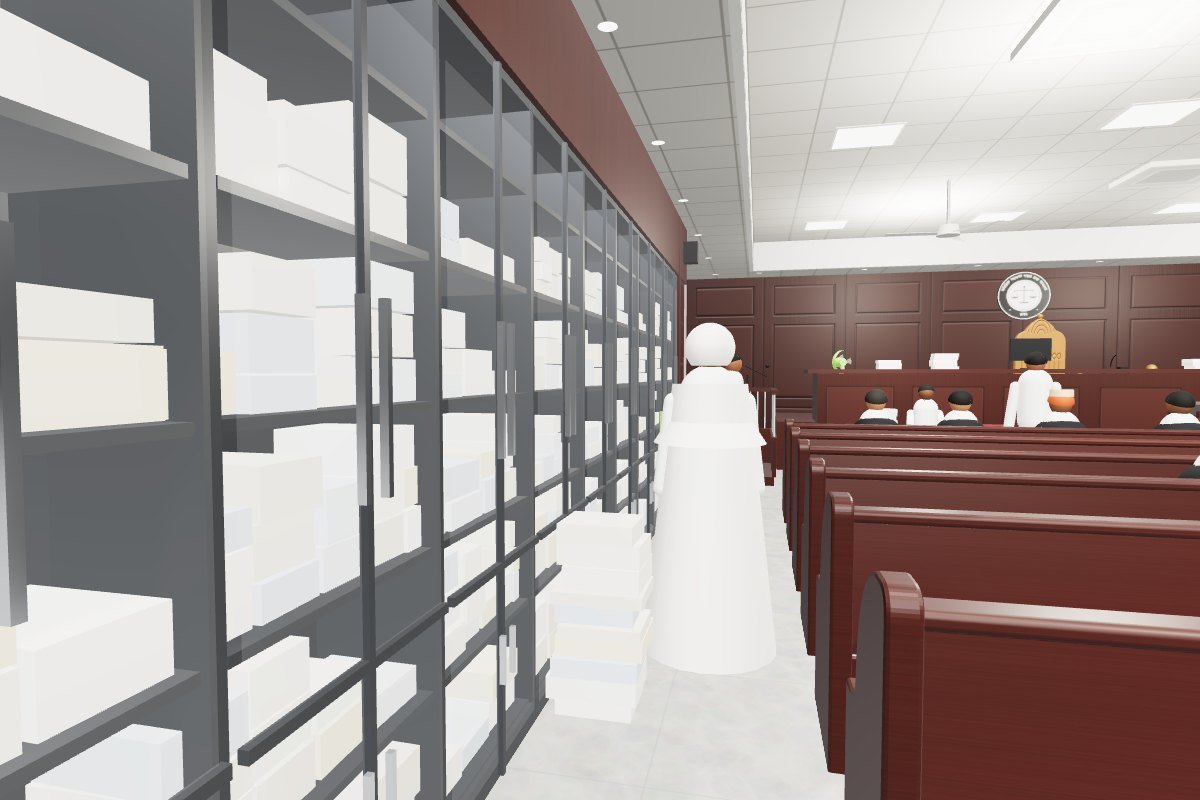
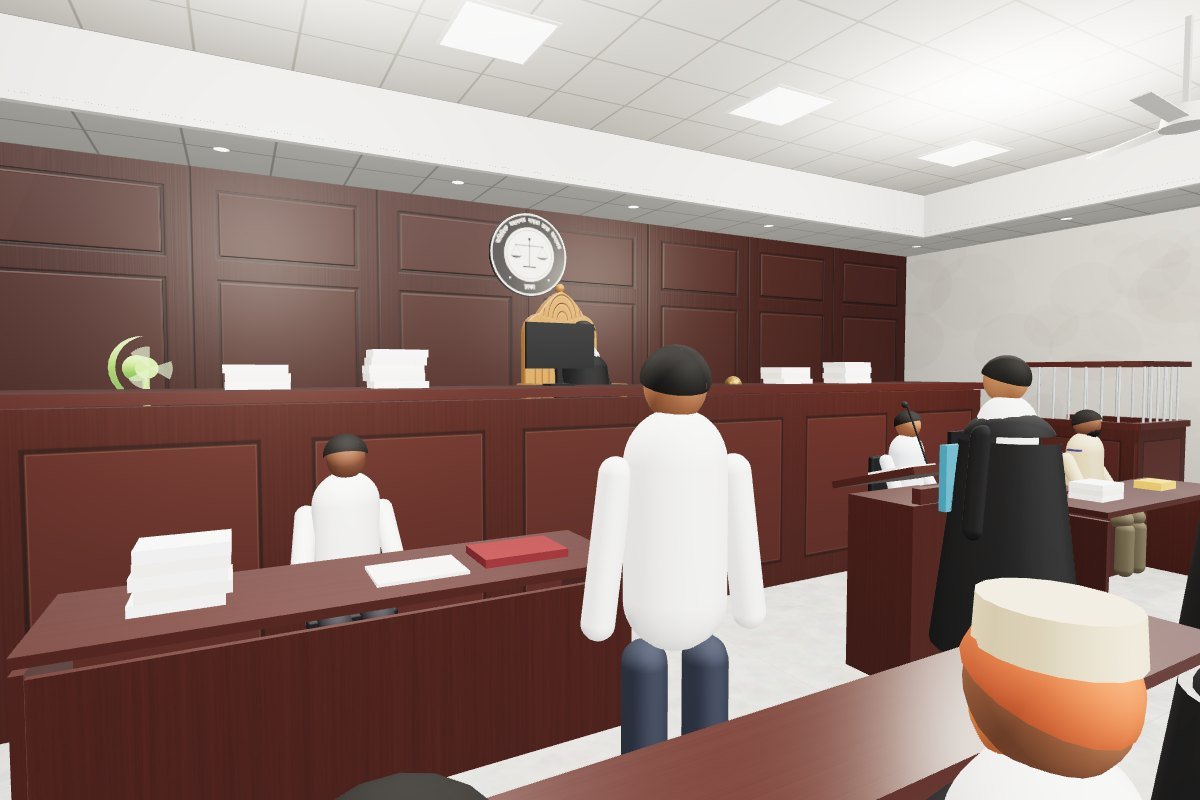
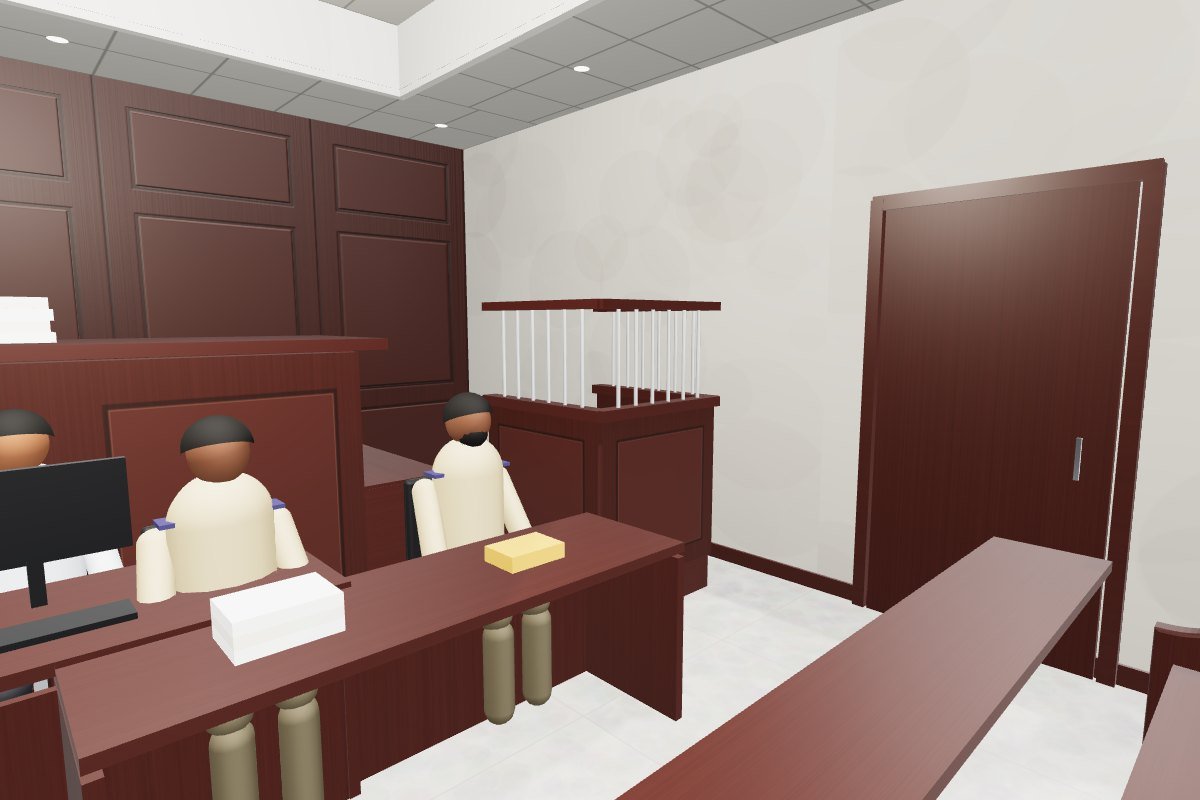
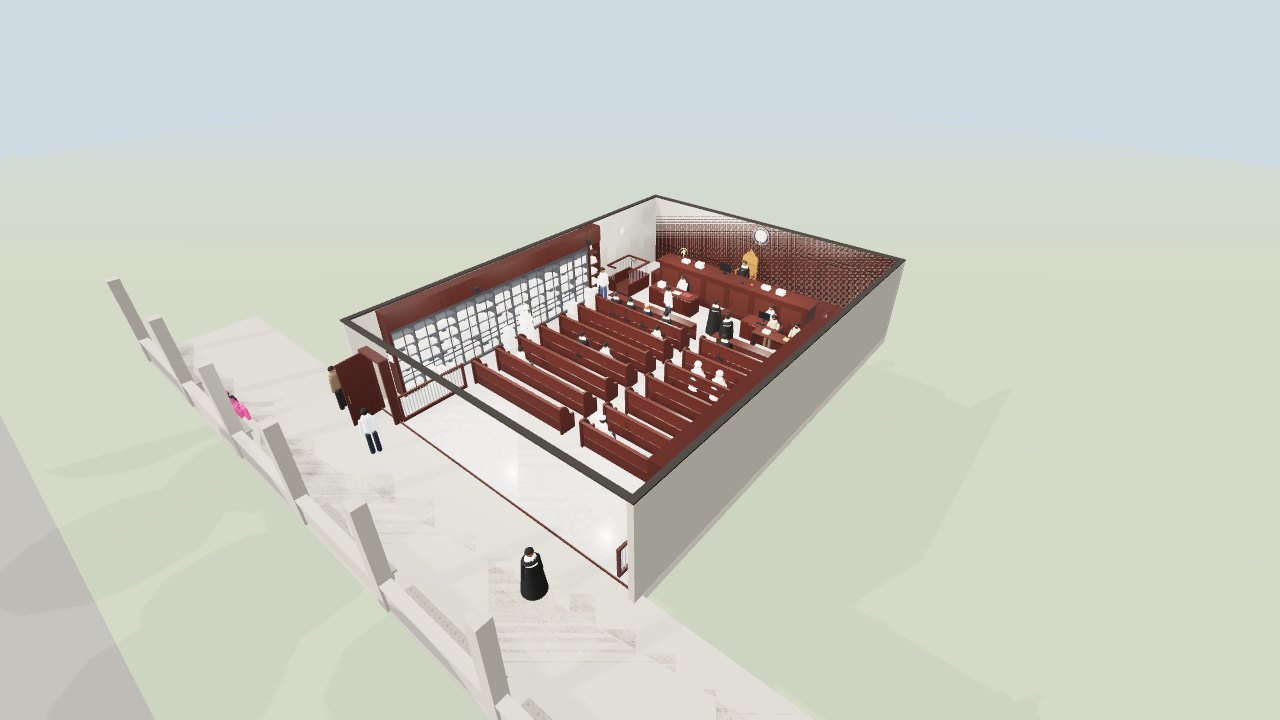
Each stage below adds papers to the police case file. See what a Dhaka sessions courtroom looks like in our 3D courtroom tour.
Police station
The complaint is recorded as an FIR under section 154; the court later gives the case a GR number.
First production
Within 24 hours the accused reaches the magistrate with a forwarding report; the defence files a vakalatnama and bail petition.
Remand and custody
The magistrate rules on remand and bail; if bail is refused, a warrant sends the accused to jail.
Investigation
The officer gathers evidence and keeps a case diary; bail and time petitions follow.
Police report
A charge sheet or final report is filed; the informant may file a naraji; the court takes cognizance.
Trial
Charge or discharge, witnesses, examination under section 342, arguments and judgment.
Appeal and higher courts
Appeal, revision and bail go to the Sessions Judge or the High Court Division.
Stage 1: the police station
Who files: the victim, a relative, a witness or a police officer. Papers: the ejahar, the FIR, the general diary entry and, after an arrest, the arrest memorandum and any seizure list. In cases under the Nari-O-Shishu Nirjatan Daman Ain, 2000 (the Women and Children Repression Prevention Act), a complainant with initial evidence must be recorded at once, even at a station outside her area, which then sends it to the right station.[11]
Stage 2: the Chief Metropolitan Magistrate's court and GR section
Court: in Dhaka, the Chief Metropolitan Magistrate's court; elsewhere, the Chief Judicial Magistrate's court. Who files: the police (forwarding report, case diary extract, remand prayer); the defence lawyer (a vakalatnama, called okalatnama, the signed paper appointing the lawyer, and a bail petition); later, hazira (attendance) papers. What happens: the magistrate checks whether the arrest rules were followed and decides on remand, bail or jail.[1][3]
Stage 3: the remand hearing and custody warrant
Who files: the investigating officer (remand prayer); the defence (objection and bail petition). What happens: the magistrate may refuse remand, grant fewer days or grant it with reasons recorded; if bail is refused, a custody warrant sends the accused to jail.[3]
Stage 4: the investigation period
Who files: the investigating officer (time extension requests); the defence (bail and time petitions). What happens: the officer examines witnesses and collects reports. Investigation must now finish within sixty working days unless the magistrate extends time.[6]
Stage 5: police report, naraji and cognizance
Who files: the police (charge sheet or final report); the informant (a naraji petition objecting to a final report). What happens: the magistrate takes cognizance, orders further investigation or accepts the final report.[9] Cases triable only by a Court of Session are sent there. Nari-O-Shishu and Special Powers Act cases go to the tribunal or Special Tribunal, which takes cognizance on the police report itself; dowry simple hurt under section 11(ga) now stays with a magistrate.[1][11][14]
Stage 6: charge, trial and judgment
Who files: the prosecution (witness lists, summons requests); the defence (discharge petition, defence witness list); both sides, hazira on every date. What happens: the court discharges the accused or frames a charge, hears the prosecution witnesses, examines the accused under section 342, hears any defence evidence and arguments, and gives judgment.[1] See our guide to framing of charges.
Stage 7: appeal, revision and higher-court bail
Court: the Sessions Judge (the Metropolitan Sessions Judge in Dhaka) or the High Court Division. Who files: the convicted person (appeal, with a certified copy of the judgment); the State (appeal against acquittal); either side (revision). What happens: appeals from a Metropolitan Magistrate go to the Sessions Judge, and from a Court of Session to the High Court Division.[1] Tribunal and Special Tribunal appeals go to the High Court Division within thirty days.[11][14]
The complaint and the FIR
Section 154 of the CrPC says information about a cognizable offence given to an officer-in-charge "shall be reduced to writing", read over, signed by the informant, and entered in a book in the prescribed form.[2] A cognizable offence is one for which police may arrest without a warrant. For a non-cognizable offence, section 155 says the officer notes the substance and refers the informant to the magistrate.[1] See our guide on GD vs FIR.
What the PRB adds
- The information "that shall first reach the police, whether oral or written" is the first information, even if it is hearsay.[9]
- Officers must not delay the FIR to test the complaint, or wait for a medical result when grievous hurt is reported.[9]
- An FIR, once recorded, "shall on no account be cancelled" by station officers.[9]
- Where police receive news of a crime by phone or telegram, an officer may "himself lodge a first information", which is how police-initiated FIRs arise.[9]
Delay and police-initiated cases
The FIR form asks for the reasons for any delay. An unexplained gap is a standard defence point; an honest explanation, such as time in hospital, usually matters less. In police-initiated cases, the defence looks hard at the arrest story, the independent witnesses and the seizure list, because informant and investigator often come from the same station.
Getting a copy of the FIR
Section 154 does not itself give the informant a free copy at the station. Families usually obtain a certified copy from the court record: any person affected by an order may apply for a copy of any part of the record under section 548, paying the fee.[1] Our guide to the certified copy application walks through the form.
Arrest and the forwarding report
Article 33 of the Constitution says an arrested person must be told the grounds of arrest "as soon as may be", may consult a lawyer of his choice, and must be produced before the nearest magistrate within twenty-four hours, excluding travel time.[7] Section 61 of the CrPC repeats the limit for arrests without warrant.[1]
New arrest papers since 2025
The Code of Criminal Procedure (Amendment) Act, 2026 (Act No. XI of 2026), treated as in force from 10 August 2025 (its interim investigation report rule from 10 July 2025), added duties that create new papers.[6]
Under new section 46A, the arresting officer must show identification, prepare a memorandum of arrest attested by a family member or local resident, tell a nominated relative within twenty-four hours where the person is held (if arrested away from home), arrange a medical check for any injury, and allow the person to consult a lawyer, preferably within twelve hours.[6]
The memorandum, in new Form IA, goes to the magistrate with the arrested person. Sections 46B to 46E add a general diary entry, information for relatives and a government doctor's examination of a sick or injured person. Section 54A requires reasons for a warrantless arrest to be given at the time, and section 67A requires the magistrate to check that the arrest rules were followed.[1][6]
The forwarding report
If the investigation cannot finish within 24 hours, section 167(1) requires the officer-in-charge or an investigating officer of at least Sub-Inspector rank to send the nearest Judicial Magistrate a copy of the case diary entries and forward the accused.[3] The Appellate Division's guidelines in Bangladesh v Bangladesh Legal Aid and Services Trust (BLAST) (2016) add that the forwarding letter must say why the investigation cannot finish in 24 hours and why the accusation is well founded, attaching the case diary entries in B.P. Form 38. Without those entries, the magistrate must release the person on a bond.[8]
Police remand under section 167
"Remand" in everyday usage means police custody for questioning. Section 167(2), as substituted in 2026, lets the magistrate authorise detention for up to fifteen days in the whole, and adds that no magistrate shall authorise police custody in a case "for a period exceeding fifteen days in the whole". Further detention must be judicial custody, meaning jail or other non-police custody under a court order. The magistrate must record reasons for police custody.[3] TRW regularly appears at remand hearings for clients; our guide to police remand hearings goes deeper.
New section 167(2A) lets the magistrate order a medical examination at a government hospital before handing the accused to police. When remand ends, the accused must be produced without unnecessary delay, and any injury or torture allegation must lead to a medical examination.[3]
What the magistrate should check
- Is a case registered? Registration is a precondition for custody under section 167(2).[8]
- Are the case diary entries produced, and do they support the stated grounds?[8]
- Does the forwarding report show the real aim is preventive detention? If so, section 167A bars judicial custody.[1]
- If police want to "show arrest" someone already held in another case, is he produced with that case's diary entries and heard (section 167A)?[1]
Suppose police seek three days' remand to trace absconding co-accused without saying what this accused can reveal: the defence can argue the grounds are general, and the magistrate may cut the days, refuse remand or grant bail. If the investigation is not finished within 120 days, section 167(5) allows bail by the magistrate or the Court of Session, depending on the punishment.[3]
The interim custody warrant under section 344
When bail is refused, the jail needs written authority to hold the accused: the custody warrant in the police case file. The printed form cites section 344, which lets a court adjourning an inquiry or trial "by a warrant remand the accused if in custody", but no magistrate may remand "for a term exceeding fifteen days at a time".[1][8]
During investigation, the basis for keeping someone in jail is the judicial custody now described in section 167(2).[3] The BLAST guidelines add that where investigation cannot finish within the section 167 period and the case is triable only by a Court of Session or tribunal, the magistrate may remand under section 344 for up to fifteen days at a time.[8] So the warrant is renewed date by date: the accused is produced, bail can be argued again and, if refused, a fresh warrant issues.
- Police remand: custody with the investigating officer, capped at fifteen days in the whole for a case.[3]
- Jail custody (hajot): detention in prison under the magistrate's warrant, for no more than fifteen days at a time.[1]
Check the warrant's blanks: offence, law, production date and jail. Then see our guides to the bail process and the bail bond and release order.
Medical evidence and privacy
In assault and gender-based violence cases, the medical papers are often the strongest independent evidence in the police case file. Under section 32 of the Nari-O-Shishu Ain, the victim and the accused can be examined at a government hospital or a recognised private hospital, and no fee is payable at a government hospital when the victim attends in person or police produce the victim or accused.[11]
A lawyer reads the injury report alongside the complaint and forwarding report. Do the times of occurrence agree? Does the history given to the doctor match the complaint? The doctor is usually called to prove the report, though section 509 allows a medical witness's deposition taken before a magistrate to be used.[1]
Dignity and privacy
Section 14 of the Nari-O-Shishu Ain bars publishing names, addresses, photographs or other information revealing a woman or child victim's identity, including online and on social media, on pain of up to two years' imprisonment, a fine of up to one lakh taka, or both.[11] The words on photographs and social media came in with the 2026 amending Act.[12] Never share pages of a police case file in group chats.
Seizure lists and counterfeit notes
For a search, section 103 of the CrPC requires two or more respectable local residents to witness it, and a list of everything seized, and where it was found, signed by them.[5] An investigating officer searching without a warrant under section 165 must first record his grounds in writing. Items taken from an arrested person must now be listed in a witness's presence, with a copy to the person or his nominee.[1]
In the seizure list (jobdo talika) in a police case file, lawyers check that the witnesses are independent locals, that time and place match the FIR, and that the notes are described and sealed.
Section 25A of the Special Powers Act
Section 25A of the Special Powers Act, 1974 punishes counterfeiting currency notes or Government stamps, dealing in or using counterfeit notes as genuine, and possessing counterfeiting equipment, with death, life imprisonment or up to fourteen years' rigorous imprisonment, and a fine.[14]
Offences under the Act are listed in its Schedule and triable only by a Special Tribunal.[15] They are cognizable, and an accused in custody gets bail only if the prosecution is heard and, where it objects, the court finds reasonable grounds to believe he is not guilty.[14] A draft Counterfeit Currency Prevention Act was published for comment in July 2026; until a new law takes effect, section 25A applies.[16]
Charge sheet, final report and cognizance
The investigating officer keeps a case diary day by day; it never enters the defence's police case file, as the accused cannot demand to see it.[1] New section 173B requires investigations to finish within sixty working days of the information; if not, the officer must apply to the magistrate with reasons, and delay beyond any extension can lead to transfer of the investigation.[6] Nari-O-Shishu cases (except section 11(ga), which follows the CrPC) have shorter limits: fifteen working days if the accused was caught in the act, otherwise thirty, extendable by fifteen.[11]
Charge sheet or final report
At the end, the officer-in-charge sends a report under section 173 to the magistrate and tells the informant what was done.[4] If the evidence supports prosecution, this is a charge sheet (B.P. Form No. 39); if not, a final report (B.P. Form No. 42) giving reasons.[9] A charge sheet comes with the documents and witness statements relied on; the accused can get a copy of the report before trial, and further investigation remains possible.[4]
Naraji and cognizance
Against a final report, the informant can file a naraji petition (নারাজি, an objection). The Appellate Division has said the magistrate "is not bound to accept the police report".[8] Under PRB regulation 276, he may accept it, order further enquiry or take cognizance under section 190(1)(b).[9]
Cognizance means the court formally takes up the offence, which a magistrate may do on a police report under section 190; cases triable only by a Court of Session are then sent there under section 205C.[1] A Nari-O-Shishu tribunal and a Special Tribunal each take cognizance on a written police report from a Sub-Inspector or above; a tribunal can also act on a sworn complaint if police refused to record the case.[11][14]
| Case | Trial court | Appeal | Basis |
|---|---|---|---|
| Magistrate-triable offence | Metropolitan Magistrate | Sessions Judge | CrPC ss 190, 408 |
| Sessions-triable offence | Sessions or Additional Sessions Judge | High Court Division | CrPC ss 205C, 410 |
| Nari-O-Shishu offence (not 11(ga)) | Nari-O-Shishu tribunal | High Court Division, 30 days | Ain ss 26 to 28 |
| Dowry simple hurt, s 11(ga), from 25 March 2025 | First-class magistrate | Under the CrPC | Ain s 35 |
| Counterfeit notes, SPA s 25A | Special Tribunal | High Court Division, 30 days | SPA ss 26, 27, 30 |
Dowry cases and the 2026 changes
Section 11 of the Nari-O-Shishu Ain punishes a husband, his relatives or anyone acting for him who, for dowry, kills or tries to kill the woman, or causes her grievous or simple hurt; clause (ga) covers simple hurt. Section 30 punishes abettors as principals.[11] In the docket we describe, the FIR cites section 11(ga) with section 30.
The Nari-O-Shishu Nirjatan Daman (Amendment) Act, 2026 (Act No. 85 of 2026), dated 10 April 2026, is treated as in force from 25 March 2025.[12] For dowry cases it:
- raised the punishment for section 11(ga) to two to five years' rigorous imprisonment and a fine, from one to three years;[11]
- added section 35, making 11(ga) offences triable by a first-class magistrate, cognizable, compoundable (open to settlement) and non-bailable, with the CrPC and Evidence Act governing the case;[11]
- kept 11(ga) cases already pending before a tribunal there, and lets a tribunal try an 11(ga) charge together with a linked tribunal offence;[11] and
- cut the time to appeal from a tribunal to the High Court Division from sixty to thirty days.[11]
So check a dowry hurt case's filing date against 25 March 2025 before assuming which court is next. Separately, demanding, giving or taking dowry is an offence under sections 3 and 4 of the Dowry Prohibition Act, 2018, with one to five years' imprisonment, a fine of up to fifty thousand taka, or both; these offences are cognizable, non-bailable and compoundable.[13] See our guide to dowry law in Bangladesh.
For offences still before the tribunal, section 19 bars bail for the main accused without first hearing the complainant side, or where the court sees reasonable grounds to believe the charge. Section 17 punishes filing a case knowing it has no lawful ground.[11]
Police case file checklist for families
TRW handles police cases, remand hearings and bail for clients, and the first step is always to put the police case file in date order and compare the papers.
Copies to get
- Certified copies of the FIR, forwarding report, order sheet and seizure list from the court record.[1]
- A copy of the charge sheet or final report, which the accused is entitled to before trial.[4]
- At trial, copies of a prosecution witness's police statement for cross-examination.[1]
What to compare
- Dates and times: occurrence, report, arrest, medical examination and the "seen" stamp.
- Places: occurrence, arrest and seizure.
- Sections: the complaint margin, FIR, forwarding report and warrant should match.
- Delay and remand grounds: are they explained, and specific to this accused?
What families should keep
Write the case number, GR number, police station and court on the docket cover. Keep every certified copy in date order with the vakalatnama and receipts, a list of hearing dates and outcomes, and medical records kept private. For the full picture, read our criminal case process guide.
Test yourself
Frequently asked questions
What is a GR case in Bangladesh?
A police case: one that began with an FIR at a police station. GR stands for General Register, which court officers keep so the magistrate can see all cognizable cases reported to police. A complaint filed directly before a magistrate is a CR case and stays out of that register unless sent to police to investigate.[9]
What is the difference between the ejahar and the FIR?
The ejahar is the complainant's written account to the officer-in-charge. The FIR is the police record of that first information under section 154 of the CrPC, signed by the informant.[2] The Police Regulations, Bengal require it in B.P. Form No. 27, and a written complaint that first reaches police counts as the first information.[9]
How long can police keep someone before court?
No more than twenty-four hours after arrest, excluding the journey, unless a magistrate authorises further detention. Article 33(2) of the Constitution and section 61 of the CrPC set this limit.[7][1] The police must then forward the accused to the magistrate with a forwarding report and the case diary entries under section 167.[3]
What is the maximum police remand?
What is the interim custody warrant in the file?
The magistrate's written order to the jail to hold the accused and produce him on the next date. The printed form cites section 344 of the CrPC, which allows remand to custody on adjournment for no more than fifteen days at a time.[1]
Can the accused see the police case diary?
No. Under section 172 of the CrPC, the court may use the diary to help it, but the accused cannot call for it or see it merely because the court refers to it. If the officer uses it to refresh his memory, or the court uses it to contradict him, the Evidence Act rules on those uses apply.[1]
What can the complainant do if police file a final report?
File a naraji (objection) petition. The Appellate Division has held that the magistrate is not bound to accept the police report, and may order further investigation or take cognizance.[8][9] In Nari-O-Shishu cases, the tribunal may appoint a new investigating officer, who must finish within fifteen working days.[11]
Which court tries a dowry assault case now?
Simple hurt for dowry under section 11(ga) of the Nari-O-Shishu Ain is now triable by a first-class magistrate under new section 35, added by Act No. 85 of 2026 and treated as in force from 25 March 2025. It is cognizable, compoundable and non-bailable. Cases already pending before a tribunal stay there.[11][12]
Where do appeals from a Special Tribunal or Nari-O-Shishu tribunal go?
Can anyone post the victim's name or photo?
No. Section 14 of the Nari-O-Shishu Ain bars publishing information, including names, addresses or photographs, that reveals a woman or child victim's identity, in print, online or on social media. The penalty is up to two years' imprisonment, a fine of up to one lakh taka, or both.[11] Keep the police case file private.
Source register
Primary legal and regulatory sources
Materials checked on 23 November 2026. Confirm the current official text before relying on any provision.
- The Code of Criminal Procedure, 1898 (Act No. V of 1898)
- CrPC section 154: Information in cognizable cases
- CrPC section 167: Procedure when investigation cannot be completed in twenty-four hours
- CrPC section 173: Report of police-officer
- CrPC section 103: Search to be made in presence of witnesses
- Code of Criminal Procedure (Amendment) Act, 2026 (Act No. XI of 2026)
- Constitution of Bangladesh, article 33: Safeguards as to arrest and detention
- Bangladesh v BLAST, Civil Appeal No. 53 of 2004, 8 SCOB [2016] AD 1, Supreme Court of Bangladesh
- Police Regulations, Bengal, 1943, as applied in Bangladesh
- Immigration and Refugee Board of Canada: Bangladesh, police complaints and FIRs (BGD200855.E, 2022)
- নারী ও শিশু নির্যাতন দমন আইন, ২০০০ (Nari-O-Shishu Nirjatan Daman Ain, 2000)
- নারী ও শিশু নির্যাতন দমন (সংশোধন) আইন, ২০২৬ (Act No. 85 of 2026)
- যৌতুক নিরোধ আইন, ২০১৮ (Dowry Prohibition Act, 2018)
- The Special Powers Act, 1974 (Act No. XIV of 1974)
- The Special Powers Act, 1974: The Schedule
- Prothom Alo (Bangla): draft counterfeit currency law, 9 July 2026
Related TRW assistance
Move from information to a defined next step
If someone close to you has been arrested, named in an FIR or sent to jail on a custody warrant, TRW can review the police case file, appear at the remand and bail hearings and follow the case through investigation and trial. Contact our Dhaka lawyers with the police station, case number and court name.











