
Complaint against a lawyer in Bangladesh: the Bar Council route, step by step
A complaint against a lawyer in Bangladesh for professional or other misconduct is made to the Bangladesh Bar Council, which either rejects it summarily or refers it to one of its three-member Tribunals under the Bangladesh Legal Practitioners and Bar Council Order 1972. After notice to the advocate and the Attorney-General and a hearing on evidence, the Tribunal can dismiss the complaint or reprimand, suspend or remove the advocate.
Any person aggrieved can appeal to a Division Bench of the High Court Division within ninety days.
- Where it starts
- Bangladesh Bar Council, Dhaka (written complaint to the Council, which refers it to a Bar Council Tribunal)
- Main law
- Bangladesh Legal Practitioners and Bar Council Order 1972 (P.O. 46 of 1972), Articles 10, 32-38; Bangladesh Legal Practitioners…
- Typical duration
- Scrutiny by the Council: 1-3 months. Tribunal enquiry: about 6-24 months. Appeal to the High Court Division: about 1-2…
- Who can file
- Any person, usually a client or opponent, or any court; the Bar Council may also refer a case on its own motion
Complaint against a lawyer in Bangladesh: walk through every stage
Press next, use your arrow keys or tap a court on the map. The gold marker shows where your case is, and the green trail shows the route it has taken. For the immersive version, play it full screen.
Read every step as text
 Step 1 · Before complaining
Decide whether it is misconduct
Before making a complaint against a lawyer in Bangladesh, the client needs to separate misconduct from disappointment. The Bar Council can punish an advocate found guilty of professional or other misconduct, measured against the standards of conduct and etiquette the Council lays down. Typical examples are misappropriating client money, taking fees and then not appearing, deceiving the court, conflicts of interest, and withholding a client's papers. Losing a case, or advice that turned out wrong, is not in itself misconduct.
The Council's own guidance asks complainants to file only for unethical conduct, not for disagreements or poor work.
Where: Complainant's adviser (another lawyer or legal aid) · Time: 1-7 days · Law: Article 10(c)-(d) P.O. 46 of 1972; Article 32(1) P.O. 46 of 1972; Canons of Professional Conduct and Etiquette (Bangladesh Bar Council) · Documents: Timeline of the engagement, Fee receipts and correspondence
Tip: Check that the person is an enrolled advocate. Complaints against unregistered touts or clerks belong with the police, not the Bar Council.
 Step 2 · Before complaining
Ask for the file, an account and an explanation
In most cases it pays to write to the advocate first, asking for the return of original documents, a statement of fees received and money held, and an explanation of what happened in court. Many disputes about papers and accounts end at this stage. The letter also creates evidence: a refusal or silence supports the later complaint, and a written reply may contain admissions. Keep a copy and proof of delivery, by registered post with acknowledgment due, courier or e-mail.
Where: Complainant's adviser (another lawyer or legal aid) · Time: 1-3 weeks · Law: Canons of Professional Conduct and Etiquette (duties to the client) · Documents: Demand letter, Postal receipt or e-mail record, Any reply
Tip: Ask for specific items by name, such as the original title deeds or the certified copy of the judgment. Vague requests invite vague replies.
 Step 3 · Before complaining
Collect the evidence
The Tribunal decides on evidence, so the complainant assembles the documents that prove the engagement and the misconduct: the vakalatnama or engagement letter, receipts or bank records of fees, messages and e-mails, order sheets showing the advocate's absence or a missed deadline, and copies of any dismissed or time-barred case. Where money was handed over for a deposit or court fee, proof of payment and the court record showing it was not deposited are central. Witnesses who were present at meetings should be identified.
Where: Complainant's adviser (another lawyer or legal aid) · Time: 1-3 weeks · Law: Article 35(1) P.O. 46 of 1972 (Tribunal's power to compel documents) · Documents: Vakalatnama, Fee receipts or bank statements, Court order sheets, Messages and e-mails, Witness list
Tip: Obtain certified copies of the order sheets from the court. They are the strongest proof of non-appearance.
 Step 4 · Filing and scrutiny
File the complaint with the Bar Council
The complaint is addressed to the Bangladesh Bar Council in writing and signed by the complainant. The Council's published procedure asks for its complaint form, photocopies of supporting papers, and a filing fee stated as BDT 1,000, and accepts complaints by post, e-mail or fax. The complaint should name the advocate with their enrolment details if known, set out the facts in date order, identify the conduct complained of and attach the evidence. A court can also make the complaint itself, and the Council can act on its own motion.
Where: Bangladesh Bar Council secretariat · Time: 1 day to file · Law: Article 32(2) P.O. 46 of 1972; Bangladesh Legal Practitioners and Bar Council Rules 1972 · Documents: Complaint form, signed, Copies of supporting documents, Filing fee receipt
Tip: Keep the complaint factual and in date order. Insults and speculation weaken it; documents strengthen it.
 Step 5 · Filing and scrutiny
Scrutiny: summary rejection or reference
The Council examines the complaint on its face. It may summarily reject it, for example where the facts disclose no misconduct or the matter is a pure fee dispute. If it does not reject it, the Council must refer the case to a Tribunal for disposal. The Council can also refer a case on its own motion where it otherwise has reason to believe an advocate has been guilty of misconduct, such as after a press report or a judge's remarks.
Where: Bangladesh Bar Council secretariat · Time: 1-3 months · Law: Article 32(2) P.O. 46 of 1972 · Documents: Council's decision, Order of reference to a Tribunal
Tip: Ask the secretariat for the reference number and the Tribunal assigned, so you can follow the case.
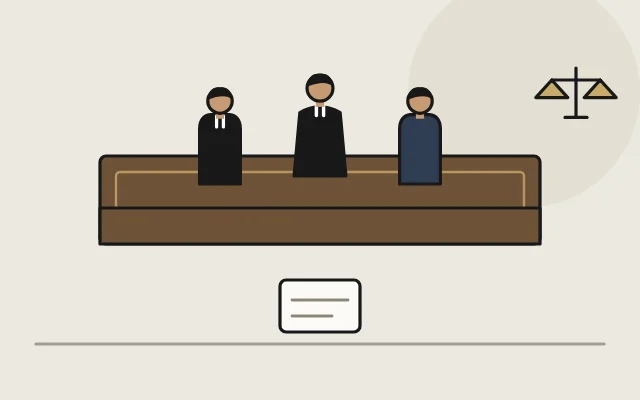 Step 6 · Tribunal enquiry
The Tribunal takes up the case
Each Bar Council Tribunal has three members: two elected by the Council from among its members and one advocate co-opted from the roll. The senior-most advocate among them chairs it, and the Attorney-General cannot sit on a Tribunal. A pending enquiry does not lapse when the Council's term ends: the same Tribunal completes it, unless the Chairman of the Bar Council transfers it to another Tribunal, which continues from the same stage. The Tribunal follows the procedure prescribed in the Bar Council's rules.
Where: Bar Council Tribunal · Time: 1-3 months to first listing · Law: Article 33(1)-(2) P.O. 46 of 1972; Article 34(1) P.O. 46 of 1972 · Documents: Case record transferred from the Council
Tip: If the Bar Council's term is ending, ask whether your enquiry will stay with the same Tribunal or be transferred.
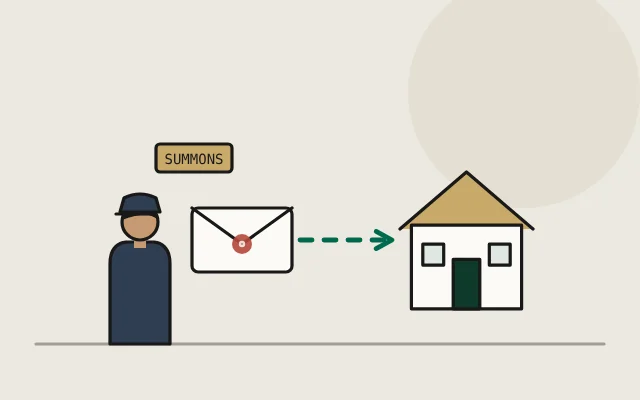 Step 7 · Tribunal enquiry
Notice to the advocate and the Attorney-General
The Tribunal fixes a hearing date and sends notice of it to the advocate concerned and to the Attorney-General for Bangladesh. Both must be given an opportunity to lead evidence and to be heard before any order is made. The Attorney-General's role reflects the public interest in the conduct of the profession. The complainant is notified to attend and prove the complaint. The advocate usually files a written reply answering each allegation.
Where: Bar Council Tribunal · Time: 1-3 months · Law: Article 34(2) P.O. 46 of 1972 · Documents: Notice of hearing, Advocate's written reply
Tip: Read the advocate's reply carefully and prepare documents that answer each defence before the evidence date.
 Step 8 · Tribunal enquiry
Preliminary issues
Objections such as the complaint being vague, the complainant lacking standing, or the matter being a mere fee dispute are often taken first. The Chairman of the Tribunal may empower one member to decide preliminary issues and to record evidence, which speeds things up because the full Tribunal need not sit for every hearing. A complaint that survives the preliminary stage moves to evidence.
Where: Bar Council Tribunal · Time: 1-6 months · Law: Article 34(3) P.O. 46 of 1972 · Documents: Written objections, Order on preliminary issues
Tip: Answer a 'fee dispute only' objection by showing the dishonesty or breach of duty, not just the amount of money involved.
 Step 9 · Tribunal enquiry
Evidence and witnesses
The complainant, the advocate and the Attorney-General may each lead evidence. The Tribunal has the powers of a civil court to enforce attendance of witnesses, compel production of documents and issue commissions, and it can send its summons to a local civil court for service. A judge or magistrate can be required to attend only with the sanction of the High Court Division or, for a criminal or revenue court officer, the Government. The enquiry is a judicial proceeding for the offences of false evidence and insulting the Tribunal.
Where: Bar Council Tribunal · Time: 3-12 months · Law: Article 34(2) P.O. 46 of 1972; Article 35(1)-(4) P.O. 46 of 1972 · Documents: Witness summons, Documentary exhibits, Depositions
Tip: Bring originals of key documents to the evidence date. Photocopies alone may be challenged.
 Step 10 · Decision
Tribunal's decision
On completing the enquiry, the Tribunal may dismiss the complaint or, where the case was referred on the Council's own motion, direct that the proceedings be filed. If misconduct is proved, it may reprimand the advocate, suspend them from practice for a stated period, or remove them from practice. It may order costs, and where it finds the complaint false and vexatious, it can also make the complainant pay the advocate deterrent costs of up to 500, a sum the Order still expresses in rupees.
This shows that the Tribunal takes a careless complaint against a lawyer in Bangladesh seriously too.
Where: Bar Council Tribunal · Time: 1-3 months after the hearing ends · Law: Article 32(1) P.O. 46 of 1972; Article 34(4)-(6) P.O. 46 of 1972 · Documents: Reasoned order, Costs order
Tip: Collect the certified order promptly. The ninety days for appeal run from the date the order is communicated.
- Step 11 · After the decision
Penalty entered on the roll
A reprimand or suspension is recorded against the advocate's name on the roll. A suspended advocate is barred from practising in any court or before any authority or person in Bangladesh for the period fixed. A removed advocate's name is struck off the roll at once. In both cases the advocate's certificate is recalled. An appeal to the High Court Division does not automatically suspend the penalty, so the order takes effect unless the High Court Division grants a stay.
Where: Bangladesh Bar Council secretariat · Time: Immediately after the order · Law: Article 34(5) and (9) P.O. 46 of 1972; Article 38 P.O. 46 of 1972 · Documents: Roll entry, Recall of certificate
Tip: If a suspended advocate keeps appearing in court, inform the court and the Bar Council in writing with a copy of the order.
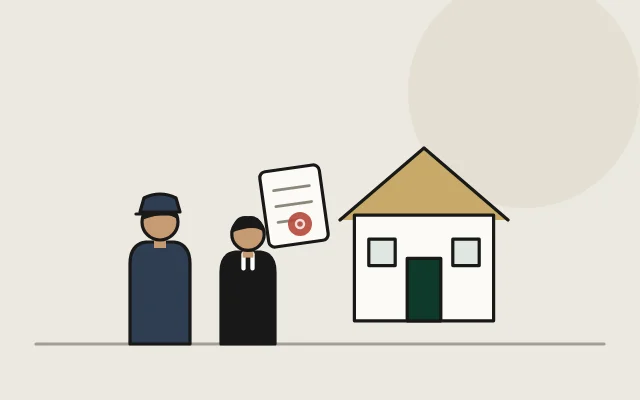 Step 12 · After the decision
Enforcing costs
Every order of the Tribunal for costs or deterrent costs is executable as if it were an order of the High Court Division. A party who is owed costs and is not paid can therefore apply for execution against the other side's assets rather than starting a new suit. In practice, costs awards are modest, so the main value of the Tribunal's order lies in the professional penalty and the findings, which can support separate civil or criminal proceedings.
Where: Court before which the advocate appeared, or civil and criminal courts · Time: 2-6 months · Law: Article 34(7) P.O. 46 of 1972 · Documents: Certified copy of the costs order, Execution application
Tip: Keep the certified order safe. You will need it both for execution and for any later civil claim.
 Step 13 · After the decision
Recovering money and papers in the ordinary courts
The Order gives the Tribunal power to punish, not to compensate: it has no express power to order a refund of fees or the return of a client's papers. A client who wants money back usually files a money suit in the civil court, and where money entrusted for a specific purpose was dishonestly used, can complain to a Magistrate of criminal breach of trust under the Penal Code, including the aggravated form for an attorney or agent entrusted with property in the way of business. These proceedings run independently of the Bar Council case.
A finding by the Tribunal may be useful evidence, but each forum decides on its own record.
Where: Court before which the advocate appeared, or civil and criminal courts · Time: 1-4 years · Law: Article 34(4) P.O. 46 of 1972; ss.406 and 409 Penal Code 1860; Code of Civil Procedure 1908 · Documents: Plaint or complaint petition, Tribunal's order, Proof of payment
Tip: Check limitation before relying on the Bar Council case. A money suit has its own deadline that keeps running while the enquiry is pending.
Walk through it from your side
Pick your side. The step-by-step journey above and the full-screen player will then show what you do at every stage.
Complainant
You want the Bar Council to refer your complaint to a Tribunal and the Tribunal to find professional or other misconduct and impose a reprimand, suspension or removal. You must prove the misconduct with documents and witnesses, not just show that a case was lost. Your biggest risk is a complaint that reads as a fee dispute or disappointment with the result, which may be summarily rejected, or one found false and vexatious, which can lead to costs against you.
Decide whether it is misconduct
You list what the advocate actually did or failed to do, with dates, and check whether it is misconduct, such as misusing money, not appearing after taking fees or withholding papers, rather than disappointment with the result. Confirm the person is an enrolled advocate.
Watch outA complaint that is really about losing the case or the quality of advice is likely to be summarily rejected.
Ask for the file, an account and an explanation
You write to the advocate asking for named original documents, a statement of fees received and money held, and an explanation of what happened in court. Send it by registered post with acknowledgment due, courier or e-mail, and keep proof of delivery.
Watch outAsk for specific items by name; a vague request invites a vague reply.
Collect the evidence
You assemble the vakalatnama or engagement letter, fee receipts or bank records, messages, certified order sheets showing absence or missed deadlines, and proof of any money given for court fees or deposits that was not used. Identify witnesses who were present at meetings.
Watch outGet certified copies of order sheets from the court; they are the strongest proof of non-appearance.
File the complaint with the Bar Council
You file a signed complaint on the Bar Council's form with photocopies of your evidence and the filing fee, by post, e-mail or fax. Set out the facts in date order, name the advocate with enrolment details if known and identify the conduct complained of.
Watch outKeep the complaint factual; insults and speculation weaken it and can count against you if the complaint is found vexatious.
Scrutiny: summary rejection or reference
You follow up with the secretariat for the reference number and, if referred, which Tribunal has the case. If the complaint is summarily rejected, you take advice on whether a writ petition is realistic.
Watch outA summary rejection is not appealable to the High Court Division under Article 36, so any challenge must be by writ.
The Tribunal takes up the case
You note the Tribunal assigned and its members, keep in touch with the secretariat about listing, and check whether the enquiry will stay with the same Tribunal if the Council's term is ending.
Watch outMissed listings delay the enquiry; ask to be told of every date.
Notice to the advocate and the Attorney-General
You attend on the notified date ready to prove your complaint, and when the advocate's written reply arrives you prepare documents answering each defence before the evidence date.
Watch outYour absence on the hearing date risks the complaint being dismissed.
Preliminary issues
If the advocate raises objections such as vagueness or a mere fee dispute, you respond by pointing to the dishonesty or breach of duty shown by your documents, not just the amount of money involved.
Evidence and witnesses
You give evidence, produce originals of key documents and bring your witnesses. If you need a court record or a witness who will not come voluntarily, ask the Tribunal to use its civil court powers.
Watch outBring originals; photocopies alone may be challenged.
Tribunal's decision
You collect the certified order promptly and read the reasons. If the complaint was dismissed and you consider it wrongly decided, you take advice on review by the Tribunal or an appeal to the High Court Division.
Watch outThe ninety days for appeal run from the date the order is communicated to you.
Penalty entered on the roll
You keep a certified copy of the order. If a suspended or removed advocate continues to appear, you inform the court and the Bar Council in writing with a copy of the order.
Enforcing costs
If you were awarded costs and they are unpaid, you apply for execution as the Order allows, using the certified order, instead of filing a fresh suit.
Watch outCosts awards are usually modest, so weigh the cost of execution.
Recovering money and papers in the ordinary courts
If you want money or papers back, you take advice on a money suit in the civil court or, where entrusted money was dishonestly used, a criminal complaint of criminal breach of trust, using the Tribunal's findings as supporting evidence.
Watch outLimitation for a money suit keeps running while the Bar Council case is pending.
Respondent advocate
You want the complaint rejected at scrutiny or dismissed after enquiry, or, if any fault is found, a proportionate outcome. You must answer each allegation with your file, accounts and court records, showing that you acted within the standards of conduct and etiquette. Your biggest risk is not engaging: ignoring the client's requests, the Council's correspondence or the Tribunal's notice leaves the complainant's account unanswered.
Decide whether it is misconduct
You may not know a complaint is coming. If a client is dissatisfied, you review your file, fee records and the order sheets, and keep them complete and safe. Consider whether a frank explanation or a meeting could resolve a misunderstanding early.
Watch outKeep your records exactly as they are; gaps or later changes will be hard to explain to a Tribunal.
Ask for the file, an account and an explanation
You reply in writing, promptly and courteously, returning the client's original papers where appropriate, giving an account of fees and any money held, and explaining the steps taken in the case. Keep a copy of your reply and proof of what was returned.
Watch outSilence or a refusal to return papers can itself be relied on later as evidence against you.
Collect the evidence
You put your own file in order: the engagement terms, fee receipts, accounts of any client money, correspondence, drafts filed and order sheets showing your appearances. Identify any colleague or clerk who can confirm what happened.
Watch outDo not contact the client or witnesses in a way that could look like pressure to withdraw.
File the complaint with the Bar Council
You are not yet a party, but you may learn of the complaint. You seek advice from a senior colleague or lawyer, gather your file and prepare to respond if the Council or a Tribunal calls on you.
Scrutiny: summary rejection or reference
If the Council invites your comments before deciding, you give a short, documented explanation showing why the facts disclose no misconduct, for example that the dispute is only about fees or the result of the case.
Watch outOverstated or inaccurate statements made at this stage can be used against you at the enquiry.
The Tribunal takes up the case
You check the Tribunal's composition and raise any genuine conflict of interest promptly. You instruct a lawyer if you wish to be represented and prepare to receive notice of the hearing.
Watch outRaise any objection to a member at the outset, not after an adverse order.
Notice to the advocate and the Attorney-General
You receive notice of the hearing and file a clear written reply answering each allegation, with supporting documents. The Attorney-General also receives notice and may lead evidence, so address the public-interest aspects as well as the client's allegations.
Watch outAnswer every allegation specifically; a point left unanswered is likely to weigh against you.
Preliminary issues
You consider raising preliminary objections, such as lack of standing, vagueness, or that the matter is purely a fee dispute, and support them with documents. One member may decide preliminary issues and record evidence.
Watch outPreliminary objections should be genuine; weak ones only lengthen the enquiry and can affect costs.
Evidence and witnesses
You give evidence, cross-examine the complainant's witnesses through your lawyer, and produce your file, accounts and order sheets. You may call your own witnesses and ask the Tribunal to summon documents.
Watch outThe enquiry is a judicial proceeding for false evidence, so everything said must be accurate.
Tribunal's decision
You collect the certified order and consider your options: compliance, an application for review, or an appeal to a Division Bench within ninety days. If the complaint was found false and vexatious, you may seek deterrent costs.
Watch outAn appeal does not stop the penalty taking effect unless the High Court Division grants a stay.
Penalty entered on the roll
If suspended, you stop practising before any court or authority for the period fixed and surrender the certificate as required. If you have appealed, you apply to the High Court Division for a stay if needed and inform your clients so their matters are covered.
Watch outPractising while suspended without a stay is a serious further breach.
Enforcing costs
You pay any costs ordered against you, or apply for review or appeal if you consider the order wrong. If costs or deterrent costs were awarded in your favour and remain unpaid, you can seek execution.
Watch outUnpaid costs orders are executable like an order of the High Court Division.
Recovering money and papers in the ordinary courts
If a civil suit or criminal complaint follows, you defend it on its own evidence with your own lawyer, relying on your accounts and file. Returning papers or settling a genuine accounts dispute may resolve the civil claim.
Watch outEach forum decides on its own record, so a favourable Tribunal outcome does not end a separate case automatically.
What if…? How the complaint against a lawyer in Bangladesh can change course
Choose a scenario. The map animates the route up the hierarchy and, where a case is sent back, down to the lower court and up again.
What if a party appeals the Tribunal's order?
- 1High Court Division
Appeal to a Division Bench of the High Court Division
Any person aggrieved by the Tribunal's order, whether the advocate, the complainant or the Attorney-General, may appeal to the High Court Division within ninety days of the order being communicated. A Division Bench hears it and may make any order it thinks fit, including reducing a removal to a suspension or a reprimand. Section 5 of the Limitation Act applies, so a late appeal can be admitted for sufficient cause, and section 12 excludes the time taken to obtain copies.
The appeal is not an automatic stay, but the court may stay the order on terms.
1-2 yearsArticle 36(1)-(2) P.O. 46 of 1972Article 37 P.O. 46 of 1972Article 38 P.O. 46 of 1972ss.5 and 12 Limitation Act 1908
Where it ends up: The High Court Division confirms, varies or sets aside the Tribunal's order.
Can the Tribunal review its own order?
- 1Bar Council Tribunal
Review by the Tribunal
The Tribunal may, of its own motion or on application, review any order dismissing the complaint, filing the proceedings, imposing a penalty, or awarding costs or deterrent costs, and may maintain, vary or rescind it. The Order sets no time limit for review, but an application should be made promptly and should not be used to delay the ninety-day appeal, which keeps running.
1-6 monthsArticle 34(8) P.O. 46 of 1972
Where it ends up: The Tribunal maintains, varies or rescinds its order, and the appeal route remains open.
What if a court refers the lawyer's conduct to the Bar Council?
- 1Court before which the advocate appeared, or civil and criminal courts
Complaint made by a court
A court that sees possible misconduct, such as a false affidavit or an advocate misleading the bench, can itself complain to the Bar Council. The High Court Division, like any other court, can make such a complaint about an advocate appearing before it.
With the court's orderArticle 32(2) P.O. 46 of 1972 - 2Bangladesh Bar Council secretariat
Council refers the court's complaint to a Tribunal
The Council treats the court's complaint like any other, scrutinising it and, unless it rejects it, referring it to a Tribunal. The judge's order or remarks become evidence, and the judge can be summoned only with the sanction the Order requires.
1-3 monthsArticle 32(2) P.O. 46 of 1972Article 35(1) proviso P.O. 46 of 1972
Where it ends up: The enquiry proceeds before a Tribunal in the same way as a client's complaint.
What if the Bar Council rejects the complaint summarily, and is there a revision?
- 1High Court Division
No revision; a writ is the residual remedy
Summary rejection by the Council is not an order of a Tribunal under Article 34, so the statutory appeal does not apply to it. Nor does civil revision under section 115 of the Code of Civil Procedure, which covers subordinate courts, not the Bar Council or its Tribunals. A complainant who believes a serious complaint was rejected arbitrarily or without considering the evidence may file a writ petition in the High Court Division against the Council as a statutory body.
Motion within weeks; final hearing 1-2 yearsArticle 32(2) P.O. 46 of 1972Article 102 Constitution of Bangladeshs.115 Code of Civil Procedure 1908
Where it ends up: The High Court Division either leaves the rejection in place or directs the Council to reconsider and refer the complaint.
What if the High Court Division sends the case back to the Tribunal?
- 1High Court Division
Order set aside and case sent back
Where the High Court Division finds a procedural defect, such as no proper notice to the advocate or the Attorney-General, or evidence wrongly shut out, it can set aside the order and send the case back for a fresh enquiry from the stage where the error occurred.
With the appeal judgmentArticle 36(2) P.O. 46 of 1972Article 34(2) P.O. 46 of 1972 - 2Bar Council Tribunal
Fresh enquiry and a new order
The Tribunal reopens the enquiry, takes the missing evidence or hears the omitted party, and passes a new order. That order is itself appealable within ninety days, so the case can return to the High Court Division.
3-12 monthsArticle 34(4) P.O. 46 of 1972Article 36(1) P.O. 46 of 1972
Where it ends up: A new Tribunal order is made, which can again be appealed to the High Court Division.
Can the case go to the Appellate Division?
- 1Appellate Division of the Supreme Court
Petition for leave to appeal
Article 36(2) declares the High Court Division's order on appeal final. The Appellate Division's power to grant leave to appeal from any High Court Division judgment comes from Article 103 of the Constitution, and is generally regarded as surviving a statutory finality clause. Leave can therefore be sought by a petition, normally within 60 days, but it is granted only on a substantial question of law. The Appellate Division can review its own judgment under Article 105.
1-2 yearsArticle 36(2) P.O. 46 of 1972Article 103(3) Constitution of BangladeshArticle 105 Constitution of Bangladesh
Where it ends up: The Appellate Division refuses leave, leaving the High Court Division's order final, or hears the appeal on the point of law.
How the complaint against a lawyer in Bangladesh moves up the court hierarchy
A complaint against a lawyer in Bangladesh never starts in an ordinary court. It goes first to the Bangladesh Bar Council, the statutory regulator, which acts as a filter: it can reject a complaint summarily or refer it to a three-member Bar Council Tribunal, which is the first-instance disciplinary forum. There are no money thresholds and no fixed limitation period for the complaint itself. The Tribunal hears evidence from the complainant, the advocate and the Attorney-General, and it can dismiss the complaint or reprimand, suspend or remove the advocate.
It can also review its own orders. The next level is the High Court Division, where a Division Bench hears appeals filed within ninety days. That appeal is a full rehearing on the record, of facts as well as law, and the bench can substitute its own penalty or send the case back. The Order calls the High Court Division's decision final. Further challenge depends on the Appellate Division granting leave under Article 103 of the Constitution on a point of law. Claims for refunds go separately to the civil courts.
- Appellate DivisionAppellate Division of the Supreme Court
- High Court DivisionHigh Court Division
- First instanceCourt before which the advocate appeared, or civil and criminal courts · Bar Council Tribunal
- Start · outside courtComplainant's adviser (another lawyer or legal aid) · Bangladesh Bar Council secretariat
Where your case is heard
Addresses are for Dhaka. Every district has equivalent courts at its own district judgeship.
Supreme Court of Bangladesh (Appellate Division and High Court Division)
Supreme Court of Bangladesh, Shahbag, Ramna, Dhaka-1000Hears appeals, revisions, references, writ petitions under Article 102, company matters and death references (High Court Division), and appeals by leave from the High Court Division (Appellate Division).
Both Divisions sit in the Supreme Court complex; many High Court Division benches sit in the Annex Building. Check the daily cause list for the bench and court room. Postal contact is the Registrar General, Supreme Court of Bangladesh, Ramna, Dhaka-1000.
Court of the District and Sessions Judge, Dhaka (Dhaka Judge Court)
Dhaka Judge Court premises, 16 Johnson Road, Sadarghat, DhakaSeat of the Dhaka District Judge and Additional District Judges (civil appeals, probate, district-level civil and sessions work outside the metropolitan area) and the civil courts of first instance (Joint District Judge, Senior Civil/Assistant Judge courts).
Official judiciary portal gives '16 Johnson Road, Sadarghat, Dhaka'. Many civil courts (Additional District Judge courts, Joint District Judge and Senior Assistant Judge courts, Artha Rin Adalat No.1, insolvency court) are in the new 8-storey District Judge Court building in the same premises. The 2026 judgeship list names the first-instance civil courts 'Senior Civil Judge' / 'Civil Judge' (formerly Senior Assistant Judge / Assistant Judge); some pages still use the old names. Every district has an equivalent court at its district judgeship.
Bangladesh Bar Council, Dhaka
Dhaka (exact address not confirmed)The statutory body that enrols and regulates advocates under the Bangladesh Legal Practitioners and Bar Council Order 1972. Complaints of professional misconduct are heard by its Tribunals, which can reprimand, suspend or remove an advocate.
Address could not be confirmed from an official source. Complaints are filed in writing with the Bar Council secretariat. An appeal against a Tribunal's order lies to the High Court Division. Check the current address before visiting.
Complainant's adviser (another lawyer or legal aid)
Where this happens depends on your district or the office concerned. Ask us for the exact courtroom and address.
How long each stage takes
These are indicative ranges based on typical Dhaka practice. Adjournments, case backlogs and appeals can stretch them.
Documents checklist and key terms
Tick off what you have. Your ticks stay saved in this browser. Bring the list to your first meeting with your lawyer.
- Bangladesh Bar Council
- The statutory body that enrols advocates, sets standards of professional conduct and decides misconduct cases through its Tribunals.
- Bar Council Tribunal
- A three-member disciplinary body of the Bar Council that holds the enquiry and decides the complaint.
- Misconduct
- Professional or other conduct by an advocate that falls below the standards of conduct and etiquette set by the Bar Council.
- Reprimand
- The mildest penalty, recorded against the advocate's name on the roll.
- Suspension
- A ban on practising before any court or authority in Bangladesh for a period fixed by the Tribunal.
- Removal from practice
- The severest penalty: the advocate's name is struck off the roll and the certificate is recalled.
- Deterrent costs
- Costs the Tribunal can order a complainant to pay the advocate where the complaint was false and vexatious.
- Roll
- The register of advocates maintained by the Bar Council.
Complaint against a lawyer in Bangladesh: common questions
Can I complain because my lawyer lost my case?
How do I file a complaint against a lawyer in Bangladesh?
Can the Tribunal order my lawyer to refund fees or return my file?
What penalties can be imposed?
How long does a complaint against a lawyer in Bangladesh take?
What happens if my complaint is found to be false?
Can I appeal if the Tribunal dismisses my complaint?
Can I file a criminal case as well?
Law and sources
- Bangladesh Legal Practitioners and Bar Council Order 1972 (P.O. 46 of 1972), Laws of Bangladesh
- Bangladesh Legal Practitioners and Bar Council Order 1972, full text mirror
- Bangladesh Bar Council: procedure for complaint against an advocate
- Bangladesh Bar Council: Bar Council Tribunals
- The Daily Star: How does the Bar Council Tribunal function? (18 February 2019)
- Limitation Act 1908
- Constitution of Bangladesh (Articles 102-105)
- Penal Code 1860
This Case Journey is a general guide to procedure in Bangladesh as of October 2026. It is not legal advice. Procedure, fees and time limits change, and every case turns on its own facts. Timelines are indicative. Speak to a lawyer about your own matter.
Run this case from outside Bangladesh
You can usually start and run this case without travelling. You sign a power of attorney abroad, the Bangladesh High Commission or Embassy attests it, and your attorney and lawyer act for you in Dhaka. Some steps, such as giving evidence in person, may still need you or a commission. See how a case runs through a power of attorney →
Want to know where your case stands?
Book a consultation. A TRW lawyer will place your matter on this map, explain the next step and the realistic timeline, and tell you what to prepare.











