
Land survey tribunal case in Bangladesh: correcting a wrong RS, BS or city survey khatian, step by step
A land survey tribunal case in Bangladesh is the suit under section 145A of the State Acquisition and Tenancy Act 1950 to correct a wrong entry in the finally published record-of-rights, such as an RS, BS or city survey khatian. It is heard by a Joint District Judge sitting as the Land Survey Tribunal, with appeal to a Land Survey Appellate Tribunal that the 2023 amendment finally made workable.
The deadline is short, and the published record is presumed correct until proved wrong.
- Where it starts
- Survey and settlement camp during the survey; after final publication, the Land Survey Tribunal (a Joint District…
- Main law
- State Acquisition and Tenancy Act 1950 ss.143-144B and Chapter XVIIA ss.145A-145I (inserted by Act IX of 2004, amended by the…
- Typical duration
- Statute: trial to end within 180 days of the date fixed for final hearing (s.145A(7A)). In practice, given heavy…
- Who can file
- Any person aggrieved by an entry in, or omission from, the last finally published record-of-rights, for example an…
Land survey tribunal case in Bangladesh: walk through every stage
Press next, use your arrow keys or tap a court on the map. The gold marker shows where your case is, and the green trail shows the route it has taken. For the immersive version, play it full screen.
Read every step as text
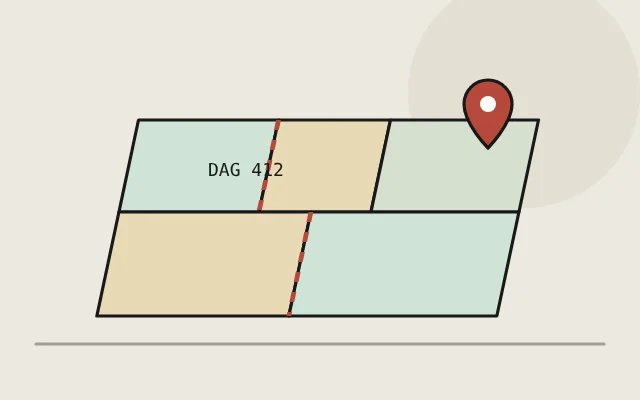 Step 1 · During the survey
Take part in the field survey and attestation
When the Government orders a survey under s.144, survey teams map each plot and record the owner, possessor and land class. Landholders are given a draft entry, often called the parcha or khatian draft, at the attestation stage. This is the cheapest moment to fix mistakes. Owners should attend, produce deeds, inheritance documents, mutation khatians and rent receipts, and check every plot number, area and name. Many later disputes in a land survey tribunal case in Bangladesh start because nobody attended the camp.
Where: Survey and settlement camp (Revenue-officer) · Time: Weeks to months while the camp operates · Law: s.144(1)-(4) State Acquisition and Tenancy Act 1950; State Acquisition and Tenancy Rules 1955 · Documents: Title deeds and via deeds, Previous CS, SA and RS khatians, Mutation (namjari) khatian, Land development tax receipts, Succession certificate or warish certificate
Tip: Keep the attestation slip. It shows what was recorded at the time and can later prove that an error crept in at a later stage.
 Step 2 · During the survey
Object to the draft record
After preparation, the Revenue-officer publishes the draft record-of-rights for a prescribed period and must receive and consider objections to any entry or omission. An objection is filed on the prescribed form with the supporting documents, and the officer hears the parties and decides. This stage is quick and inexpensive compared with litigation, and an order here creates a written record of the dispute that the Tribunal can later examine. Keep certified copies of the objection and the order.
Where: Survey and settlement camp (Revenue-officer) · Time: Within the publication period set by the camp · Law: s.144(5) State Acquisition and Tenancy Act 1950; State Acquisition and Tenancy Rules 1955 · Documents: Objection petition, Certified copy of draft entry, Supporting title and possession documents
 Step 3 · During the survey
Appeal the objection decision within the survey
A person dissatisfied with the decision on an objection may appeal to the prescribed Revenue Authority, an officer not below the rank of Assistant Settlement Officer, within the period set by the rules. The appeal officer can correct the draft. Only when all objections and appeals are disposed of is the record finally framed. Using these internal stages is not a legal precondition for a Tribunal suit, but it often resolves the error without one.
Where: Survey and settlement camp (Revenue-officer) · Time: 1-3 months · Law: s.144(6) State Acquisition and Tenancy Act 1950; State Acquisition and Tenancy Rules 1955 · Documents: Appeal petition, Certified copy of objection order
 Step 4 · During the survey
Final publication: the clock starts
The Revenue-officer then finally publishes the record and issues a certificate stating the date of final publication. That publication is conclusive evidence that the record was duly prepared. Under s.144A every entry is presumed correct until proved wrong by evidence. The date of final publication starts the one-year limitation period for a suit in the Land Survey Tribunal, so owners must find out the gazette or certificate date for their mouza.
Where: Survey and settlement camp (Revenue-officer) · Time: One date per mouza · Law: s.144(7)-(8) State Acquisition and Tenancy Act 1950; s.144A State Acquisition and Tenancy Act 1950 · Documents: Gazette or notice of final publication, Certificate under s.144(8), Certified copy of the final khatian and mouza map
Tip: Do not rely on the date the khatian copy was printed. Limitation runs from the final publication date of the record.
- Step 5 · Filing in the Tribunal
Collect certified records and plan the claim
Before filing, the lawyer collects certified copies of the final khatian and map, earlier survey khatians, the mutation record and rent receipts. These come from the record room or the land office. The claim must be framed correctly. The Tribunal decides whether the entry is wrong and orders correction, and it hears only suits arising out of the final publication. Wider disputes about title, partition or possession may need a civil suit. A routine mutation after a sale or inheritance is a separate process before the AC Land under s.143.
Where: Upazila or circle land office (AC Land) · Time: 2-6 weeks · Law: s.143 State Acquisition and Tenancy Act 1950; s.145A(4) State Acquisition and Tenancy Act 1950; s.145F State Acquisition and Tenancy Act 1950 · Documents: Certified final khatian and mouza map, Earlier khatians (CS, SA, RS), Mutation case file and DCR, Registered deeds
 Step 6 · Filing in the Tribunal
File the suit within one year
The aggrieved person files a plaint in the Land Survey Tribunal for the district. It must be filed within one year of final publication, or of the Tribunal's establishment if that is later. The Tribunal may admit a suit in the next year if it is satisfied with the reasons for delay. After two years the suit is barred. The plaint identifies the wrong entry and the correct one, and prays for a declaration and a direction to correct the record. The Government is normally impleaded, as are the persons wrongly recorded.
Where: Land Survey Tribunal · Time: Within 1 year of final publication (up to 2 with condonation) · Law: s.145A(6)-(7) State Acquisition and Tenancy Act 1950; s.145A(8) State Acquisition and Tenancy Act 1950; s.145F State Acquisition and Tenancy Act 1950 · Documents: Plaint with schedule of land (mouza, JL no., khatian, plot, area), Application explaining delay, if filed in the second year, Court fee, Vakalatnama
Tip: File within the first year whenever possible. Condonation in the second year is discretionary and has to be justified with evidence.
 Step 7 · Filing in the Tribunal
Court fee and valuation
The plaintiff pays court fee on the plaint. Where the suit seeks only a declaration that the record is wrong and a direction to correct it, it is usually treated as declaratory and attracts a fixed fee under Schedule II of the Court-fees Act 1870. Where recovery of possession or another consequential relief is added, ad valorem fee may be required. Practice varies, so the registry's view should be checked before filing. Underpaid fee can lead to the plaint being returned or rejected under Order VII CPC.
Where: Land Survey Tribunal · Time: Same day as filing · Law: Court-fees Act 1870 Schedule II; Order VII rule 11 CPC · Documents: Court fee stamps or e-challan, Valuation statement in the plaint
 Step 8 · Filing in the Tribunal
Summons and written statements
The Tribunal issues summons to the defendants. Under the CPC as amended in 2026, service can include post, courier, SMS, voice calls and instant messaging. The Government, through the Deputy Commissioner or the Government Pleader, and the private defendants file written statements defending the entry. The Tribunal has CPC powers to summon witnesses, order production of documents, accept evidence on affidavit, requisition public records and issue commissions.
The judge may keep the suit or transfer it to a Senior Assistant Judge or Assistant Judge (now Senior Civil Judge or Civil Judge) appointed under the 2023 amendment.
Where: Land Survey Tribunal · Time: 2-6 months · Law: s.145D(1) State Acquisition and Tenancy Act 1950; s.145A(3A)-(3C) State Acquisition and Tenancy Act 1950; Order V and Order VIII CPC · Documents: Process fees and addresses, Written statements, Transfer order, if any
 Step 9 · Evidence and hearing
Framing issues
The judge reads the pleadings and frames the issues. Typical issues are whether the suit is within time, whether the record-of-rights entry is wrong, who holds title and possession, and whether the plaintiff is entitled to the correction sought. Preliminary points, such as limitation or the suit being outside the Tribunal's jurisdiction, may be decided first. Both sides then file lists of witnesses and documents, including the certified record-of-rights entries they rely on.
Where: Land Survey Tribunal · Time: 1-3 months · Law: Order XIV CPC (followed in Tribunal practice); s.145A(6) State Acquisition and Tenancy Act 1950 · Documents: Issues framed by the court, Lists of witnesses and documents
 Step 10 · Evidence and hearing
Evidence to rebut the presumption
Because s.144A presumes the entry correct, the plaintiff carries the burden. Evidence usually includes registered deeds and the chain of title, earlier survey khatians, mutation records and rent receipts, plus witnesses to long possession such as neighbours or the local Union Parishad. The Tribunal can call for original survey papers and attestation records from the settlement office. In practice it often appoints a survey-knowing commissioner to measure and match the plot on the ground. Defendants then lead their evidence and both sides cross-examine.
Where: Land Survey Tribunal · Time: 6-18 months · Law: s.144A State Acquisition and Tenancy Act 1950; s.145D(1)(a)-(e) State Acquisition and Tenancy Act 1950; Order XXVI rule 9 CPC (as used in Tribunal practice) · Documents: Exhibited deeds and khatians, Requisitioned survey records, Commissioner's report and field book
- Step 11 · Evidence and hearing
Final hearing within 180 days
After evidence the lawyers argue the case. The 2023 amendment requires the Tribunal to conclude the trial within 180 days of the date fixed for final hearing, to cut down long delays. Press reports have put pending Tribunal cases nationally in the lakhs. Courts still grant adjournments, so parties should keep witnesses and documents ready and resist unnecessary time petitions. A land survey tribunal case in Bangladesh often turns on whether documents were properly exhibited at this stage.
Where: Land Survey Tribunal · Time: Up to 6 months from final-hearing date · Law: s.145A(7A) State Acquisition and Tenancy Act 1950 · Documents: Written arguments, Case law on rebutting s.144A
 Step 12 · Judgment and correcting the record
Judgment: declaration and direction to correct
The Tribunal delivers judgment and a decree. If the plaintiff succeeds, it declares the impugned entry incorrect and directs the concerned office to correct the record-of-rights in line with its decision. It may also pass other necessary orders, for example about the plot numbers or area. The proceeding is a judicial proceeding for perjury purposes. Subject to the Appellate Tribunal's decision on appeal, the Tribunal's judgment is final, and the record office must then correct the record-of-rights entry as directed.
Where: Land Survey Tribunal · Time: Judgment within weeks of hearing · Law: s.145A(8) State Acquisition and Tenancy Act 1950; s.145D(2) State Acquisition and Tenancy Act 1950; s.145E State Acquisition and Tenancy Act 1950 · Documents: Certified copy of judgment and decree
- Step 13 · Judgment and correcting the record
Get the record actually corrected
The winning party sends a certified copy of the decree to the office maintaining the record, through the Tribunal or directly. That is usually the Upazila or circle land office and the district record room, and for current surveys the settlement office. The officer corrects the khatian and map, and mutation can follow under s.143. If the office does not act, the party can apply back to the Tribunal for directions or, as a last resort, seek mandamus from the High Court Division. This completes a land survey tribunal case in Bangladesh.
Where: Upazila or circle land office (AC Land) · Time: 1-6 months · Law: s.145A(8) State Acquisition and Tenancy Act 1950; s.143 State Acquisition and Tenancy Act 1950; Article 102 Constitution · Documents: Certified decree, Application for correction, Corrected khatian copy
What if…? How the land survey tribunal case in Bangladesh can change course
Choose a scenario. The map animates the route up the hierarchy and, where a case is sent back, down to the lower court and up again.
What if the losing side appeals?
- 1Land Survey Appellate Tribunal
Appeal to the Land Survey Appellate Tribunal
Any person aggrieved by the Tribunal's judgment, decree or order may appeal within three months. The Appellate Tribunal may admit it within a further three months if satisfied with the reasons for delay. Since the 2023 amendment, the District Judge acts as the Appellate Tribunal until a separate judge is appointed, and may pass appeals to Additional District Judges. The appeal reconsiders facts and law.
File within 3 months; decision 6-24 monthss.145B(1)-(6) State Acquisition and Tenancy Act 1950State Acquisition and Tenancy (Amendment) Act 2023
Where it ends up: The Appellate Tribunal affirms, varies or reverses the judgment, and its decision is final under s.145E.
Can the High Court Division revise the Appellate Tribunal's decision?
- 1High Court Division
No statutory revision: writ under Article 102
Chapter XVIIA gives no revision to the High Court Division, and s.145E makes the Appellate Tribunal's decision final. Its procedural powers come from s.145D, not the full CPC. The usual route is a writ petition under Article 102, limited to lack of jurisdiction, illegality or breach of natural justice. Since the 2023 amendment, the High Court Division has sent some writ petitioners to the new appellate forum instead.
6-24 monthss.145E State Acquisition and Tenancy Act 1950Article 102 Constitution
Where it ends up: The writ is discharged, or the decision is declared unlawful and sent back for fresh consideration.
Can the Tribunal review its own judgment?
- 1Land Survey Tribunal
Review power is uncertain
Section 145D lists the CPC powers the Tribunal has, such as summons, discovery, affidavits, records and commissions, and review under Order XLVII is not among them. Whether a review lies is therefore uncertain and should be checked against current High Court Division decisions. Clerical or arithmetical slips can generally be corrected. For a real error of law or fact, the safe course is to appeal within three months.
Not reliable; appeal insteads.145D(1) State Acquisition and Tenancy Act 1950s.145B(5) State Acquisition and Tenancy Act 1950
Where it ends up: In practice, errors are corrected on appeal to the Appellate Tribunal rather than by review.
Can the Tribunal refer a legal question upward?
- 1High Court Division
No reference procedure
The CPC reference to the High Court Division under s.113 and Order XLVI is not among the powers given by s.145D, and Chapter XVIIA has its own complete appeal route. The Tribunal must decide the legal question itself. The party who loses on it raises the point on appeal to the Appellate Tribunal and, if necessary, in a writ before the High Court Division.
Not applicables.145D State Acquisition and Tenancy Act 1950s.145H State Acquisition and Tenancy Act 1950
Where it ends up: Legal questions are settled through appeal and writ, not by reference.
What if the Appellate Tribunal sends the suit back?
- 1Land Survey Appellate Tribunal
Judgment set aside and suit sent back
If the Tribunal decided only on limitation and was wrong, refused to consider requisitioned survey records, or failed to have the plot measured where identity was disputed, the Appellate Tribunal can set the judgment aside. It sends the suit back with directions, for example to admit evidence or hold a local investigation. Courts generally prefer to decide finally where the record is enough.
Part of the appeals.145B State Acquisition and Tenancy Act 1950s.145D(1)(e) State Acquisition and Tenancy Act 1950 - 2Land Survey Tribunal
Retrial and fresh judgment, then a new appeal
The Tribunal restores the suit, carries out the directions, takes any further evidence and gives a fresh judgment. The 180-day target for concluding the trial applies again. The losing party can bring a new appeal to the Appellate Tribunal within three months of the fresh judgment, so the case can come back up.
6-12 monthss.145A(7A) State Acquisition and Tenancy Act 1950s.145B(5) State Acquisition and Tenancy Act 1950
Where it ends up: The suit is decided again at Tribunal level and may return to the Appellate Tribunal.
Can the case go to the Appellate Division?
- 1Appellate Division of the Supreme Court
Leave to appeal against the writ judgment
If the High Court Division decides a writ about the Tribunal or Appellate Tribunal, the losing party may file a civil petition for leave to appeal under Article 103 within the time set by the Appellate Division Rules. The Appellate Division grants leave only on substantial questions. Its judgment binds all courts, and review under Article 105 is very narrow.
1-3 yearsArticle 103 ConstitutionArticle 105 ConstitutionArticle 111 Constitution
Where it ends up: The Appellate Division's decision ends the dispute over the record entry.
How the land survey tribunal case in Bangladesh moves up the court hierarchy
A land survey tribunal case in Bangladesh has its own track outside the ordinary civil courts. Before final publication, errors are handled inside the survey: an objection to the Revenue-officer under s.144(5), then an appeal to an Assistant Settlement Officer or higher under s.144(6). Once the record is finally published, the only forum is the Land Survey Tribunal, a Joint District Judge, whatever the land's value.
Civil courts are barred by s.145F, and the 2023 amendment lets Senior Assistant and Assistant Judges, now called Senior Civil Judges and Civil Judges, dispose of suits the Tribunal transfers to them. Appeal lies within three months to the Land Survey Appellate Tribunal, a District Judge, who may pass appeals to an Additional District Judge. That appeal reconsiders both facts and law, and its decision is final under s.145E. The High Court Division can be reached only by a writ under Article 102, on questions of jurisdiction and legality.
The Appellate Division hears the matter only with leave under Article 103.
- Appellate DivisionAppellate Division of the Supreme Court
- High Court DivisionHigh Court Division
- Appellate levelLand Survey Appellate Tribunal
- First instanceLand Survey Tribunal
- Start · outside courtSurvey and settlement camp (Revenue-officer) · Upazila or circle land office (AC Land)
Where your case is heard
Addresses are for Dhaka. Every district has equivalent courts at its own district judgeship.
Supreme Court of Bangladesh (Appellate Division and High Court Division)
Supreme Court of Bangladesh, Shahbag, Ramna, Dhaka-1000Hears appeals, revisions, references, writ petitions under Article 102, company matters and death references (High Court Division), and appeals by leave from the High Court Division (Appellate Division).
Both Divisions sit in the Supreme Court complex; many High Court Division benches sit in the Annex Building. Check the daily cause list for the bench and court room. Postal contact is the Registrar General, Supreme Court of Bangladesh, Ramna, Dhaka-1000.
Land Survey Appellate Tribunal
Dhaka (exact address not confirmed)Hears appeals from Land Survey Tribunal decisions under section 145B of the State Acquisition and Tenancy Act 1950.
Address could not be confirmed from an official source. Confirm the seat for the relevant division with the Dhaka judgeship office or the Supreme Court before visiting.
Land Survey Tribunal, Dhaka
Dhaka Judge Court premises, 16 Johnson Road, Sadarghat, DhakaHears disputes over final survey records of rights (khatian) under section 145A of the State Acquisition and Tenancy Act 1950.
Listed among the courts of the Dhaka District and Sessions Judgeship; its exact building and floor are not published, so the address given is the Dhaka Judge Court premises. Land Survey Tribunals sit at district judgeships across the country.
Survey and settlement camp (Revenue-officer)
Where this happens depends on your district or the office concerned. Ask us for the exact courtroom and address.
Upazila or circle land office (AC Land)
Where this happens depends on your district or the office concerned. Ask us for the exact courtroom and address.
How long each stage takes
These are indicative ranges based on typical Dhaka practice. Adjournments, case backlogs and appeals can stretch them.
Documents checklist and key terms
Tick off what you have. Your ticks stay saved in this browser. Bring the list to your first meeting with your lawyer.
- Record-of-rights (khatian)
- The official record listing each plot's owners, shares, possession and land class, prepared in a survey under s.144.
- CS, SA, RS, BS
- Successive surveys: Cadastral Survey, State Acquisition survey, Revisional Survey and Bangladesh Survey. City surveys cover metropolitan areas.
- Final publication
- The official publication of the finished record under s.144(7). It starts the one-year limitation period for a Tribunal suit.
- Presumption of correctness
- Under s.144A, a published entry is taken as correct until evidence proves otherwise.
- Land Survey Tribunal
- A Joint District Judge appointed or empowered under s.145A to hear suits arising from final publication of the record.
- Land Survey Appellate Tribunal
- The appeal forum under s.145B, now a District Judge or an Additional District Judge to whom appeals are transferred.
- Mouza and JL number
- The revenue village unit and its jurisdiction list number, used to identify land in every record.
- Mutation (namjari)
- Updating the record after a sale or inheritance before the AC Land under s.143. It is different from correcting a survey error.
Land survey tribunal case in Bangladesh: common questions
What is the deadline for a land survey tribunal case in Bangladesh?
Can I go to the ordinary civil court instead?
Who is the judge?
Why does the record seem to win automatically?
Where does an appeal go and how long do I have?
Can the High Court Division hear my case after the appeal?
Does winning automatically change the khatian?
How long will the case take in practice?
Law and sources
- The State Acquisition and Tenancy Act 1950, Laws of Bangladesh
- The State Acquisition and Tenancy Act 1950, mirror text
- State Acquisition and Tenancy (Amendment) Act 2023 (Act No. 24 of 2023), FAOLEX summary
- Bill placed in parliament seeking to ease case backlog (Dhaka Tribune, June 2023)
- Riddled with backlogs, land tribunals cry out for appellate courts (The Business Standard, August 2021)
- Absence of appeal court, judge crisis cripple land survey tribunals (Prothom Alo English)
- High Court Division, W.P. No. 5142 of 2019 (Land Survey Tribunal, Jessore; appeal now lies to the Appellate Tribunal)
- The Court-fees Act 1870
This Case Journey is a general guide to procedure in Bangladesh as of October 2026. It is not legal advice. Procedure, fees and time limits change, and every case turns on its own facts. Timelines are indicative. Speak to a lawyer about your own matter.
Run this case from outside Bangladesh
You can usually start and run this case without travelling. You sign a power of attorney abroad, the Bangladesh High Commission or Embassy attests it, and your attorney and lawyer act for you in Dhaka. Some steps, such as giving evidence in person, may still need you or a commission. See how a case runs through a power of attorney →
Want to know where your case stands?
Book a consultation. A TRW lawyer will place your matter on this map, explain the next step and the realistic timeline, and tell you what to prepare.











