
Public nuisance order in Bangladesh: the full journey, step by step
A public nuisance order in Bangladesh is a conditional order made by an Executive Magistrate under s.133 of the Code of Criminal Procedure to remove an obstruction from a public way, stop an offensive trade, make a dangerous building safe or fence a dangerous tank. The person named must either comply or appear and show cause.
If they do neither, or their objection fails, the order is made absolute and enforced. The procedure does not apply inside metropolitan areas such as Dhaka city, where other authorities and remedies take its place.
- Where it starts
- Court of the District Magistrate or any other Executive Magistrate (in Dhaka district outside the metropolitan area…
- Main law
- Code of Criminal Procedure 1898 ss.132A-143, 195, 435, 439, 439A, 561A (Chapter X, as amended in 1978 and by the CrPC (Amendment)…
- Typical duration
- 1 to 6 months for an uncontested order and 6 to 18 months if contested; much longer if a public-right question goes to…
- Who can file
- Anyone affected can give information, and the police often report. The Magistrate can also act on any other information
Public nuisance order in Bangladesh: walk through every stage
Press next, use your arrow keys or tap a court on the map. The gold marker shows where your case is, and the green trail shows the route it has taken. For the immersive version, play it full screen.
Read every step as text
 Step 1 · Before the order
Check that s.133 fits
A public nuisance order in Bangladesh under s.133 covers a fixed list of situations. These are an unlawful obstruction or nuisance on a way, river or channel used by the public, or in a public place; a trade, occupation or stored goods injurious to the community's health or comfort; construction or disposal of a substance likely to cause fire or explosion; a building, tent, structure or tree likely to fall; an unfenced tank, well or excavation next to a public way; and a dangerous animal. The nuisance must affect the public, not just one neighbour.
Chapter X does not apply in a metropolitan area.
Where: Lawyer's chamber · Time: 1-3 days · Law: s.133(1) CrPC; s.132A CrPC; s.268 Penal Code 1860 · Documents: Description of the nuisance, Location map
Tip: A purely private dispute, such as one neighbour's drain, belongs in a civil suit, not s.133.
 Step 2 · Before the order
Collect evidence of public harm
The Magistrate needs to see that the community, not one person, is affected. Useful evidence includes dated photographs and video, a petition signed by many local residents, medical certificates linking illness to smoke or effluent, school or mosque committee letters, and complaints already made to the Union Parishad or Paurashava. For a dangerous building or tree, an engineer's or forest officer's report showing the risk of collapse is strong evidence. For an obstructed public way, mouza maps and records showing long public use help answer a later claim that the way is private.
Where: Nuisance site (way, river, building, tank or trade premises) · Time: 1-3 weeks · Law: s.133(1) CrPC; s.139A CrPC · Documents: Photographs and video, Residents' petition, Medical certificates, Engineer's report, Mouza map
Tip: Gather proof of public use of a path from the start. It is the first thing tested if the respondent denies a public right.
 Step 3 · Before the order
Police report
The Magistrate acts on a police report or other information, and may take such evidence as they think fit before making the order. Residents often first give information at the police station, and the police then inquire and report to the Executive Magistrate. A police report confirming the obstruction or danger, with sketches and names of those responsible, carries weight. If the nuisance also amounts to an offence, such as causing danger in a public way, the police can prosecute separately under the Penal Code.
Where: Police station (thana) · Time: 1-4 weeks · Law: s.133(1) CrPC; s.283 Penal Code 1860; s.290 Penal Code 1860 · Documents: GD entry, Police report with sketch map
Tip: Ask the police to name the owner or occupier responsible. Orders against the wrong person cannot be enforced.
 Step 4 · Before the order
Petition before the Executive Magistrate
A petition is filed before the District Magistrate or any other Executive Magistrate with local jurisdiction. In Dhaka district outside the metropolitan area these courts sit at the Deputy Commissioner's office, and in an upazila the Upazila Nirbahi Officer usually acts. Since the separation of the judiciary these powers have belonged to Executive Magistrates, not Judicial Magistrates. The petition identifies the nuisance and the person causing or owning it, sets out the public harm and attaches the evidence. The Magistrate may hear the petitioner and call for a police or local inquiry report.
Where: Executive Magistrate's Court, Deputy Commissioner's Office, Dhaka · Time: 1 day to file · Law: s.133(1) CrPC; CrPC (Amendment) Act 2009 (Act XXXII of 2009) · Documents: Petition, Supporting affidavit, Evidence bundle, Court-fee stamp
Tip: A joint petition by several residents shows the harm is public and not a personal grudge.
 Step 5 · Conditional order and service
Conditional order under s.133
If satisfied, the Magistrate makes a conditional order. It requires the person to remove the obstruction, stop or regulate the trade, remove the goods, stop or repair the building, fence the tank or deal with the animal within a fixed time. Alternatively, it allows them to appear on a fixed date and move to have the order set aside or modified. This is the public nuisance order in Bangladesh in its first form. An order duly made under s.133 cannot be challenged in any civil court, so objections must be raised before the Magistrate.
Where: Executive Magistrate's Court, Deputy Commissioner's Office, Dhaka · Time: 1-4 weeks after filing · Law: s.133(1) CrPC; s.133(2) CrPC · Documents: Conditional order under s.133
Tip: Check that the order states exactly what must be done and by when. Vague orders are hard to enforce and easy to challenge.
- Step 6 · Conditional order and service
Service or proclamation
The order is served on the person named in the same way as a summons, if practicable. If personal service is not possible, it is notified by proclamation in the manner the Government's rules direct, and a copy is stuck up at the place or places best suited to bring it to that person's notice, usually at the site. Service matters because the penalty for disobedience depends on the person knowing of the order.
Where: Nuisance site (way, river, building, tank or trade premises) · Time: 1-4 weeks · Law: s.134(1)-(2) CrPC · Documents: Service return, Proof of proclamation and affixing
Tip: Photograph the order fixed at the site with a date stamp. It answers later claims of no notice.
 Step 7 · Conditional order and service
Interim injunction for imminent danger
If the Magistrate considers that immediate measures are needed to prevent imminent and serious danger or injury to the public, such as a building about to collapse onto a road, they may issue an injunction to the person named while the matter is decided. If the person does not obey at once, the Magistrate may personally use, or cause to be used, whatever means they think fit to prevent the danger. No suit lies for anything done in good faith under this power.
Where: Executive Magistrate's Court, Deputy Commissioner's Office, Dhaka · Time: Same day to 1 week · Law: s.142(1)-(3) CrPC · Documents: Injunction order, Record of measures taken
Tip: Ask for interim measures only where the danger is real and immediate, backed by an expert report.
 Step 8 · Show cause and inquiry
Comply or show cause
The person named must either do what the order requires, within the time and in the manner stated, or appear and show cause against it. If they do neither, they become liable to the penalty under s.188 of the Penal Code and the order is made absolute. Until 1978 a respondent could also ask for a jury to decide whether the order was reasonable, but that option was removed by the Law Reforms Ordinance 1978, and the Magistrate now decides alone.
Where: Executive Magistrate's Court, Deputy Commissioner's Office, Dhaka · Time: By the date fixed · Law: s.135 CrPC; s.136 CrPC; ss.138-139 CrPC (omitted by the Law Reforms Ordinance 1978) · Documents: Written objection, Evidence of compliance, if any
Tip: If you have already complied, file proof such as photographs or a completion certificate on the date fixed.
- Step 9 · Show cause and inquiry
Is a public right denied?
Where the order concerns obstruction or danger on a way, river, channel or place, the Magistrate must ask the respondent at the first appearance whether they deny that the public has any right over it. If they deny it, the Magistrate must inquire before going further. If there is reliable evidence supporting the denial, the proceeding is stayed until a civil court decides whether the public right exists. If there is none, the Magistrate proceeds. A respondent who fails to deny the right then, or offers no reliable evidence, cannot raise the denial later.
Where: Executive Magistrate's Court, Deputy Commissioner's Office, Dhaka · Time: 1-3 months · Law: s.139A(1)-(3) CrPC · Documents: Title deeds, Mouza map and khatian, Witness statements on public use
Tip: For the respondent, this is the moment to deny the public right with documents. Silence now means losing the point for good.
 Step 10 · Show cause and inquiry
Evidence on whether the order is reasonable
If the respondent shows cause, the Magistrate takes evidence in the manner provided in Chapter XX of the CrPC, the procedure for trying summons cases. Both sides call witnesses, who can be cross-examined, and expert reports are proved. The question is whether the conditional order is reasonable and proper. That means whether the nuisance exists, whether it affects the public, and whether the remedy ordered is proportionate. The Magistrate may visit the site.
Where: Executive Magistrate's Court, Deputy Commissioner's Office, Dhaka · Time: 1-6 months · Law: s.137(1) CrPC; Chapter XX CrPC (ss.241-249) · Documents: Depositions, Expert and engineer reports, Site inspection notes
Tip: Respondents often win by offering a lesser remedy, such as fencing instead of demolition. Put the alternative in writing.
 Step 11 · Order absolute and enforcement
Order dropped or made absolute
If the Magistrate is satisfied that the order is not reasonable and proper, no further proceedings are taken and the case ends. If not so satisfied, the order is made absolute. This final order is the enforceable public nuisance order in Bangladesh. No appeal lies against it under the CrPC, and the civil courts cannot question it, so the only challenge is criminal revision.
Where: Executive Magistrate's Court, Deputy Commissioner's Office, Dhaka · Time: 2-6 weeks after evidence · Law: s.137(2)-(3) CrPC; s.404 CrPC; s.133(2) CrPC · Documents: Order made absolute, Certified copy
Tip: Obtain a certified copy at once. Time for revision is short in practice, even though no fixed limit is written.
- Step 12 · Order absolute and enforcement
Notice to perform
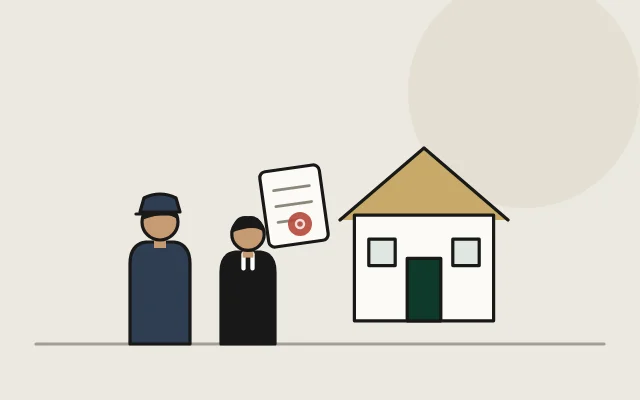
Once the order is absolute, whether under s.136 or s.137, the Magistrate gives notice to the person, requires them to perform the act within a time fixed in the notice, and warns that disobedience is punishable under s.188 of the Penal Code. This second notice gives a last chance to comply voluntarily before the Magistrate acts at the person's expense.
Where: Executive Magistrate's Court, Deputy Commissioner's Office, Dhaka · Time: As fixed in the notice · Law: s.140(1) CrPC · Documents: Notice under s.140(1)
Tip: Compliance within the notice period avoids both prosecution and the cost of the Magistrate's own work.
 Step 13 · Order absolute and enforcement
Work done at the respondent's cost
If the act is not performed in time, the Magistrate may have it done, for example by having the obstruction removed or the building propped up. The costs can be recovered by selling any building, goods or other property removed, or by distress and sale of the person's other movable property, even outside the Magistrate's limits if another Magistrate endorses the order. No suit lies for anything done in good faith under this provision.
Where: Nuisance site (way, river, building, tank or trade premises) · Time: 1-3 months · Law: s.140(2)-(3) CrPC · Documents: Work order, Cost account, Attachment and sale record
Tip: Keep an itemised account of costs. Recovery from movable property is challenged if the bill is unclear.
 Step 14 · Order absolute and enforcement
Prosecution for disobedience and repeat nuisances
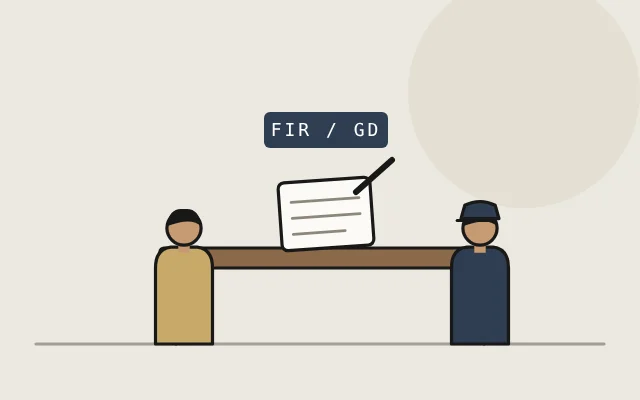
Knowingly disobeying the order is an offence under s.188 of the Penal Code, punishable more heavily if it endangers life, health or safety. A court can take cognisance only on the written complaint of the public servant concerned or a superior. The District Magistrate or an empowered Executive Magistrate may also order a person not to repeat or continue a public nuisance, and breaking that order is punishable under s.291 of the Penal Code with up to six months' simple imprisonment or a fine.
Where: Police station (thana) · Time: 6-18 months for a prosecution · Law: s.188 Penal Code 1860; s.195(1)(a) CrPC; s.143 CrPC; s.291 Penal Code 1860 · Documents: Written complaint by the public servant, Order under s.143
Tip: Residents cannot file a s.188 case themselves. Ask the Magistrate who made the order to lodge the complaint.
 Step 15 · Other routes
Other routes and metropolitan areas
Inside a metropolitan area, and wherever s.133 is too narrow, other routes apply. The City Corporation or Paurashava can act under local government law and its building and conservancy powers. The Department of Environment's Director General can direct compensation or corrective measures for pollution, with offences tried by environment courts. The Attorney General, or two or more persons with the Attorney General's written consent, can sue in a civil court for a declaration and injunction against a public nuisance. Persistent official inaction can be taken to the High Court Division by writ petition.
Where: City Corporation, Paurashava or Department of Environment · Time: Months to years · Law: s.132A CrPC; s.7 Environment Conservation Act 1995; s.91 CPC; Article 102 Constitution · Documents: Written complaint to the authority, Attorney General's consent for a s.91 suit
Tip: Complain in writing to the authority first and keep the receipt. A writ court usually asks what the petitioners did before coming to it.
Walk through it from your side
Pick your side. The step-by-step journey above and the full-screen player will then show what you do at every stage.
Affected residents
You want the obstruction removed, the harmful trade stopped or regulated, or the dangerous building, tree or tank made safe. You must show that the nuisance falls within s.133 and affects the public, not just one neighbour, and that the place is outside a metropolitan area. Your biggest risk is a weak record on public use or public harm, especially if the respondent denies that the public has any right over a way.
Check that s.133 fits
With your lawyer, you check that the problem is on the s.133 list, that it affects the public, and that the place is outside a metropolitan area. If it is inside, you consider the City Corporation, the Department of Environment, a civil suit or a writ instead.
Watch outA purely private dispute, such as one neighbour's drain, belongs in a civil suit, not under s.133.
Collect evidence of public harm
You collect dated photographs and video, a petition signed by many residents, medical certificates, committee letters, earlier complaints and, for a way, mouza maps and records of long public use. For a dangerous building or tree, obtain an engineer's or forest officer's report.
Watch outProof of public use of a path is the first thing tested if the respondent denies a public right.
Police report
You give information at the police station and ask the police to inquire and report to the Executive Magistrate, naming the owner or occupier responsible. Where the nuisance is also an offence, the police may prosecute separately.
Watch outAn order against the wrong person cannot be enforced, so make sure the responsible person is correctly identified.
Petition before the Executive Magistrate
Your lawyer files a petition before the Executive Magistrate with local jurisdiction, identifying the nuisance and the person responsible, setting out the public harm and attaching the evidence. A joint petition by several residents is stronger.
Watch outFiling inside a metropolitan area is a ground for the order to be set aside in revision.
Conditional order under s.133
You obtain a certified copy of the conditional order and check that it names the right person and states exactly what must be done and by when.
Watch outA vague order is hard to enforce and easy to challenge.
Service or proclamation
You help the process server find the person named and, if proclamation is used, photograph the order fixed at the site with a date stamp.
Watch outDisobedience penalties depend on the person knowing of the order, so proof of service matters.
Interim injunction for imminent danger
If the danger is imminent and serious, such as a building about to fall onto a road, you ask the Magistrate for an interim injunction under s.142, supported by an expert report.
Watch outAsk for interim measures only where the danger is real and immediate.
Comply or show cause
You attend on the date fixed and check whether the respondent has complied. If not, your lawyer asks for the order to be made absolute or for the inquiry to proceed.
Is a public right denied?
If the respondent denies a public right, you produce your evidence of public use at the Magistrate's inquiry: maps, old records and witnesses who have used the way for years.
Watch outIf the Magistrate finds reliable evidence supporting the denial, the case is stayed until a civil court decides.
Evidence on whether the order is reasonable
You give evidence and call witnesses and experts on the existence of the nuisance and its effect on the public, and face cross-examination. You may ask the Magistrate to visit the site.
Watch outThe question is whether the order is reasonable and proper, so be ready to answer a proposed lesser remedy.
Order dropped or made absolute
You obtain a certified copy of the final order. If the Magistrate drops the case, you consider criminal revision with your lawyer.
Watch outNo appeal lies, so revision is the only route; do not delay.
Notice to perform
You monitor whether the respondent complies within the time fixed in the notice, and report non-compliance to the Magistrate with photographs.
Work done at the respondent's cost
If the respondent does not comply, you ask the Magistrate to have the work done, and cooperate with the officials who carry it out.
Prosecution for disobedience and repeat nuisances
If the order is knowingly disobeyed, you ask the Magistrate who made it to lodge a written complaint under s.188 Penal Code. If the nuisance recurs, you can ask for an order under s.143 not to repeat or continue it.
Watch outResidents cannot file a s.188 case themselves; the public servant concerned must complain.
Other routes and metropolitan areas
Inside a metropolitan area or where s.133 is too narrow, you complain in writing to the City Corporation, Paurashava or Department of Environment and keep the receipt. A civil suit with the Attorney General's consent, or a writ, may follow.
Watch outA writ court will usually ask what you did before coming to it.
Respondent (person named)
You want the conditional order set aside or modified, or the case dropped, because the nuisance is private, does not exist, falls outside s.133 or the remedy is out of proportion. You must appear on the date fixed, deny any public right at the first appearance if that is your case, and support your objection with evidence. Your biggest risk is doing nothing, which makes the order absolute and exposes you to s.188 Penal Code and to work done at your cost.
Check that s.133 fits
If residents or officials complain about your premises, trade or structure, you take advice early on whether s.133 can apply, whether the place is in a metropolitan area, and what reasonable steps you could take to reduce the problem.
Watch outVoluntary improvements now can make a later order unnecessary or narrower.
Collect evidence of public harm
You gather your own records: title deeds, khatian and mouza maps if you say a way is private, licences and permits for a trade, and expert or engineering reports on safety or emissions.
Watch outIf you will deny a public right, collect reliable documents now; you will need them at your first appearance.
Police report
If the police visit, you cooperate, show your licences or title documents and explain any steps taken. Ask for the officer's name and keep a note of what was said.
Watch outObstructing the police inquiry will be held against you; a calm factual account helps.
Petition before the Executive Magistrate
You may not know of the petition yet. Keep your documents ready and check whether the place falls inside a metropolitan area, which would take it outside Chapter X altogether.
Conditional order under s.133
You obtain a certified copy of the conditional order and decide, with your lawyer, whether to comply within the time fixed or to appear and move to have it set aside or modified.
Watch outA duly made s.133 order cannot be challenged in a civil court, so raise every objection before the Magistrate.
Service or proclamation
When the order is served or fixed at the site, note the date, keep a copy and instruct a lawyer at once.
Watch outIgnoring a properly served or proclaimed order still counts as default.
Interim injunction for imminent danger
If an interim injunction is issued, you obey it at once and, if you think it is wrong, ask the Magistrate to vary it or seek revision, with expert evidence that the danger is not imminent.
Watch outIf you do not obey forthwith, the Magistrate may take direct measures to prevent the danger.
Comply or show cause
You either do what the order requires within the time and file proof of compliance, or appear and show cause against it with a written objection.
Watch outDoing neither makes the order absolute and exposes you to the s.188 Penal Code penalty.
Is a public right denied?
When the Magistrate asks at your first appearance whether you deny a public right over the way, river, channel or place, you answer clearly and produce reliable documents in support if that is your case.
Watch outIf you fail to deny the right then, or offer no reliable evidence, you cannot raise it later.
Evidence on whether the order is reasonable
Your lawyer cross-examines the residents' witnesses and you call your own evidence. Where useful, you offer a lesser remedy in writing, such as fencing instead of demolition, or regulating a trade instead of stopping it.
Watch outPut any proposed alternative in writing so the Magistrate can consider it.
Order dropped or made absolute
You obtain a certified copy of the order made absolute and decide quickly whether to comply or seek criminal revision before the Sessions Judge or the High Court Division, with a stay if needed.
Watch outTime for revision is short in practice even though no fixed limit is written.
Notice to perform
When you receive the notice under s.140, you perform the act within the time fixed and file proof of compliance with the Magistrate.
Watch outCompliance within the notice period avoids both prosecution and the cost of the Magistrate's own work.
Work done at the respondent's cost
If the Magistrate has the work done, you ask for an itemised account of the costs and check it before any property is sold to recover them.
Watch outThe costs can be recovered by selling property removed or your other movable property, even outside the district.
Prosecution for disobedience and repeat nuisances
If a s.188 complaint or a s.143 order is made, you instruct a lawyer, show any compliance and, if prosecuted, defend the case in the ordinary way.
Watch outRepeating or continuing a nuisance after a s.143 order is punishable under s.291 Penal Code.
Other routes and metropolitan areas
If the authority, the Department of Environment or a court is approached, you respond with your licences, permits and compliance records, and take part in any hearing or inspection.
Watch outIgnoring directions from the Department of Environment can lead to separate liability.
What if…? How the public nuisance order in Bangladesh can change course
Choose a scenario. The map animates the route up the hierarchy and, where a case is sent back, down to the lower court and up again.
Is there an appeal against a s.133 order?
- 1Executive Magistrate's Court, Deputy Commissioner's Office, Dhaka
No appeal and no civil challenge
The CrPC gives no appeal against a conditional order or an order made absolute under Chapter X, and no appeal lies except where the Code or another law provides one. The civil courts are barred from questioning a duly made order. The remedy that replaces an appeal is criminal revision before the Sessions Judge or the High Court Division.
Not applicables.404 CrPCs.133(2) CrPC - 2District and Sessions Judge's Court, Dhaka
Revision instead
The aggrieved party, whether the respondent or the residents if the order was dropped, files a criminal revision. The court checks jurisdiction, procedure and whether the order was reasonable on the evidence.
6-18 monthss.435 CrPCs.439A CrPC
Where it ends up: Revision replaces appeal as the route to a higher court.
What if a party challenges the order by revision?
- 1District and Sessions Judge's Court, Dhaka
Revision before the Sessions Judge
All Executive Magistrates are treated as inferior to the Sessions Judge for revision. Common grounds are that the nuisance was private, not public; that the area is metropolitan, where Chapter X does not apply; that no s.139A inquiry was held despite a denial of public right; or that no evidence was taken under s.137. The Sessions Judge's decision is final for the applicant.
6-18 monthss.435(1) CrPC and Explanations.439A CrPCs.132A CrPC - 2High Court Division
High Court Division revision or s.561A
A party may go directly to the High Court Division in revision. After a Sessions Judge's revisional order, the only route is s.561A to prevent abuse of process. The court may stay demolition or other enforcement meanwhile.
6-24 monthss.439 CrPCs.439(4) CrPCs.561A CrPC
Where it ends up: The order is upheld, modified, set aside or sent back.
Can the Magistrate review the order?
- 1Executive Magistrate's Court, Deputy Commissioner's Office, Dhaka
No review of a final order
A criminal court cannot alter a signed order except to correct a clerical error. Before the order is made absolute, however, the Magistrate must drop the case if satisfied that it is not reasonable and proper. After it, s.143 orders can be made afresh if the nuisance recurs.
Weekss.369 CrPCs.137(2) CrPCs.143 CrPC - 2Appellate Division of the Supreme Court
Review in the Appellate Division only
Only the Appellate Division can review its own judgment, under Article 105, for an error apparent on the face of the record, within 30 days.
3-12 monthsArticle 105 ConstitutionOrder XXVI Supreme Court (Appellate Division) Rules 1988
Where it ends up: Errors are corrected by revision, not review.
What if the respondent says the way is private?
- 1Civil court: Civil Judge, Senior Civil Judge or Joint District Judge
Civil court decides the public right
There is no reference procedure, but s.139A works like one. If the Magistrate finds any reliable evidence supporting the respondent's denial of a public right, the proceeding is stayed until a competent civil court decides the question. A party, often the residents, must file a declaratory suit. Suits valued up to Tk 15 lakh go to a Civil Judge, up to Tk 25 lakh to a Senior Civil Judge, and above that to a Joint District Judge.
2-5 yearss.139A(2) CrPCs.42 Specific Relief Act 1877ss.18-19 Civil Courts Act 1887 (as amended 2021 and 2026) - 2Executive Magistrate's Court, Deputy Commissioner's Office, Dhaka
Back before the Magistrate
Once the civil court decides, the Magistrate resumes. If a public right is declared, the Magistrate proceeds under s.137. If not, the proceeding ends, because s.133 cannot protect a private way.
1-3 monthss.139A(2) CrPCs.137 CrPC
Where it ends up: The civil court's decision on the public right controls the outcome before the Magistrate.
What if the revision court sends the case back?
- 1District and Sessions Judge's Court, Dhaka
Order set aside and remanded
If the Magistrate made the order absolute without taking evidence, or ignored a denial of public right, the Sessions Judge can set it aside and send the case back for a proper inquiry.
Within the revisions.439A(1) CrPCs.423(1) CrPC - 2Executive Magistrate's Court, Deputy Commissioner's Office, Dhaka
Fresh inquiry
The Magistrate holds the s.139A inquiry or takes evidence under s.137 as directed, then drops the order or makes it absolute again with reasons.
2-6 monthss.139A CrPCs.137 CrPC - 3District and Sessions Judge's Court, Dhaka
Back up on revision
The fresh order can be challenged again. A party who already used revision before the Sessions Judge must go to the High Court Division under s.561A instead.
6-18 monthss.435 CrPCs.439A(2) CrPCs.561A CrPC
Where it ends up: After the fresh order, the case can climb again to the Sessions Judge or the High Court Division.
What if no authority acts on a serious public nuisance?
- 1High Court Division
Writ petition in the High Court Division
Where a City Corporation, the Department of Environment or the police fail to act on a serious nuisance, such as river pollution or blocked public roads, affected people or a public-interest petitioner can seek a writ under Article 102 directing them to perform their legal duties. The court can issue a Rule and interim directions.
1-3 yearsArticle 102(1) and (2)(a)(i) Constitution - 2Appellate Division of the Supreme Court
Civil petition for leave to appeal
The losing side in the writ can seek leave to appeal to the Appellate Division, usually within 60 days of the High Court Division's judgment.
1-3 yearsArticle 103 ConstitutionOrder XIII rule 1 Supreme Court (Appellate Division) Rules 1988
Where it ends up: The High Court Division can compel the authority to act, subject to the Appellate Division.
Can a s.133 case reach the Appellate Division?
- 1Appellate Division of the Supreme Court
Criminal petition for leave to appeal
A party who loses in the High Court Division on revision or under s.561A can file a criminal petition for leave to appeal, usually within 30 days. Leave is granted only on substantial questions of law, such as the reach of s.132A or the meaning of a public place.
1-3 yearsArticle 103 ConstitutionOrder XXIV rule 2 Supreme Court (Appellate Division) Rules 1988 - 2Appellate Division of the Supreme Court
Final decision
If leave is granted, the Appellate Division decides the appeal, and its ruling binds all courts and Magistrates.
1-2 yearsArticle 111 Constitution
Where it ends up: The Appellate Division's decision is final, subject only to an Article 105 review.
How the public nuisance order in Bangladesh moves up the court hierarchy
A public nuisance order in Bangladesh starts and usually ends with the District Magistrate or another Executive Magistrate. There is no value threshold. The test is whether the nuisance falls within s.133 and affects the public. The procedure is excluded inside metropolitan areas by s.132A, so in Dhaka city the route runs through the City Corporation, the Department of Environment, a civil suit or a writ. No appeal lies against the Magistrate's order, and the civil courts cannot question it.
The only challenge is criminal revision, before the Sessions Judge or directly in the High Court Division, which examines legality and propriety but does not rehear the facts. A Sessions Judge's revisional decision is final for the applicant, leaving s.561A as the route upward. Where the respondent credibly denies a public right, the civil court hierarchy decides that question first. The Appellate Division hears these cases only by leave.
- Appellate DivisionAppellate Division of the Supreme Court
- High Court DivisionHigh Court Division
- Appellate levelDistrict and Sessions Judge's Court, Dhaka
- First instanceExecutive Magistrate's Court, Deputy Commissioner's Office, Dhaka · Civil court: Civil Judge, Senior Civil Judge or Joint District Judge
- Start · outside courtLawyer's chamber · Nuisance site (way, river, building, tank or trade premises) · Police station (thana) · City Corporation, Paurashava or Department of Environment
Where your case is heard
Addresses are for Dhaka. Every district has equivalent courts at its own district judgeship.
Supreme Court of Bangladesh (Appellate Division and High Court Division)
Supreme Court of Bangladesh, Shahbag, Ramna, Dhaka-1000Hears appeals, revisions, references, writ petitions under Article 102, company matters and death references (High Court Division), and appeals by leave from the High Court Division (Appellate Division).
Both Divisions sit in the Supreme Court complex; many High Court Division benches sit in the Annex Building. Check the daily cause list for the bench and court room. Postal contact is the Registrar General, Supreme Court of Bangladesh, Ramna, Dhaka-1000.
Court of the District and Sessions Judge, Dhaka (Dhaka Judge Court)
Dhaka Judge Court premises, 16 Johnson Road, Sadarghat, DhakaSeat of the Dhaka District Judge and Additional District Judges (civil appeals, probate, district-level civil and sessions work outside the metropolitan area) and the civil courts of first instance (Joint District Judge, Senior Civil/Assistant Judge courts).
Official judiciary portal gives '16 Johnson Road, Sadarghat, Dhaka'. Many civil courts (Additional District Judge courts, Joint District Judge and Senior Assistant Judge courts, Artha Rin Adalat No.1, insolvency court) are in the new 8-storey District Judge Court building in the same premises. The 2026 judgeship list names the first-instance civil courts 'Senior Civil Judge' / 'Civil Judge' (formerly Senior Assistant Judge / Assistant Judge); some pages still use the old names. Every district has an equivalent court at its district judgeship.
Office of the Deputy Commissioner (District Magistrate), Dhaka
Dhaka (exact address not confirmed)District administration: land revenue and record-correction appeals, certificate cases, acquisition, executive magistracy and mobile courts for Dhaka district.
The official street address could not be read from dhaka.gov.bd (its contact pages did not load); the judiciary portal confirms office phone 02-223389786. Confirm the address before visiting. Every district has a Deputy Commissioner's office at the district headquarters.
Lawyer's chamber
Where this happens depends on your district or the office concerned. Ask us for the exact courtroom and address.
Nuisance site (way, river, building, tank or trade premises)
Where this happens depends on your district or the office concerned. Ask us for the exact courtroom and address.
Police station (thana)
Where this happens depends on your district or the office concerned. Ask us for the exact courtroom and address.
Dhaka South City Corporation and Dhaka North City Corporation
DSCC: Nagar Bhaban, Dhaka-1000; DNCC: Gulshan Centre Point, Plot 23-26, Road 46, Gulshan-2, Dhaka-1212Municipal bodies: holding tax, trade licences, birth and death registration, and the Arbitration Council (Chairman) functions under the Muslim Family Laws Ordinance 1961 through their zonal/ward offices.
DNCC website: https://dncc.gov.bd. Talaq notices and arbitration council matters are handled by the zonal executive officer's office for the ward concerned, not at the head office. The maps link points to DSCC Nagar Bhaban; for DNCC search the Gulshan address.
How long each stage takes
These are indicative ranges based on typical Dhaka practice. Adjournments, case backlogs and appeals can stretch them.
Documents checklist and key terms
Tick off what you have. Your ticks stay saved in this browser. Bring the list to your first meeting with your lawyer.
- Public nuisance
- An act or illegal omission causing common injury, danger or annoyance to the public or people in the vicinity (s.268 Penal Code).
- Conditional order
- The first order under s.133, requiring the person to remove the nuisance or appear and show cause.
- Order absolute
- The conditional order confirmed after default or after the inquiry, enforceable under s.140.
- Public right
- A right of the public to use a way, river, channel or place, which, if credibly denied, is decided by a civil court.
- Proclamation
- Public notice of an order when personal service is not possible, with a copy fixed at the site.
- Metropolitan area
- A city area with its own metropolitan police law, where Chapter X of the CrPC does not apply.
- Executive Magistrate
- A magistrate from the administrative service who handles preventive matters under the CrPC.
Public nuisance order in Bangladesh: common questions
What is a public nuisance order in Bangladesh?
Can I get a s.133 order in Dhaka city?
Who decides whether the nuisance is reasonable to remove?
What if the respondent says the path is private?
Can I appeal against a public nuisance order in Bangladesh?
What happens if the order is ignored?
Can the Magistrate act before the hearing?
What are common mistakes with a public nuisance order in Bangladesh?
Law and sources
- Code of Criminal Procedure 1898, Chapter X (ss.132A-143), Laws of Bangladesh mirror
- Code of Criminal Procedure 1898, Bangladesh Laws (Legislative and Parliamentary Affairs Division)
- Penal Code 1860, Laws of Bangladesh mirror
- Code of Civil Procedure 1908, Laws of Bangladesh mirror
- Dhaka Metropolitan Police Ordinance 1976, Laws of Bangladesh mirror
- Supreme Court of Bangladesh
This Case Journey is a general guide to procedure in Bangladesh as of October 2026. It is not legal advice. Procedure, fees and time limits change, and every case turns on its own facts. Timelines are indicative. Speak to a lawyer about your own matter.
Run this case from outside Bangladesh
You can usually start and run this case without travelling. You sign a power of attorney abroad, the Bangladesh High Commission or Embassy attests it, and your attorney and lawyer act for you in Dhaka. Some steps, such as giving evidence in person, may still need you or a commission. See how a case runs through a power of attorney →
Want to know where your case stands?
Book a consultation. A TRW lawyer will place your matter on this map, explain the next step and the realistic timeline, and tell you what to prepare.











