
Sexual harassment complaint in Bangladesh: committee, criminal case and appeal, step by step
A sexual harassment complaint in Bangladesh usually begins inside the workplace or educational institution, before a complaint committee required by the High Court Division's 2009 guidelines in BNWLA v Bangladesh and, for workers, by sections 332 and 332A of the Labour Act 2006 as amended in 2026. The committee investigates and recommends, and the employer or institution disciplines.
Serious conduct can also be prosecuted under section 10 of the Nari o Shishu Nirjatan Daman Ain 2000 or the Penal Code, while dismissal or retaliation goes to the Labour Court and an institution that ignores the guidelines can be taken to the High Court Division by writ.
- Where it starts
- A written complaint to the complaint committee of the workplace or educational institution; in parallel or instead, an…
- Main law
- High Court Division guidelines in BNWLA v Bangladesh, Writ Petition No. 5916 of 2008 (judgment 14 May 2009); Bangladesh Labour…
- Typical duration
- Committee investigation: 30 working days under the guidelines, extendable to 60. Disciplinary action: 1-3 months.…
- Who can file
- The person harassed (any worker, employee, student or trainee); a criminal case can also be started by a relative or…
Sexual harassment complaint in Bangladesh: walk through every stage
Press next, use your arrow keys or tap a court on the map. The gold marker shows where your case is, and the green trail shows the route it has taken. For the immersive version, play it full screen.
Read every step as text
 Step 1 · Before the complaint
Recognise what counts as sexual harassment
Two definitions matter. The 2009 High Court Division guidelines, made in a writ brought by the Bangladesh National Women Lawyers' Association, cover unwelcome sexually determined behaviour in all public and private workplaces and educational institutions. For workers, the Labour Act now defines sexual harassment in section 2(52A), listing thirteen forms such as unwelcome physical contact, using institutional power to seek a sexual relationship, sexually coloured remarks, showing pornography, stalking, recording images for blackmail, threats after a rejected proposal and quid pro quo demands, plus conduct that creates a hostile working environment.
Online and phone messages are included.
Where: Employer or educational institution (management, HR, head of institution) · Time: 1-3 days · Law: BNWLA v Bangladesh, Writ Petition No. 5916 of 2008 (HCD, 14 May 2009); s.2(52A) Bangladesh Labour Act 2006 (inserted by Act No. 43 of 2026) · Documents: Written account of each incident, The institution's harassment policy
Tip: Write down dates, places, words used and witnesses as soon as possible. A contemporaneous note carries weight with a committee and a court.
 Step 2 · Before the complaint
Preserve evidence and watch the time limit
Screenshots of messages and call logs, emails, CCTV footage, entry records and the names of colleagues who saw or heard something are the evidence that decides most complaints. Ask early for CCTV to be preserved, because many systems overwrite within weeks. Timing also matters. The 2009 guidelines expect a complaint to be made generally within thirty working days of the incident, although committees can consider delay with reasons. Criminal complaints have no short statutory limit, but delay invites doubt.
Before filing, a complainant can seek free advice from the district legal aid office or a women's rights organisation.
Where: Employer or educational institution (management, HR, head of institution) · Time: 1-2 weeks · Law: BNWLA guidelines (2009), complaint procedure; Evidence Act 1872 · Documents: Screenshots and call logs, Emails, Request to preserve CCTV, Names of witnesses
Tip: Back up digital evidence outside the workplace systems, without breaching confidentiality rules.
 Step 3 · The internal complaint
Lodge a written complaint with the committee
A sexual harassment complaint in Bangladesh is normally made in writing to the complaint committee. Under the guidelines every workplace and educational institution must have one, with at least five members, most of them women, a woman as head where possible, and at least two members from outside, preferably from organisations working on gender and sexual abuse. For workers, section 332A of the Labour Act now requires a five-member committee with a female majority from within the establishment, a woman as head and two members from organisations working on gender and sexual violence.
The complaint should name the person accused and describe each incident.
Where: Complaint committee (2009 guidelines / Labour Act s.332A) · Time: 1 day · Law: s.332A(1) and (4) Bangladesh Labour Act 2006 (inserted by Act No. 43 of 2026); BNWLA guidelines (2009), committee and complaint clauses · Documents: Written complaint, Evidence bundle, List of witnesses
Tip: Ask for a dated acknowledgment. If no committee exists, the absence itself is a breach you can report.
 Step 4 · The internal complaint
Interim protection and confidentiality
While the complaint is pending, the authority must ensure the complainant's safety. Under the guidelines it may temporarily suspend the person accused, and in practice it can change reporting lines, shifts or seating so that the two do not work together. Identities of the complainant and the accused must not be disclosed until the allegation is proved, and the committee must protect confidentiality and dignity.
The Labour Act's section 332 also requires employers to treat harassment as a workplace safety risk and to take effective steps to support legal cases, which means not pressing a complainant to drop a police case.
Where: Employer or educational institution (management, HR, head of institution) · Time: Within days of the complaint · Law: BNWLA guidelines (2009), protection and confidentiality clauses; s.332(1) and s.332A(3) Bangladesh Labour Act 2006 (as substituted and inserted in 2026) · Documents: Interim order or office memo, Request for protective measures
Tip: Ask for any interim measure in writing. Moving the complainant, rather than the accused, can itself look like retaliation.
 Step 5 · The internal complaint
Investigation by the committee
The committee gives the accused notice of the allegations and a chance to answer, hears the complainant and witnesses for both sides, and examines documents and digital evidence. Hearings are held in private, and the complainant may ask to give evidence without facing the accused directly. The committee follows a zero-tolerance approach but must still be fair: findings based on evidence the accused never saw are vulnerable to challenge. The guidelines allow the committee to recommend action against a complainant only where a complaint is proved to be deliberately false, not merely unproved.
Where: Complaint committee (2009 guidelines / Labour Act s.332A) · Time: Within 30 working days, extendable to 60 · Law: BNWLA guidelines (2009), investigation clause; s.332A(2)-(4) Bangladesh Labour Act 2006 · Documents: Notice to the accused, Written replies, Minutes and witness statements
Tip: Keep a copy of everything you give the committee and ask for the minutes of your own hearing.
 Step 6 · The internal complaint
Committee report and recommendation
The guidelines require the committee to submit its report and recommendations to the authority within thirty working days, a period that may be extended to sixty. If the allegation is proved, the report recommends the action to be taken, which can range from a warning to dismissal for staff, or suspension or expulsion for students. If it is not proved, the matter is closed but the complainant remains protected against retaliation.
Where the conduct also appears to be an offence under the Penal Code or another law, the guidelines require the authority to refer the matter to the appropriate court or tribunal.
Where: Complaint committee (2009 guidelines / Labour Act s.332A) · Time: 30-60 working days from the complaint · Law: BNWLA guidelines (2009), report and punishment clauses · Documents: Committee report, Recommendation
Tip: Ask for written notice of the outcome. You will need it for any Labour Court case or writ.
- Step 7 · The internal complaint
Disciplinary action by the employer
The committee investigates; the employer disciplines. Under the guidelines a proved complaint is treated as misconduct and action is taken under the organisation's service rules. For a worker covered by the Labour Act, section 24 still applies: a written charge, at least seven days to explain, a hearing and a finding by an enquiry committee, concluded within the statutory period. A dismissal that skips these steps may be overturned in the Labour Court however strong the evidence. Government employees are disciplined under the Government Servants (Discipline and Appeal) Rules 2018, with their own appeal route.
Where: Employer or educational institution (management, HR, head of institution) · Time: 1-3 months · Law: ss.23-24 Bangladesh Labour Act 2006; BNWLA guidelines (2009), punishment clause; Government Servants (Discipline and Appeal) Rules 2018 · Documents: Charge sheet, Reply, Enquiry report, Final order
Tip: Employers should make harassment an express act of misconduct in approved service rules, because it is not listed in s.23(4).
- Step 8 · The internal complaint
When there is no committee or nobody acts
Many workplaces still have no functioning committee. For a Labour Act establishment, failing to form the section 332A committee is an offence punishable with a fine of Tk 20,000 to Tk 50,000 under section 307A, and other failures under section 332 fall under the general penalty provision. A worker can report the employer to the Department of Inspection for Factories and Establishments, whose inspectors must keep the complainant's identity confidential. A worker treated with hostility for complaining to an inspector can take the grievance to the Labour Court.
For government offices and educational institutions, the remedy is to insist on the guidelines and, if necessary, a writ.
Where: Employer or educational institution (management, HR, head of institution) · Time: 1-6 months · Law: s.307A Bangladesh Labour Act 2006 (inserted 2026); s.319A Bangladesh Labour Act 2006 (inserted 2026); s.332 Bangladesh Labour Act 2006 · Documents: Complaint to DIFE, Evidence that no committee exists
Tip: Put the request to form a committee in writing and keep the reply. It is the evidence a DIFE inspector or the High Court Division will ask for.
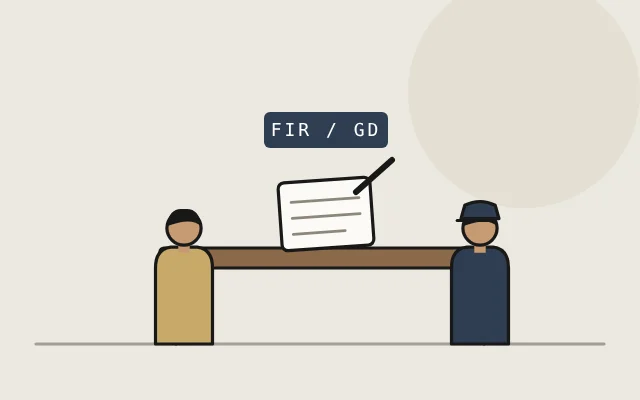 Step 9 · Criminal case
Report a crime to the police
Harassment that involves physical contact can be a serious crime. Under section 10 of the Nari o Shishu Nirjatan Daman Ain 2000, touching a woman's or child's sexual or other body part with the body or an object to satisfy sexual desire, or outraging a woman's modesty, is sexual oppression, punishable with three to ten years' rigorous imprisonment and a fine. Words, gestures or exhibits intended to insult a woman's modesty fall under section 509 of the Penal Code, and assault to outrage modesty under section 354.
The officer in charge must record the information; if police refuse a Nari o Shishu case, a complaint can go straight to the Tribunal.
Where: Police station · Time: Same day · Law: s.10 Nari o Shishu Nirjatan Daman Ain 2000; ss.354 and 509 Penal Code 1860; s.154 Code of Criminal Procedure 1898; s.27 Nari o Shishu Nirjatan Daman Ain 2000 · Documents: Written information, Medical report if there was physical assault, Digital evidence
Tip: An internal complaint and a police case can run side by side. The committee does not need to finish first.
- Step 10 · Criminal case
Trial in the Nari o Shishu Tribunal
A section 10 case is tried by the Nari o Shishu Nirjatan Daman Tribunal, a court of Sessions Judge rank. After investigation within the Act's working-day limits and a police report, the Tribunal takes cognisance, decides bail under the Act's restrictions, frames charges and hears witnesses, often in camera. The complainant's lawyer is treated as a public prosecutor. The Act sets a target of 180 working days for trial, though many cases take longer. The full route is set out in TRW's Nari o Shishu case journey.
Where: Nari o Shishu Nirjatan Daman Tribunal · Time: 1-4 years · Law: s.10 Nari o Shishu Nirjatan Daman Ain 2000; ss.18-20 and 25-27 Nari o Shishu Nirjatan Daman Ain 2000 (as amended by Act No. 85 of 2026) · Documents: Police report, Medical and digital evidence, Witness list
Tip: Keep copies of the FIR and the police report. A naraji petition is the remedy if police submit a final report you disagree with.
- Step 11 · Criminal case
Penal Code case before a Magistrate
Verbal and non-contact harassment, such as obscene remarks, gestures, lewd messages or showing objects, is usually prosecuted under section 509 of the Penal Code, and lesser assaults under section 354. These cases are tried by a Metropolitan Magistrate in Dhaka or a Judicial Magistrate elsewhere, on a police report or a complaint petition. Online harassment may also fall under the cyber security law, which has its own Tribunal. A conviction carries imprisonment or a fine, and the court can order the convicted person to pay compensation from the fine.
Where: Metropolitan Magistrate or Judicial Magistrate's Court · Time: 6-24 months · Law: ss.354 and 509 Penal Code 1860; s.200 Code of Criminal Procedure 1898; s.545 Code of Criminal Procedure 1898 · Documents: Police report or complaint petition, Screenshots and witness statements
Tip: Choose the right charge. A touching case filed only under s.509 undercharges the conduct and limits the sentence.
- Step 12 · Employment and constitutional remedies
Grievance and Labour Court complaint
A worker dismissed, demoted or penalised for making a sexual harassment complaint in Bangladesh can use the grievance procedure in section 33 of the Labour Act. The worker sends a written grievance to the employer within thirty days of learning of the cause; the employer must hear and decide it within thirty days; and if the worker is dissatisfied or the employer does nothing, a complaint can be filed in the Labour Court within the next thirty days.
Harassment can also amount to direct discrimination under the 2026 amendments, where the burden of justification falls on the employer.
Where: Labour Court · Time: Grievance 30 + 30 days; complaint within 30 days after that · Law: s.33(1)-(3) Bangladesh Labour Act 2006; ss.345A-345B Bangladesh Labour Act 2006 (inserted 2026) · Documents: Written grievance, Employer's decision or proof of silence, Complaint to the Labour Court
Tip: Count the thirty-day periods carefully. A late grievance or complaint is the commonest reason worker claims fail.
- Step 13 · Employment and constitutional remedies
Labour Court hearing and order
The Labour Court, chaired by a judicial officer sitting with members, hears the worker's complaint and the employer's reply, takes evidence on the dismissal or penalty and decides whether the employer followed sections 23 and 24 and acted lawfully. It can order reinstatement with or without back pay, convert a dismissal into a discharge with benefits, or award compensation. Offences under the Labour Act, such as failing to form a committee, are also tried in the Labour Court on prosecution by the inspectorate.
Where: Labour Court · Time: 1-3 years · Law: s.33(4)-(5) Bangladesh Labour Act 2006; ss.214 and 216 Bangladesh Labour Act 2006 · Documents: Evidence of the complaint and dismissal, Committee report, Service records
Tip: File the committee's report and any interim orders with the Labour Court; they show the history behind the dismissal.
 Step 14 · Employment and constitutional remedies
Writ to enforce the guidelines
The 2009 guidelines were issued under Article 102 and bind public and private workplaces and educational institutions until Parliament legislates. They matter most where the Labour Act does not reach: government offices, universities, schools and managers outside the definition of worker. An aggrieved person, or a public interest litigant, can file a writ petition asking the High Court Division to direct an institution to form a committee, to conduct a fair inquiry, or to quash a decision reached in breach of the guidelines.
The government gave final approval to a draft Prevention of Sexual Harassment at the Workplace and Educational Institutions Ordinance in January 2026, but it does not appear among the laws published in 2026, so the guidelines still govern.
Where: High Court Division · Time: Rule in weeks; final hearing 1-3 years · Law: Article 102 Constitution of Bangladesh; BNWLA v Bangladesh, Writ Petition No. 5916 of 2008 (HCD, 14 May 2009) · Documents: Writ petition with affidavit, Complaint, report and correspondence, Demand for justice notice
Tip: Send a written demand to the institution first and give it a short time to act; the High Court Division expects that before a mandamus.
Walk through it from your side
Pick your side. The step-by-step journey above and the full-screen player will then show what you do at every stage.
Complainant
You want the harassment stopped, a fair investigation, protection from retaliation and, where the conduct is a crime, prosecution. You must give a clear, dated account supported by messages, witnesses or records. Your biggest risk is delay: evidence such as CCTV disappears, the guidelines expect a complaint generally within thirty working days, and a worker's grievance must be sent within thirty days.
Recognise what counts as sexual harassment
You write down each incident: date, place, words or acts, and anyone who saw or heard. Check your institution's harassment policy and whether what happened falls within the 2009 guidelines or, as a worker, the Labour Act definition. Speak to a trusted adviser or lawyer.
Watch outOnline and phone messages count, so do not delete them even if they are distressing.
Preserve evidence and watch the time limit
You save screenshots, call logs and emails outside workplace systems where permitted, list witnesses and ask in writing for CCTV and entry records to be preserved. Free advice is available from the district legal aid office or women's rights organisations.
Watch outMany CCTV systems overwrite within weeks, so ask for preservation straight away.
Lodge a written complaint with the committee
You lodge a written complaint with the committee, naming the person accused, describing each incident and attaching your evidence and witness list. Ask for a dated acknowledgment.
Watch outThe guidelines expect a complaint generally within thirty working days; explain any delay in writing.
Interim protection and confidentiality
You ask the authority in writing for interim protection, such as a change of reporting line, shift or seating, or temporary suspension of the person accused. Keep the confidentiality of the process yourself.
Watch outBeing moved yourself against your wishes can be retaliation; record your objection in writing.
Investigation by the committee
You give your account to the committee, produce your evidence and identify witnesses. You can ask to give evidence without facing the accused directly. Keep copies of everything you submit and ask for the minutes of your hearing.
Watch outInconsistencies between your written complaint and oral account are often used against you, so review your complaint first.
Committee report and recommendation
You ask for written notice of the outcome and a copy of the report or recommendation where possible. If the conduct also appears to be an offence, ask the authority to refer it to the appropriate court, as the guidelines require.
Watch outYou will need the written outcome for any Labour Court complaint or writ, so do not accept a verbal update.
Disciplinary action by the employer
You follow the disciplinary process and may be called as a witness in the employer's enquiry. Keep a record of any adverse treatment after your complaint.
Watch outIf you are penalised for complaining, note the date you learn of it; the thirty-day grievance period runs from then.
When there is no committee or nobody acts
If there is no committee or nobody acts, you put a written request to the employer to form one. As a worker, you can report the employer to the Department of Inspection for Factories and Establishments, whose inspectors must keep your identity confidential.
Watch outKeep the employer's reply, or note its silence; it is your evidence before an inspector or the High Court Division.
Report a crime to the police
If the harassment involved physical contact or other criminal conduct, you give written information to the police station, with your evidence and any medical report. If police refuse a Nari o Shishu case, you can complain directly to the Tribunal.
Watch outGet a copy of the recorded FIR and note the case number; the internal complaint does not have to finish first.
Trial in the Nari o Shishu Tribunal
In the Nari o Shishu Tribunal, your lawyer acts alongside the prosecution. You give evidence, often in camera, and face cross-examination. If police file a final report you disagree with, you can file a naraji petition.
Watch outKeep copies of the FIR and police report; you will need them for any challenge.
Penal Code case before a Magistrate
For verbal or non-contact harassment, you pursue a Penal Code case before a Metropolitan or Judicial Magistrate on a police report or complaint petition, with your screenshots and witness statements. Ask the court to consider compensation from any fine.
Watch outChoose the right charge: a touching case filed only under section 509 undercharges the conduct.
Grievance and Labour Court complaint
If you are dismissed, demoted or penalised for complaining, you send a written grievance to the employer within thirty days of learning of it. If the employer does not decide within thirty days, or you are dissatisfied, you file a complaint in the Labour Court within the next thirty days.
Watch outLate grievances and complaints are the commonest reason worker claims fail; count the days carefully.
Labour Court hearing and order
At the Labour Court you prove the complaint history, the penalty and the link between them, filing the committee report and any interim orders. Ask for reinstatement with back pay or compensation.
Watch outIf the decision goes against you, note the appeal period at once.
Writ to enforce the guidelines
Where the Labour Act does not reach, for example a government office, school or university, you send a written demand to the institution and, if it does not act, file a writ petition asking the High Court Division to direct compliance with the 2009 guidelines.
Watch outSend a demand first and give a short time to act; the court expects this before a mandamus.
Accused / employer
As the person accused, you want a fair hearing on evidence you have seen, and a decision based on facts rather than assumption. As the employer or institution, you want a lawful, well-documented process that protects both parties. The biggest risk for the accused is ignoring notices or contacting the complainant; for the employer, it is having no committee or skipping the statutory disciplinary steps.
Recognise what counts as sexual harassment
If you are an employer or institution, check that your harassment policy, committee and complaint procedure exist and are publicised. If you are an individual who has heard of concerns about your conduct, take advice early and avoid any contact that could be seen as pressure.
Watch outFor a Labour Act establishment, failing to form the section 332A committee is an offence carrying a fine of Tk 20,000 to Tk 50,000.
Preserve evidence and watch the time limit
If you are the employer, preserve CCTV, entry records and relevant emails once you learn of a possible complaint. If you are the person accused, keep your own messages and records intact; they may support your account.
Watch outDeleting messages or footage after learning of a complaint can be treated as destroying evidence.
Lodge a written complaint with the committee
If you are the employer, ensure the committee receives and records the complaint and is properly constituted with a female majority, a woman as head and outside members. If you are the person accused, wait for formal notice and prepare to respond through the proper process.
Watch outA committee that is not properly constituted makes its findings easy to challenge, whichever way they go.
Interim protection and confidentiality
If you are the employer, take proportionate interim measures that protect the complainant without prejudging the case, and keep identities confidential. If you are the person accused, comply with any interim measure and avoid contact with the complainant.
Watch outContacting the complainant, directly or through others, can lead to further disciplinary or criminal action.
Investigation by the committee
If you are the person accused, you answer the notice in writing, ask to see the evidence against you, call your own witnesses and attend the hearing. If you are the employer, give the committee the records it needs and keep out of its deliberations.
Watch outFindings based on evidence the accused never saw are vulnerable; ask in writing for anything that has not been shared.
Committee report and recommendation
If you are the person accused, you receive the outcome and consider your options, including an internal appeal under the service rules. If you are the employer, receive the report within the guideline period and decide on the recommended action.
Watch outA complaint that is merely unproved is not a false complaint; action against a complainant is justified only for a deliberately false complaint.
Disciplinary action by the employer
If you are the employer, issue a written charge, give at least seven days to reply, hold a hearing and complete the enquiry before any dismissal, following section 24 or your service rules. If you are the person accused, reply to the charge and attend the hearing with your evidence.
Watch outA dismissal that skips the statutory steps may be overturned in the Labour Court however strong the evidence.
When there is no committee or nobody acts
If you are the employer and have no committee, form one now in line with section 332A or the guidelines and deal with the complaint. Cooperate with any inspection and do not seek the identity of the worker who complained.
Watch outTreating a worker with hostility for complaining to an inspector can lead to a Labour Court case.
Report a crime to the police
If a criminal case is registered against you, instruct a criminal lawyer at once and consider whether to seek bail. Give your account through your lawyer and preserve evidence that supports it.
Watch outOffences under section 10 of the 2000 Act carry three to ten years' rigorous imprisonment, so take the case seriously from the outset.
Trial in the Nari o Shishu Tribunal
You appear before the Tribunal, apply for bail subject to the Act's restrictions, receive the police report and documents, and answer the charge. Your lawyer cross-examines the prosecution witnesses and may call defence witnesses.
Watch outMissing a date can lead to a warrant and loss of bail.
Penal Code case before a Magistrate
You answer the Penal Code charge before the Magistrate, with your lawyer. Examine whether the facts alleged fit the section charged, and test the digital evidence for completeness and context.
Watch outOnline harassment may also be charged under the cyber law, which has its own Tribunal; check every charge carefully.
Grievance and Labour Court complaint
As the employer, you hear the worker's grievance and give a written decision within thirty days. If you rely on misconduct, make sure your records show the statutory process was followed.
Watch outUnder the 2026 amendments, harassment can be direct discrimination, and the burden of justifying the treatment falls on you.
Labour Court hearing and order
As the employer, you file your reply, produce the charge, enquiry records and the decision, and show that the action was lawful and unconnected with the complaint. Consider settlement where the record is weak.
Watch outGaps in the section 24 process are often decisive, whatever the underlying facts.
Writ to enforce the guidelines
As the institution or government respondent, you file an affidavit-in-opposition showing the committee you have formed and the inquiry you conducted, or take steps to comply. Fixing the problem promptly may make the writ unnecessary.
Watch outIgnoring a Rule issued by the High Court Division can lead to an order against you without your side being heard.
What if…? How the sexual harassment complaint in Bangladesh can change course
Choose a scenario. The map animates the route up the hierarchy and, where a case is sent back, down to the lower court and up again.
What if a party appeals the Labour Court's decision?
- 1Labour Appellate Tribunal
Appeal to the Labour Appellate Tribunal
A party aggrieved by the Labour Court's judgment or decision can appeal to the Labour Appellate Tribunal within the period set by the Act. The Tribunal can confirm, vary or set aside the decision, or send it back. In the labour route there is no civil appeal or revision to the High Court Division; the Tribunal's decision can be challenged only through the High Court Division's writ jurisdiction.
6-24 monthss.217 Bangladesh Labour Act 2006s.218 Bangladesh Labour Act 2006
Where it ends up: The Labour Appellate Tribunal's decision stands unless the High Court Division interferes by writ.
What if the criminal court's decision is wrong?
- 1High Court Division
Criminal appeal and revision in the High Court Division
A conviction or acquittal by the Nari o Shishu Tribunal is appealed to the High Court Division under section 28 of the 2000 Act, as amended in 2026. Interlocutory orders, such as refusal to take cognisance or framing of charge, can be challenged in criminal revision, and an abuse of process can be quashed under the inherent power. A Magistrate's conviction under the Penal Code goes first by appeal to the Sessions Judge, then by revision to the High Court Division.
1-4 yearss.28 Nari o Shishu Nirjatan Daman Ain 2000 (amended by Act No. 85 of 2026)ss.408, 435, 439 and 561A Code of Criminal Procedure 1898
Where it ends up: The High Court Division confirms, alters or sets aside the conviction, acquittal or order.
Can a committee or court reconsider its own decision?
- 1Appellate Division of the Supreme Court
Limited review, mainly at the top
Neither the guidelines nor the Labour Act give the complaint committee a formal power to review its own report; a flawed report is challenged through the employer's internal appeal, the Labour Court or a writ. A criminal court cannot review its judgment once signed, except for clerical errors. The High Court Division may review a civil or writ judgment on narrow grounds, and the Appellate Division may review its own judgments under Article 105.
3-12 monthss.369 Code of Criminal Procedure 1898Order XLVII rule 1 Code of Civil Procedure 1908Article 105 Constitution of Bangladesh
Where it ends up: Review is exceptional; errors are normally corrected by appeal, revision or writ.
Is there a reference to a higher court?
- 1High Court Division
No reference: the writ route instead
There is no procedure for a committee, an employer or the Labour Court to refer a question to the High Court Division. A question about whether an institution complied with the guidelines, or whether a committee was properly constituted and acted fairly, reaches the High Court Division only by a writ petition under Article 102. The guidelines also require institutions to report annually to the Government on compliance.
1-3 yearsArticle 102 Constitution of BangladeshBNWLA guidelines (2009), monitoring clause
Where it ends up: Systemic or legal questions go to the High Court Division by writ, not reference.
What if the appellate tribunal sends the case back?
- 1Labour Appellate Tribunal
Labour Appellate Tribunal remits the case
Where the Labour Court failed to consider the committee report, refused evidence or misread the procedure under section 24, the Labour Appellate Tribunal may set aside the decision and send the case back for a fresh hearing on specified points, instead of deciding the facts itself.
Order on the day of judgments.218 Bangladesh Labour Act 2006 - 2Labour Court
Fresh hearing and new decision
The Labour Court rehears the case as directed, takes the further evidence and gives a new decision. That decision carries a fresh right of appeal, so the case can return to the Labour Appellate Tribunal, and from there to the High Court Division only by writ.
4-12 monthss.216 Bangladesh Labour Act 2006s.217 Bangladesh Labour Act 2006
Where it ends up: The case returns to the Labour Court, is decided again and may climb back to the Labour Appellate Tribunal.
Can the case reach the Appellate Division?
- 1Appellate Division of the Supreme Court
Petition for leave to appeal
Against a High Court Division judgment in a writ, a criminal appeal or a revision, the aggrieved party can petition the Appellate Division for leave to appeal. Leave is granted only where a substantial question of law or a serious injustice is shown, such as how far the guidelines bind private institutions. If leave is granted, the appeal is heard on the record.
1-3 yearsArticle 103 Constitution of BangladeshSupreme Court of Bangladesh (Appellate Division) Rules 1988
Where it ends up: The Appellate Division's decision is final and binds all courts under Article 111.
How the sexual harassment complaint in Bangladesh moves up the court hierarchy
A sexual harassment complaint in Bangladesh runs on three tracks that can move at the same time. The internal track starts with the complaint committee, which investigates and recommends, and the employer or institution, which disciplines; there is no appeal from the committee to a court.
The criminal track starts at the police station or with a complaint: contact offences under section 10 of the Nari o Shishu Nirjatan Daman Ain 2000 go to the Nari o Shishu Tribunal, a court of Sessions Judge rank, with appeal to the High Court Division, while Penal Code offences go to a Magistrate, with appeal to the Sessions Judge and revision above. The employment track takes a worker's dismissal or retaliation claim to the Labour Court, with appeal to the Labour Appellate Tribunal, whose decision can be challenged only by writ.
Over all three, the High Court Division can intervene by writ, and the Appellate Division hears appeals by leave.
- Appellate DivisionAppellate Division of the Supreme Court
- High Court DivisionHigh Court Division
- Appellate levelLabour Appellate Tribunal
- First instanceMetropolitan Magistrate or Judicial Magistrate's Court · Nari o Shishu Nirjatan Daman Tribunal · Labour Court
- Start · outside courtEmployer or educational institution (management, HR, head of institution) · Complaint committee (2009 guidelines / Labour Act s.332A) · Police station
Where your case is heard
Addresses are for Dhaka. Every district has equivalent courts at its own district judgeship.
Supreme Court of Bangladesh (Appellate Division and High Court Division)
Supreme Court of Bangladesh, Shahbag, Ramna, Dhaka-1000Hears appeals, revisions, references, writ petitions under Article 102, company matters and death references (High Court Division), and appeals by leave from the High Court Division (Appellate Division).
Both Divisions sit in the Supreme Court complex; many High Court Division benches sit in the Annex Building. Check the daily cause list for the bench and court room. Postal contact is the Registrar General, Supreme Court of Bangladesh, Ramna, Dhaka-1000.
Labour Appellate Tribunal
43 Kakrail, 4 Anjuman Mufidul Islam Road, Dhaka-1000Hears appeals against judgments and orders of the Labour Courts under section 217 of the Bangladesh Labour Act 2006.
Single national tribunal in Dhaka. The official contact is the Registrar, Labour Appellate Tribunal (phone 02-9361851).
Chief Metropolitan Magistrate Court, Dhaka
19 Johnson Road, Dhaka-1100Takes cognisance of and tries criminal cases arising in Dhaka Metropolitan Police areas (Metropolitan Magistrate courts), hears bail, remand and FIR/complaint matters, and sends sessions-triable cases to the Metropolitan Sessions Judge.
Metropolitan Magistrate courts are spread over the CMM court main building (floors 2-9) and the CJM court building (courts 29-37 on the 8th and 9th floors). Check the court number on the cause list. Each metropolitan city (Chattogram, Khulna, Rajshahi, Sylhet, Barishal, Rangpur, Gazipur) has its own CMM court.
Nari-o-Shishu Nirjatan Daman Tribunals, Dhaka
Dhaka Judge Court premises, 16 Johnson Road, Sadarghat, DhakaTry offences of rape, dowry violence, trafficking of women and children, acid-related and other offences under the Nari-o-Shishu Nirjatan Daman Ain 2000.
Dhaka has Tribunals Nos. 1-9, each presided over by a District and Sessions Judge-level judge and listed under the Dhaka judgeship. Their exact buildings in the Dhaka court area are not published. Every district has at least one such tribunal.
Labour Courts, Dhaka (First, Second and Third Labour Courts)
Dhaka (exact address not confirmed)Tries individual and collective labour disputes, wage and compensation claims and offences under the Bangladesh Labour Act 2006.
The 2022 Ministry of Labour gazette (on the Labour Appellate Tribunal site) confirms the First Labour Court, Dhaka and sets each Dhaka labour court's territorial jurisdiction by police station, but no official street address was found. Labour Courts also sit in Chattogram, Khulna, Rajshahi, Narayanganj, Gazipur, Cumilla and other centres.
Employer or educational institution (management, HR, head of institution)
Where this happens depends on your district or the office concerned. Ask us for the exact courtroom and address.
Complaint committee (2009 guidelines / Labour Act s.332A)
Where this happens depends on your district or the office concerned. Ask us for the exact courtroom and address.
Police station
Where this happens depends on your district or the office concerned. Ask us for the exact courtroom and address.
How long each stage takes
These are indicative ranges based on typical Dhaka practice. Adjournments, case backlogs and appeals can stretch them.
Documents checklist and key terms
Tick off what you have. Your ticks stay saved in this browser. Bring the list to your first meeting with your lawyer.
- Sexual harassment
- Unwelcome sexually determined conduct, defined in the 2009 guidelines and, for workers, in s.2(52A) of the Labour Act.
- Complaint committee
- The body every workplace and educational institution must form to receive and investigate complaints, with a female majority and outside members.
- BNWLA guidelines
- Directions issued by the High Court Division in Writ Petition No. 5916 of 2008 (14 May 2009), binding until Parliament legislates.
- Sexual oppression (jouno piron)
- The offence in s.10 of the Nari o Shishu Nirjatan Daman Ain 2000, punishable with three to ten years' rigorous imprisonment.
- Section 509 Penal Code
- The offence of words, gestures or acts intended to insult the modesty of a woman.
- Grievance procedure
- The Labour Act s.33 process: written grievance, employer's decision, then complaint to the Labour Court.
- Writ of mandamus
- A High Court Division order directing a public body or institution to perform a legal duty, such as forming a committee.
Sexual harassment complaint in Bangladesh: common questions
Is there a law against sexual harassment in Bangladesh?
Where do I file a sexual harassment complaint in Bangladesh?
Is there a time limit for a sexual harassment complaint in Bangladesh?
Who sits on the complaint committee?
What can the committee recommend?
What if my employer has no complaint committee?
Can I be dismissed for complaining?
Do the rules cover students and universities?
Law and sources
- Bangladesh Labour (Amendment) Act 2026 (Act No. 43 of 2026) — Laws of Bangladesh
- Bangladesh Labour Act 2006 — Laws of Bangladesh
- Nari o Shishu Nirjatan Daman Ain 2000 — Laws of Bangladesh
- ILO Compendium — BNWLA v Government of Bangladesh, Writ Petition No. 5916 of 2008 (14 May 2009)
- The Daily Star (Law and Our Rights), 3 July 2009 — High Court guidelines on sexual harassment
- Penal Code 1860 — Laws of Bangladesh
- TBS News — HC seeks govt report on preventing sexual harassment in the workplace
- Prothom Alo English, 29 January 2026 — Govt okays ordinance on prevention of sexual harassment, domestic violence
This Case Journey is a general guide to procedure in Bangladesh as of October 2026. It is not legal advice. Procedure, fees and time limits change, and every case turns on its own facts. Timelines are indicative. Speak to a lawyer about your own matter.
Run this case from outside Bangladesh
You can usually start and run this case without travelling. You sign a power of attorney abroad, the Bangladesh High Commission or Embassy attests it, and your attorney and lawyer act for you in Dhaka. Some steps, such as giving evidence in person, may still need you or a commission. See how a case runs through a power of attorney →
Want to know where your case stands?
Book a consultation. A TRW lawyer will place your matter on this map, explain the next step and the realistic timeline, and tell you what to prepare.











