
TRW Insight / Bangladesh
Supply, distribution, construction, joint venture, shareholder and finance disputes each meet arbitration differently in Bangladesh. Knowing what is arbitrable, what it costs and how the award is enforced decides whether the clause in your contract will work.
Commercial arbitration in Bangladesh: resolving business disputes in 2026
Commercial arbitration in Bangladesh is how a growing share of serious business disputes is actually resolved: unpaid supply invoices, terminated distributorships, delayed construction projects, deadlocked joint ventures, broken shareholder bargains and contested financing arrangements. The Arbitration Act 2001 gives parties a private tribunal, a procedure they can shape and an award that is enforced as a court decree. In 2026 that choice sits alongside new specialist commercial courts, which makes the decision about forum more strategic, not less.
This guide looks at commercial arbitration sector by sector. It explains which disputes are arbitrable and which belong in court or before a regulator, how a domestic arbitration between Bangladeshi parties works in practice, what it costs at the Bangladesh International Arbitration Centre, and how an award is turned into money. It is written for boards, in-house counsel and owner-managers who need to know whether the arbitration clause in their contract will help or hinder them when a dispute arrives.

Summary: Most contractual business disputes in Bangladesh can be arbitrated under the Arbitration Act 2001, whether the parties are local or foreign. The real questions are sector-specific: whether a statute sends the dispute to a court or regulator, whether the clause covers every party and every claim, and whether the award can be enforced against assets in Bangladesh. Answering them before the dispute escalates decides cost, speed and recovery.
Key point: The Arbitration Act 2001 contains no list of non-arbitrable subjects. It preserves other laws that bar arbitration, so the arbitrability of a commercial dispute turns on the sector statute: criminal and competition matters, statutory company-law remedies and disputes reserved to regulators such as the Bangladesh Energy Regulatory Commission sit outside the tribunal's reach.
At a glance
Wide arbitrability
Contract, supply, distribution, construction, joint venture and most financing disputes can go to arbitration if the clause covers them.
Statutory carve-outs
Criminal, competition, statutory shareholder remedies and regulator-reserved disputes stay with courts or regulators.
Domestic arbitration
Between Bangladeshi parties, the District Court supports appointments, interim relief, challenges and enforcement.
Predictable cost
BIAC publishes scale fees: a Tk 20,000 registration fee and an administrative fee that starts at Tk 30,000, plus VAT.
2026 context
New commercial courts compete with arbitration for business disputes, and the government is reviewing the Arbitration Act 2001.
Table of Contents
Why businesses choose commercial arbitration in Bangladesh
The case for arbitration starts with the courts. Business leaders citing World Bank data put the average time to enforce a contract in Bangladesh at 1,442 days, with almost no improvement over five years.[12] At the inaugural Bangladesh ADR Summit in August 2026, a leading bank chief executive said loan recovery cases take three to eight years and that non-performing loans exceed 30 per cent of the portfolio, about Tk 5.8 trillion.[13] Delay of that order changes negotiating behaviour: the party in breach has every incentive to wait.
Arbitration answers that incentive in four ways. The parties choose decision-makers with sector expertise rather than taking the next available judge. The tribunal is not bound by the Code of Civil Procedure or the Evidence Act, so procedure can be fitted to the dispute.[1] Hearings are private. And the award, once the challenge window has closed, is enforced as a decree of the court, with only narrow grounds of review.[1] [2]
What arbitration does not fix
Arbitration is not a way to avoid the courts entirely. Courts still appoint arbitrators when the parties cannot agree, grant urgent interim relief, hear challenges and enforce awards. Practitioners at the 2026 summit pointed to a weak arbitration ecosystem and to some government bodies' reluctance to honour awards.[13] The Law Minister, Md Asaduzzaman, has also acknowledged that high arbitrator fees and long-pending files undermine the Arbitration Act 2001, and said those limitations can be fixed.[12] Good commercial arbitration in Bangladesh is therefore as much about managing the court interface as about the hearing itself.
Which commercial disputes are arbitrable in Bangladesh
The starting point is generous. The Arbitration Act 2001 defines an arbitration agreement broadly, as an agreement to refer disputes arising from a defined legal relationship, whether contractual or not.[1] The Contract Act 1872 voids agreements that restrain legal proceedings, but expressly saves contracts to refer future or existing disputes to arbitration.[3] And the Act has no list of subjects that cannot be arbitrated.[2]
The limits come from elsewhere. Section 3 preserves any other law under which a dispute may not be referred to arbitration, and non-arbitrability is a ground both for setting aside a domestic award and for refusing to enforce a foreign one.[2] Criminal and competition matters are generally treated as non-arbitrable. Under section 40 of the Bangladesh Energy Regulatory Commission Act 2003, disputes between licensees, or between licensees and consumers, must go to the regulator.[2]
A practical arbitrability test
For any commercial dispute, ask three questions. First, is the claim about private rights between the contracting parties, such as price, quality, delay, termination or damages? If so, it is almost always arbitrable. Second, does the relief sought bind third parties or the public, such as winding up a company, rectifying a statutory register or declaring a patent invalid? If so, a court or authority is likely to be needed. Third, does a sector statute reserve the dispute to a special forum? Energy, certain banking matters and statutory company-law remedies are the usual candidates in Bangladesh, and each is addressed below.
Supply and sale-of-goods disputes
Supply contracts generate the largest volume of commercial disputes in Bangladesh: non-payment, short or late delivery, quality rejections, price escalation and termination for convenience. These are core contractual claims and fit arbitration well. Damages follow the Contract Act 1872, including the rules on compensation where a penalty or liquidated sum is stipulated.[3]
The common problem is not arbitrability but documentation. Long-running supply relationships often run on a framework agreement with an arbitration clause, overlaid by purchase orders and invoices that carry their own terms, sometimes with a court jurisdiction clause. Before issuing a notice, map which document governs each consignment. Where a clause is missing from the operative documents, the counterparty may argue there is no written agreement to arbitrate. The Act treats an exchange of letters or electronic communications as a written agreement, and also an exchange of pleadings in which one party asserts the agreement and the other does not deny it.[1]
Energy and utility supply
Gas and power supply disputes have produced some of the most important arbitration case law in the country, including a 2018 decision between Jalalabad Gas Transmission and Distribution System and Lafarge Surma Cement.[2] Supply disputes with state utilities can be arbitrated where the contract provides for it, but disputes between licensees, or with consumers, fall within the jurisdiction of the Bangladesh Energy Regulatory Commission. Read the licence and the regulatory framework alongside the supply contract before choosing a forum.
Distribution, agency and franchise disputes
Distribution and agency relationships fail in predictable ways: territorial breaches, minimum-purchase shortfalls, unpaid commission, termination without notice and claims for stock buy-back or goodwill. Commercial arbitration in Bangladesh handles these well because the tribunal can examine years of trading records and the commercial context privately, without exposing pricing and margins in a public court file.
Public policy is the main risk at the award stage. In Saudi Arabian Airlines Corporation v Saudi Bangladesh Services Company Ltd (2021) the Appellate Division read public policy narrowly: an award offends it only if it is patently illegal or so unfair that it shocks the conscience of the court.[2] That standard protects well-reasoned awards. It also means tribunals and counsel should engage directly with any mandatory rule a losing party might later invoke, such as foreign exchange or tax restrictions on commission payments.
Franchise and licensing
Franchise and brand-licensing agreements combine contractual claims, which are arbitrable, with intellectual property questions that may not be. A tribunal can decide whether a licensee breached the agreement and award damages or order it to stop using the mark between the parties. Registration, validity and cancellation of a trademark remain matters for the registry and the courts. Our guide to commercial agreements in Bangladesh explains how to structure these contracts so the dispute route matches the risk.
Construction and infrastructure disputes
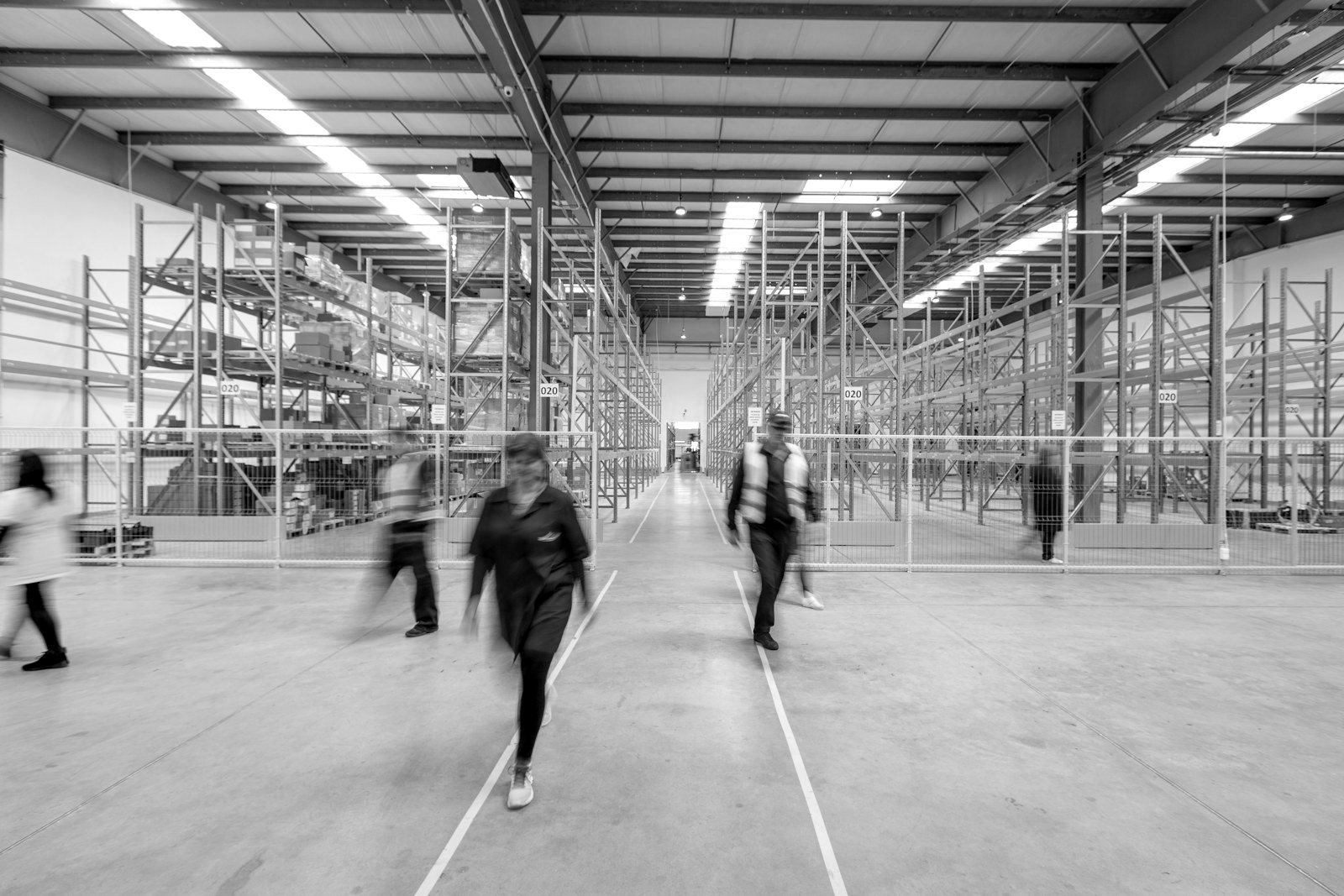
Construction, energy and infrastructure have seen the most significant arbitration activity in Bangladesh. The recurring causes are project delay, extension-of-time and price-escalation claims, design non-compliance, tax and VAT burdens, unforeseen ground conditions, force majeure and joint venture disputes.[2] Construction claims suit arbitration because they are technical, document-heavy and best decided by people who understand programmes, measurement and certification.
Many contracts contain a tiered process: engineer's determination, dispute board or adjudication, negotiation, then arbitration. Each step usually carries its own notice period, and missing one can defeat a valid claim. Our analysis of unpaid infrastructure project claims in Bangladesh sets out how to preserve those rights under public procurement documents.
Interim relief on projects
Projects often need urgent protection before a tribunal exists: restraining a call on a performance guarantee, preserving equipment or securing site records. Section 7A of the Arbitration Act 2001 lets the court grant interim orders, including injunctions, receivers and preservation of property, before or during the arbitration.[1] In Drilltec-Maxwell Joint Venture v Gas Transmission Company Ltd (2016) the court required a valid arbitration agreement and a genuine intention to arbitrate before granting relief.[2] See our note on whether a performance guarantee can be stopped.
Review of construction awards
Courts do not generally review an award on its merits, as the Appellate Division confirmed in Bangladesh Power Development Board v M/s Arab Contractors (BD) Ltd (2010). In 2021, however, the High Court Division set aside the award in Gas Transmission Company Ltd v Drilltec-Maxwell Joint Venture, a departure from that approach that remains under appeal.[2] Contractors facing state-owned employers should expect a determined challenge and plan the record accordingly.
Joint venture disputes
Joint ventures in Bangladesh take two forms, and the form changes the dispute. A contractual joint venture, common in construction and energy bids, is governed by the consortium or JV agreement; disputes between partners over cost sharing, scope, liability and profit split are contractual and readily arbitrable. An incorporated joint venture adds a company, a shareholders' agreement and articles of association, which brings company law into play.
Joint venture disputes often turn on who is bound. A JV company may not be a signatory to the partners' agreement, and a parent guarantor may not be a party to either. The Act provides for consolidation and joint hearings, but a tribunal's reach still depends on who signed the arbitration agreement.[1] Without that agreement, related disputes can fragment across tribunals and courts. Draft the clause so that the JV company, each partner and any guarantor sign the same dispute resolution regime, with a mechanism to join related claims.
Deadlock and exit
Deadlock is the classic joint venture dispute. A tribunal can enforce a contractual deadlock mechanism, award damages for breach of reserved-matter provisions and, in our view, order a party to perform a contractual buy-sell obligation between the partners. It cannot wind up the JV company or bind the company registry. Where exit is the likely end point, the agreement should contain a valuation and transfer mechanism that an arbitral tribunal can apply without needing a court to restructure the company.
Shareholder disputes and arbitration
Shareholder disputes sit at the edge of arbitrability. Claims under a shareholders' agreement, such as breach of pre-emption rights, non-compete covenants, information rights or a put option, are contractual and can be arbitrated between the signatories. Statutory remedies are different. The Companies Act 1994 gives the court power to make orders protecting minority shareholders under section 233 and to wind up a company under section 241.[5] Those remedies affect the company, its creditors and its register, and should be treated as court-only unless and until Bangladeshi courts hold otherwise.
The practical answer is a dual-track strategy. Use the arbitration clause for the contractual bargain, and keep the statutory remedy in reserve. A court asked to hear a contractual claim covered by the clause must refer it to arbitration if a party applies before filing its written statement.[1] A petition seeking statutory relief that no tribunal can grant is less likely to be stayed. Our analysis of shareholder disputes in Bangladesh covers the statutory thresholds and recent High Court Division reasoning in detail.

Banking, finance and loan disputes
Banking disputes raise the hardest forum question. Banks and financial institutions recover loans through the Artha Rin Adalat under the Artha Rin Adalat Ain 2003, which builds in its own settlement and mediation stages, including at execution and on appeal.[6] The new commercial court regime does not take over matters where another law limits or excludes ordinary civil jurisdiction.[10]
That does not mean a financing contract can never be arbitrated. In April 2025 the High Court Division held, in a dispute over a partly disbursed Tk 11 crore lease-finance facility, that the District Judge was wrong to refuse to appoint an arbitrator under section 12 of the Arbitration Act 2001 merely because the lender had filed an Artha Rin suit. The court directed an appointment within 30 days, reasoning that section 12 deals solely with appointment.[7] The borrower's claim about undisbursed funds was a contractual dispute within the clause. Whether a lender's recovery claim can itself be arbitrated remains a separate and contested question.
ADR for non-performing loans
Regulators have also pushed lenders toward out-of-court resolution. Bangladesh Bank's BRPD Circular No 11 of 12 May 2024 encourages banks to use alternative dispute resolution, with BIAC's support, to recover non-performing loans, and participating banks committed to a pilot referring cases involving non-wilful defaulters to BIAC mediation.[14] For restructurings, inter-creditor arrangements, trade finance and guarantee disputes between commercial counterparties, commercial arbitration in Bangladesh is a realistic option. See our guides to bank guarantees and banking regulations in Bangladesh.
Domestic arbitration between Bangladeshi parties
Local arbitration is the everyday form of commercial arbitration in Bangladesh. The Arbitration Act 2001 does not define domestic arbitration as such. It defines international commercial arbitration by reference to a party's foreign nationality, residence, incorporation, central management or government status, and every other arbitration seated in Bangladesh is, in effect, domestic.[1] [2] The distinction matters because it decides which court supports the arbitration.
In a domestic arbitration the District Court does the work: it appoints arbitrators in default, grants interim measures under section 7A, hears applications to set aside the award and enforces it as a decree.[2] In an international commercial arbitration seated in Bangladesh, the High Court Division takes on interim relief and set-aside applications, and appointments in default go to the Chief Justice or a judge he nominates.[1] Questions specific to foreign parties and foreign seats are covered in our separate guide to international commercial arbitration.
Ad hoc or institutional
Many domestic contracts still provide for ad hoc arbitration, with each side naming an arbitrator and the two choosing a chair. Where the parties have not agreed the number, the tribunal has three members.[1] Ad hoc arbitration works when both sides cooperate. When one does not, appointment through the District Court can take months: banking practitioners have estimated six months to a year, against about three days for a BIAC appointment.[14] For most domestic commercial contracts, institutional rules are the better default. BIAC, sponsored by ICC Bangladesh, the Dhaka Chamber of Commerce and Industry and the Metropolitan Chamber of Commerce and Industry, began operating in April 2011 and now administers cases under its Arbitration Rules 2019 and Mediation Rules 2019.[8]
How a commercial arbitration runs in practice
The detailed procedure is the subject of our step-by-step guide to the arbitration process, so this section gives only the outline that matters when choosing the route. Proceedings begin with a written request or notice of arbitration. If the parties cannot agree a sole arbitrator within 30 days, a party may apply for a default appointment.[1] The tribunal rules on its own jurisdiction, and objections must be raised no later than the statement of defence.[1] [2]
The tribunal then sets a timetable for statements of claim and defence, document production, witness and expert evidence and hearings. It can order interim measures itself, require security and have its orders enforced by the court.[1] The Act sets no time limit for the award.[2] BIAC has reported resolution periods under its rules from three months to 388 days, and one BIAC case was resolved in three months.[13] [14]
Read the clause
Confirm the seat, rules, number of arbitrators, language and every party bound by the arbitration agreement.
Test arbitrability
Check whether a sector statute, regulator or statutory company-law remedy takes any part of the dispute outside arbitration.
Diarise deadlines
Record contractual notice periods, tiered-clause steps, limitation dates and the 30-day appointment window.
Secure the position
Seek interim relief under section 7A or from the tribunal where assets, guarantees or evidence are at risk.
Serve the notice
Issue a notice or request for arbitration that identifies the parties, the clause, the claims and the relief sought.
Constitute the tribunal
Nominate an arbitrator with sector expertise, or file with BIAC, and apply to court if the other side stalls.
Build the record
Assemble contracts, correspondence, accounts, programmes and expert evidence to a timetable set by the tribunal.
Plan for enforcement
Locate counterparty assets early and prepare to enforce the award as a decree once the 60-day challenge period ends.
Settlement remains open throughout, and the Act expressly provides for settlement during the arbitral proceedings.[1] A parallel court suit can also be withdrawn into arbitration under section 89B of the Code of Civil Procedure.[4]
The cost of commercial arbitration in Bangladesh
Cost is the most common objection to arbitration among domestic businesses, and the Law Minister has singled out high arbitrator fees as a problem.[12] Institutional scale fees make the cost predictable. Under BIAC's published schedule, the claimant pays a non-refundable registration fee of Tk 20,000 with the notice of arbitration. The administrative fee starts at Tk 30,000 for claims up to Tk 50 lakh and is capped at Tk 2,55,000 for claims above Tk 100 crore. VAT at 15 per cent applies.[9]
Arbitrators' fees, where the parties adopt the BIAC scale, run on bands. For a claim of Tk 2 crore, the scale gives an administrative fee of Tk 50,000 and an arbitrator's fee between about Tk 3.5 lakh and Tk 10 lakh.[9] A separate fast-track annex has bands for claims up to Tk 5 crore, with a Tk 15,000 registration fee and lower bands. Claims and counterclaims are added together to set the amount in dispute, and foreign-currency claims are converted at the Bangladesh Bank rate.[9]
Costs, interest and recovery
Unless the parties agree otherwise, the tribunal fixes the costs of the arbitration, which include arbitrators' and witness fees, legal fees and institutional charges, and decides who bears them.[2] It may award interest from the date the cause of action arose to the date of the award and, unless the award directs otherwise, post-award interest runs at two per cent above the Bangladesh Bank rate.[2] Legal fees and expert costs usually exceed institutional fees, so a costs budget and a recovery analysis belong in the first week of any matter, not the last.
Enforcing commercial awards
An award is only as good as its enforcement. A domestic award may be challenged within 60 days of receipt on the limited grounds in section 43, which include incapacity, lack of proper notice, excess of mandate, improper composition or procedure, non-arbitrability, public policy and fraud or corruption.[2] Once that window has expired, or a challenge has failed, the award is enforced as a decree of the court under section 44.[2]
A foreign award is enforced through the District Court in Dhaka under section 45, and Bangladesh has been a party to the New York Convention since 6 May 1992.[2] Enforcement strategy, from asset tracing to execution against state-owned enterprises, is covered in our separate guide to enforcing arbitral awards. At the outset, the commercial point is simple: identify where the counterparty's assets are before choosing the seat.

Arbitration, the commercial courts and other forums in 2026
The biggest 2026 change to commercial arbitration in Bangladesh is the arrival of a competitor. The Commercial Court Ordinance 2026 was published in the gazette at the start of January 2026 and took effect immediately. It provides for district-level commercial courts hearing at least 24 types of commercial dispute, including banking, insurance, import and export, carriage of goods, aircraft transactions and construction and infrastructure contracts, with trials to conclude within 90 days of the final hearing and appeals to commercial benches of the High Court Division.[10]
Commentators note that the definition extends to joint venture, investment, intellectual property and natural resource agreements, and that the regime requires mandatory pre-suit mediation before a case is filed.[11] Parliament passed the Commercial Courts Act 2026 in April, and the Law Minister has since said the government will revisit it to fill gaps on regulatory, tax, labour and criminal matters.[12]
Choosing between court and tribunal
Nothing in the new regime displaces a valid arbitration clause. The Arbitration Act 2001 still bars courts from hearing matters the parties have agreed to arbitrate, except as the Act allows.[1] The choice is therefore made at the drafting stage. Arbitration offers expertise, privacy and enforceability abroad. The commercial courts may offer speed and lower cost for straightforward domestic claims, if their 90-day target holds.
Bangladesh International Arbitration Centre
Dhaka institution operating since April 2011, administering cases under its Arbitration Rules 2019 and Mediation Rules 2019.
District Courts
Make default appointments, grant interim measures, hear set-aside applications and enforce domestic awards.
High Court Division
Handles interim relief and set-aside applications in international commercial arbitrations seated in Bangladesh.
Commercial courts
District-level courts created in 2026 to hear listed commercial disputes, with appeals to commercial benches.
Artha Rin Adalat
Specialist money-loan courts for financial institutions' recovery claims, with built-in mediation stages.
Bangladesh Energy Regulatory Commission
Decides disputes between energy licensees, and between licensees and consumers.
Sector comparison at a glance
The table below summarises how commercial arbitration in Bangladesh applies across the main sectors. On a phone, scroll it sideways.
| Sector | Typical disputes | Arbitrable? | Watch for | Practical step |
|---|---|---|---|---|
| Supply and sale of goods | Non-payment, defects, late delivery, termination | Yes | Purchase orders with conflicting clauses | Map which document governs each order |
| Distribution and agency | Territory, targets, commission, termination | Yes | Public policy and FX arguments at award stage | Keep trading records and notices complete |
| Construction and infrastructure | Delay, variations, payment, escalation | Yes | Tiered notice steps; state-employer challenges | Run a claims calendar from day one |
| Joint ventures | Cost sharing, deadlock, exit, profit split | Yes, between signatories | Non-signatory JV company or guarantor | Bind every entity to one clause |
| Shareholder | SHA breach, pre-emption, put options | Contract claims yes; statutory remedies no | Sections 233 and 241 Companies Act 1994 | Run contract and statutory tracks separately |
| Banking and finance | Facility, disbursement, guarantees, restructuring | Depends on claim | Artha Rin Adalat Ain 2003 | Check forum before serving notice |
| Energy licences | Tariffs, licensee and consumer disputes | Often no | BERC Act 2003, section 40 | Read the licence alongside the contract |
Two drafting points apply in every sector. Make sure every party that may be involved in the dispute signs the arbitration clause, and state the seat, rules, number of arbitrators and language. Our analysis of arbitration agreement enforceability in Bangladesh covers clause wording; a dedicated guide to drafting arbitration clauses follows.
How TRW handles commercial arbitration
TRW acts for claimants and respondents in domestic and international commercial arbitration across supply, distribution, construction, energy, joint venture, shareholder and finance disputes. Our work runs from the first notice to the final recovery: reviewing the clause and the arbitrability position, securing interim relief under section 7A, managing tribunal appointments, building the evidential record, presenting the case at BIAC or ad hoc, and defending or enforcing the award.
We also advise on the threshold decision many businesses get wrong, which is whether to arbitrate at all. Where a mediated settlement, an Artha Rin settlement conference or a commercial court claim is the better route, we say so. Our international arbitration practice, alternative dispute resolution practice and construction and project delivery team work together on complex matters, and our overview of alternative dispute resolution in Bangladesh explains how arbitration fits the wider landscape.
What to watch in commercial arbitration in Bangladesh
Three developments will shape the next year. First, reform of the Arbitration Act 2001: a BIAC and UNDP seminar in May 2026 discussed reform proposals, and the Law Minister has said the Act's limitations can be fixed easily.[12] Second, the bedding-in of the commercial courts, and how they interact with arbitration clauses and pre-suit mediation. Third, the institutional market: BIAC, now 15 years old, has signed memoranda with 12 Chinese arbitration bodies and partnerships across about 14 other countries, a signal of its ambition for cross-border work.[13]
Contracts signed now will be performed under that changing framework. Review standard-form supply, distribution and project contracts, align the dispute clauses in multi-party structures, and decide deliberately between arbitration and the commercial courts. If a dispute is emerging, contact TRW to discuss the forum, the deadlines and the realistic route to recovery.
Frequently asked questions
What is commercial arbitration in Bangladesh?
Which commercial disputes cannot be arbitrated in Bangladesh?
The Act has no list, but it preserves other laws that bar arbitration. Criminal and competition matters are generally non-arbitrable, energy licensee and consumer disputes go to the Bangladesh Energy Regulatory Commission, and statutory company-law remedies such as winding up are matters for the court.[2] [5]
Can two Bangladeshi companies arbitrate their dispute?
Yes. Arbitration seated in Bangladesh between local parties is governed by the Arbitration Act 2001, with the District Court handling default appointments, interim measures, set-aside applications and enforcement.[2]
Can shareholder disputes go to arbitration?
Contractual claims under a shareholders' agreement can be arbitrated between its signatories. Statutory remedies under the Companies Act 1994, such as minority protection orders under section 233 and winding up, should be treated as matters for the court.[5]
Can a bank loan dispute be arbitrated?
How much does arbitration at BIAC cost?
BIAC charges a Tk 20,000 registration fee and an administrative fee from Tk 30,000, capped at Tk 2,55,000, plus 15 per cent VAT. Arbitrators' fees follow a separate scale if the parties adopt it, and legal costs are additional.[9]
How long does a commercial arbitration take?
Can a court case be stopped if there is an arbitration clause?
Do the new commercial courts replace arbitration?
How long do I have to challenge a domestic award?
An application to set aside must be made within 60 days of receiving the award, on the limited grounds in section 43 of the Arbitration Act 2001.[2]
Source register
Primary legal and regulatory sources
Materials checked on 20 October 2026. Confirm the current official text before relying on any provision.
- Arbitration Act 2001 — Laws of Bangladesh
- Chambers Global Practice Guides — International Arbitration 2026: Bangladesh
- Contract Act 1872 — Laws of Bangladesh
- Code of Civil Procedure 1908 (sections 89A to 89C) — Laws of Bangladesh
- Companies Act 1994 (sections 233 and 241) — Laws of Bangladesh
- Artha Rin Adalat Ain 2003 — Laws of Bangladesh
- High Court Division, Civil Revision No 1850 of 2023, judgment of 29 April 2025 (CEFAD Foundation v International Leasing and Financial Services Ltd)
- Bangladesh International Arbitration Centre
- Bangladesh International Arbitration Centre — Fees of Arbitration
- The Financial Express, 3 January 2026 — Commercial Court Ordinance issued
- The Daily Star, Law Review — A review of the Commercial Court Ordinance 2026
- The Daily Star, 2026 — Govt to address major gaps in Commercial Courts Act
- The Financial Express, 2 August 2026 — Country needs to embrace arbitration for clearing staggering dispute backlog
- Dhaka Tribune, 1 October 2024 — BIAC discusses ADR methods to recover bad debts (BRPD Circular No 11 of 2024)
Related TRW assistance
Move from information to a defined next step
TRW acts in domestic and international commercial arbitration across supply, distribution, construction, joint venture, shareholder and finance disputes, from interim relief to award enforcement. Explore our international arbitration practice and alternative dispute resolution practice, or contact TRW to discuss your dispute.