
TRW Insight / Bangladesh
Bangladesh Bank's July 2026 framework lets banks partner with foreign payment platforms and open Digital Value Accounts for customers. Banks keep control of settlement, existing foreign exchange limits still apply, and fintechs need a licence or a bank partner to take part.
Cross-border digital payments in Bangladesh: the 2026 framework
Cross-border digital payments in Bangladesh moved onto a new footing on 29 July 2026, when Bangladesh Bank's Foreign Exchange Policy Department-1 issued FEPD-1 Circular No. 25 and allowed authorised dealer banks to work with foreign payment platforms through a bank-intermediated framework.[15][6] For the first time, a Bangladeshi bank can open digital wallets in its customers' names with a foreign provider, keep them under a master account it controls, and use them for outward payments as well as inward receipts.
The change matters to four groups at once. Foreign merchants want Bangladeshi customers to be able to pay them. Bangladeshi freelancers, software houses and e-commerce exporters want their foreign earnings home quickly. Fintechs want to know which licence lets them take part. Banks carry the regulatory risk for all of it. This guide explains the law, who decides, what each channel allows, how a bank launches a partnership, the compliance load and how to structure a product that Bangladesh Bank will accept. Every example is hypothetical.
Cross-border digital payments, step by step.
Cross-border digital payments in Bangladesh
Only authorised dealer banks may settle cross-border payments, so foreign platforms reach Bangladeshi users through them.
FER Act 1947Bangladesh Bank administers the Act through the Guidelines for Foreign Exchange Transactions and yearly consolidated circulars.
Banks may now partner with foreign payment platforms and open Digital Value Accounts in their customers' names.
29 July 2026FEPD-1 Circular No. 25 introduced the framework; it now sits in Part K of FEPD-1 Circular No. 40.
Every wallet is a sub-account of the bank's master account, with real-time data and a mirror ledger.
Bank controlUnused balances stay under the bank's control, and no transaction may run outside the approved arrangement.
Online payments abroad are capped at USD 300 a transaction, within existing travel, ERQ and RFCD entitlements.
USD 300Membership, IT, visa and hotel payments follow their own heads in Circular No. 40.
Freelancers and IT exporters repatriate within four months and may keep half of ICT earnings in foreign currency.
50 per centReceipts up to USD 20,000 need no Form C, which is being replaced by digital declarations; OPGSP receipts are capped at USD 10,000 a transaction.
A fintech that handles payments needs a PSO or PSP licence, or must work entirely through a bank.
Section 4(2)The Payment and Settlement Systems Act 2024, in force since January 2025, requires a Bangladesh Bank licence to run a payment system or provide payment services.
A bank needs FEPD-1 acknowledgement before launch, then must report every transaction and keep strong AML controls.
Prior acknowledgementMap each payment to a head, a limit and a document, then choose the channel: the regime rewards structure.
The numbers and rules that matter.
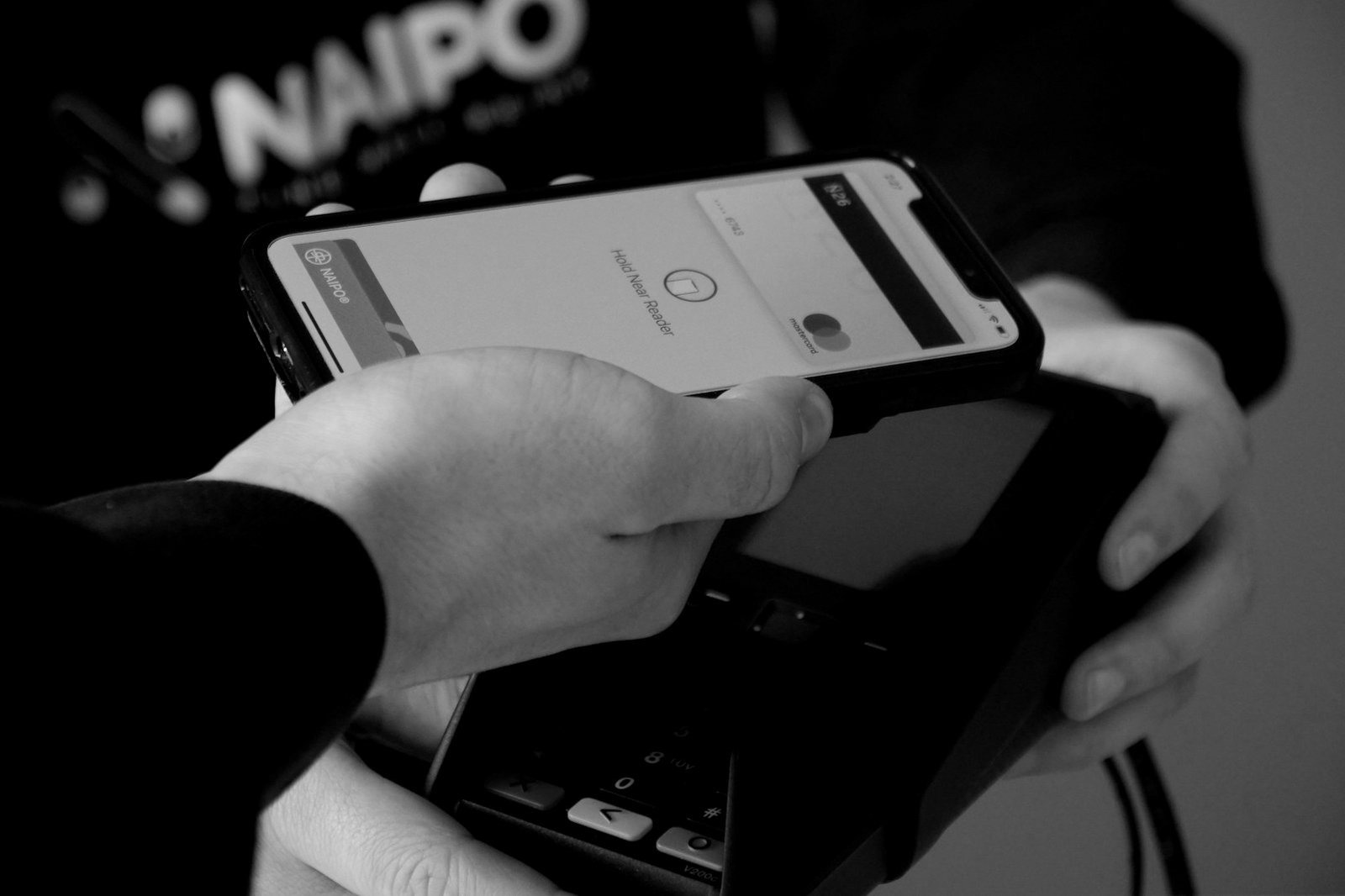
Summary: Bangladesh still runs a controlled foreign exchange regime under the Foreign Exchange Regulation Act 1947, and only authorised dealer banks may move money across the border. The July 2026 framework keeps that rule: it lets banks partner with foreign payment platforms and open Digital Value Accounts that sit under a bank-controlled master account. Outward use is tied to existing entitlements, such as travel quotas, ERQ and RFCD balances and a USD 300 per transaction cap for online payments. Payment companies without a bank still need a Bangladesh Bank licence.
Key point: The framework for cross-border digital payments is bank-led by design: every transaction must be routed exclusively through an authorised dealer, the bank must obtain Bangladesh Bank's acknowledgement before launch, and a platform that holds Bangladeshi users' money outside an approved master account is outside the law.
At a glance
Banks stay in control
Only authorised dealer banks may settle cross-border payments; platforms connect to Bangladeshi users through them.
Digital Value Accounts
User wallets with a foreign provider operate only as sub-accounts of a bank's master account.
Entitlements still apply
Outward use draws on travel quotas, ERQ and RFCD balances and set heads such as membership, IT and visa fees.
USD 300 per transaction
Online payments abroad by card or wallet are capped at USD 300 a transaction for individuals.
Exporters keep more
ICT service exporters may hold up to 50 per cent of net earnings in foreign currency in an ERQ account.
Licence or partner
A fintech that touches payment flows needs a PSO or PSP licence, or must work entirely through a bank.
Table of Contents
The legal architecture: FER Act, GFET and the 2026 circulars
The starting point is the Foreign Exchange Regulation Act 1947, which provides the legal basis for regulating payments and dealings in foreign exchange.[4] Bangladesh Bank administers the regulations made under the Act, and authorised dealers, in practice banks holding foreign exchange licences, must keep transaction records, report through Bangladesh Bank's online portals and bring the regulations to their customers' notice.[5] Our overview of foreign exchange regulations in Bangladesh covers the Act and the current and capital account rules in depth.
The detailed rules sit in two layers: the Guidelines for Foreign Exchange Transactions 2018 (GFET), issued in January 2018,[5] and a set of consolidated circulars that Bangladesh Bank reissues each year. Three of those circulars govern cross-border digital payments:
- Exports and inward receipts: FEPD-1 Circular No. 26 of 30 July 2026 covers services and ITES, OPGSPs, e-commerce exports, freelancers, inward remittances and ERQ accounts. It replaced FE Circular No. 31 of 31 July 2025 and is valid for one year.[2]
- Imports: FEPD-1 Circular No. 30 of 13 August 2026 contains, unusually, the rule on buying foreign currency from the digital wallets of incoming tourists.[3]
- Outward current account payments: FEPD-1 Circular No. 40 of 30 September 2026, issued under section 20(3) of the FER Act, replaced FE Circular No. 37 of 30 September 2025. It covers travel, private and institutional remittances, international cards and, in Part K, the bank-intermediated framework.[1]
Paragraph numbers move each year when the circulars are reissued, so compliance manuals citing 2025 numbering are already out of date. Circular No. 25 itself has been absorbed into Part K of Circular No. 40, which footnotes it as the source.[15][1]
What the July 2026 framework for cross-border digital payments introduced
Bangladesh Bank described the purpose as promoting digital financial inclusion, facilitating cross-border trade in services and modernising payment infrastructure.[1] Before July 2026, banks used Online Payment Gateway Service Providers mainly for inward remittances; the new framework extends the bank-platform relationship to outward payments.[7][8]
CDPSPs and Digital Value Accounts
Authorised dealers may set up standing arrangements with foreign payment service providers, digital platforms, online payment gateways and other legitimate payment solution providers, which the circular calls cross-border digital payment service providers (CDPSPs), subject to foreign exchange, AML/CFT, tax and reporting rules. Banks may facilitate the opening of wallets or stored-value accounts, called Digital Value Accounts (DVAs), in users' names.[1] Press reports expected platforms such as PayPal and Payoneer to be candidates, but the circular names no provider.[6][7]
The bank's safeguards
The control structure is the heart of the framework. Part K of Circular No. 40 requires that:[1]
- every DVA is linked to a Master DVA or the bank's settlement account with the CDPSP, and operates only as a sub-account, never as a standalone or independently funded account;
- the bank integrates with the CDPSP in real time or near real time, with visibility of balances, transactions and usage, and keeps a mirror ledger of all DVA transactions;
- controls restrict unauthorised use, enforce transaction caps and keep complete audit trails;
- unused DVA balances stay under the bank's control and may be repatriated, reversed or adjusted.
All transactions must be routed exclusively through authorised dealers for settlement and foreign exchange conversion, and no cross-border transaction may run outside approved CDPSP arrangements and the Master DVA structure.[1]
What a DVA may be used for
The framework creates no new entitlement to buy foreign currency; it gives existing entitlements a new channel. A bank may release travel foreign exchange for private, medical and official trips through DVAs. DVAs may also be funded from Export Retention Quota (ERQ) and Resident Foreign Currency Deposit (RFCD) balances, and up to three top-level officials of an ERQ holder may use them for bona fide business expenses.[1]
Cross-border online payments through a DVA are capped at USD 300 or its equivalent per transaction, and DVAs may also be used for membership fees on actual requirements, IT expenses, visa processing fees and online hotel bookings.[1]
Prior acknowledgement and inward use
A bank offering outward remittance under the framework must first apply to FEPD-1 at Bangladesh Bank's head office with details of the CDPSP, operational structure, system integration and compliance frameworks, for regulatory acknowledgement. The circular sets no time limit for it. On the inward side, exporters and e-commerce traders holding notional accounts or DVAs may repatriate export proceeds under existing rules, ERQ funds may be loaded into approved DVAs, and banks may provide acquiring services for non-residents paying local merchants.[1]
Card and wallet rules for paying foreign merchants
For most residents, the practical way to pay a foreign merchant is still an international card. Part I of Circular No. 40 starts from the position that international cards are intended for use while travelling abroad, and that online use from Bangladesh is allowed only for specified payments.[1]
The USD 300 online payment rule
Banks may allow cardholders to make online payments not exceeding USD 300 or its equivalent in a single transaction, counted against the cardholder's unused annual travel quota plus up to USD 1,000 more a year. Cards may also be used for online hotel bookings for travel abroad and, through virtual cards if needed, for membership and examination fees.[1]
Business cards and institutional payments
- Software and IT firms: BASIS members may receive cards of up to USD 8,000 each, refillable, within USD 40,000 per calendar year.[1]
- E-commerce businesses: e-CAB members may receive cards of USD 2,000 each, within USD 10,000 per calendar year.[1]
- Individual developers: virtual cards for app and game development costs, capped at USD 500 per calendar year.[1]
Larger corporate payments, such as software maintenance fees and cloud usage fees, are institutional remittances under Part E, made against a licence or agreement, invoices and tax compliance.[1] Our guide to outward remittance from Bangladesh explains those heads and the Form TM process.
Blocked categories and resale of foreign digital items
Banks must guard against illegitimate online payments abroad, expressly including online gambling, forex or stock trading and buying cryptocurrencies or lottery tickets, and must strictly observe KYC and AML/CFT standards.[1] Foreign sellers using local marketplaces should note Part E, paragraph 29: selling digital items to residents for Taka contravenes the FER Act unless the items were procured through an outward remittance under general authorisation, and items bought under personal or corporate entitlements cannot be resold on those platforms.[1]
Inward payments for freelancers and IT exporters
The inward side of cross-border digital payments is more developed and more generous. Circular No. 26 treats internet-delivered software and data services as service exports outside the EXP form procedure.[2]
Proceeds, forms and repatriation time
Freelancers and individual service exporters may receive up to USD 20,000 without Form C; above that, Part K refers to the online Form C (ICT), unless Part L provides otherwise. Part L now states that Form C and Form C (ICT) stand discontinued, replaced by customer declarations captured through banks' secure digital interfaces; until those are in place, banks collect purpose and supporting information through existing digital channels.[2]
Service proceeds must be repatriated within the period that applies to goods, which Part A sets at four months. Retaining proceeds abroad, other than in an authorised notional or merchant account, violates section 5(1)(e)(i) of the FER Act and is punishable under section 23(1).[2][4]
OPGSPs, marketplaces and freelancer cards
Banks may make standing arrangements with recognised OPGSPs, with a separate nostro collection account for each. Exporters may hold notional accounts only with OPGSPs that have such an arrangement, funds must be swept to the nostro account, and the limit is USD 10,000 per transaction.[2] Service exporters may also hold marketplace merchant accounts and notional accounts with licensed foreign payment operators, declaring them to the bank with an undertaking to repatriate. Banks may issue dual-currency Freelancer Cards, and MFS providers and PSPs may repatriate proceeds through standing arrangements with foreign PSPs.[2]
How much can stay in foreign currency
ICT service exporters may retain up to 50 per cent of net export earnings in an ERQ account; other service exporters up to 30 per cent. The balance is converted to Taka.[2] Banks must credit inward remittances the same business day if received in banking hours, completing any pre-credit verification within three business days.[2] E-commerce exporters may ship consignments of up to USD 1,000 per transaction without an EXP form where paid before shipment.[2] Tax is covered in our guide to freelancer tax in Bangladesh.
Payment aggregators, gateways and the PSO/PSP licence
Foreign exchange law decides whether money may cross the border; payment systems law decides who may handle it on the way. The Payment and Settlement Systems Act 2024, passed by Parliament on 2 July 2024, brought bank and non-bank payment services under statute.[11]
The Act took effect when the Financial Institutions Division issued its gazette notification at the start of January 2025.[16] Section 4(2) requires a Bangladesh Bank licence to operate a payment system or provide payment services, and contravention is punishable under section 37(1).[12] When the Bill was passed, breaches of its approval requirements were reported to carry up to five years' imprisonment, a fine of up to Tk 5 million, or both.[11]
The Bangladesh Payment and Settlement System Regulations 2014 remain the operating rulebook. Regulation 5(1) provides that no person shall provide payment services unless licensed by Bangladesh Bank, and the Regulations distinguish a payment system operator (PSO), which runs a settlement system among participants, from a payment service provider (PSP), which provides payment services and settles through a bank.[9]
Capital, fees and the draft PSO regulation
Bangladesh Bank's published approval procedure, dating from 2019, sets minimum paid-up capital of Tk 5 million for a PSO and Tk 200 million for a PSP, an application fee of Tk 25,000 and a licence fee of Tk 100,000, with a no objection certificate first and final approval after inspection. Only a PSP may issue e-money.[10]
The draft PSO Regulation of 4 November 2025 would create five PSO categories, starting with digital merchant acquiring at Tk 10 million minimum capital; payment aggregators would act under merchant acquiring rather than hold a separate licence.[13] Check whether the final text has issued. Our guide to the PSO and PSP licence in Bangladesh covers the application in full.
Enforcement against unlicensed platforms
In late September 2026 Bangladesh Bank's Payment Systems Supervision Department named 22 online payment platforms operating without approval and urged individuals, businesses and financial institutions not to use them.[12] For a foreign platform, the lesson is direct: a payment licence covers domestic services, while foreign exchange still passes through an authorised dealer.
How a bank launches a cross-border digital payments partnership
Most launches will be led by a bank with a foreign platform as partner and, often, a local fintech providing the customer interface. The sequence below reflects Part K and the general rules of Circular No. 40.[1]
Define the use cases
List each outward and inward flow the product will carry and map it to the head of Circular No. 40 or No. 26 that permits it.
Vet the platform
Carry out due diligence on the CDPSP, including its home-country licensing, AML/CFT controls and ability to share data in real time.
Build the integration
Set up the Master DVA, real-time or near real-time integration, a mirror ledger and system-enforced transaction caps.
Sign the agreement
Give the bank contractual rights to data, audit trails and control of unused balances, with clear refund and chargeback rules.
Apply to FEPD-1
Submit CDPSP details, operating structure, system integration and compliance frameworks to Bangladesh Bank for acknowledgement.
Launch and report
Go live only after acknowledgement, report all framework transactions regularly and run KYC, CDD and AML/CFT monitoring.
Review each year
Re-map products when the consolidated circulars are reissued, because paragraph numbers and limits can change.
Two documents carry most of the weight. The bank-CDPSP agreement must give the bank real-time visibility, control of unused balances and audit rights, because the bank cannot discharge those regulatory duties without contractual support. The application to FEPD-1 should map each use case to the permitting head and show caps enforced in the system, not only by policy. Form TM records and supporting papers must be kept for at least five years, and a Bangladesh Bank approval for an outward remittance is valid for no more than 45 days unless it states otherwise.[1]

What the rules on cross-border digital payments mean for each party
Foreign merchants and payment platforms
A foreign merchant cannot open its own channel into Bangladesh. It can be paid by card within the customer's entitlements, through a DVA under a bank's master account, by institutional remittance under Form TM for business supplies, or through a local subsidiary that sells in Taka and remits under the applicable head.[1] A foreign platform's route is a partnership with an authorised dealer, accepting sub-accounts, real-time data sharing, transaction caps and bank control of balances; serving the domestic market needs a separate PSO or PSP assessment.[1][9]
Suppose a Singapore software company sells subscriptions to Bangladeshi small businesses at USD 49 a month. Owners paying by card are within the USD 300 rule, though the payments use personal entitlements. A company paying an annual licence of USD 2,400 should instead use an institutional remittance against the agreement and invoice, with tax deducted.[1] Banks may also acquire digital wallet payments by incoming tourists through recognised foreign wallet providers and buy foreign currency from those wallets against Taka.[3]
Bangladeshi exporters of services
For freelancers and software houses, the July 2026 changes are mostly good news: exporters holding a DVA may repatriate export proceeds through it, and ERQ funds may be loaded into approved DVAs for bona fide current obligations.[1] The core obligations do not change: repatriate within four months, keep within ERQ limits, and never park proceeds abroad outside an authorised account.[2]
Fintechs and banks
A fintech can hold a PSO or PSP licence, or act as technology and distribution partner to a bank that holds the CDPSP relationship and the settlement. It cannot collect user funds and settle with a foreign platform itself.[9][1] Banks carry the risk: each must regularly report all framework transactions and maintain robust KYC, customer due diligence and AML/CFT controls.[1]
Comparing the channels for cross-border digital payments
The table compares the main channels by direction, limit and legal basis, using the figures in the current consolidated circulars.[1][2]
| Channel | Direction | Key limit or condition | Legal basis |
|---|---|---|---|
| International card (individual) | Outward | USD 300 per online transaction, within unused travel quota plus up to USD 1,000 a year | Circular No. 40, Part I |
| Digital Value Account | Outward and inward | Sub-account of a bank's Master DVA; USD 300 per online transaction; travel, ERQ and RFCD entitlements | Circular No. 40, Part K |
| Institutional remittance | Outward | Head-specific; Form TM with agreement, invoice and tax compliance | Circular No. 40, Parts A and E |
| OPGSP notional account | Inward | USD 10,000 per transaction; funds swept to the bank's nostro | Circular No. 26, Parts I and K |
| Freelancer inward remittance | Inward | No Form C up to USD 20,000; Form C (ICT) above, now being replaced by digital declarations under Part L | Circular No. 26, Part K |
| Small e-commerce export | Inward | Up to USD 1,000 per transaction without EXP form, paid before shipment | Circular No. 26, Part J |
| Tourist wallet acquiring | Inward | Bank arrangement with foreign PSP; overdraft only against bank guarantee | Circular No. 30, Part O |
The same USD 2,000 can be a lawful wallet payment, a lawful institutional remittance or a breach, depending on who pays, under which head and with which documents.
AML/KYC, reporting and who decides
Four bodies matter in practice: FEPD-1, the payment systems departments, the Bangladesh Financial Intelligence Unit and the authorised dealer bank that applies the rules to each transaction.[1][12][14]
Foreign Exchange Policy Department-1
Issues the consolidated circulars and acknowledges bank and platform launches under Part K of Circular No. 40.
Bangladesh Bank payment systems departments
License PSOs and PSPs, receive MFS and PSP notifications and act against unlicensed payment platforms.
Bangladesh Financial Intelligence Unit
Receives suspicious transaction reports under the Money Laundering Prevention Act 2012.
Authorised dealer bank
Holds the platform relationship, master account and mirror ledger, and applies limits and KYC to each payment.
- Framework transactions: regular reporting of all DVA transactions to Bangladesh Bank.[1]
- Outward remittances: entries in the Online TM Form Monitoring System, with tax and VAT details by the 25th of the following month.[1]
- Cards: monthly statements and the Online International Card Monitoring System.[1]
- Freelancer receipts: reporting with purpose codes, after tax deduction and KYC checks.[2]
Under section 25(1)(d) of the Money Laundering Prevention Act 2012, a reporting organisation must report any doubtful transaction immediately and of its own accord; failure to report attracts a fine of Tk 50,000 to Tk 2.5 million under section 25(2), and tipping off is an offence under section 6.[14] See our guide to anti-money laundering law in Bangladesh. For DVA products, typical red flags are split payments under the USD 300 cap, wallets funded by third parties and attempted payments to blocked categories.
Practical structuring for cross-border digital payments
Bangladesh's regime is purpose-based, so map every flow to a head, a limit and a document, then choose the channel.
- Foreign SaaS selling into Bangladesh: card or DVA for individuals within USD 300 a transaction; institutional remittance for companies.[1]
- Bangladeshi software house billing abroad: collect through an OPGSP or a declared notional or merchant account, repatriate within four months and use the 50 per cent ERQ for foreign spending.[2]
- Foreign platform seeking Bangladeshi users: become a CDPSP partner of one or more banks and build the integration before the FEPD-1 application.[1]
- Local fintech: decide early between a PSO or PSP licence and a bank technology partnership.[9]
What to do this week
- List every cross-border payment flow by direction, payer, purpose and typical amount.
- Match each flow to the current paragraph of Circular No. 26 or No. 40.
- Check whether any user money sits with a foreign platform outside a bank-controlled account, and close that gap first.
- For a new product, agree a term sheet with the partner bank on data access, caps, unused balances and reporting.

Challenging a refusal or enforcement action
Customers may not apply to Bangladesh Bank directly: the authorised dealer forwards the application with its recommendation. The circular treats its limits as indicative, so Bangladesh Bank can accommodate bona fide requests above them once the expense is shown to be genuine.[1] A refusal is often best answered by a better-documented resubmission through the bank.
Where Bangladesh Bank refuses an acknowledgement, blocks a platform or acts against a licensee unlawfully, irrationally or unfairly, the remedy is a writ petition in the High Court Division; our guide to a writ against Bangladesh Bank explains grounds, timing and interim relief. TRW regularly advises banks, fintechs and foreign payment companies on cross-border digital payments and acts in challenges to regulatory decisions; see our fintech, payments and PSP licensing practice.
What to watch in 2027
- Renewal of the consolidated circulars: Circulars No. 26 and No. 40 are each valid for one year, so replacements are due in 2027.[1][2]
- Bank acknowledgements: which banks obtain FEPD-1 acknowledgement for CDPSP partnerships, and with which platforms.
- Final PSO rules: whether the draft PSO Regulation is finalised and how it treats aggregators.[13]
- Enforcement: further public warnings against unlicensed payment platforms.[12]
Test yourself
Frequently asked questions
Which circular introduced the framework for cross-border digital payments?
FEPD-1 Circular No. 25, issued by Bangladesh Bank's Foreign Exchange Policy Department-1 on 29 July 2026. Its content now sits in Part K of FEPD-1 Circular No. 40 of 30 September 2026, the consolidated circular on outward current account remittances, which footnotes Circular No. 25 as its source.[15][1]
Can PayPal or Payoneer now operate directly in Bangladesh?
Not directly. The framework lets authorised dealer banks partner with foreign payment platforms, and press reports expected providers such as PayPal and Payoneer to be candidates. The circular names no provider, and every transaction must run through a bank under a master account arrangement acknowledged by Bangladesh Bank.[1][7]
What is a Digital Value Account?
A wallet or stored-value account opened with a foreign payment provider in an individual's name through a Bangladeshi bank. It must be linked to the bank's Master DVA or settlement account, cannot be independently funded, and any unused balance stays under the bank's control for repatriation, reversal or adjustment.[1]
How much can a resident pay a foreign merchant online?
By card, no more than USD 300 or its equivalent per transaction, within the unused annual travel quota plus up to USD 1,000 a year. The same per transaction cap applies to online payments through a DVA. Membership fees, visa fees and IT expenses follow their own heads.[1]
Does a bank need Bangladesh Bank approval before offering DVAs?
Yes. The bank must apply to FEPD-1 at Bangladesh Bank's head office with details of the platform, operational structure, system integration and compliance arrangements, and obtain regulatory acknowledgement before offering outward remittance. No time limit is set, so launch plans should allow for the regulator's questions.[1]
How do freelancers receive foreign payments lawfully?
Through a bank, an OPGSP with a bank arrangement, a declared marketplace or notional account, a Freelancer Card, or a licensed MFS provider or PSP. Receipts up to USD 20,000 need no Form C. Proceeds must be repatriated within four months, and ICT exporters may retain up to 50 per cent in an ERQ account.[2]
Can a foreign platform hold an exporter's earnings abroad?
Only in an authorised notional or merchant account recognised by Circular No. 26, and only until repatriation within the statutory period. Other retention abroad violates section 5(1)(e)(i) of the FER Act and is punishable under section 23(1). OPGSP notional accounts must be swept to the bank's nostro account.[2]
Does a payment aggregator need a licence in Bangladesh?
Yes, if it operates a payment system or provides payment services in Bangladesh. Section 4(2) of the Payment and Settlement Systems Act 2024 requires a Bangladesh Bank licence. Under the November 2025 draft PSO Regulation, aggregation would sit within the merchant acquiring categories rather than as a separate licence.[12][13]
What AML and reporting duties apply to cross-border digital payments?
Banks must report all framework transactions to Bangladesh Bank and maintain robust KYC, customer due diligence and AML/CFT controls. Cards must block gambling, forex trading and crypto purchases. Suspicious transactions must be reported to the BFIU immediately under section 25(1)(d) of the Money Laundering Prevention Act 2012.[1][14]
Can foreign tourists pay Bangladeshi merchants with their own wallets?
Yes, through a bank. Authorised dealers may acquire wallet transactions through arrangements with recognised wallet providers, gateways or aggregators, buy foreign currency from tourists' wallets against Taka cash or one-time prepaid Taka cards, and arrange point-of-sale payments with local merchants, subject to due diligence and reporting.[3]
Source register
Primary legal and regulatory sources
Materials checked on 20 November 2026. Confirm the current official text before relying on any provision.
- Bangladesh Bank, FEPD-1 Circular No. 40 (30 September 2026): consolidated circular on outward current account remittances, including Part K on the bank-intermediated cross-border digital payment framework (from FEPD-1 Circular No. 25 of 29 July 2026)
- Bangladesh Bank, FEPD-1 Circular No. 26 (30 July 2026): consolidated circular on export transactions, services, OPGSPs, freelancers, inward remittances and ERQ
- Bangladesh Bank, FEPD-1 Circular No. 30 (13 August 2026): consolidated circular on import transactions, including purchase of foreign currency from tourists' digital wallets
- Foreign Exchange Regulation Act 1947 (Act No. VII of 1947), Laws of Bangladesh
- Bangladesh Bank, Guidelines for Foreign Exchange Transactions 2018, Volume 1, Chapter 1 (Introduction and Definitions)
- Prothom Alo English, 29 July 2026: PayPal, Payoneer-like foreign payment services cleared for launch in Bangladesh
- The Financial Express, 30 July 2026: BB opens door to global payment platforms
- The Daily Star, 29 July 2026: BB issues guidelines to link local banks with foreign payment providers
- Bangladesh Bank, Bangladesh Payment and Settlement System Regulations 2014
- Bangladesh Bank, Payment Systems Department: Approval Procedure of Payment System Operator (PSO) / Payment Service Provider (PSP)
- The Financial Express, 2 July 2024: Parliament passes Payment and Settlement System Bill 2024
- The Financial Express, 28 September 2026: Bangladesh Bank warns against 22 illegal online payment platforms
- Bangladesh Bank, Payment Systems Department: PSO Regulation 2025 (draft, 4 November 2025)
- Bangladesh Financial Intelligence Unit: Guidance on Reporting Suspicious Transaction Report for the Reporting Organization (January 2019)
- Bangladesh Bank, FEPD-1 Circular No. 25 (29 July 2026): Bank-intermediated cross-border digital payment framework
- The Daily Star, 1 January 2025: No bar on suing Nagad as new law takes effect (gazette bringing the Payment and Settlement System Act 2024 into force)
Related TRW assistance
Move from information to a defined next step
TRW advises banks, fintechs, foreign payment platforms and service exporters on cross-border payment partnerships, Bangladesh Bank applications and PSO and PSP licensing. Explore our fintech, payments and PSP licensing practice or contact TRW to review your structure.











