
Restoration of dismissed suit in Bangladesh: the full journey, step by step
Restoration of dismissed suit in Bangladesh is the plaintiff's route back into court after a suit is dismissed for default, usually because no one appeared when it was called on.
The application goes to the same court within thirty days, under Order IX rule 9 (or rule 4 where the dismissal was for unpaid process fees or both sides' absence), and the plaintiff must show sufficient cause or use the direct restoration route on costs. A refusal under rule 9 can be taken to a miscellaneous appeal and then civil revision.
- Where it starts
- The trial court that dismissed the suit: a Civil Judge, Senior Civil Judge (formerly Assistant Judge or Senior…
- Main law
- Code of Civil Procedure 1908 ss.104, 106, 115 and 151, Order IX rules 2-5, 8, 9, 9A and 15, Order XVII rules 1-3, Order XLI rules…
- Typical duration
- Direct restoration on costs: a few weeks. Contested restoration: roughly 2-8 months in Dhaka. Miscellaneous appeal…
- Who can file
- The plaintiff whose suit was dismissed, or the appellant whose appeal was dismissed for default
Restoration of dismissed suit in Bangladesh: walk through every stage
Press next, use your arrow keys or tap a court on the map. The gold marker shows where your case is, and the green trail shows the route it has taken. For the immersive version, play it full screen.
Read every step as text
 Step 1 · Understanding the dismissal
Find out exactly why the suit was dismissed
The order sheet tells you which rule the court used, and that decides the remedy. Under Order IX, a suit may be dismissed under rule 2 because the summons was not served after the plaintiff failed to pay court fees or postal charges, under rule 3 because neither party appeared, under rule 5 because the plaintiff did not seek fresh summons within one month of an unserved return, or under rule 8 because the defendant appeared and the plaintiff did not.
A suit can also be dismissed under Order XVII for unpaid adjournment costs, or decided on the merits under Order XVII rule 3.
Where: Trial court (Civil Judge, Senior Civil Judge or Joint District Judge) · Time: 2-7 days · Law: Order IX rules 2, 3, 5 and 8 Code of Civil Procedure 1908; Order XVII rules 1(3), 2 and 3 Code of Civil Procedure 1908 · Documents: Application for certified copy of the order sheet, Certified copy of the dismissal order
Tip: Get the certified copy at once. The thirty days run from the dismissal itself, not from when you collect the copy.
 Step 2 · Understanding the dismissal
Match the dismissal to the right remedy
After a dismissal under rule 2 or rule 3, rule 4 lets the plaintiff either bring a fresh suit, subject to limitation, or apply to set the dismissal aside. After a dismissal under rule 8, rule 9 bars a fresh suit on the same cause of action, so restoration is the only way back. A rule 5 dismissal leaves a fresh suit open. A dismissal for unpaid adjournment costs is revived under Order XVII rule 1(7). A decision on the merits under Order XVII rule 3 is a decree and must be appealed.
Where: Lawyer's chamber · Time: 1-2 days · Law: Order IX rules 4, 5(2) and 9(1) Code of Civil Procedure 1908; Order XVII rule 1(7) Code of Civil Procedure 1908 · Documents: Dismissal order, Copy of plaint and order sheet
Tip: Never assume you can simply refile. After a rule 8 dismissal, a fresh suit on the same cause of action is barred.
 Step 3 · Understanding the dismissal
Treat the thirty days as a hard deadline
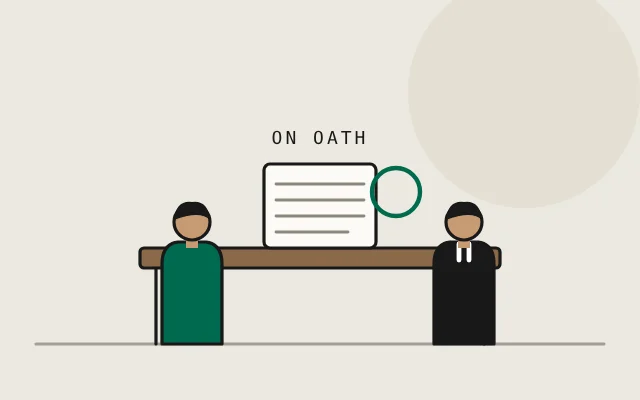
Article 163 of the Limitation Act gives a plaintiff thirty days from the date of dismissal to apply to set aside a dismissal for default of appearance, or for failure to pay the costs of service or to furnish security. Section 5 of the Limitation Act, which allows late filing for sufficient cause, applies to appeals, reviews and revisions, and to other applications only where a law extends it.
The Code expressly extends it to setting aside ex parte decrees and readmitting appeals, but not to rule 9 applications, so a late application is very hard to save.
Where: Lawyer's chamber · Time: 30 days from dismissal · Law: Article 163 Limitation Act 1908; s.5 Limitation Act 1908; Order IX rule 13(2) and Order XLI rule 19(2) Code of Civil Procedure 1908 (contrast) · Documents: Calendar note of the dismissal date
Tip: File within thirty days even if the papers are imperfect. Supporting documents can usually follow; a missed deadline usually cannot be cured.
 Step 4 · Applying for restoration
Direct restoration on costs under rule 9A
Where a suit was dismissed under rule 8, the court may set the dismissal aside directly to avoid delay, without requiring the plaintiff to prove sufficient cause. The plaintiff applies on affidavit within thirty days of the dismissal and pays costs of up to Tk 1,000 fixed by the court. The court then serves notice of the order on the defendant who appeared, at the plaintiff's cost. This short route can be used only once in a suit, so a plaintiff who defaults again must prove cause under rule 9.
Where: Trial court (Civil Judge, Senior Civil Judge or Joint District Judge) · Time: 2-6 weeks · Law: Order IX rule 9A Code of Civil Procedure 1908 · Documents: Application with affidavit, Costs deposit
Tip: If this is your first default, ask for rule 9A expressly. It avoids a contested hearing on your excuse.
 Step 5 · Applying for restoration
File the restoration application under rule 9 or rule 4
If rule 9A is not available, the plaintiff files an application under rule 9 (or rule 4) explaining why no one appeared or why the fees were not paid. Typical causes are sudden illness, a road accident, a clerk's error in noting the date, the lawyer being engaged in a higher court, or a wrong date in the cause list. The application is supported by an affidavit and documents and is registered as a miscellaneous case. Restoration of dismissed suit in Bangladesh succeeds or fails on how convincingly this cause is proved.
Where: Trial court (Civil Judge, Senior Civil Judge or Joint District Judge) · Time: 1-7 days to prepare and file · Law: Order IX rules 4 and 9(1) Code of Civil Procedure 1908 · Documents: Restoration application, Affidavit, Medical certificate or other proof of cause, Court fee
Tip: Explain the default specifically: who was ill, when, and why no one else could attend. Generic excuses fail.
 Step 6 · Applying for restoration
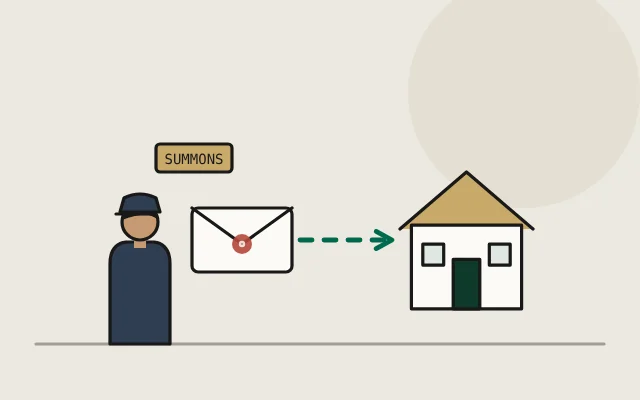
Notice to the defendant
No order restoring a suit under rule 9 can be made unless notice of the application has been served on the opposite party. The court issues notice to the defendant, who may file a written objection saying the excuse is false, that the plaintiff has a history of delay, or that the application is late. The defendant often points to earlier adjournments, now relevant because the 2026 amendment caps adjournments at four per party before the peremptory hearing.
Where: Trial court (Civil Judge, Senior Civil Judge or Joint District Judge) · Time: 1-2 months · Law: Order IX rule 9(2) Code of Civil Procedure 1908; Order XVII rule 1(3) Code of Civil Procedure 1908 (as amended 2026) · Documents: Notice of the application, Written objection
Tip: Make sure the notice is actually served. An order made without notice to the defendant is vulnerable in revision.
 Step 7 · Hearing and order
Hearing on sufficient cause
The court hears the plaintiff and, where the facts are disputed, takes evidence: the plaintiff or the lawyer's clerk, a doctor, or the person who was supposed to attend. The question is whether there was sufficient cause for the non-appearance on the day the suit was called on, or for not paying the fees within time. Courts generally prefer cases to be decided on their merits, but a long record of defaults, or an excuse contradicted by documents, will defeat restoration of dismissed suit in Bangladesh.
Where: Trial court (Civil Judge, Senior Civil Judge or Joint District Judge) · Time: 1-4 months · Law: Order IX rules 4 and 9(1) Code of Civil Procedure 1908 · Documents: Deposition or affidavit evidence, Medical records, Cause list or diary showing the date
Tip: Bring the original medical prescriptions and hospital receipts. Photocopies alone invite doubt.
 Step 8 · Hearing and order
Order restoring or refusing restoration
If the court is satisfied, it must set aside the dismissal, on such terms as to costs or otherwise as it thinks fit, and appoint a day to proceed with the suit. Typical terms are payment of costs to the defendant within a fixed time. If it is not satisfied, it rejects the application. A rejection under rule 9 is appealable; a rejection under rule 4 is not, and is challenged by revision instead. Certified copies should be applied for immediately.
Where: Trial court (Civil Judge, Senior Civil Judge or Joint District Judge) · Time: 1-4 weeks after hearing · Law: Order IX rules 4 and 9(1) Code of Civil Procedure 1908; Order XLIII rule 1(c) Code of Civil Procedure 1908 · Documents: Order in the miscellaneous case, Certified copy
Tip: Pay any costs ordered on time and file proof of payment. Courts can treat non-payment as a fresh default.
 Step 9 · After restoration and other routes
The suit resumes where it stopped
Under rule 15, a suit restored under rule 4 or rule 9 proceeds from the stage it had reached immediately before the dismissal. If evidence had started, it continues; if issues had not been framed, that is the next step. The plaintiff should ask the court expressly about any interim order, such as a temporary injunction, that was in force at the time of dismissal, because its status after restoration is often disputed and a fresh order may be needed.
Where: Trial court (Civil Judge, Senior Civil Judge or Joint District Judge) · Time: Next date within 1-2 months · Law: Order IX rule 15 Code of Civil Procedure 1908; s.151 Code of Civil Procedure 1908 · Documents: Application to revive or continue interim orders, Updated list of witnesses
Tip: File a short application asking the court to confirm the interim order on the first date after restoration.
- Step 10 · After restoration and other routes
Avoid a second default under the 2026 adjournment cap
Since the CPC (Amendment) Act 2026, a court may grant no more than four adjournments to either party before the peremptory hearing. Any adjournment beyond that carries costs of Tk 200 to Tk 1,000 payable to the other side, and no party may get more than three such paid adjournments. If the plaintiff does not pay the costs within the time set, the suit becomes liable to dismissal. At the peremptory hearing stage adjournments are allowed only exceptionally, again on costs.
Where: Trial court (Civil Judge, Senior Civil Judge or Joint District Judge) · Time: Throughout the trial · Law: Order XVII rule 1(3)-(6) Code of Civil Procedure 1908 (as amended 2026) · Documents: Adjournment applications, Receipts for costs paid
Tip: Keep your own count of adjournments taken. Courts now count them strictly.
 Step 11 · After restoration and other routes
Revival after dismissal for unpaid adjournment costs
A suit dismissed because the plaintiff did not pay adjournment costs under Order XVII rule 1(3) or (4) has its own revival route. The plaintiff applies within thirty days of the dismissal and deposits Tk 2,000 into court. On that application the suit is revived for hearing without further inquiry, and the deposit is paid to the other side. No proof of sufficient cause is needed, but the thirty-day window is strict.
Where: Trial court (Civil Judge, Senior Civil Judge or Joint District Judge) · Time: Within 30 days; order usually within weeks · Law: Order XVII rule 1(7) Code of Civil Procedure 1908 · Documents: Revival application, Deposit of Tk 2,000
Tip: Check whether the dismissal was under Order XVII or Order IX. The two routes have different conditions.
- Step 12 · After restoration and other routes
Consider a fresh suit where it is allowed
After a dismissal under Order IX rule 2, 3 or 5, the plaintiff may file a fresh suit instead of seeking restoration. The catch is limitation: the new suit must itself be within time, and the period spent on the dismissed suit is not automatically excluded. A fresh suit also means paying the court fee again. Where a rule 8 dismissal has occurred, a fresh suit on the same cause of action is barred and restoration of dismissed suit in Bangladesh is the only option.
Where: Lawyer's chamber · Time: 1-4 weeks · Law: Order IX rules 4, 5(2) and 9(1) Code of Civil Procedure 1908; Limitation Act 1908, First Schedule · Documents: Limitation calculation, Draft fresh plaint
Tip: Run the limitation numbers before choosing a fresh suit. Many claims are already time-barred by the time of dismissal.
 Step 13 · After restoration and other routes
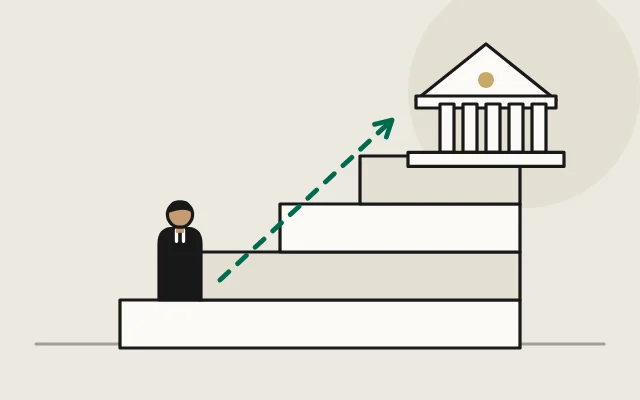
Restoring an appeal dismissed for default
The same logic applies on appeal. If an appeal is dismissed because the appellant did not appear or did not pay the sum required, such as the costs of serving notice, the appellant may apply for readmission within thirty days and must show sufficient cause; section 5 applies to these applications. Rule 19A also allows direct readmission on affidavit within thirty days, once only. An appeal dismissed for unpaid adjournment costs under rule 12A is revived on application within thirty days with costs.
Where: District Judge's Court (including Additional District Judge) · Time: 1-4 months · Law: Order XLI rules 11(2), 12A, 19 and 19A Code of Civil Procedure 1908; Article 168 Limitation Act 1908 · Documents: Readmission application with affidavit, Copy of dismissal order
Tip: A refusal to readmit an appeal is itself appealable under Order XLIII rule 1(t), so ask for reasons on the record.
Walk through it from your side
Pick your side. The step-by-step journey above and the full-screen player will then show what you do at every stage.
Plaintiff (applicant)
You want the dismissal set aside so that your suit continues from where it stopped, with any interim protection confirmed. You must apply within thirty days and either use a direct route on costs or prove a genuine, specific cause for missing the date or the payment. Your biggest risk is the thirty-day limit, because the Code does not extend section 5 of the Limitation Act to rule 9 applications.
Find out exactly why the suit was dismissed
You or your lawyer inspect the order sheet and apply at once for a certified copy of the dismissal order, so you know exactly which rule of Order IX or Order XVII the court used.
Watch outThe thirty days run from the dismissal itself, not from the day you collect the copy.
Match the dismissal to the right remedy
With your lawyer, you match the dismissal to its remedy: rule 4 after a rule 2 or 3 dismissal, rule 9 or 9A after a rule 8 dismissal, Order XVII rule 1(7) after unpaid adjournment costs, or an appeal if the suit was decided on the merits.
Watch outAfter a rule 8 dismissal a fresh suit on the same cause of action is barred, so do not assume you can refile.
Treat the thirty days as a hard deadline
You treat the thirty days as an absolute deadline and file within it, even if some supporting documents must follow later. You keep proof of the filing date.
Watch outA late rule 9 application is very hard to save, because section 5 is not expressly extended to it.
Direct restoration on costs under rule 9A
If the suit was dismissed under rule 8 and this is your first default, you apply on affidavit within thirty days for direct restoration under rule 9A and deposit the costs the court fixes, up to Tk 1,000.
Watch outRule 9A can be used only once, so a later default will require proof of cause.
File the restoration application under rule 9 or rule 4
Where rule 9A is not available, you file an application under rule 9 or rule 4 with an affidavit explaining specifically who was ill or what went wrong, when, and why no one else could attend, attaching medical or other proof.
Watch outGeneric excuses such as 'the lawyer was busy' without proof are routinely rejected.
Notice to the defendant
You make sure notice of the application is actually served on the defendant and file proof of service. You prepare to answer any objection about delay or past defaults.
Watch outAn order made without notice to the defendant is vulnerable in revision.
Hearing on sufficient cause
You give evidence or file affidavit evidence, bringing original prescriptions, hospital receipts, the lawyer's diary or the cause list for the missed date, and call the doctor or clerk if the facts are disputed.
Watch outPhotocopies alone and inconsistencies between your affidavit and oral account invite doubt.
Order restoring or refusing restoration
If the suit is restored, you pay any costs ordered within the time set and file proof. If restoration is refused, you obtain a certified copy at once and consider a miscellaneous appeal (for rule 9) or revision (for rule 4).
Watch outFailing to pay the costs on time can be treated as a fresh default.
The suit resumes where it stopped
On the first date after restoration, you ask the court expressly to confirm or renew any interim order, such as an injunction, that was in force when the suit was dismissed, and you take the suit forward from the stage it had reached.
Watch outDo not assume an earlier injunction has revived automatically.
Avoid a second default under the 2026 adjournment cap
You keep your own count of adjournments, attend every date, and pay any adjournment costs within the time set, because the 2026 cap of four adjournments is applied strictly.
Watch outA second default under the cap can lead to dismissal again, with fewer remedies left.
Revival after dismissal for unpaid adjournment costs
If the suit was dismissed for unpaid adjournment costs, you apply for revival under Order XVII rule 1(7) within thirty days and deposit Tk 2,000 into court; no proof of cause is needed.
Watch outThe thirty-day window under rule 1(7) is strict and separate from the Order IX routes.
Consider a fresh suit where it is allowed
Where the dismissal was under rule 2, 3 or 5, you weigh restoration against a fresh suit, calculating limitation carefully and budgeting for a fresh court fee. Bring the original plaint and documents so your lawyer can judge quickly whether refiling is realistic.
Watch outTime spent on the dismissed suit is not automatically excluded, so the claim may already be time-barred.
Restoring an appeal dismissed for default
If your appeal was dismissed for default, you apply to the appellate court for readmission within thirty days, using rule 19A on affidavit if it is your first time, or rule 19 with proof of sufficient cause.
Watch outA refusal to readmit is appealable under Order XLIII rule 1(t), so make sure reasons are recorded.
Defendant (opposing)
You want the dismissal to stand, or at least to be lifted only on fair terms such as costs. You must show that the application is late, that the excuse is untrue or unproved, or that the plaintiff has a pattern of default. Your biggest risk is opposing on general grounds only, since courts lean towards deciding suits on their merits when a real cause is shown.
Find out exactly why the suit was dismissed
You note the date and the rule under which the suit was dismissed, and keep a copy of the order sheet showing earlier adjournments and defaults by the plaintiff. These will matter if restoration is sought.
Match the dismissal to the right remedy
You take advice on which remedy is open to the plaintiff and whether the dismissal bars a fresh suit. If it was a rule 8 dismissal, you know restoration is the plaintiff's only way back and prepare accordingly.
Treat the thirty days as a hard deadline
You diary thirty days from the dismissal. If an application is filed after that, you prepare to argue that it is time-barred and that section 5 does not apply to a rule 9 application.
Watch outRaise the limitation point in your first written objection; leaving it until argument weakens it.
Direct restoration on costs under rule 9A
You check whether the rule 9A conditions are met: a rule 8 dismissal, an affidavit, an application within thirty days and no earlier use of the rule. If they are, your realistic focus is on the costs to be paid to you.
File the restoration application under rule 9 or rule 4
When you receive the application, you test the excuse against the order sheet and any documents you hold. You collect anything that contradicts it, such as proof the plaintiff or lawyer was active elsewhere that day.
Notice to the defendant
You file a written objection setting out why the excuse is false or insufficient, the plaintiff's history of adjournments and any delay in applying. You attach documents rather than relying on bare denials.
Watch outNot appearing after notice can let the application be allowed with little scrutiny.
Hearing on sufficient cause
You cross-examine the plaintiff's witnesses on the details of the excuse and point the court to any documents that contradict it. You remind the court of earlier defaults recorded in the order sheet.
Order restoring or refusing restoration
If restoration is granted, you check that costs ordered in your favour are paid and consider whether the order is open to revision before the District Judge. If it is refused, you prepare to defend the order on any appeal.
Watch outAn order granting restoration is not appealable, so any challenge must be by revision.
The suit resumes where it stopped
You take part in the restored suit from the stage it had reached. If the plaintiff seeks to revive an interim order, you can argue that circumstances have changed since the dismissal.
Avoid a second default under the 2026 adjournment cap
You oppose unnecessary adjournment requests and, where the cap is exceeded, ask the court to award costs payable to you. You keep track of the plaintiff's adjournments on the record.
Revival after dismissal for unpaid adjournment costs
You check that any revival application under Order XVII rule 1(7) is within thirty days and that the Tk 2,000 has been deposited; the deposit is then paid to you.
Consider a fresh suit where it is allowed
If the plaintiff files a fresh suit, you check whether it is barred by limitation or, after a rule 8 dismissal, by the bar on suing again on the same cause of action, and raise that in your written statement.
Restoring an appeal dismissed for default
As respondent in the appeal, you check whether the readmission application is within time and whether rule 19A has already been used, and you oppose an unsupported excuse under rule 19.
What if…? How the restoration of dismissed suit in Bangladesh can change course
Choose a scenario. The map animates the route up the hierarchy and, where a case is sent back, down to the lower court and up again.
What if the trial court refuses to restore the suit?
- 1District Judge's Court (including Additional District Judge)
Miscellaneous appeal against the refusal
An order under rule 9 rejecting a restoration application is appealable under Order XLIII rule 1(c). The appeal lies to the court that would hear an appeal from the decree in the suit: the District Judge for Civil and Senior Civil Judge suits and Joint District Judge suits up to Tk 5 crore, and the High Court Division above that. The period is 30 days to the District Judge and 90 days to the High Court Division, excluding copying time.
6-18 monthsOrder XLIII rule 1(c) Code of Civil Procedure 1908s.106 Code of Civil Procedure 1908Articles 152 and 156 Limitation Act 1908s.21 Civil Courts Act 1887
Where it ends up: The appellate court affirms the refusal or restores the suit and sends it back for trial.
What if no appeal lies, or the appeal fails?
- 1District Judge's Court (including Additional District Judge)
Revision before the District Judge
A refusal under rule 4, and an order granting restoration that the defendant wants to challenge, are not appealable. The aggrieved party may apply to the District Judge for revision under section 115(2), on an error of law that caused a failure of justice. A further revision to the High Court Division then needs leave on an important question of law.
6-18 monthss.115(2)-(4) Code of Civil Procedure 1908 - 2High Court Division
Civil revision in the High Court Division
Where the District Judge has decided a miscellaneous appeal, no second appeal lies. The losing party applies to the High Court Division under section 115(1), by settled practice within ninety days. The High Court Division does not rehear the facts, but it may intervene where the courts below ignored evidence of cause or applied the wrong rule.
1-3 yearss.104(2) Code of Civil Procedure 1908s.115(1) Code of Civil Procedure 1908
Where it ends up: The revisional court leaves the order alone or corrects it, restoring or refusing to restore the suit.
Can the trial court reconsider its refusal?
- 1Trial court (Civil Judge, Senior Civil Judge or Joint District Judge)
Review on narrow grounds
A party aggrieved by an order from which no appeal has been preferred may apply to the same court for review within ninety days, on new evidence not available despite due diligence, an error apparent on the face of the record, or another sufficient reason. If the review application is itself dismissed because the applicant did not appear, it can be restored within fifteen days on sufficient cause.
2-6 monthss.114 and Order XLVII rules 1 and 7(2) Code of Civil Procedure 1908Articles 160 and 173 Limitation Act 1908
Where it ends up: The order stands, or is corrected on the review grounds.
What if the appellate court sends the suit back?
- 1Trial court (Civil Judge, Senior Civil Judge or Joint District Judge)
Suit returned to the trial court
When the District Judge allows the miscellaneous appeal, the dismissal is set aside and the suit goes back to the trial court to proceed from the stage it had reached. The trial court must follow the appellate order, comply with any terms such as payment of costs, and fix a date. Both sides then continue the trial under the current rules on affidavit evidence and adjournments.
Weeks to restart; trial 6-24 monthsOrder IX rule 15 Code of Civil Procedure 1908Order XLIII rule 2 Code of Civil Procedure 1908 - 2High Court Division
Defendant challenges the restoration
A defendant who thinks the District Judge was wrong to restore the suit cannot appeal further, but may seek revision in the High Court Division under section 115(1). After the retrial, the final decree is open to a regular first appeal to the District Judge or the High Court Division, depending on value, so the case climbs the ladder again.
1-3 yearss.104(2) and s.115(1) Code of Civil Procedure 1908s.96 Code of Civil Procedure 1908
Where it ends up: The suit is tried below and any later decree comes back up by appeal or revision.
Can a doubtful point of law go to the High Court Division by reference?
- 1High Court Division
Reference under section 113 and Order XLVI
A court may refer a question of law or usage to the High Court Division where it has a reasonable doubt and the decree in the case is not subject to appeal. Most suits are appealable, so references in restoration disputes are very rare. Where one is made, the trial court decides the matter in line with the High Court Division's answer.
6-18 monthss.113 Code of Civil Procedure 1908Order XLVI rules 1-3 Code of Civil Procedure 1908
Where it ends up: The trial court disposes of the matter in conformity with the answer.
Can the dispute reach the Appellate Division?
- 1Appellate Division of the Supreme Court
Leave to appeal
A party aggrieved by the High Court Division's decision in revision or in a first miscellaneous appeal may file a civil petition for leave to appeal in the Appellate Division within 60 days. Leave is granted only on a substantial question of law, so pure disputes about whether an excuse was believable rarely go further.
1-3 yearsArticle 103 ConstitutionAppellate Division Rules 1988, Order XIII
Where it ends up: The Appellate Division refuses leave or grants it and finally decides the point.
How the restoration of dismissed suit in Bangladesh moves up the court hierarchy
Restoration of dismissed suit in Bangladesh begins in the trial court that dismissed the suit. Civil suits are filed in the lowest court whose limit covers their value: a Civil Judge up to Tk 15 lakh, a Senior Civil Judge up to Tk 25 lakh and a Joint District Judge without limit, under section 19 of the Civil Courts Act 1887 as amended in 2021, with the courts renamed in 2026. That court decides whether there was sufficient cause.
A refusal under rule 9 can be challenged by miscellaneous appeal to the court that hears appeals in the suit: the District Judge for Civil and Senior Civil Judge suits and Joint District Judge suits up to Tk 5 crore, and the High Court Division above that. The appeal rehears facts and law on the record. Orders that are not appealable, including refusals under rule 4 and orders granting restoration, go to the District Judge in revision.
No second appeal exists; the High Court Division's role is civil revision on errors of law, and the Appellate Division hears matters only by leave.
- Appellate DivisionAppellate Division of the Supreme Court
- High Court DivisionHigh Court Division
- Appellate levelDistrict Judge's Court (including Additional District Judge)
- First instanceTrial court (Civil Judge, Senior Civil Judge or Joint District Judge)
- Start · outside courtLawyer's chamber
Where your case is heard
Addresses are for Dhaka. Every district has equivalent courts at its own district judgeship.
Supreme Court of Bangladesh (Appellate Division and High Court Division)
Supreme Court of Bangladesh, Shahbag, Ramna, Dhaka-1000Hears appeals, revisions, references, writ petitions under Article 102, company matters and death references (High Court Division), and appeals by leave from the High Court Division (Appellate Division).
Both Divisions sit in the Supreme Court complex; many High Court Division benches sit in the Annex Building. Check the daily cause list for the bench and court room. Postal contact is the Registrar General, Supreme Court of Bangladesh, Ramna, Dhaka-1000.
Court of the District and Sessions Judge, Dhaka (Dhaka Judge Court)
Dhaka Judge Court premises, 16 Johnson Road, Sadarghat, DhakaSeat of the Dhaka District Judge and Additional District Judges (civil appeals, probate, district-level civil and sessions work outside the metropolitan area) and the civil courts of first instance (Joint District Judge, Senior Civil/Assistant Judge courts).
Official judiciary portal gives '16 Johnson Road, Sadarghat, Dhaka'. Many civil courts (Additional District Judge courts, Joint District Judge and Senior Assistant Judge courts, Artha Rin Adalat No.1, insolvency court) are in the new 8-storey District Judge Court building in the same premises. The 2026 judgeship list names the first-instance civil courts 'Senior Civil Judge' / 'Civil Judge' (formerly Senior Assistant Judge / Assistant Judge); some pages still use the old names. Every district has an equivalent court at its district judgeship.
Lawyer's chamber
Where this happens depends on your district or the office concerned. Ask us for the exact courtroom and address.
How long each stage takes
These are indicative ranges based on typical Dhaka practice. Adjournments, case backlogs and appeals can stretch them.
Documents checklist and key terms
Tick off what you have. Your ticks stay saved in this browser. Bring the list to your first meeting with your lawyer.
- Dismissal for default
- Dismissal of a suit because a party failed to appear or take a required step, without a decision on the merits.
- Restoration
- An order setting aside a dismissal so that the suit continues from the stage it had reached.
- Sufficient cause
- A genuine reason that prevented attendance or payment, proved to the court's satisfaction.
- Direct restoration (rule 9A)
- Setting aside a rule 8 dismissal on costs of up to Tk 1,000 without proof of cause, within thirty days and only once.
- Peremptory hearing
- The stage at which the suit is listed for final hearing and adjournments are allowed only exceptionally.
- Fresh suit bar
- The rule that a plaintiff whose suit is dismissed under Order IX rule 8 cannot sue again on the same cause of action.
- Readmission
- Restoration of an appeal dismissed for the appellant's default, under Order XLI rule 19.
- Miscellaneous appeal
- An appeal against an order listed in Order XLIII rule 1, such as a refusal to restore a suit under rule 9.
Restoration of dismissed suit in Bangladesh: common questions
What is the time limit for restoration of dismissed suit in Bangladesh?
Can I just file the same suit again?
What counts as sufficient cause?
Is there a quicker way than proving my excuse?
Can a refusal to restore be appealed?
Does restoration revive the temporary injunction I had?
How do the 2026 changes affect restoration of dismissed suit in Bangladesh?
What if my appeal, rather than my suit, was dismissed for default?
Law and sources
- Code of Civil Procedure 1908, First Schedule with 2026 amendments, Orders IX, XVII, XLI, XLIII and XLVII (Laws of Bangladesh)
- Code of Civil Procedure 1908, sections 104, 106, 113-115 and 151 (laws.sayed.app mirror)
- Limitation Act 1908, s.5 and First Schedule Articles 152, 156, 160, 163, 168 and 173 (laws.sayed.app mirror)
- Limitation Act 1908, section 5 — Laws of Bangladesh
- Civil Courts Act 1887, ss.19, 21 and 25A (laws.sayed.app mirror)
- Constitution of the People's Republic of Bangladesh, Article 103 (Laws of Bangladesh)
This Case Journey is a general guide to procedure in Bangladesh as of October 2026. It is not legal advice. Procedure, fees and time limits change, and every case turns on its own facts. Timelines are indicative. Speak to a lawyer about your own matter.
Run this case from outside Bangladesh
You can usually start and run this case without travelling. You sign a power of attorney abroad, the Bangladesh High Commission or Embassy attests it, and your attorney and lawyer act for you in Dhaka. Some steps, such as giving evidence in person, may still need you or a commission. See how a case runs through a power of attorney →
Want to know where your case stands?
Book a consultation. A TRW lawyer will place your matter on this map, explain the next step and the realistic timeline, and tell you what to prepare.











