
Hindu wife maintenance in Bangladesh: the full journey, step by step
Hindu wife maintenance in Bangladesh is claimed by a suit in the Family Court, usually under the Hindu Married Women's Right to Separate Residence and Maintenance Act 1946, which lets a wife live apart and still be maintained if her husband is cruel, deserts her, marries again, converts or has another justifiable fault.
Because Hindu law in Bangladesh has no divorce, the marriage and the duty to maintain continue, and the court fixes the amount by the parties' social standing and the husband's means. Appeals go to the Family Appellate Court and revision to the High Court Division; the old Magistrate route under section 488 of the Code of Criminal Procedure no longer exists.
- Where it starts
- Family Court (a Civil Judge or Senior Civil Judge court) where the wife ordinarily lives, or where the cause of action…
- Main law
- Hindu Married Women's Right to Separate Residence and Maintenance Act 1946 ss.2-3; Family Courts Act 2023 (ss.5-8, 10-17, 19, 21…
- Typical duration
- Interim orders in 1-3 months; a contested suit in roughly 8-24 months at first instance; 1-3 more years if it goes to…
- Who can file
- The wife, for herself; the children through their mother as next friend, for their own maintenance
Hindu wife maintenance in Bangladesh: walk through every stage
Press next, use your arrow keys or tap a court on the map. The gold marker shows where your case is, and the green trail shows the route it has taken. For the immersive version, play it full screen.
Read every step as text
 Step 1 · Before filing
Understand the right and the route
Under Hindu law a husband must maintain his wife while she lives with him. The 1946 Act adds a statutory right to live separately and still be maintained if one of its grounds exists. Hindu personal law in Bangladesh does not provide for divorce, so the marriage, and with it the duty to maintain, continues however long the couple live apart. The High Court Division has held that a so-called divorce by affidavit does not end a Hindu marriage.
The first meeting maps the facts against the statutory grounds, because Hindu wife maintenance in Bangladesh usually turns on which ground can be proved.
Where: Lawyer's chamber · Time: 1-2 weeks · Law: s.2 Hindu Married Women's Right to Separate Residence and Maintenance Act 1946; Prodip Roy v Tumpa Kar, HCD Civil Revision No. 3548 of 2019 (15 January 2024) · Documents: Any marriage certificate or registration, Photographs and invitation cards of the wedding, Children's birth registration certificates
Tip: Do not sign any affidavit or 'deed of separation' offered by the husband's family before taking advice; it does not end the marriage but can be used to suggest she gave up her claims.
 Step 2 · Before filing
Secure proof of the marriage
Registration of Hindu marriages is optional under the Hindu Marriage Registration Act 2012, in force since 27 January 2013, and an unregistered marriage performed by Hindu rites remains valid. Proof still matters, because a husband who denies the marriage can take the case out of the Family Court altogether. Either spouse can apply to the Hindu Marriage Registrar for the area, and a marriage performed before the Act can also be registered.
Where registration is not possible, the wife gathers witnesses to the ceremony, the priest's details, photographs and documents that name her as his wife.
Where: Hindu Marriage Registrar's office · Time: 1-4 weeks · Law: ss.3, 5 and 6 Hindu Marriage Registration Act 2012; s.1(3) Hindu Marriage Registration Act 2012 (S.R.O. No. 30-Law/2013) · Documents: Registration application, National ID cards, Witnesses to the ceremony, Photographs, invitations, NID or passport entries naming the spouse
Tip: Ask for a certified copy of the register entry as soon as it is made; it is the simplest answer to a denial later.
 Step 3 · Before filing
Identify and document the ground
Section 2 entitles a Hindu wife to separate residence and maintenance if her husband has a loathsome disease not contracted from her, treats her with cruelty that makes living with him unsafe or undesirable, deserts her, marries again, converts to another religion, keeps a concubine in the house or habitually lives with one, or for any other justifiable cause. She loses the right if she is unchaste, converts, or fails without sufficient cause to obey a decree for restitution of conjugal rights.
Evidence is collected for the ground relied on: medical and police records, messages, or proof of the second marriage.
Where: Lawyer's chamber · Time: 2-4 weeks · Law: s.2(1)-(7) and proviso Hindu Married Women's Right to Separate Residence and Maintenance Act 1946 · Documents: Medical reports and photographs of injuries, Police complaints or general diary entries, Messages and letters, Evidence of a second marriage or conversion
Tip: Plead every ground that fits, including 'any other justifiable cause'; Family Courts often decree on more than one.
 Step 4 · Before filing
Gather evidence of the husband's means
Section 3 tells the court to fix the amount having regard to the social standing of the parties and the extent of the husband's means. There is no fixed formula or percentage. The wife's lawyer therefore collects whatever shows his income and lifestyle: salary slips or the employer's name, trade licences, land records showing agricultural income, rent from property, bank or mobile financial service activity, vehicles and spending on social media. The wife also lists her own reasonable monthly needs, the children's school and medical costs, and the cost of renting a suitable separate home.
Where: Lawyer's chamber · Time: 2-4 weeks · Law: s.3 Hindu Married Women's Right to Separate Residence and Maintenance Act 1946 · Documents: Husband's salary or business records, Land and rental records, Bank or mobile banking evidence, Budget of the wife's and children's needs, Rent quotations
Tip: A relative of the husband who confirms his income can be decisive; one Family Court relied on the husband's own brother.
 Step 5 · Mediation and filing
Pre-case mediation in notified districts
Maintenance is a matter within section 5 of the Family Courts Act 2023, and section 5 matters appear in the Schedule to the Legal Aid Services Act 2000 as amended in 2026. In districts where the mediation provisions have been brought into force, the wife must first apply to the district legal aid office. A mediated agreement certified by the Chief Legal Aid Officer is binding and has the effect of a decree.
If mediation fails, the office issues a report that must be filed with the plaint, and the time spent is excluded from limitation. Check whether your district has been notified.
Where: District Legal Aid Office (pre-case mediation) · Time: About 1-2 months · Law: ss.21B and 21C Legal Aid Services Act 2000 (inserted by Act 45 of 2026); Schedule item 1, Legal Aid Services Act 2000; s.5(d) Family Courts Act 2023 · Documents: Mediation application, Proof of marriage, Mediation report (if no settlement)
Tip: Even where mediation is not compulsory, the legal aid office can provide a free lawyer to a wife who cannot afford one.
 Step 6 · Mediation and filing
File the suit in the Family Court
The wife files a plaint in the Family Court, which may be where she now ordinarily lives. The plaint claims separate residence and maintenance under the 1946 Act, maintenance for the children, and past maintenance from the date the husband stopped supporting her. It lists witnesses and attaches the documents relied on. Family Courts hear Hindu maintenance suits in the ordinary way.
The old alternative of a Magistrate's maintenance order under section 488 of the Code of Criminal Procedure is no longer available, because sections 488 to 490 were omitted with effect from 1 November 2007.
Where: Family Court (Civil Judge or Senior Civil Judge) · Time: 1-2 weeks to draft and file · Law: ss.5(d), 6(1) proviso and 6(3)-(8) Family Courts Act 2023; s.25 Family Courts Act 2023; Code of Criminal Procedure (Amendment) Act 2009 (omission of ss.488-490 CrPC) · Documents: Plaint with schedule of witnesses, Documents relied on and list, Copies for service, Tk 200 court fee and process costs, Mediation report (where required)
Tip: File every document you rely on with the plaint; documents produced later need the court's permission, which is granted only exceptionally.
 Step 7 · Mediation and filing
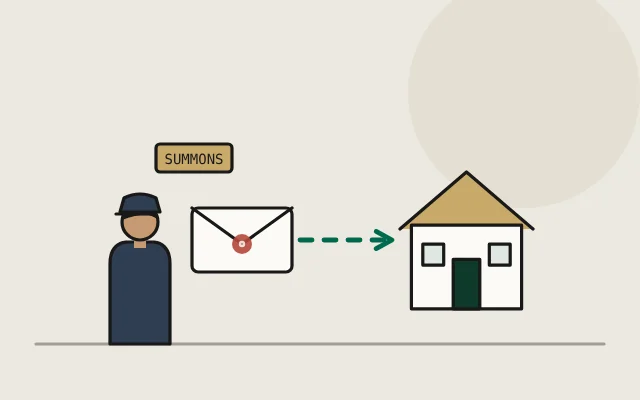
Summons, written statement or ex parte hearing
The court fixes a date, usually within thirty days, and issues summons, a registered-post notice and, where an address is known, an e-mail summons. On the first date the husband files a written statement; the court may give one further date, not more than twenty-one days later, for good cause. If he does not appear after due service, the suit can proceed ex parte, and he may apply within thirty days of an ex parte decree to set it aside.
If the wife misses a hearing, the suit may be dismissed, and she may apply within thirty days to restore it.
Where: Family Court (Civil Judge or Senior Civil Judge) · Time: 1-3 months · Law: s.7(1)-(4) Family Courts Act 2023; s.8(1) Family Courts Act 2023; s.10 Family Courts Act 2023 · Documents: Summons and notice, Written statement, Defendant's witness list
Tip: Give the court the husband's workplace address and e-mail as well as his home; defective service is the commonest reason ex parte decrees are set aside.
 Step 8 · Mediation and filing
Apply for interim orders
A maintenance suit can take a year or more. Section 21 allows the Family Court, at any stage, to make any interim order it considers appropriate if immediate action is needed to stop a party defeating the purpose of the suit. In practice this covers interim maintenance for the wife and children and orders protecting her residence. In one Dhaka case the Family Court restrained a husband from disturbing his wife and children's possession of the family flat pending the suit, and the High Court Division kept the status quo while directing a quick trial.
Where: Family Court (Civil Judge or Senior Civil Judge) · Time: 2-8 weeks · Law: s.21 Family Courts Act 2023; Gobinda Bar v Bijoy Rani Tikadar, HCD Civil Revision No. 1900 of 2023 (13 January 2025) · Documents: Application for interim order with affidavit, Evidence of urgent needs, Evidence of threatened eviction or sale
Tip: Ask early for interim relief, especially where the husband is trying to sell or let the home the wife and children live in.
 Step 9 · Trial in the Family Court
Pre-trial hearing and reconciliation
After the written statement, the court holds a pre-trial hearing. It examines the plaint, written statement and documents, identifies the points in dispute and tries to bring about a compromise or reconciliation. Spouses who agree can return to live together, or settle the amount of maintenance and the residence arrangement, and the court then passes a decree on the agreed terms. If there is no settlement, a trial date is fixed. Proceedings may be held in camera if either party asks or the court thinks it necessary.
Where: Family Court (Civil Judge or Senior Civil Judge) · Time: 1-3 months · Law: s.11 Family Courts Act 2023; s.12 Family Courts Act 2023; s.15 Family Courts Act 2023 · Documents: Settlement proposals, Draft compromise terms
Tip: Attend in person. Judges often speak directly to the spouses at this stage, and a realistic offer can end the case months early.
 Step 10 · Trial in the Family Court
Trial: proving the marriage, the ground and the means
At trial the wife and her witnesses give evidence first, and the court may accept a witness's evidence on affidavit, with cross-examination. She must prove the marriage, the ground she relies on and the husband's means; he may try to prove one of the disqualifications in the proviso, such as unchastity, or that he offered to maintain her at home. The court records the evidence and can summon witnesses and documents, including from employers and banks. Hindu wife maintenance in Bangladesh is often decided on documentary proof of income rather than on oral claims.
Where: Family Court (Civil Judge or Senior Civil Judge) · Time: 3-12 months · Law: s.13 Family Courts Act 2023; s.22 Family Courts Act 2023; s.2 proviso Hindu Married Women's Right to Separate Residence and Maintenance Act 1946 · Documents: Exhibits proving marriage and the ground, Income evidence, Witness summonses
Tip: If the husband hides his income, ask the court to summon his employer or bank under section 22.
 Step 11 · Trial in the Family Court
Final reconciliation attempt and judgment
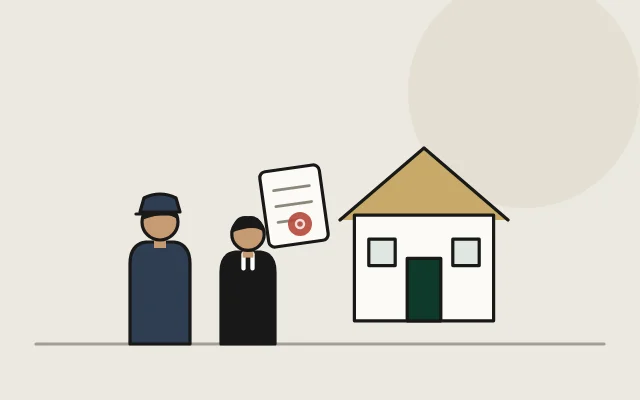
When the evidence closes, the court tries once more to reconcile the parties and then gives judgment. It decides whether the wife is entitled to separate residence and maintenance, the monthly amount for her residence and keep, the children's maintenance and the past maintenance due. In a 2024 revision from Sunamganj, the Family Court's decree of Tk 6,39,800 as past maintenance and residence, with monthly sums of Tk 2,000 for residence and Tk 4,000 for maintenance, was upheld by the High Court Division, which removed only an automatic 15 per cent annual increase.
Where: Family Court (Civil Judge or Senior Civil Judge) · Time: 1-2 months after evidence closes · Law: s.14 and s.16 Family Courts Act 2023; s.3 Hindu Married Women's Right to Separate Residence and Maintenance Act 1946; Sreedam Das v Sujola Rani Das, HCD Civil Revision No. 3859 of 2022 (30 May 2024) · Documents: Judgment, Decree
Tip: Apply for certified copies on the day of judgment; the thirty-day appeal period excludes only the time needed to obtain them.
 Step 12 · Decree, enforcement and after
Enforce the decree
If the husband does not pay within the time fixed, the wife applies to the Family Court within one year to execute the decree. It can be executed as a civil money decree, by attachment and sale of property or attachment of salary, or as if it were a fine, in which case the judge acts as a first-class Magistrate, issues a warrant and can order imprisonment of up to three months or until payment.
The court can order payment in instalments and can transfer the decree to another Family Court where the husband lives or has property.
Where: Family Court (Civil Judge or Senior Civil Judge) · Time: 3-12 months · Law: s.17(3)-(8) Family Courts Act 2023 · Documents: Execution application, Certified copy of the decree, Details of the husband's assets, employer and bank
Tip: Monthly maintenance falls due month by month; apply promptly for each period of arrears rather than letting years accumulate.
 Step 13 · Decree, enforcement and after
Payments, changes and the continuing marriage
Payments made through the court are recorded in the decree register, which avoids later disputes about what was paid. Because the marriage continues, the right to maintenance continues too, but so do its conditions: a wife who converts or is found unchaste can lose it, and a husband may rely on a later change of circumstances. Courts sometimes build in annual increases, and in a 2024 Chattogram revision the High Court Division kept a 10 per cent yearly increase for the daughters' maintenance while ordering arrears to be paid in twelve instalments.
Where: Family Court (Civil Judge or Senior Civil Judge) · Time: Ongoing · Law: s.17(2) and (8) Family Courts Act 2023; s.2 proviso Hindu Married Women's Right to Separate Residence and Maintenance Act 1946; Prodip Roy v Tumpa Kar, HCD Civil Revision No. 3548 of 2019 (15 January 2024) · Documents: Decree register entries, Receipts for payments, Evidence of changed circumstances
Tip: Keep every receipt. Disputes over what was paid are common when execution is sought years later.
Walk through it from your side
Pick your side. The step-by-step journey above and the full-screen player will then show what you do at every stage.
Wife (plaintiff)
You want regular maintenance, the cost of a suitable separate home and arrears from when support stopped. You must prove the marriage, a ground under section 2 of the 1946 Act such as cruelty, desertion or a second marriage, and your husband's means. Your biggest risk is weak proof of the marriage or of his income, which can send you to a civil court first or leave the amount too low.
Understand the right and the route
You meet a family lawyer with any marriage registration, wedding photographs and invitations and the children's birth certificates, and map your facts against the grounds in the 1946 Act.
Watch outDo not sign any affidavit or deed of separation from your husband's family before advice; it does not end the marriage but can be used against your claims.
Secure proof of the marriage
If the marriage is not registered, you apply to the Hindu Marriage Registrar to register it, and collect certified copies. Otherwise gather ceremony witnesses, the priest's details and documents naming you as his wife.
Watch outIf he denies the marriage, the Family Court cannot decide that question and you will need a civil court declaration first.
Identify and document the ground
You identify every ground that fits and collect evidence: medical reports, police complaints or general diary entries, messages, or proof of a second marriage or conversion.
Watch outPlead every ground that fits, including any other justifiable cause.
Gather evidence of the husband's means
You collect evidence of his income and lifestyle, such as salary, trade licence, land and rent records and bank or mobile banking activity, and prepare a budget of your and the children's needs and rent.
Watch outThere is no fixed formula, so the court relies on the evidence of means you put before it.
Pre-case mediation in notified districts
In a notified district you apply to the district legal aid office for mediation first, with proof of the marriage. If it fails, keep the mediation report for the plaint.
Watch outA certified mediated agreement is binding and has the effect of a decree, so read the terms carefully.
File the suit in the Family Court
You file the plaint in the Family Court where you now live, claiming separate residence, your maintenance, the children's maintenance and past maintenance, with all documents relied on and the Tk 200 court fee.
Watch outDocuments not filed with the plaint need the court's permission later, which is granted only exceptionally.
Summons, written statement or ex parte hearing
You give the court your husband's home, workplace and e-mail addresses so that service is effective, and attend every date.
Watch outIf you miss a hearing, the suit may be dismissed; you then have thirty days to apply to restore it.
Apply for interim orders
You apply early for interim maintenance for yourself and the children and, if needed, an order protecting your residence, with an affidavit and evidence of urgent needs.
Watch outDelay in asking for interim relief leaves you without support for months.
Pre-trial hearing and reconciliation
You attend the pre-trial hearing in person with realistic settlement terms on residence and the monthly amount.
Trial: proving the marriage, the ground and the means
You and your witnesses prove the marriage, the ground and his means. If he hides income, ask the court to summon his employer or bank.
Watch outOral claims about income without documents often lead to a lower award.
Final reconciliation attempt and judgment
You hear the judgment and apply for certified copies the same day if you may need to appeal or execute.
Watch outThe thirty-day appeal period excludes only the time needed to obtain copies.
Enforce the decree
If he does not pay, you apply to execute within one year of the date fixed, naming his employer, bank and assets.
Watch outApply promptly for each period of arrears rather than letting years build up.
Payments, changes and the continuing marriage
You keep every receipt and the decree register entries, and return to court if payments stop or circumstances change.
Watch outConversion or proven unchastity can end your right, so take advice before major life changes.
Husband (defendant)
You want a fair outcome: an amount that reflects your real means and the parties' standing, and no liability where the law does not impose it. You can contest the ground alleged, rely on the statutory disqualifications if you can prove them, offer to maintain your wife at home, and challenge the amount. Your biggest risk is ignoring the summons or hiding income, which invites an ex parte decree or a higher award.
Understand the right and the route
If your wife has left or is threatening a claim, take early advice on your duty to maintain and on the grounds she might rely on. A Hindu marriage is not ended by an affidavit of divorce.
Watch outRelying on an affidavit of divorce or a family settlement as ending the marriage is a common and costly mistake.
Secure proof of the marriage
You keep your own records of the marriage and its circumstances. If you accept the marriage, saying so early narrows the dispute and saves costs.
Watch outDenying a marriage you know took place exposes you to costs and damages your credibility.
Identify and document the ground
You gather evidence that answers the grounds likely to be alleged, and any proof of the disqualifications in the proviso, such as non-compliance with a restitution decree.
Watch outMaking serious allegations against your wife without evidence can harm your case and your standing with the court.
Gather evidence of the husband's means
You prepare honest evidence of your income, assets and existing obligations, such as dependants and loans, so that the court fixes a realistic amount.
Watch outHiding income is easily exposed through employers, banks or relatives, and courts react badly to it.
Pre-case mediation in notified districts
You attend the legal aid mediation and make a realistic proposal on maintenance and residence. A settlement now avoids a long suit.
Watch outRefusing to engage leaves the wife free to sue and leaves you with no say in the terms.
File the suit in the Family Court
Make sure your current home and work addresses are known so that you receive the summons, and instruct a family lawyer as soon as you hear a suit has been filed.
Summons, written statement or ex parte hearing
You appear on the first date and file your written statement with a schedule of witnesses and your documents. The court can allow one further date of up to twenty-one days for good cause.
Watch outIf you do not appear, the suit can proceed ex parte; you then have only thirty days from the decree to apply to set it aside.
Apply for interim orders
You file a reply to the interim application with evidence of your means, and comply promptly with any interim order while the suit continues.
Watch outDisobeying an interim order damages your position in the main suit and on any appeal.
Pre-trial hearing and reconciliation
You attend in person and consider whether reconciliation or an agreed amount is possible. A compromise decree on agreed terms ends the case months earlier.
Trial: proving the marriage, the ground and the means
You give evidence, cross-examine your wife's witnesses and prove any disqualification you rely on, or your offer to maintain her at home.
Watch outThe burden of proving a disqualification such as unchastity is on you, and unproven allegations count against you.
Final reconciliation attempt and judgment
You hear the judgment and apply for certified copies the same day. Decide quickly whether to comply, settle the arrears or appeal to the Family Appellate Court.
Watch outThe thirty-day appeal period excludes only the time needed to obtain copies.
Enforce the decree
You pay as decreed, through the court so that it is recorded, or ask the court for instalments if you cannot pay at once.
Watch outUnpaid sums can be recovered as if they were a fine, with a warrant and up to three months' imprisonment.
Payments, changes and the continuing marriage
You pay through the court and keep receipts. If your means change substantially, take advice on asking the court to revisit the amount rather than simply stopping payment.
Watch outStopping payment on your own is not a defence and arrears keep building.
What if…? How the Hindu wife maintenance in Bangladesh can change course
Choose a scenario. The map animates the route up the hierarchy and, where a case is sent back, down to the lower court and up again.
What if either spouse appeals?
- 1Family Appellate Court (District Judge)
Family Appeal to the Family Appellate Court
An appeal against the Family Court's judgment, decree or order lies to the Family Appellate Court, the District Judge's court, within thirty days, excluding the time to obtain copies; the court can extend time for good cause. The appeal must be in writing, state the grounds and attach a certified copy of the decision. The District Judge may send it to an Additional or Joint District Judge. The appellate court rehears facts and law on the record and can confirm, vary or reverse the decree, and it can make interim orders.
6-18 monthss.18 and s.19(1)-(4), (6) Family Courts Act 2023s.21 Family Courts Act 2023
Where it ends up: The Family Appellate Court's decision is final on facts, and the Family Court amends its decree accordingly under s.19(5).
What if the appellate decision is wrong in law?
- 1High Court Division
Civil revision in the High Court Division
The losing side may apply to the High Court Division under section 115(1) of the Code of Civil Procedure against the Family Appellate Court's decree. A single judge decides whether there is an error of law that has caused a failure of justice. The court does not reweigh the evidence, but it can adjust the terms, as it did in 2024 by removing an automatic annual increase in one case and allowing arrears in instalments in another. Any stay is usually conditional on continued payment of current maintenance.
1-3 yearss.115(1) Code of Civil Procedure 1908
Where it ends up: The Rule is discharged, leaving the decree in place, or made absolute and the decree corrected or set aside.
Can the court reconsider its own decision?
- 1Family Court (Civil Judge or Senior Civil Judge)
Setting aside ex parte decrees and restoration
Section 28 of the Family Courts Act 2023 excludes the Code of Civil Procedure, apart from sections 10 and 11, so the Family Court has no general review power. Its own corrective powers are specific: setting aside an ex parte decree, or restoring a suit dismissed for default, on an application within thirty days showing sufficient cause.
1-3 monthss.28(1) Family Courts Act 2023s.10(5)-(6) Family Courts Act 2023 - 2High Court Division
Review of a High Court Division judgment
A party may ask the High Court Division to review its revisional judgment on the narrow grounds of Order XLVII rule 1: new and important evidence not available earlier despite due diligence, an error apparent on the face of the record, or another sufficient reason. Review is not a second revision.
3-12 monthss.114 and Order XLVII rule 1 Code of Civil Procedure 1908
Where it ends up: The ex parte decree is set aside and the suit reheard, or the High Court Division's judgment is corrected or left in place.
Can a legal question be referred to the High Court Division?
- 1High Court Division
No reference; transfer and revision instead
Because section 28 excludes section 113 of the Code, a Family Court cannot refer a question of law to the High Court Division. Questions of law reach that court through civil revision after the appeal. The High Court Division can, however, transfer a suit or appeal from one Family Court or district to another, or stay it, on a party's application or of its own motion, which helps a wife who has moved to her parents' district.
2-6 monthss.28(1) Family Courts Act 2023s.20(1) and (5) Family Courts Act 2023
Where it ends up: The suit continues in the Family Court to which it is assigned, and legal questions go up only by revision.
What if the High Court Division sends the case back?
- 1High Court Division
High Court Division sets aside and directs a fresh decision
Where the courts below decided an interim or final matter on a wrong footing, or left contested facts undecided, the High Court Division can set their orders aside and send the matter back with directions. In the Dhaka flat case decided in January 2025, it set aside the appellate order, directed both sides to maintain the status quo for three months and ordered the Family Court to dispose of the suit on merits within that time.
Order on the day of judgments.115(1) Code of Civil Procedure 1908Gobinda Bar v Bijoy Rani Tikadar, HCD Civil Revision No. 1900 of 2023 (13 January 2025) - 2Family Court (Civil Judge or Senior Civil Judge)
Fresh hearing in the Family Court
The Family Court restores the suit, hears any further evidence and gives a fresh judgment. That decision carries its own right of appeal to the Family Appellate Court, and from there the case can climb back to the High Court Division in revision.
3-12 monthsss.13, 14 and 16 Family Courts Act 2023s.19 Family Courts Act 2023
Where it ends up: The case returns up the chain with a complete record if either side is still dissatisfied.
Can the case go to the Appellate Division?
- 1Appellate Division of the Supreme Court
Civil petition for leave to appeal
Against the High Court Division's revisional judgment, the aggrieved party may file a civil petition for leave to appeal in the Appellate Division within sixty days. Leave is granted only where a substantial question of law or a serious failure of justice is shown, such as the scope of 'any other justifiable cause'. A stay can be sought from the Chamber Judge. The Appellate Division may review its own judgment under Article 105.
1-3 yearsArticle 103 Constitution of BangladeshSupreme Court of Bangladesh (Appellate Division) Rules 1988Article 105 Constitution of Bangladesh
Where it ends up: The Appellate Division's decision is final and binds all courts under Article 111.
What if the husband denies that there was ever a marriage?
- 1Civil court (Civil Judge / Senior Civil Judge) for a declaration of marriage
Declaratory suit in the civil court
In August 2025 the High Court Division held that a Family Court has no jurisdiction to decide a dispute about whether a marriage exists at all, because that is not one of the matters listed in section 5. Where the husband denies the marriage, the wife should seek a declaration that she is his lawful wife in the competent civil court. A Family Court that finds the marriage itself in dispute should return the plaint rather than decide it.
1-3 yearss.5 and s.6(2) Family Courts Act 2023s.42 Specific Relief Act 1877Sahadeb Das v Sumitra Das, HCD Civil Revision No. 3822 of 2024 (28 August 2025) - 2Family Court (Civil Judge or Senior Civil Judge)
Back to the Family Court for maintenance
Once the civil court declares the marriage, the wife returns to the Family Court with the decree as proof and claims separate residence and maintenance in the ordinary way. Registering the marriage under the 2012 Act at the outset avoids this costly detour.
8-24 monthss.5(d) Family Courts Act 2023s.3 Hindu Marriage Registration Act 2012
Where it ends up: With the marriage declared, the maintenance claim proceeds in the Family Court.
How the Hindu wife maintenance in Bangladesh moves up the court hierarchy
Hindu wife maintenance in Bangladesh begins in the Family Court, presided over by a Civil Judge or Senior Civil Judge (formerly Assistant Judge or Senior Assistant Judge). There is no value ceiling, so a modest monthly claim and a large arrears claim start in the same court. In notified districts, pre-case mediation at the legal aid office comes first. Since 1 November 2007 there has been no parallel Magistrate's maintenance order, because sections 488 to 490 of the Code of Criminal Procedure were omitted.
One appeal lies to the Family Appellate Court, a court of District Judge rank, which rehears facts and law; the District Judge may pass it to an Additional or Joint District Judge. Above that there is no further appeal on facts. The High Court Division may intervene in civil revision under section 115 for an error of law causing a failure of justice, and the Appellate Division hears matters only by leave. If the marriage itself is denied, a civil court must first declare it.
- Appellate DivisionAppellate Division of the Supreme Court
- High Court DivisionHigh Court Division
- Appellate levelFamily Appellate Court (District Judge)
- First instanceFamily Court (Civil Judge or Senior Civil Judge) · Civil court (Civil Judge / Senior Civil Judge) for a declaration of marriage
- Start · outside courtLawyer's chamber · Hindu Marriage Registrar's office · District Legal Aid Office (pre-case mediation)
Where your case is heard
Addresses are for Dhaka. Every district has equivalent courts at its own district judgeship.
Supreme Court of Bangladesh (Appellate Division and High Court Division)
Supreme Court of Bangladesh, Shahbag, Ramna, Dhaka-1000Hears appeals, revisions, references, writ petitions under Article 102, company matters and death references (High Court Division), and appeals by leave from the High Court Division (Appellate Division).
Both Divisions sit in the Supreme Court complex; many High Court Division benches sit in the Annex Building. Check the daily cause list for the bench and court room. Postal contact is the Registrar General, Supreme Court of Bangladesh, Ramna, Dhaka-1000.
Court of the District and Sessions Judge, Dhaka (Dhaka Judge Court)
Dhaka Judge Court premises, 16 Johnson Road, Sadarghat, DhakaSeat of the Dhaka District Judge and Additional District Judges (civil appeals, probate, district-level civil and sessions work outside the metropolitan area) and the civil courts of first instance (Joint District Judge, Senior Civil/Assistant Judge courts).
Official judiciary portal gives '16 Johnson Road, Sadarghat, Dhaka'. Many civil courts (Additional District Judge courts, Joint District Judge and Senior Assistant Judge courts, Artha Rin Adalat No.1, insolvency court) are in the new 8-storey District Judge Court building in the same premises. The 2026 judgeship list names the first-instance civil courts 'Senior Civil Judge' / 'Civil Judge' (formerly Senior Assistant Judge / Assistant Judge); some pages still use the old names. Every district has an equivalent court at its district judgeship.
Family Courts, Dhaka
Dhaka Judge Court premises, 16 Johnson Road, Sadarghat, DhakaHears suits for dissolution of marriage, restitution of conjugal rights, dower, maintenance, and guardianship and custody of children under the Family Courts Ordinance 1985 / Family Courts Act 2023.
Family courts are Assistant Judge (Civil Judge) courts. The judgeship portal lists Family Court-05, Dhaka, and shows the 2nd and 3rd Additional Family Courts on the ground floor of the new 8-storey District Judge Court building; the exact room of each numbered family court is not published, so check the cause list. Every district has family courts at its district judgeship.
Lawyer's chamber
Where this happens depends on your district or the office concerned. Ask us for the exact courtroom and address.
Hindu Marriage Registrar's office
Where this happens depends on your district or the office concerned. Ask us for the exact courtroom and address.
District Legal Aid Office (pre-case mediation)
Where this happens depends on your district or the office concerned. Ask us for the exact courtroom and address.
How long each stage takes
These are indicative ranges based on typical Dhaka practice. Adjournments, case backlogs and appeals can stretch them.
Documents checklist and key terms
Tick off what you have. Your ticks stay saved in this browser. Bring the list to your first meeting with your lawyer.
- Separate residence and maintenance
- The right under the 1946 Act of a Hindu wife to live apart from her husband and be maintained by him if one of the statutory grounds exists.
- Any other justifiable cause
- The residual ground in s.2(7) of the 1946 Act, covering serious misconduct not listed in the other grounds.
- Past maintenance
- Maintenance for the period before the suit during which the husband failed to support his wife, which Family Courts have decreed in Hindu cases.
- Interim order
- A temporary order under s.21 of the Family Courts Act 2023, such as interim maintenance or protection of the wife's residence, made while the suit is pending.
- Family Appellate Court
- The District Judge's court that hears appeals from Family Court decrees under the Family Courts Act 2023.
- Restitution of conjugal rights
- A decree ordering a spouse to return to married life; a wife who disobeys one without sufficient cause loses her right under the 1946 Act.
- Hindu Marriage Registrar
- The officer appointed under the Hindu Marriage Registration Act 2012 to register Hindu marriages, on an optional basis, for an upazila or city area.
- Rule
- A High Court Division order calling on the other side to show cause why the decision below should not be set aside; the first stage of a civil revision.
Hindu wife maintenance in Bangladesh: common questions
Can a Hindu wife claim maintenance without a divorce?
Which court hears Hindu wife maintenance in Bangladesh?
Is an unregistered Hindu marriage valid?
What if the husband says we were never married?
Can a Hindu wife recover past maintenance?
When does a Hindu wife lose the right to maintenance?
How much maintenance will the court order?
How long does a Hindu wife maintenance in Bangladesh case take?
Law and sources
- Hindu Married Women's Right to Separate Residence and Maintenance Act 1946, Laws of Bangladesh
- Family Courts Act 2023 (Act No. 26 of 2023), Laws of Bangladesh
- Hindu Marriage Registration Act 2012 (Act No. 40 of 2012), Laws of Bangladesh
- Code of Criminal Procedure 1898 (footnote on omission of ss.488-490), Laws of Bangladesh
- Legal Aid Services (Amendment) Act 2026 (Act 45 of 2026), Laws of Bangladesh
- High Court Division, Civil Revision No. 3859 of 2022 (Sreedam Das v Sujola Rani Das, 30 May 2024)
- High Court Division, Civil Revision No. 3548 of 2019 (Prodip Roy v Tumpa Kar, 15 January 2024)
- High Court Division, Civil Revision No. 1900 of 2023 (Gobinda Bar v Bijoy Rani Tikadar, 13 January 2025)
- High Court Division, Civil Revision No. 3822 of 2024 (Sahadeb Das v Sumitra Das, 28 August 2025)
- Limitation Act 1908 (First Schedule Art 128), Laws of Bangladesh
This Case Journey is a general guide to procedure in Bangladesh as of October 2026. It is not legal advice. Procedure, fees and time limits change, and every case turns on its own facts. Timelines are indicative. Speak to a lawyer about your own matter.
Run this case from outside Bangladesh
You can usually start and run this case without travelling. You sign a power of attorney abroad, the Bangladesh High Commission or Embassy attests it, and your attorney and lawyer act for you in Dhaka. Some steps, such as giving evidence in person, may still need you or a commission. See how a case runs through a power of attorney →
Want to know where your case stands?
Book a consultation. A TRW lawyer will place your matter on this map, explain the next step and the realistic timeline, and tell you what to prepare.











