
Withdrawal of prosecution in Bangladesh: the full journey, step by step
Withdrawal of prosecution in Bangladesh means the Public Prosecutor, with the consent of the court, stops prosecuting an accused before judgment under section 494 of the Code of Criminal Procedure. If the withdrawal comes before a charge is framed the accused is discharged, and if it comes after, the accused is acquitted.
Since 2024 the Government has used the provision on a large scale through review committees for cases it describes as politically motivated, but in every case the court, not the Government, makes the final decision.
- Where it starts
- The criminal court where the case is pending (Magistrate, Sessions Judge, Additional or Joint Sessions Judge, or…
- Main law
- Code of Criminal Procedure 1898, ss.492-495, 494, 403, 435, 436, 439, 439A and 561A; Home Ministry notifications on review of…
- Typical duration
- Committee review: about 2-6 months from application to recommendation. Court hearing on the s.494 application: about…
- Who can file
- Only a Public Prosecutor, or an officer permitted to conduct the prosecution under s.495, can apply. An accused can ask…
Withdrawal of prosecution in Bangladesh: walk through every stage
Press next, use your arrow keys or tap a court on the map. The gold marker shows where your case is, and the green trail shows the route it has taken. For the immersive version, play it full screen.
Read every step as text
 Step 1 · Choosing the route
Understand what section 494 allows
Section 494 lets any Public Prosecutor, with the consent of the court, withdraw from the prosecution of any person at any time before judgment, either generally or for one or more of the offences charged. The accused cannot withdraw a case, and in a police case neither can the informant. The decision to apply is the prosecutor's, usually on Government instruction, but the consent belongs to the court. The lawyer explains the two possible results and checks the stage the case has reached, because that decides whether the accused will be discharged or acquitted.
Where: Lawyer's chamber · Time: 1-3 days · Law: s.494 CrPC; ss.492-493 CrPC · Documents: FIR and charge sheet, Order sheet showing the stage of the case
Tip: In a complaint case tried as a summons case, the complainant's own withdrawal under s.248 may be quicker.
 Step 2 · Choosing the route
Choose between a committee application and a direct request
There are two practical routes. Cases covered by a current Government scheme, such as the review of what the Government calls politically motivated harassment cases, go through the district committee procedure. Other cases depend on persuading the prosecuting authority directly, for example where the evidence has collapsed, a key witness has died, or the parties have settled a non-compoundable private dispute. Either way, the lawyer obtains certified copies of the FIR, charge sheet and order sheet, because both routes require the case papers.
Where: Lawyer's chamber · Time: 1-3 weeks · Law: s.494 CrPC; s.495(2) CrPC · Documents: Certified copies of FIR, charge sheet and order sheet, Written grounds for withdrawal
Tip: Check the date limits of any scheme: the 2026 procedure was reported to cover cases lodged between January 2009 and 5 August 2024.
 Step 3 · Administrative review
Apply to the District Magistrate
Under the Home Ministry procedure reported in June 2026, which revoked a circular of 22 September 2024, the accused or a close relative applies to the District Magistrate with lawyer-certified copies of the case papers. A four-member district committee, chaired by the District Magistrate with the Superintendent of Police, the Public Prosecutor and the Additional District Magistrate as members, reviews such applications. The District Magistrate must send the file to the Public Prosecutor within seven working days.
The procedure is set by executive notification, not by statute, so its details can change and should be checked before applying.
Where: District Magistrate's office (district review committee) · Time: 1-2 weeks · Law: Home Ministry notification on review of harassment cases (reported 11 June 2026); s.494 CrPC · Documents: Application to the District Magistrate, Lawyer-certified case papers, National ID of the applicant
Tip: Keep the receipt or memo number of the application; it is the only way to follow progress.
 Step 4 · Administrative review
The Public Prosecutor's opinion
The Public Prosecutor examines the case papers and gives a written opinion on whether the prosecution should be withdrawn, within fifteen working days under the reported 2026 procedure. The prosecutor looks at the evidence on record, the stage of the trial, the nature of the allegation and whether the case appears to have been brought for an improper purpose. In ordinary, non-scheme cases, this is the stage at which the defence submits a written representation with documents asking the prosecutor to seek instructions to withdraw.
Where: Public Prosecutor's office · Time: About 3 weeks · Law: s.492 CrPC; s.494 CrPC · Documents: Written opinion, Defence representation, if any
Tip: A short, factual representation that points to the record works better than political argument.
- Step 5 · Administrative review
Recommendation and Government decision
The district committee's recommendation goes to the Ministry of Home Affairs, within forty-five working days of the application under the reported 2026 procedure, and a six-member central committee convened by the Law Minister, formed on 8 March 2026, reviews the district recommendations and coordinates the withdrawal process. Under the interim government a central committee chaired by the Law Adviser had, by March 2025, recommended withdrawal of 6,202 cases, and as a matter of policy withdrew no murder case. In November 2026 Parliament was told that 24,013 such cases had been withdrawn.
If the Government agrees, the Public Prosecutor is instructed to apply to the court.
Where: Ministry of Home Affairs and central review committee · Time: 1-4 months · Law: s.494 CrPC; Home Ministry notification (June 2026) · Documents: Committee recommendation, Government instruction to the Public Prosecutor
Tip: A recommendation is not a withdrawal. Until the court consents, the case is still pending.
- Step 6 · Application in court
The Public Prosecutor applies to the court
The prosecutor files a written application under section 494 in the court where the case is pending, naming the accused and the offences from which the prosecution is to be withdrawn and stating the grounds. The application is made by the prosecutor in charge of the case; in Magistrate courts, an officer permitted to conduct the prosecution under section 495 has the same power. This step is common to every withdrawal of prosecution in Bangladesh, whether it began with a committee or with a direct request.
Where: Magistrate's court (Chief Metropolitan or Chief Judicial Magistrate and subordinate Magistrates) · Time: Next hearing date · Law: s.494 CrPC; s.495(1)-(2) CrPC · Documents: Application under s.494, Government instruction, if any
Tip: The accused's lawyer should check that every accused and every section intended is named in the application.
 Step 7 · Application in court
The informant or victim may object
The Code does not give the informant a formal right to veto withdrawal, but courts commonly allow an informant or victim to place written objections and be heard before deciding whether to consent. Objections usually argue that the evidence is strong, that the withdrawal is not in good faith, or that the victim has not been consulted. The accused's lawyer may reply, pointing to the record and the prosecutor's reasons. The court decides on the materials before it, not on the number of objections.
Where: Magistrate's court (Chief Metropolitan or Chief Judicial Magistrate and subordinate Magistrates) · Time: 1-2 hearings · Law: s.494 CrPC · Documents: Written objection, Reply on behalf of the accused
Tip: Victims who wish to object should file in writing at the first date the application is listed.
 Step 8 · Application in court
The court decides whether to consent
Consent is a judicial function, not a formality. The court looks at the record and the prosecutor's reasons and decides whether withdrawal serves the administration of justice rather than an improper purpose. It may consent for some accused or some offences and refuse for others. It records brief reasons. Because a Government instruction does not bind the court, a withdrawal of prosecution in Bangladesh can be refused even after a committee has recommended it, in which case the trial simply continues.
Where: Magistrate's court (Chief Metropolitan or Chief Judicial Magistrate and subordinate Magistrates) · Time: 1-3 months · Law: s.494 CrPC · Documents: Order on the s.494 application
Tip: Ask the court to record reasons either way; a reasoned order is easier to defend in revision.
- Step 9 · Order and aftermath
Effect: discharge or acquittal
If the court consents before a charge has been framed, the accused is discharged for the offences withdrawn. If it consents after a charge has been framed, or in a case where the Code requires no charge, such as a summons case, the accused is acquitted. The difference matters. An acquittal is protected by section 403 against a second trial for the same offence, while a discharge is not, and section 436 allows a higher court to order further inquiry into a discharged person after giving him a chance to show cause.
Where: Magistrate's court (Chief Metropolitan or Chief Judicial Magistrate and subordinate Magistrates) · Time: Same day · Law: s.494(a) and (b) CrPC; s.403 CrPC; s.436 CrPC · Documents: Order of discharge or acquittal
Tip: Where the charge has not yet been framed, consider whether waiting for the charge hearing serves the accused better.
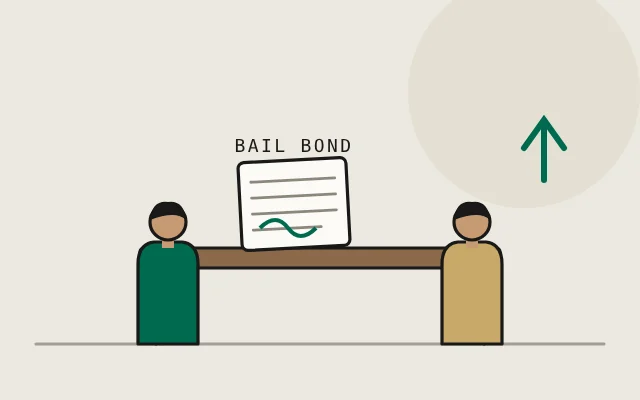 Step 10 · Order and aftermath
Keep attending court until the order
While a withdrawal of prosecution in Bangladesh is under consideration, the case remains pending. The accused must keep attending and keep bail in place; failing to appear in reliance on a recommendation risks cancellation of bail and a warrant. Where the case has several accused and withdrawal is sought only for some, the trial of the others continues. Time limits for trial under section 339C continue to run, and the court may proceed with evidence if the application is delayed.
Where: Magistrate's court (Chief Metropolitan or Chief Judicial Magistrate and subordinate Magistrates) · Time: Throughout · Law: ss.339C and 496-498 CrPC · Documents: Bail bond, Attendance record
Tip: Give the lawyer authority to appear when personal attendance is excused, and confirm each date.
- Step 11 · Order and aftermath
After withdrawal: close the file
Once the order is made, the accused should obtain a certified copy. It is used to discharge bail bonds and sureties, recall any warrant, and show employers, banks and immigration authorities that the case has ended. Property seized in the case is dealt with by the court under section 517, and an application should be made for its return. Where the withdrawal was for some offences only, the copy shows exactly what remains to be tried.
Where: Magistrate's court (Chief Metropolitan or Chief Judicial Magistrate and subordinate Magistrates) · Time: 1-3 weeks · Law: s.517 CrPC · Documents: Certified copy of the order, Application for return of seized property
Tip: Check the police verification records later; ask the court for a certificate if a record still shows the case as pending.
 Step 12 · Challenges
Challenging the court's order
No specific appeal lies against an order granting or refusing consent, so the remedy is revision. An informant who says consent was wrongly given, or a prosecutor or accused who says it was wrongly refused, can apply to the Sessions Judge against a Magistrate's order, whose decision is final for the applicant, or to the High Court Division against a Sessions court's order. Where an acquittal has followed, the revisional court cannot convert it into a conviction, but it can set the order aside and send the case back.
Where: Sessions Judge or Metropolitan Sessions Judge (trial and revision) · Time: 3-12 months · Law: ss.435, 439 and 439A CrPC; s.439(4) CrPC · Documents: Revision petition, Certified copy of the order
Tip: Revision should be filed promptly; courts commonly apply 60 days by analogy.
- Step 13 · Challenges
High Court Division: revision or section 561A
Against a Sessions court's order, the aggrieved party goes to the High Court Division in criminal revision. Where the Sessions Judge has already decided a revision, section 439(4) bars a further revision and the party relies on the inherent power under section 561A, which allows the High Court Division to prevent abuse of the process of any court or otherwise secure the ends of justice. The Bench issues a Rule, may stay further proceedings, and later decides whether the consent order was lawful.
Where: High Court Division · Time: 6 months - 2 years · Law: ss.435 and 439 CrPC; s.561A CrPC · Documents: Revision petition or s.561A application, Affidavit, Certified copies
Tip: Serve the informant or the accused properly; an order made without notice to the person affected is vulnerable.
Walk through it from your side
Pick your side. The step-by-step journey above and the full-screen player will then show what you do at every stage.
Accused (seeking withdrawal)
You want the prosecution against you withdrawn so that you are discharged or acquitted without a full trial. You must persuade the prosecuting authority, and then the court, that continuing the case does not serve justice, using the record rather than political argument. Your biggest risk is treating a committee recommendation as the end of the case and missing court dates.
Understand what section 494 allows
You meet your lawyer, who explains that only the Public Prosecutor can apply and that the court decides. Your lawyer checks the stage of the case, because withdrawal before charge leads to discharge and after charge to acquittal.
Watch outYou cannot withdraw a police case yourself; only the prosecutor can apply.
Choose between a committee application and a direct request
Your lawyer decides whether your case falls within a current Government scheme or needs a direct request to the prosecuting authority, and obtains certified copies of the FIR, charge sheet and order sheet.
Watch outCheck the scheme's date limits; the reported 2026 procedure covers cases lodged between January 2009 and 5 August 2024.
Apply to the District Magistrate
You, or a close relative, apply to the District Magistrate with lawyer-certified copies of the case papers. You keep the receipt or memo number, because that is how you track progress.
Watch outThe scheme rests on an executive notification; check the current version before you apply.
The Public Prosecutor's opinion
Your lawyer sends the Public Prosecutor a short, factual representation pointing to weaknesses in the record, such as a dead witness or missing evidence, with supporting documents. You keep a copy and note the date it was delivered.
Watch outPolitical argument is less persuasive than specific gaps in the evidence.
Recommendation and Government decision
You wait for the district recommendation to reach the Home Ministry and the central committee. You keep attending court and keep your bail in place throughout, and your lawyer follows up with the district office using the memo number.
Watch outA recommendation is not a withdrawal; the case is still pending until the court consents.
The Public Prosecutor applies to the court
When the Public Prosecutor files the section 494 application, your lawyer checks that it names you and every offence intended to be withdrawn, and that the grounds stated match the record. Any error should be raised with the prosecutor before the hearing.
Watch outAn accused or offence left out of the application stays on trial.
The informant or victim may object
Your lawyer replies to any objection by pointing to the record and the prosecutor's reasons, without attacking the victim. You attend the hearing so that the court sees you are complying with your bail, and you leave the submissions to your lawyer.
The court decides whether to consent
Your lawyer asks the court to consent and to record brief reasons. If the court consents only in part, you note exactly which offences remain, and you prepare to continue the trial on those.
Watch outAsk for reasons either way; a reasoned order is easier to defend in revision.
Effect: discharge or acquittal
You note whether the order is a discharge (before charge) or an acquittal (after charge). An acquittal is protected against a second trial by section 403; a discharge gives weaker protection.
Watch outA discharged person can face further inquiry after a show-cause opportunity.
Keep attending court until the order
You keep attending court and keep bail in place until the court makes its order. You give your lawyer authority to appear on dates when personal attendance is excused.
Watch outMissing a date in reliance on a recommendation risks bail cancellation and a warrant.
After withdrawal: close the file
You obtain a certified copy of the order, use it to discharge bail bonds and sureties and recall any warrant, and apply under section 517 for the return of any seized property.
Watch outCheck police verification records later and ask the court for a certificate if the case still shows as pending.
Challenging the court's order
If consent was refused, your lawyer considers revision before the Sessions Judge against a Magistrate's order, or before the High Court Division against a Sessions court's order. Otherwise you prepare for trial.
Watch outFile promptly; courts commonly apply 60 days by analogy.
High Court Division: revision or section 561A
In the High Court Division your advocate defends a consent order, or challenges a refusal, by revision or under section 561A where a Sessions Judge has already decided a revision.
Watch outMake sure the informant was properly served; an order made without notice is vulnerable.
Informant / victim (objecting)
You want the trial to go ahead so that the allegation is decided on evidence. You must show the court, from the record, that the evidence is real and that withdrawal would serve an improper purpose rather than justice. Your biggest risk is objecting late or in general terms, without pointing to the material on file.
Understand what section 494 allows
You consult a lawyer early if you hear that withdrawal is being sought. Your lawyer explains that the court must consent and that you may ask to be heard before it decides.
Watch outDo not assume withdrawal is automatic; there is still time to prepare an objection.
Choose between a committee application and a direct request
You keep your own copies of the FIR, your statement, medical or other evidence and the order sheet, so that you can show the strength of the case if withdrawal is proposed.
Watch outEvidence you cannot produce later will not help your objection.
Apply to the District Magistrate
You may write to the District Magistrate setting out why the case is genuine and should not be treated as harassment. Keep a receipt for any letter you deliver.
Watch outThe committee reviews papers, not speeches; send documents, not general complaints.
The Public Prosecutor's opinion
You may meet the Public Prosecutor or send a written note explaining the evidence and its importance, so that the prosecutor's opinion reflects your side. Bring copies of the key documents and the names of witnesses willing to testify.
Watch outRaise concerns before the prosecutor's opinion is sent; it is due within fifteen working days under the reported procedure.
Recommendation and Government decision
While the recommendation is under review, you prepare your objection for the court with your lawyer, gathering the documents and witness details that show the case has substance.
Watch outEven if the Government agrees, the court can still refuse consent.
The Public Prosecutor applies to the court
When the application is filed, your lawyer obtains a copy and notes the grounds stated, so that your objection answers them directly. You collect any documents that contradict those grounds, such as medical reports or witness statements.
Watch outAsk for a copy promptly so you can respond on the first date.
The informant or victim may object
You file a written objection on the first date the application is listed, arguing that the evidence is strong, that withdrawal is not in good faith, or that you were not consulted. Your lawyer asks to be heard.
Watch outFile in writing at the first listing; late objections may not be considered.
The court decides whether to consent
Your lawyer asks the court to examine the record itself and refuse consent if withdrawal would serve an improper purpose. You ask the court to record its reasons.
Watch outIf consent is given, note the date of the order for any revision.
Effect: discharge or acquittal
You consider with your lawyer whether the order is a discharge or an acquittal, since that affects what remedies remain and whether further inquiry may be sought. You obtain a certified copy of the order without delay.
Keep attending court until the order
You keep attending as a witness when summoned, because the trial continues while the application is pending, and against any accused not covered by it. You tell the prosecutor if you change address, so that summonses reach you.
Watch outDo not stop co-operating with the prosecution while the application is undecided.
After withdrawal: close the file
If you own property seized in the case, you may also apply under section 517 for its return. You keep the order with your records if you intend to challenge it.
Challenging the court's order
If consent was given, your lawyer may apply in revision, arguing that the court consented without examining the record or for an extraneous purpose. The Sessions Judge's decision on your revision is final for you.
Watch outFile promptly; courts commonly apply 60 days by analogy and may refuse a stale revision.
High Court Division: revision or section 561A
Your Supreme Court advocate files a revision or, where a further revision is barred, an application under section 561A, and asks for a Rule and a stay of any consequential steps.
Watch outThe accused must be heard before any order against him; serve him properly.
What if…? How the withdrawal of prosecution in Bangladesh can change course
Choose a scenario. The map animates the route up the hierarchy and, where a case is sent back, down to the lower court and up again.
Can anyone appeal against a withdrawal?
- 1Sessions Judge or Metropolitan Sessions Judge (trial and revision)
Revision, not appeal
Section 404 allows an appeal only where the Code provides one, and no provision gives an appeal against a consent order under section 494. Where the withdrawal results in acquittal, the Government that instructed the withdrawal will not normally appeal under section 417. The practical remedy for an objecting informant is revision to the Sessions Judge or the High Court Division, as described in the main steps.
Not applicables.404 CrPCs.417 CrPCss.435 and 439A CrPC
Where it ends up: The consent order is tested in revision rather than appeal.
What if the informant challenges the court's consent?
- 1Sessions Judge or Metropolitan Sessions Judge (trial and revision)
Informant's revision
The informant applies to the Sessions Judge, or to the High Court Division for a Sessions court's order, arguing that the court consented without examining the record or for an extraneous purpose. The revisional court calls for the record and hears the accused before passing any order against him. It can uphold the consent, or set it aside so that the trial resumes.
3-12 monthsss.435, 439(2) and 439A CrPC
Where it ends up: The withdrawal stands, or the case is restored to the trial court's file.
Can the trial court reconsider after refusing consent?
- 1Magistrate's court (Chief Metropolitan or Chief Judicial Magistrate and subordinate Magistrates)
No review, but a fresh application is possible
A criminal court has no general power to review its own decisions, and section 369 bars review of a signed judgment except for clerical errors. Section 494 does not, however, limit the prosecutor to one application before judgment, so a fresh application on new grounds, such as a later change in the evidence, may be made. A repeat of the same application on the same grounds is unlikely to succeed. Only the Appellate Division has a true review power, under Article 105.
Not applicables.369 CrPCs.494 CrPCArticle 105 Constitution
Where it ends up: The refusal stands unless revised, or a new application on new grounds is decided.
What if the High Court Division Bench is divided?
- 1High Court Division
Reference to a third judge
If the two judges hearing a revision are equally divided, section 439(1) applies the procedure in section 429. The case and both opinions go before a third judge of the High Court Division, and the judgment follows that judge's opinion. The Government itself has no power to refer a pending prosecution to the High Court Division for a decision on withdrawal.
3-9 monthss.439(1) CrPCs.429 CrPC
Where it ends up: The third judge's opinion decides the revision, subject to leave to the Appellate Division.
What if the higher court sends the application back?
- 1High Court Division
Consent order set aside and sent back
Where the trial court gave consent, or refused it, without considering the record or giving reasons, the High Court Division commonly sets the order aside and directs the trial court to decide the application afresh after hearing the parties. Its decision is certified to the lower court, which must act on it.
1-3 months to reach the trial courts.439(1) CrPCs.442 CrPC - 2Sessions Judge or Metropolitan Sessions Judge (trial and revision)
Fresh decision, and back up if needed
The trial court rehears the prosecutor, the accused and any objector and passes a new reasoned order. That order is open to revision in the same way, so the matter can return to the High Court Division.
1-3 monthss.494 CrPCs.435 CrPC
Where it ends up: The trial court decides the s.494 application again, and its new order can itself be revised.
How does the case reach the Appellate Division?
- 1Appellate Division of the Supreme Court
Criminal petition for leave to appeal
The party that loses in the High Court Division may file a criminal petition for leave to appeal under Article 103(3) within 30 days, or 60 days for a Government petition against an acquittal. A Chamber Judge may stay the High Court Division's order. If leave is granted, a full Bench hears the appeal, and a review under Article 105 lies only for an error apparent on the face of the record.
6-24 monthsArticle 103(3) ConstitutionOrder XXIV rule 2 Appellate Division Rules 1988Article 105 Constitution
Where it ends up: The Appellate Division's decision is final and binds the trial court.
How the withdrawal of prosecution in Bangladesh moves up the court hierarchy
Withdrawal of prosecution in Bangladesh is decided by the court where the case is pending, whatever its level: a Metropolitan or Judicial Magistrate, a Sessions Judge, an Additional or Joint Sessions Judge, or a special tribunal. There is no value threshold; the stage of the case decides the effect, discharge before charge and acquittal after it. Government bodies, the district committee, the Home Ministry and the central committee, act only before the court stage and can do no more than instruct the Public Prosecutor to apply. No appeal lies against a consent order.
Revision lies to the Sessions Judge against a Magistrate's order, and that decision is final for the applicant. Against a Sessions court's order, revision lies to the High Court Division, which can also act under section 561A. Revisional courts examine legality and propriety on the record rather than rehearing evidence. The Appellate Division hears the matter only by leave, and can review its own judgment only for an error apparent on the record.
- Appellate DivisionAppellate Division of the Supreme Court
- High Court DivisionHigh Court Division
- Appellate levelSessions Judge or Metropolitan Sessions Judge (trial and revision)
- First instanceMagistrate's court (Chief Metropolitan or Chief Judicial Magistrate and subordinate Magistrates)
- Start · outside courtLawyer's chamber · District Magistrate's office (district review committee) · Public Prosecutor's office · Ministry of Home Affairs and central review committee
Where your case is heard
Addresses are for Dhaka. Every district has equivalent courts at its own district judgeship.
Supreme Court of Bangladesh (Appellate Division and High Court Division)
Supreme Court of Bangladesh, Shahbag, Ramna, Dhaka-1000Hears appeals, revisions, references, writ petitions under Article 102, company matters and death references (High Court Division), and appeals by leave from the High Court Division (Appellate Division).
Both Divisions sit in the Supreme Court complex; many High Court Division benches sit in the Annex Building. Check the daily cause list for the bench and court room. Postal contact is the Registrar General, Supreme Court of Bangladesh, Ramna, Dhaka-1000.
Court of the Metropolitan Sessions Judge, Dhaka
40-45 Johnson Road, Dhaka-1100Tries sessions-triable offences from Dhaka metropolitan police stations and hears criminal appeals and revisions from Metropolitan Magistrates; Additional and Joint Metropolitan Sessions Judges also sit as Metropolitan Special Tribunals.
The Metropolitan Sessions Judge sits on the 2nd floor of the main building; Additional and Joint Metropolitan Sessions Judge courts are in the main building and the tin-shed building in the same compound. The Metropolitan Sessions Judge, Dhaka also holds the post of Senior Special Judge, Dhaka. Help line published by the court: 01335-145002.
Chief Metropolitan Magistrate Court, Dhaka
19 Johnson Road, Dhaka-1100Takes cognisance of and tries criminal cases arising in Dhaka Metropolitan Police areas (Metropolitan Magistrate courts), hears bail, remand and FIR/complaint matters, and sends sessions-triable cases to the Metropolitan Sessions Judge.
Metropolitan Magistrate courts are spread over the CMM court main building (floors 2-9) and the CJM court building (courts 29-37 on the 8th and 9th floors). Check the court number on the cause list. Each metropolitan city (Chattogram, Khulna, Rajshahi, Sylhet, Barishal, Rangpur, Gazipur) has its own CMM court.
Lawyer's chamber
Where this happens depends on your district or the office concerned. Ask us for the exact courtroom and address.
Office of the Deputy Commissioner (District Magistrate), Dhaka
Dhaka (exact address not confirmed)District administration: land revenue and record-correction appeals, certificate cases, acquisition, executive magistracy and mobile courts for Dhaka district.
The official street address could not be read from dhaka.gov.bd (its contact pages did not load); the judiciary portal confirms office phone 02-223389786. Confirm the address before visiting. Every district has a Deputy Commissioner's office at the district headquarters.
Public Prosecutor's office
Where this happens depends on your district or the office concerned. Ask us for the exact courtroom and address.
Ministry of Home Affairs, Dhaka
Building No. 8, Bangladesh Secretariat, Dhaka-1000Oversees the police and other law-enforcement agencies. In criminal matters it processes recommendations to withdraw prosecutions, mercy petitions, detention orders under the Special Powers Act 1974 and extradition requests.
The Ministry has two divisions, the Public Security Division and the Security Services Division; the right one depends on the matter. The Secretariat is a restricted area and the public generally needs a pass to enter, so most applications are sent by post or through the office concerned (for example the jail authority for a mercy petition).
How long each stage takes
These are indicative ranges based on typical Dhaka practice. Adjournments, case backlogs and appeals can stretch them.
Documents checklist and key terms
Tick off what you have. Your ticks stay saved in this browser. Bring the list to your first meeting with your lawyer.
- Public Prosecutor
- A lawyer appointed by the Government under s.492 CrPC to conduct prosecutions; only a prosecutor can apply under s.494.
- Consent of the court
- The court's own decision, on the record, to allow the withdrawal; a Government instruction does not bind it.
- Discharge
- The result of withdrawal before a charge is framed; the accused is released but not acquitted.
- Acquittal
- The result of withdrawal after a charge is framed or in a case needing no charge; it bars a second trial for the same offence.
- District committee
- A committee headed by the District Magistrate that reviews applications under the Government's harassment-case scheme.
- Informant
- The person who lodged the FIR; he or she may object to withdrawal but has no veto.
- Revision
- A higher court's review of the legality or propriety of a lower court's order under ss.435-439A CrPC.
Withdrawal of prosecution in Bangladesh: common questions
Who can apply for withdrawal of prosecution in Bangladesh?
Is a Government recommendation enough to end my case?
What is the difference between discharge and acquittal here?
Can the court refuse consent?
How does the 2026 committee procedure work?
Can the victim stop a withdrawal of prosecution in Bangladesh?
Does withdrawal cover every accused in the case?
What happens to property seized in the case?
Law and sources
- Code of Criminal Procedure 1898 (consolidated, including ss.403, 404, 429, 435-439A, 492-495, 517 and 561A) — Laws of Bangladesh
- Code of Criminal Procedure (Amendment) Act 2026 (Act No. XI of 2026) — Laws of Bangladesh
- Prothom Alo English, 16 March 2025 — Govt recommends withdrawing 6,202 politically motivated cases
- The Business Standard, 11 June 2026 — Govt forms district committees to recommend withdrawal of political cases
- The Financial Express, 16 April 2026 — Effective steps taken to withdraw politically motivated harassment cases: Law Minister
- Supreme Court of Bangladesh (Appellate Division) Rules 1988
- The Financial Express, 11 November 2026 — Politically motivated harassment: over 24,000 cases withdrawn so far
This Case Journey is a general guide to procedure in Bangladesh as of October 2026. It is not legal advice. Procedure, fees and time limits change, and every case turns on its own facts. Timelines are indicative. Speak to a lawyer about your own matter.
Run this case from outside Bangladesh
You can usually start and run this case without travelling. You sign a power of attorney abroad, the Bangladesh High Commission or Embassy attests it, and your attorney and lawyer act for you in Dhaka. Some steps, such as giving evidence in person, may still need you or a commission. See how a case runs through a power of attorney →
Want to know where your case stands?
Book a consultation. A TRW lawyer will place your matter on this map, explain the next step and the realistic timeline, and tell you what to prepare.











