
Arms case in Bangladesh: the full journey, step by step
An arms case in Bangladesh usually begins with the recovery of an unlicensed firearm or ammunition, followed by a seizure list, an FIR and a police investigation with strict time limits.
Possession without a licence is punishable under s.19(f) of the Arms Act 1878 with at least seven years, and under s.19A with at least ten years where a firearm is involved, and these cases are tried by a Special Tribunal under the Special Powers Act 1974. Bail is restricted, and an appeal lies to the High Court Division within 30 days.
- Where it starts
- Place of recovery, then the police station where the FIR is recorded; first production before the Chief Metropolitan or…
- Main law
- Arms Act 1878 ss.13-24, 30, 30A, 30B (as amended 1980, 1991 and 2002); Special Powers Act 1974 ss.26-34B and Schedule; Code of…
- Typical duration
- Investigation: 15 to 60 working days by law, often longer. Trial before a Special Tribunal: about 1 to 5 years in…
- Who can file
- The case is started by the police, RAB or another law-enforcement agency on recovery; the State prosecutes through a…
Arms case in Bangladesh: walk through every stage
Press next, use your arrow keys or tap a court on the map. The gold marker shows where your case is, and the green trail shows the route it has taken. For the immersive version, play it full screen.
Read every step as text
 Step 1 · Recovery and arrest
Recovery, search and arrest
Most arms cases start when police, RAB or another agency recovers a firearm, ammunition or other arms during a search, a check-post stop or an operation. All offences triable by a Special Tribunal are cognizable, so the officer can arrest without a warrant. Where the search is made under the CrPC in a case of unlicensed possession under s.19(f), the Arms Act requires it to be made in the presence of an officer specially appointed by the Government for that purpose.
A Magistrate can also order a search of premises where arms are believed to be held for an unlawful purpose, even if licensed.
Where: Police station · Time: Hours · Law: s.30 Arms Act 1878; s.25 Arms Act 1878; s.32(a) Special Powers Act 1974; s.54 CrPC; s.103 CrPC · Documents: Search record, Arrest memo
Tip: Family members should note the time, place, agency and officers' names at once. The defence later compares these with the times on the seizure list and FIR.
 Step 2 · Recovery and arrest
Seizure list and witnesses
The officer prepares a seizure list (jabdatalika) describing each weapon, its make, bore and number, the rounds of ammunition, where they were found and in whose possession. Independent local witnesses present at the search should sign it, and they later testify in court. The items are sealed and kept in the police malkhana. In an arms case in Bangladesh, possession is the heart of the prosecution, so the precise place of recovery and who controlled it matter more than anything else.
Where: Police station · Time: During the search · Law: s.103 CrPC; s.19(f) Arms Act 1878 · Documents: Seizure list, Photographs of the items, Malkhana entry
Tip: Check whether the seizure witnesses are genuinely independent. Witnesses who are police sources or who did not see the recovery are a common defence point.
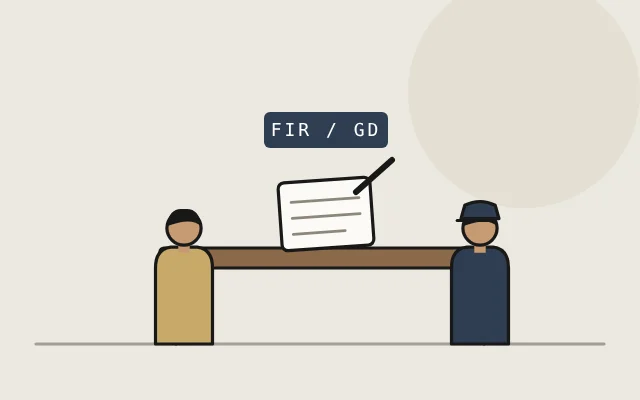 Step 3 · Recovery and arrest
FIR at the police station
The recovering officer usually lodges the FIR as complainant at the local police station, naming the accused, the items and the seizure witnesses. The FIR normally cites s.19(f) of the Arms Act, and s.19A where the item is a pistol, revolver, rifle, shotgun or other firearm. Separate offences may be added, such as going armed without a licence, secret possession under s.20, or possession with intent to use the firearm for murder under s.20A.
No prior Government sanction is needed to prosecute an Arms Act offence; the old sanction provision in s.29 was omitted in 1980.
Where: Police station · Time: Same day · Law: s.154 CrPC; s.19 Arms Act 1878; s.19A Arms Act 1878; s.20 Arms Act 1878; s.20A Arms Act 1878 · Documents: FIR, Seizure list, Arrest memo
Tip: Obtain a certified copy of the FIR quickly and compare its times, place and witness names with the seizure list.
 Step 4 · First production and bail
First production and remand
The accused must be produced before the nearest Magistrate within 24 hours. The arresting officer must also send a copy of the arrest report to the Government. Police often ask for remand to trace the source of the weapon or connected crimes. Since the CrPC (Amendment) Act 2026, in force from 10 August 2025, police custody cannot exceed fifteen days in total, and the Magistrate must examine the case diary before allowing any. The defence should oppose remand, ask for a medical examination if there are injuries, and apply for bail at the same hearing.
Where: Chief Metropolitan Magistrate Court, Dhaka · Time: Within 24 hours of arrest · Law: s.61 CrPC; s.167 CrPC (as amended 2026); s.33 Special Powers Act 1974; Article 33 Constitution · Documents: Forwarding report, Case diary, Remand petition
Tip: If the accused is already in custody in another case, police must follow the procedure for 'shown arrest' under s.167A CrPC before adding the arms case.
 Step 5 · First production and bail
Bail under the strict s.32 test
Bail is the hardest stage of an arms case in Bangladesh. The Special Powers Act says no one accused of an offence triable under it may be released unless the prosecution has been heard and, if it objects, the court is satisfied there are reasonable grounds to believe the accused is not guilty. Magistrates and Special Tribunals therefore rarely grant bail at the start. Most accused apply to the High Court Division, which considers the strength of the recovery evidence, delay in investigation or trial, age, health and time already spent in custody.
Where: Chief Metropolitan Magistrate Court, Dhaka · Time: Weeks to many months · Law: s.32(c) Special Powers Act 1974; s.497 CrPC; s.498 CrPC · Documents: Bail petition, FIR and seizure list, Medical papers if ill, Surety NIDs
Tip: Point to concrete weaknesses, such as no independent seizure witness, recovery from a shared place, or missed investigation deadlines. General hardship rarely persuades.
 Step 6 · Investigation
Investigation within fixed limits
The Arms Act sets its own time limits. If the accused was caught at the time of the offence, the investigation must be finished within 15 working days of arrest; otherwise within 60 working days of the information or of a Magistrate's order to investigate. The officer can take 7 working days more by recording reasons. If still unfinished, the controlling officer or Magistrate can transfer the investigation to another officer, who has 7 or 30 working days. Delay is recorded as inefficiency in the officer's confidential report.
Where: Police station · Time: 15-60 working days by law; often longer · Law: s.30B(1)-(6) Arms Act 1878; s.161 CrPC · Documents: Case diary, Witness statements
Tip: Missed deadlines do not end the case, but they are a useful bail argument. Keep a dated record of each hearing where the report was not filed.
 Step 7 · Investigation
Expert examination of the weapon
Investigators often send the weapon and ammunition to a police or military arms expert to confirm that it is a working firearm and live ammunition. The Arms Act says no expert opinion or examination is necessary to prove that an item is an arm or ammunition, unless the trial court thinks it necessary. In practice the defence often argues that an untested, broken or replica item is not a firearm, and asks the court to call for an expert report.
A report by a Government-appointed firearm expert can be used without calling the expert, though either side can ask for the expert to be summoned. Licensing records are also checked.
Where: Police station · Time: 2 weeks to 3 months · Law: s.30A Arms Act 1878; s.510 CrPC; s.45 Evidence Act 1872 · Documents: Expert or test-firing report, Licence verification report
Tip: If the item may be a toy, replica or unserviceable weapon, ask early for an expert examination. It can change whether s.19A applies at all.
- Step 8 · Investigation
Charge sheet or final report
At the end of the investigation the officer submits a charge sheet naming the accused and the sections, or a final report if the allegation is not supported. A Special Tribunal can take cognizance only on a written report by a police officer of at least Sub-Inspector rank, so an arms case cannot begin as a private complaint. The record is sent from the Magistrate's court to the Sessions Judge, who acts as or assigns the Special Tribunal. Accused persons named in the charge sheet who are absconding are summoned or warrants issue.
Where: Chief Metropolitan Magistrate Court, Dhaka · Time: 1-3 months · Law: s.173 CrPC; s.27(1) Special Powers Act 1974 · Documents: Charge sheet, Expert report, Witness list
Tip: Compare the charge sheet description of the weapon with the seizure list. A changed bore, number or count of rounds undermines the prosecution.
 Step 9 · Special Tribunal trial
The Special Tribunal
Offences listed in the Schedule to the Special Powers Act 1974, which include unlicensed possession under s.19(f) and s.19A of the Arms Act, can be tried only by a Special Tribunal. Every Sessions Judge, Additional Sessions Judge and Assistant (now Joint) Sessions Judge is a Special Tribunal for their sessions division. A Special Tribunal consisting of the Sessions Judge can transfer a case to another Special Tribunal in the division at any stage. The Tribunal has the powers of a Court of Session, and a Sessions-level Tribunal can pass any sentence the law allows.
Where: Special Tribunal (Sessions, Additional or Joint Sessions Judge) · Time: 1-4 weeks · Law: s.26(1)-(3) Special Powers Act 1974; s.28 Special Powers Act 1974; s.29 Special Powers Act 1974 · Documents: Transfer order, Case record
Tip: Note the Special Tribunal number in Dhaka carefully. Hearing dates and cause lists are published by tribunal number.
 Step 10 · Special Tribunal trial
Cognizance and framing of charge
The Special Tribunal takes cognizance directly on the police report, without committal. The Act directs the Tribunal to follow the CrPC procedure for summary trial of summons cases, which in Bangladesh leads to the Magistrate-trial provisions: the Tribunal hears the parties and either discharges the accused because the charge is groundless or frames a formal charge, which is read out to the accused. The charge states the weapon, the place and date of recovery and the section. The accused pleads guilty or not guilty. Most plead not guilty, and the case is fixed for evidence.
Where: Special Tribunal (Sessions, Additional or Joint Sessions Judge) · Time: 1-3 months · Law: s.27(1) Special Powers Act 1974; s.27(4) Special Powers Act 1974; s.29 Special Powers Act 1974; s.241A CrPC; s.242 CrPC; s.262 CrPC · Documents: Discharge petition, Charge
Tip: Challenge the use of s.19A at this stage if there is no evidence that the item is a working firearm.
 Step 11 · Special Tribunal trial
Trial procedure and absconding accused
The Act directs Special Tribunals to try cases summarily and not to adjourn unless necessary in the interests of justice. If an accused has absconded, the Tribunal can publish an order in two Bengali dailies and then try the accused in their absence. A Tribunal that takes over a part-heard case need not recall witnesses already examined. Despite these provisions, an arms case in Bangladesh often moves slowly because seizure witnesses and police officers fail to appear, and many hearings end without evidence being taken.
Where: Special Tribunal (Sessions, Additional or Joint Sessions Judge) · Time: Throughout the trial · Law: s.27(4)-(6) Special Powers Act 1974; s.31 Special Powers Act 1974 · Documents: Newspaper publication order, if any, Order sheets
Tip: An accused tried in absence should surrender and seek to have the matter reopened as early as possible, before the evidence closes.
 Step 12 · Special Tribunal trial
Prosecution evidence
The prosecution calls the recovering officer, the seizure-list witnesses, the investigating officer and, if relevant, the arms expert and licensing officials, and produces the weapon and ammunition as exhibits. It must prove that the accused had conscious possession or control of the item and no licence for it. Recovery from a person's body or locked room is stronger evidence than recovery from a shared house, open field or vehicle with several occupants. Contradictions between the raiding team and the independent witnesses are closely examined.
Where: Special Tribunal (Sessions, Additional or Joint Sessions Judge) · Time: 6-36 months in practice · Law: s.244 CrPC; s.27(4) Special Powers Act 1974; s.19(f) Arms Act 1878; s.14 Arms Act 1878 · Documents: Weapon and ammunition exhibits, Seizure list, Expert report
Tip: Focus cross-examination on who controlled the place of recovery. Lack of exclusive possession is the most frequent ground for acquittal.
- Step 13 · Special Tribunal trial
Examination of the accused and defence
After the prosecution closes, the Tribunal questions the accused under s.342 about the evidence. The defence may call witnesses, for example to show the accused was arrested elsewhere or that the weapon was licensed to a relative, or produce documents such as a licence or deposit receipt. Arguments follow, focusing on possession, independence of witnesses, chain of custody and any gaps in timing. If the Tribunal finds the accused not guilty it records an acquittal; otherwise it convicts.
Where: Special Tribunal (Sessions, Additional or Joint Sessions Judge) · Time: 1-3 months · Law: s.342 CrPC; s.244 CrPC; s.245 CrPC · Documents: Defence evidence, Licence or deposit records, if any, Written arguments
Tip: A defence that the arrest happened elsewhere needs specific witnesses or records, not a general denial.
 Step 14 · Judgment and after
Judgment, sentence and confiscation
The Tribunal gives a reasoned judgment. Unlicensed possession under s.19(f) carries imprisonment for life or rigorous imprisonment of not less than seven years. Where the item is a pistol, revolver, rifle, shotgun or other firearm, s.19A raises the minimum to ten years. Possession of a firearm with intent to use it for murder under s.20A can carry death. The court can confiscate the arms and the box, vehicle or baggage used to carry them. The Government can remit, suspend or commute a Special Tribunal sentence.
Where: Special Tribunal (Sessions, Additional or Joint Sessions Judge) · Time: 1-4 weeks after arguments · Law: s.19 Arms Act 1878; s.19A Arms Act 1878; s.20A Arms Act 1878; s.24 Arms Act 1878; s.30A Special Powers Act 1974 · Documents: Judgment, Certified copy application, Confiscation order
Tip: Apply for the certified copy immediately. The 30-day appeal period under s.30 of the Special Powers Act is short.
 Step 15 · Judgment and after
Licensing consequences
Licensed holders face a separate set of rules. Arms licences are issued by the Deputy Commissioner as District Magistrate under the Arms Act and its rules and policy. A licence can be cancelled or suspended by the issuing authority or a District Magistrate for recorded public-peace reasons, by a court that convicts the holder under the Act, or by Government notification. After cancellation or expiry, the weapon must be deposited at the police station or with a licensed dealer.
Breach of a licence condition is a lesser offence, tried by a Magistrate, with up to six months or a Tk 500 fine.
Where: Deputy Commissioner (District Magistrate) licensing office · Time: Weeks to months · Law: s.16 Arms Act 1878; s.18 Arms Act 1878; s.21 Arms Act 1878; s.17 Arms Act 1878 · Documents: Arms licence and renewal records, Deposit receipt, Cancellation order
Tip: Renew licences on time and deposit weapons promptly after expiry. An expired licence can turn lawful possession into a s.19(f) case.
Walk through it from your side
Pick your side. The step-by-step journey above and the full-screen player will then show what you do at every stage.
State / prosecution
The prosecution wants to prove that the accused knowingly possessed or controlled the weapon or ammunition without a licence, and that a firearm is what it claims. It must show a lawful search, an honest seizure list with independent witnesses and an unbroken chain of custody. Its biggest risk is contradictions between the raiding team, the seizure witnesses and the documents, and failing to produce witnesses at trial.
Recovery, search and arrest
The recovering officer conducts the search in line with the CrPC and, for s.19(f) cases searched under the CrPC, in the presence of the officer specially appointed by the Government. The officer records the time, place and persons present and secures the items without disturbing them.
Watch outA search made without the specially appointed officer where s.30 requires one gives the defence a strong point.
Seizure list and witnesses
The officer prepares the seizure list describing each weapon's make, bore and number, the rounds recovered, the exact place found and the person in possession, and has independent local witnesses sign it. Items are sealed and sent to the malkhana.
Watch outUsing police sources or absent persons as 'independent' witnesses is a frequent cause of acquittal.
FIR at the police station
The recovering officer lodges the FIR as informant, naming the accused, the items and the seizure witnesses, and citing s.19(f) and, for firearms, s.19A. Further sections such as s.20 or s.20A are added only if the facts support them.
Watch outTimes, places and witness names in the FIR must match the seizure list exactly.
First production and remand
The police produce the accused before the Magistrate within 24 hours with the forwarding report, send a copy of the arrest report to the Government, and apply for remand only with specific grounds shown in the case diary, such as tracing the source of the weapon.
Watch outPolice remand is capped at 15 days in total; a vague remand prayer is likely to be refused.
Bail under the strict s.32 test
The Public Prosecutor opposes bail and points to the recovery evidence, the type of weapon and any criminal record. Under s.32 Special Powers Act, the prosecution must be heard, and the court cannot release the accused over its objection unless satisfied there are reasonable grounds to believe the accused is not guilty.
Investigation within fixed limits
The investigating officer completes the investigation within the Arms Act limits: 15 working days if the accused was caught at the scene, or 60 working days otherwise, with 7 more working days on recorded reasons. The officer reports to the controlling officer and the Magistrate if the deadline is missed.
Watch outDelay is recorded against the officer and strengthens defence bail applications.
Expert examination of the weapon
The investigating officer sends the weapon and ammunition for examination by a police or military arms expert where there is any doubt about whether it works, and checks licensing records. A report by a Government-appointed firearm expert can be used without calling the expert.
Watch outIf the court thinks expert opinion necessary and none exists, the s.19A charge may fail.
Charge sheet or final report
The investigating officer files the charge sheet, naming each accused and the sections, with the seizure list, statements and expert report. The record is sent to the Sessions Judge for the Special Tribunal, which can take cognizance only on a written report by an officer of at least Sub-Inspector rank.
The Special Tribunal
The Public Prosecutor for the Special Tribunal receives the record and prepares the witness list. The Sessions Judge can transfer the case to another Special Tribunal in the division where needed.
Cognizance and framing of charge
The Public Prosecutor asks the Tribunal to frame a charge on the police report, stating the weapon, place and date of recovery and the section. If the evidence of a working firearm is thin, the PP considers whether s.19(f) rather than s.19A is the right charge.
Trial procedure and absconding accused
The Public Prosecutor ensures the recovering officer, seizure witnesses and investigating officer are summoned and attend, and asks the Tribunal to proceed in absence against an absconding accused after the required newspaper publication.
Watch outRepeated non-appearance of prosecution witnesses is the main cause of delay and weakens the case.
Prosecution evidence
The prosecution calls the recovering officer, seizure witnesses, investigating officer and, where relevant, the expert and licensing officials, and produces the weapon and ammunition as exhibits. It must show conscious possession or control and the absence of a licence.
Watch outContradictions between raiding officers and independent witnesses are examined closely.
Examination of the accused and defence
The Public Prosecutor answers defence evidence and argues that the recovery, possession and lack of licence are proved. Any defence claim that the weapon was licensed is tested against the licensing records.
Judgment, sentence and confiscation
The Public Prosecutor asks for confiscation of the arms and anything used to carry them on conviction. If the accused is acquitted, the PP considers with the Government whether to appeal to the High Court Division within thirty days.
Watch outThe 30-day appeal period under s.30 Special Powers Act also binds the State.
Licensing consequences
The licensing authority can cancel or suspend a licence on recorded public-peace grounds or after a conviction, and the police enforce deposit of weapons after cancellation or expiry. Breach of a licence condition is prosecuted before a Magistrate.
Accused
You want bail, and an acquittal if the prosecution cannot prove that you consciously and exclusively possessed the item without a licence. Defence work focuses on the search, the seizure list, the independence of witnesses and whether the item is really a working firearm. Your biggest risk is a long period in custody, because the s.32 Special Powers Act bail test is strict and the minimum sentences are high.
Recovery, search and arrest
If you or a family member is arrested, the family notes the exact time, place, agency and names of officers and anyone present, and contacts a criminal lawyer at once. Stay calm and do not resist; ask the grounds of arrest.
Watch outDo not sign blank papers or statements you have not read.
Seizure list and witnesses
Your lawyer obtains the seizure list as early as possible and notes who signed it, whether they live locally and whether they actually saw the recovery. The family gathers evidence of who controlled the place of recovery, such as tenancy papers or proof that others shared it.
Watch outNote any difference between the seizure list and what the family saw; it matters later.
FIR at the police station
Your lawyer obtains a certified copy of the FIR and compares its times, place and witness names with the seizure list and the family's account. Gather any licence, renewal or deposit papers if the weapon was licensed to you or a relative.
Watch outAn expired licence or an undeposited weapon can itself be an offence, so give your lawyer the full history.
First production and remand
Your lawyer opposes remand, asks for a medical examination if there are injuries, and applies for bail at the same hearing. If you are already in custody in another case, your lawyer checks that the 'shown arrest' procedure under s.167A CrPC has been followed.
Watch outAsk for any remand to be limited and for a lawyer's access during it.
Bail under the strict s.32 test
Your lawyer applies for bail first before the Magistrate or Tribunal and, if refused, in the High Court Division, pointing to concrete weaknesses: no independent seizure witness, recovery from a shared place, missed investigation deadlines, age, illness or time in custody.
Watch outGeneral hardship rarely persuades under the s.32 test; focus on specific evidential gaps.
Investigation within fixed limits
Your lawyer keeps a dated record of each hearing where the police report was not filed and raises missed s.30B deadlines in every bail application. You can give the officer documents supporting your account, such as proof of your whereabouts.
Watch outMissed deadlines do not end the case on their own.
Expert examination of the weapon
If the item may be a toy, replica or unserviceable weapon, your lawyer asks early for an expert examination and, if a report exists, considers asking for the expert to be called for cross-examination. Your lawyer also asks for a licence verification if a licence existed.
Watch outRaise the firearm question early; it decides whether the ten-year minimum under s.19A applies.
Charge sheet or final report
Your lawyer compares the charge sheet's description of the weapon, bore, number and rounds with the seizure list. Any change is noted for the discharge hearing and cross-examination. If a final report is filed in your favour, keep a certified copy.
Watch outA changed description between documents can undermine the whole prosecution.
The Special Tribunal
Your lawyer notes the Special Tribunal number and follows the cause list, and checks that the offence is in fact one triable by the Special Tribunal. Keep in contact with the lawyer before each date so that bail and other applications are ready.
Watch outMissing a date can lead to a warrant and loss of bail.
Cognizance and framing of charge
Your lawyer files a discharge application where the record shows no case, for example where the weapon was licensed or recovery was from a place you did not control. If a charge is framed, you plead and the case is fixed for evidence.
Watch outChallenge the use of s.19A at this stage if there is no evidence of a working firearm.
Trial procedure and absconding accused
You attend every date. If you were tried in absence, you surrender through your lawyer as early as possible and ask for the matter to be reopened before the evidence closes. Your lawyer opposes unnecessary adjournments sought by the prosecution.
Watch outAbsconding after release on bail allows the Tribunal to try you in your absence without newspaper publication.
Prosecution evidence
Your lawyer cross-examines on who controlled the place of recovery, whether the seizure witnesses really saw the search, the chain of custody and any gaps in timing. Recovery from a shared house, open field or vehicle with several people is a key defence theme.
Watch outLack of exclusive possession is the most common ground for acquittal; build the cross-examination around it.
Examination of the accused and defence
You answer the Tribunal's questions under s.342 carefully, and your lawyer calls defence witnesses or produces documents, such as evidence of arrest elsewhere or a licence held by a relative. Arguments focus on possession, witnesses, chain of custody and timing.
Watch outA claim that the arrest happened elsewhere needs specific witnesses or records.
Judgment, sentence and confiscation
You hear the judgment and apply for the certified copy the same day. If convicted, your lawyer files an appeal to the High Court Division within 30 days and applies for bail or suspension of sentence pending appeal. The Government can also remit or commute a Special Tribunal sentence.
Watch outThirty days is shorter than the usual 60 days for High Court Division appeals; do not miss it.
Licensing consequences
If you hold a licence, you renew it on time and deposit the weapon at the police station or with a licensed dealer promptly after cancellation or expiry, keeping the receipt. If a licence is cancelled, take advice on challenging the decision.
Watch outFailing to deposit a weapon after cancellation or expiry is itself an offence under s.19.
What if…? How the arms case in Bangladesh can change course
Choose a scenario. The map animates the route up the hierarchy and, where a case is sent back, down to the lower court and up again.
What if the convicted person appeals?
- 1High Court Division
Appeal to the High Court Division within 30 days
An appeal from any order, judgment or sentence of a Special Tribunal lies to the High Court Division within thirty days of its delivery. This is shorter than the ordinary Limitation Act period, so the certified copy should be applied for on the day of judgment. The appeal is a full rehearing on facts and law. Bail or suspension of sentence pending appeal is sought by a separate application.
2-6 yearss.30(1) Special Powers Act 1974s.426 CrPC - 2Metropolitan Sessions Judge (appeals from Magistrates)
Appeal in a licence-breach case
Lesser offences, such as breach of licence conditions or buying arms from an unlicensed seller, are tried by a Magistrate rather than a Special Tribunal. An appeal from such a conviction goes to the Sessions Judge, or the Metropolitan Sessions Judge in Dhaka.
1-2 yearss.408 CrPCs.21 Arms Act 1878s.22 Arms Act 1878
Where it ends up: The appeal court's judgment replaces the trial judgment, and a further challenge lies only by revision or leave to the Appellate Division.
What if a party challenges a charge, bail refusal or interim order?
- 1High Court Division
Revision in the High Court Division
Interim orders of a Special Tribunal, such as framing a charge, refusing discharge or refusing to call an arms expert, are challenged in the High Court Division by criminal revision. As the Tribunal has Court of Session powers, the revision does not go to a Sessions Judge.
6-24 monthss.439 CrPCs.29 Special Powers Act 1974 - 2High Court Division
Quashing and High Court bail
The High Court Division can quash proceedings that are an abuse of process, for example where the FIR itself shows the weapon was licensed to the accused, though it will not weigh disputed evidence. It also hears most bail applications in arms cases under s.498 CrPC.
1-12 monthss.561A CrPCs.498 CrPCs.32(c) Special Powers Act 1974
Where it ends up: The trial continues before the Special Tribunal under the corrected order, or ends if the proceedings are quashed.
Can the Special Tribunal review its own judgment?
- 1Special Tribunal (Sessions, Additional or Joint Sessions Judge)
No review by the Tribunal
Once the Special Tribunal has signed its judgment, it cannot alter or review it except to correct a clerical error. A party who thinks the judgment is wrong must appeal within thirty days. A review petition does not stop the appeal period running.
Not applicables.369 CrPCs.29 Special Powers Act 1974 - 2Appellate Division of the Supreme Court
Review in the Appellate Division
Only the Appellate Division can review its own judgment, and in criminal cases only for an error apparent on the face of the record. The petition must be filed within thirty days. It is not a rehearing of the evidence.
3-12 monthsArticle 105 ConstitutionOrder XXVI rules 1-2 Supreme Court (Appellate Division) Rules 1988
Where it ends up: Errors are corrected on appeal; review exists only at the Appellate Division.
What happens if a Special Tribunal passes a death sentence?
- 1High Court Division
Submission for confirmation
Death sentences are rare in arms cases and arise mainly under s.20A, possession of a firearm with intent to use it for murder, or where an arms charge is tried with a capital offence. If a Special Tribunal passes a death sentence, the proceedings must be sent at once to the High Court Division, and the sentence cannot be carried out unless that Division confirms it.
2-6 yearss.30(2) Special Powers Act 1974s.20A Arms Act 1878s.374 CrPC - 2High Court Division
Confirmation judgment
The High Court Division examines the whole evidence and may confirm the sentence, commute it, acquit, or order a retrial. The convict's own appeal is heard together with the reference, and the decision is certified back to the Tribunal.
1-3 months after hearings.376 CrPCs.377 CrPCs.381 CrPC
Where it ends up: The death sentence is confirmed, commuted or set aside, and the case can go to the Appellate Division.
What if the appeal court orders a retrial?
- 1High Court Division
Conviction set aside and case sent back
If the High Court Division finds a serious defect, such as seizure witnesses never examined, the accused not questioned under s.342, or a charge framed under the wrong section, it can set aside the conviction and send the case back for retrial from a stated stage.
Within the appeals.423(1)(b) CrPCs.537 CrPC - 2Special Tribunal (Sessions, Additional or Joint Sessions Judge)
Retrial before the Special Tribunal
The record returns to the Special Tribunal, which repeats only the stages ordered and can act on evidence already recorded for the rest. It then hears arguments again and delivers a fresh judgment.
6-18 monthss.31 Special Powers Act 1974s.423 CrPC - 3High Court Division
Back up on appeal
The losing side can appeal the new judgment within thirty days. To avoid another remand, the parties can ask the High Court Division to take missing evidence itself under s.428 CrPC.
2-5 yearss.30(1) Special Powers Act 1974s.428 CrPC
Where it ends up: After the retrial, the case returns to the High Court Division on a fresh appeal.
How does an arms case reach the Appellate Division?
- 1Appellate Division of the Supreme Court
Criminal petition for leave to appeal
A party who loses in the High Court Division, on appeal, revision or reference, can file a criminal petition for leave to appeal, normally within thirty days. Where the High Court Division confirms a death sentence or imposes death or life imprisonment on appeal, an appeal lies as of right under Article 103(2).
1-3 yearsArticle 103(2)-(3) ConstitutionOrder XXIV rule 2 Supreme Court (Appellate Division) Rules 1988 - 2Appellate Division of the Supreme Court
Final decision
If leave is granted, the appeal is heard on the points allowed and the Appellate Division's judgment binds all lower courts. If leave is refused, the High Court Division's judgment stands.
1-2 yearsArticle 111 ConstitutionArticle 49 Constitution
Where it ends up: The Appellate Division's decision is final, subject only to review under Article 105 and the President's prerogative of mercy.
How the arms case in Bangladesh moves up the court hierarchy
An arms case in Bangladesh skips the ordinary Magistrate trial. The Magistrate deals only with first production, remand and early bail. Unlicensed possession under s.19(f) and s.19A of the Arms Act is listed in the Schedule to the Special Powers Act 1974, so it is tried exclusively by a Special Tribunal, which is any Sessions Judge, Additional Sessions Judge or Joint Sessions Judge acting in that capacity. The Tribunal has Court of Session powers and can impose any lawful sentence.
There is no value or quantity threshold: the classification depends on whether a licence existed and whether the item is a firearm. Minor licensing offences stay with Magistrates, with appeal to the Sessions Judge. From a Special Tribunal, every appeal goes straight to the High Court Division within thirty days, as a full rehearing on facts and law, and any death sentence must be confirmed there. Interim orders are revised by the High Court Division.
The Appellate Division hears arms cases by leave, or as of right where the High Court Division confirms a death sentence or itself sentences a person to death or life imprisonment.
- Appellate DivisionAppellate Division of the Supreme Court
- High Court DivisionHigh Court Division
- Appellate levelMetropolitan Sessions Judge (appeals from Magistrates)
- First instanceChief Metropolitan Magistrate Court, Dhaka · Special Tribunal (Sessions, Additional or Joint Sessions Judge)
- Start · outside courtLawyer's chamber · Police station · Deputy Commissioner (District Magistrate) licensing office
Where your case is heard
Addresses are for Dhaka. Every district has equivalent courts at its own district judgeship.
Supreme Court of Bangladesh (Appellate Division and High Court Division)
Supreme Court of Bangladesh, Shahbag, Ramna, Dhaka-1000Hears appeals, revisions, references, writ petitions under Article 102, company matters and death references (High Court Division), and appeals by leave from the High Court Division (Appellate Division).
Both Divisions sit in the Supreme Court complex; many High Court Division benches sit in the Annex Building. Check the daily cause list for the bench and court room. Postal contact is the Registrar General, Supreme Court of Bangladesh, Ramna, Dhaka-1000.
Court of the Metropolitan Sessions Judge, Dhaka
40-45 Johnson Road, Dhaka-1100Tries sessions-triable offences from Dhaka metropolitan police stations and hears criminal appeals and revisions from Metropolitan Magistrates; Additional and Joint Metropolitan Sessions Judges also sit as Metropolitan Special Tribunals.
The Metropolitan Sessions Judge sits on the 2nd floor of the main building; Additional and Joint Metropolitan Sessions Judge courts are in the main building and the tin-shed building in the same compound. The Metropolitan Sessions Judge, Dhaka also holds the post of Senior Special Judge, Dhaka. Help line published by the court: 01335-145002.
Chief Metropolitan Magistrate Court, Dhaka
19 Johnson Road, Dhaka-1100Takes cognisance of and tries criminal cases arising in Dhaka Metropolitan Police areas (Metropolitan Magistrate courts), hears bail, remand and FIR/complaint matters, and sends sessions-triable cases to the Metropolitan Sessions Judge.
Metropolitan Magistrate courts are spread over the CMM court main building (floors 2-9) and the CJM court building (courts 29-37 on the 8th and 9th floors). Check the court number on the cause list. Each metropolitan city (Chattogram, Khulna, Rajshahi, Sylhet, Barishal, Rangpur, Gazipur) has its own CMM court.
Lawyer's chamber
Where this happens depends on your district or the office concerned. Ask us for the exact courtroom and address.
Dhaka Metropolitan Police (DMP) Headquarters
36 Minto Road, DhakaHeadquarters of the Dhaka Metropolitan Police; FIRs are lodged at the local police station, not here.
Emergency: 999. For a case, go to the police station with jurisdiction over the place of occurrence.
Office of the Deputy Commissioner (District Magistrate), Dhaka
Dhaka (exact address not confirmed)District administration: land revenue and record-correction appeals, certificate cases, acquisition, executive magistracy and mobile courts for Dhaka district.
The official street address could not be read from dhaka.gov.bd (its contact pages did not load); the judiciary portal confirms office phone 02-223389786. Confirm the address before visiting. Every district has a Deputy Commissioner's office at the district headquarters.
How long each stage takes
These are indicative ranges based on typical Dhaka practice. Adjournments, case backlogs and appeals can stretch them.
Documents checklist and key terms
Tick off what you have. Your ticks stay saved in this browser. Bring the list to your first meeting with your lawyer.
- Special Tribunal
- A Sessions, Additional or Joint Sessions Judge sitting under s.26 of the Special Powers Act 1974 to try scheduled offences.
- Section 19(f)
- The Arms Act offence of possessing or controlling arms, ammunition or military stores without a licence.
- Section 19A
- The aggravated form of s.19(f) where the item is a pistol, revolver, rifle, shotgun or other firearm, with a ten-year minimum.
- Seizure list (jabdatalika)
- The signed record of what was recovered, where, from whom and in front of which witnesses.
- Conscious possession
- Knowing control over the item, which the prosecution must prove; mere presence near it is not enough.
- Section 32 bail bar
- The Special Powers Act rule that bail needs a hearing of the prosecution and reasonable grounds to believe the accused is not guilty.
- Malkhana
- The police evidence store where seized weapons are kept until produced in court.
Arms case in Bangladesh: common questions
Which court tries an arms case in Bangladesh?
What is the punishment for keeping an unlicensed firearm?
Why is bail so difficult in an arms case in Bangladesh?
Does the prosecution need Government sanction?
Must the prosecution prove the weapon works?
How long does an arms trial take?
What is the appeal deadline?
What mistakes do families make in an arms case in Bangladesh?
Law and sources
- Arms Act 1878, Laws of Bangladesh mirror
- Arms Act 1878, Bangladesh Laws
- Special Powers Act 1974, Laws of Bangladesh mirror
- Special Powers Act 1974, Bangladesh Laws
- Code of Criminal Procedure 1898, Bangladesh Laws
- Code of Criminal Procedure (Amendment) Act 2026
- Constitution of the People's Republic of Bangladesh
- Supreme Court of Bangladesh
This Case Journey is a general guide to procedure in Bangladesh as of October 2026. It is not legal advice. Procedure, fees and time limits change, and every case turns on its own facts. Timelines are indicative. Speak to a lawyer about your own matter.
Run this case from outside Bangladesh
You can usually start and run this case without travelling. You sign a power of attorney abroad, the Bangladesh High Commission or Embassy attests it, and your attorney and lawyer act for you in Dhaka. Some steps, such as giving evidence in person, may still need you or a commission. See how a case runs through a power of attorney →
Want to know where your case stands?
Book a consultation. A TRW lawyer will place your matter on this map, explain the next step and the realistic timeline, and tell you what to prepare.











