
Abandoned building claim in Bangladesh: the Court of Settlement journey, step by step
An abandoned building claim in Bangladesh is now brought under the Abandoned Buildings (Supplementary Provisions) Act 2023 (Act No. 64 of 2023), which repealed and replaced the 1985 Ordinance and was amended in April 2026.
A person who says a listed house is not abandoned property, or that his or her rights in it survived the President's Order No. 16 of 1972, must apply to a Court of Settlement within 180 days of the list's publication; ordinary title suits are barred.
The Court's decision can be reviewed by the same Court but not appealed, leaving only a writ in the High Court Division on narrow grounds.
- Where it starts
- Application to the Court of Settlement (a Chairman who is or was a High Court Division judge, an Additional District…
- Main law
- Abandoned Buildings (Supplementary Provisions) Act 2023 (Act No. 64 of 2023), as amended by Act No. 32 of 2026 (which also…
- Typical duration
- Preparing the claim: 1-3 months. Court of Settlement hearing and decision: about 1-4 years. Review: 3-12 months. Writ…
- Who can file
- Any person claiming a right or interest in a listed house, such as the original owner's heirs, a purchaser from the…
Abandoned building claim in Bangladesh: walk through every stage
Press next, use your arrow keys or tap a court on the map. The gold marker shows where your case is, and the green trail shows the route it has taken. For the immersive version, play it full screen.
Read every step as text
 Step 1 · Checking the list and the deadline
Find out whether and why the house is listed
Abandoned property means property defined as such in President's Order No. 16 of 1972, broadly property whose owners were not present in Bangladesh after the 1971 war, whose whereabouts were unknown, or who had ceased to occupy, supervise or manage it in person. Under the 1985 Ordinance the Government published two kinds of gazette lists: the 'ka' list of houses already taken into possession, and the 'kha' list of houses for which notices had been issued.
The 2023 Act repealed that Ordinance but keeps earlier actions, lists and notifications alive, and lets the Government publish new lists. An abandoned building claim in Bangladesh therefore starts with finding the exact gazette, list and serial number.
Where: Lawyer's chamber (title research) · Time: 2-4 weeks · Law: s.2(3)-(6) Abandoned Buildings (Supplementary Provisions) Act 2023; s.4(1) and s.14 Abandoned Buildings (Supplementary Provisions) Act 2023; President's Order No. 16 of 1972 · Documents: Gazette list and serial number, Holding number and address of the house, Any Government notice or letter
Tip: Get a certified copy of the gazette entry, not a photocopy from a broker. Addresses and holding numbers in old lists often differ from current ones.
 Step 2 · Checking the list and the deadline
Assemble title and possession evidence
The claim turns on showing that the house was never abandoned property, or that the claimant's rights were not affected by the 1972 Order. That usually means a chain of title from before 1971: registered deeds, record-of-rights entries, mutation and land development tax receipts, holding tax receipts, utility bills, and evidence of where the owner lived and who occupied the house in 1971 and 1972. Heirs need succession documents.
Any earlier court decree about the house is critical, because houses the highest court has already released, or whose Government possession it has held illegal, cannot be put on a list.
Where: Lawyer's chamber (title research) · Time: 1-3 months · Law: s.4(2)(a)-(c) Abandoned Buildings (Supplementary Provisions) Act 2023; s.5 Abandoned Buildings (Supplementary Provisions) Act 2023 · Documents: Registered deeds and chain of title, Record-of-rights (khatian) extracts, Tax and utility receipts from the period, Succession documents, Earlier court decrees or judgments
Tip: Evidence of the owner's presence in Bangladesh during 1971-72 is often decisive. Look for passports, service records, school records or bank accounts from that period.
 Step 3 · Checking the list and the deadline
Check the 180-day window and the exclusions
A claimant must apply to the Court of Settlement within 180 days from the date the list is published in the official gazette. Two classes of house cannot be claimed this way at all: houses that a court has already declared abandoned property, and other urban houses of a person whose house was listed under the 1972 Order. Nor can a claim be made for a house where a court case has established Government ownership.
Because the list is conclusive evidence that the houses in it are abandoned, missing the window or falling into an excluded class usually ends the claim.
Where: Lawyer's chamber (title research) · Time: Within 180 days of the gazette · Law: s.4(3) Abandoned Buildings (Supplementary Provisions) Act 2023; s.5 and proviso Abandoned Buildings (Supplementary Provisions) Act 2023 · Documents: Gazette publication date, Calculation of the 180 days, Any earlier judgment on ownership
Tip: Diarise the 180th day from the gazette date, not from when you heard about the list. There is no general power to extend it.
 Step 4 · Claim before the Court of Settlement
File the application in the Court of Settlement
The application asks for the house to be excluded from the list, or for other relief, on the ground that it is not abandoned property and did not vest in the Government under the 1972 Order, or that the applicant's right or interest was not affected by that Order. It is made in the manner prescribed by rules. The Government establishes Courts of Settlement by gazette notification for specified areas. The application should identify the house precisely, explain the chain of title and possession, state the relief sought and attach every document relied on.
Where: Court of Settlement · Time: 1-2 weeks to file · Law: s.5 Abandoned Buildings (Supplementary Provisions) Act 2023; s.8(1) Abandoned Buildings (Supplementary Provisions) Act 2023 · Documents: Application with full particulars, Certified copy of the gazette entry, Title and possession documents, Vakalatnama
Tip: Ask the Court's office which form and fee currently apply. Rules under the 2023 Act and older directions under the 1985 Ordinance may both be relevant.
- Step 5 · Claim before the Court of Settlement
No title suit: other courts are shut out
The Court of Settlement has the field to itself. No suit or legal proceeding may be brought in any other court against any action, decision, notice or list under the 1972 Order or the 2023 Act, and no title suit or suit for specific performance may be brought for a declaration that a house is not abandoned. Once a Court of Settlement is set up, any abandoned-house suit pending in another civil court is transferred to it automatically. A judgment, order or decree of any other court about an abandoned house is treated as void.
If a house is later returned, no claim lies for rent or compensation for the period of Government possession.
Where: Court of Settlement · Time: Automatic on establishment of the Court · Law: s.7(1)-(5) Abandoned Buildings (Supplementary Provisions) Act 2023; s.3 Abandoned Buildings (Supplementary Provisions) Act 2023 · Documents: Copy of any pending suit to be transferred
Tip: Do not spend money on a title suit in the Joint District Judge's court. Any decree it passes about an abandoned house is void under s.7(4).
 Step 6 · Claim before the Court of Settlement
Government's reply and the Board's role
The Government defends the claim. Abandoned houses are controlled, managed and disposed of by Boards set up under section 10: in Dhaka a Board chaired by the Divisional Commissioner, with members from the Public Works Department, the Deputy Commissioner's office, the Ministry of Housing and Public Works, the Metropolitan Police, RAJUK, the National Housing Authority and the City Corporation; similar Boards exist for other divisional cities and districts. The Boards keep the records, collect rent, conduct court cases and report to the Government.
Their files are often the best evidence of when, how and on what basis a house was taken.
Where: Court of Settlement · Time: 2-6 months · Law: s.10(1)-(2) Abandoned Buildings (Supplementary Provisions) Act 2023 (as amended by Act No. 32 of 2026) · Documents: Government's written reply, Board's file and possession records
Tip: Ask the Court to call for the Board's complete file, including the original possession notice. Gaps in it can help the claimant.
 Step 7 · Claim before the Court of Settlement
Evidence before the Court of Settlement
The Code of Civil Procedure does not apply to the Court of Settlement, except as the Act provides. For hearing an application it has a civil court's powers to summon and examine witnesses on oath, require discovery and production of documents, take evidence or affidavits, requisition public records from any office, and issue commissions to examine witnesses or documents. Its proceedings are judicial proceedings for the purposes of section 193 of the Penal Code, so false evidence is punishable as perjury. Both sides may produce oral and documentary evidence.
Where: Court of Settlement · Time: 6-24 months · Law: s.9(1)-(3) Abandoned Buildings (Supplementary Provisions) Act 2023 · Documents: Affidavits of witnesses, Certified public records, Commission reports
Tip: Requisition old records through the Court rather than chasing them informally; it saves time and gives the records evidential weight.
 Step 8 · Claim before the Court of Settlement
Inquiry and hearing
The Court of Settlement sits where the Government directs. It consists of a Chairman, who is or was a judge or additional judge of the High Court Division, and two members: a judicial officer who is or was an Additional District Judge, and an officer who is or was at least a Deputy Secretary. All three are appointed by the Government in consultation with the Supreme Court.
After such inquiry as it considers necessary, and after giving the parties a reasonable opportunity to be heard and to adduce evidence, the Court decides the application as it thinks fit.
Where: Court of Settlement · Time: 3-12 months · Law: s.8(2)-(4) Abandoned Buildings (Supplementary Provisions) Act 2023; s.9(4)-(5) Abandoned Buildings (Supplementary Provisions) Act 2023 · Documents: Written arguments, Summary of evidence
Tip: Prepare a short written chronology of title and possession from before 1971 to date. A three-member bench works faster from a clear timeline.
 Step 9 · Decision
Decision: exclusion from the list or rejection
The Court either allows the claim, directing that the house be excluded from the list or granting other relief, or rejects it. Its decision binds all parties and cannot be questioned in any court, and no appeal lies to any other court or authority. The only statutory remedy is an application for review to the same Court, whose decision on review is final. The finality of every abandoned building claim in Bangladesh is why the evidence must be complete at first instance: there is no appellate court to cure gaps in the record.
Where: Court of Settlement · Time: 1-3 months after the hearing · Law: s.9(5)-(8) Abandoned Buildings (Supplementary Provisions) Act 2023 · Documents: Certified copy of the decision
Tip: Order a certified copy immediately. Any review application or writ petition depends on it.
 Step 10 · After the decision: release, mutation or possession
Release and handover after a successful claim
A favourable decision does not hand over the keys by itself. The Board's functions include sending the Government recommendations to release (abomukto) houses and correcting abandoned-house records, so the successful claimant applies to the Board, with the certified decision, for release, delisting and handover. The Ministry of Housing and Public Works issues the release. Where a Government allottee or tenant is in occupation, handover can take time. The Act bars any claim for rent or compensation for the period the Government held the house.
Where: Abandoned House Control, Management and Disposal Board (Dhaka: chaired by the Divisional Commissioner) · Time: 3-12 months · Law: s.10(2) Abandoned Buildings (Supplementary Provisions) Act 2023 (release recommendations and record correction); s.7(5) Abandoned Buildings (Supplementary Provisions) Act 2023 · Documents: Certified decision of the Court of Settlement, Application for release, Release order
Tip: Follow up in writing at both the Board and the Ministry; release files often stall between the two.
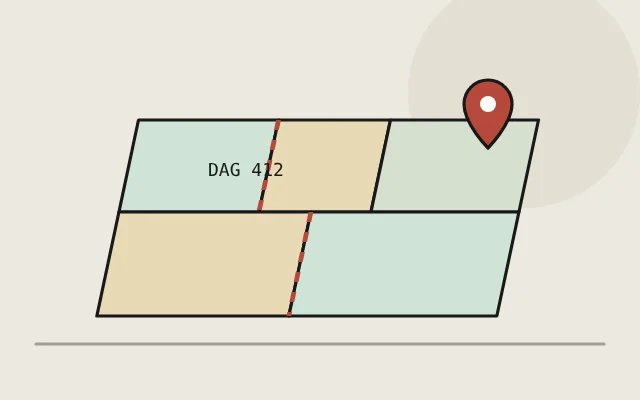 Step 11 · After the decision: release, mutation or possession
Mutation and records in the owner's name
Once the house is released, the owner applies to the Assistant Commissioner (Land) for mutation of the record of rights and pays land development tax in his or her own name, and updates the City Corporation or Paurashava holding records. The April 2026 amendment added section 5A: houses on the 'ka' or 'kha' list that the Government has sold, or sells in future, are deemed lawfully transferred, the transferee is deemed the lawful owner, and the transferee or heirs may mutate the property in their names.
The Act does not say how this affects a pending claim, but it makes such a sale very hard to undo, so a claimant should take advice early.
Where: Assistant Commissioner (Land) office (mutation) · Time: 1-3 months · Law: s.5A Abandoned Buildings (Supplementary Provisions) Act 2023 (inserted by Act No. 32 of 2026); State Acquisition and Tenancy Act 1950, s.143 · Documents: Release order or Government sale deed, Mutation application, Land development tax receipts
Tip: Buyers of a house previously on a list should obtain the release order or the Government sale deed before paying; mutation alone is not proof of release.
 Step 12 · After the decision: release, mutation or possession
If the claim fails: surrender and possession
Houses declared abandoned under the Act must be surrendered to the Government. Until rules are made under the 2023 Act, surrender and possession follow, as far as possible, the 1972 Order and the rules and orders under it. No notice or gazette is needed for houses already declared abandoned by a court, houses in undisputed Government possession, or other urban houses of a listed person. The Boards take possession of listed houses and evict unlawful occupants, and a decision of the Court of Settlement against the claimant removes any legal shield to that.
Where: Abandoned House Control, Management and Disposal Board (Dhaka: chaired by the Divisional Commissioner) · Time: 1-6 months · Law: s.6 Abandoned Buildings (Supplementary Provisions) Act 2023; s.10(2) Abandoned Buildings (Supplementary Provisions) Act 2023 (eviction and taking possession) · Documents: Surrender notice (where required), Possession record
Tip: An occupier facing eviction should check whether the Board followed the 1972 Order procedure; a defect may justify a writ even after losing in the Court of Settlement.
 Step 13 · After the decision: release, mutation or possession
Allotment, lease or purchase from the Government
The Boards allot and lease abandoned houses, collect rent, recommend sale and sale prices to the Government, register approved permanent allotments and sales, and can propose multi-storey redevelopment. Valuation committees fix the price of land and structures for sale or permanent allotment. Many occupiers who cannot win an abandoned building claim in Bangladesh instead negotiate to buy the house from the Government, and since April 2026 section 5A deems such a purchase to pass valid title to the buyer.
Where: Ministry of Housing and Public Works · Time: 6-24 months · Law: s.10(2) Abandoned Buildings (Supplementary Provisions) Act 2023 (allotment, rent, sale and redevelopment); s.10(3) Abandoned Buildings (Supplementary Provisions) Act 2023; s.5A Abandoned Buildings (Supplementary Provisions) Act 2023 · Documents: Application for allotment or purchase, Valuation report, Sale deed
Tip: Keep every rent receipt from the Board; a record of regular payment helps when applying to buy.
 Step 14 · After the decision: release, mutation or possession
Old ex parte decrees and the one-year window
Section 11 gave anyone aggrieved by an ex parte order or decree passed by any court before the 2023 Act came into force one year from commencement to apply to that court to set it aside, notwithstanding limitation, under Order IX rules 13 to 15 of the Code. The Act took effect on publication on 13 November 2023, so that window closed in November 2024. The section does not apply where the decree has been executed, or where an appeal or other proceeding against it had already started.
Where: Civil court (Joint District Judge) · Time: Window closed in November 2024 · Law: s.11 Abandoned Buildings (Supplementary Provisions) Act 2023; Order IX rules 13-15 Code of Civil Procedure 1908 · Documents: Certified copy of the ex parte decree, Application under Order IX rule 13
Tip: Anyone relying on an old ex parte decree about an abandoned house should take advice: s.7(4) treats other courts' decrees about abandoned houses as void.
Walk through it from your side
Pick your side. The step-by-step journey above and the full-screen player will then show what you do at every stage.
Claimant
You want the house excluded from the abandoned-house list and released to you. You must prove, usually from pre-1971 records, that the house was never abandoned property or that your rights were not affected by the 1972 Order. Your biggest risk is the 180-day window from the gazette list, together with the finality of the Court of Settlement's decision: there is no appeal to cure gaps in your evidence.
Find out whether and why the house is listed
You and your lawyer find the exact gazette, list ('ka' or 'kha') and serial number for the house, and obtain a certified copy of the entry. Bring the holding number, address and any Government notice or letter you have received.
Watch outOld lists often use different holding numbers and addresses; match the entry carefully to the house.
Assemble title and possession evidence
You assemble a chain of title from before 1971: registered deeds, record-of-rights extracts, tax and utility receipts, succession documents and evidence of where the owner lived and who occupied the house in 1971-72. Collect any earlier judgment about the house.
Watch outEvidence that the owner was present in Bangladesh in 1971-72 is often decisive; search for passports, service, school or bank records.
Check the 180-day window and the exclusions
Your lawyer calculates the 180th day from the gazette date and checks whether the house falls within an excluded class: houses already declared abandoned by a court, other urban houses of a listed person, or houses where a court has established Government ownership.
Watch outThere is no general power to extend the 180 days; count from the gazette date, not from when you heard about the list.
File the application in the Court of Settlement
Your lawyer files the application in the Court of Settlement, identifying the house precisely, setting out the chain of title and possession, stating the relief sought, usually exclusion from the list, and attaching every document. Ask the Court's office which form and fee apply.
Watch outDocuments omitted now may be hard to add later, and there is no appeal to correct the record.
No title suit: other courts are shut out
If you have a title suit pending in a civil court about the house, it is transferred to the Court of Settlement automatically. Do not start a new title or specific performance suit elsewhere; pursue the claim in the Court of Settlement.
Watch outAny decree another court passes about an abandoned house is void under section 7(4).
Government's reply and the Board's role
You study the Government's reply and ask the Court to call for the Board's complete file, including the original possession notice and the basis on which the house was treated as abandoned.
Watch outGaps in the Board's file can help you; note them precisely.
Evidence before the Court of Settlement
You present oral and documentary evidence, including affidavits of witnesses and certified public records. Use the Court's power to requisition records from public offices rather than chasing them informally.
Watch outFalse evidence before the Court is punishable as perjury, so check every document carefully.
Inquiry and hearing
At the hearing, your lawyer presents a short written chronology of title and possession from before 1971 to date, with written arguments and a summary of the evidence.
Watch outThe three-member bench decides on the record before it; make every point clearly now.
Decision: exclusion from the list or rejection
You obtain a certified copy of the decision immediately. If the claim fails, decide quickly with your lawyer whether to seek review in the same Court or a writ in the High Court Division.
Watch outThere is no appeal, and review should be sought promptly.
Release and handover after a successful claim
After a successful claim, you apply to the Board with the certified decision for release, delisting and handover, and follow up with the Ministry, which issues the release.
Watch outNo rent or compensation can be claimed for the period of Government possession.
Mutation and records in the owner's name
Once released, you apply to the AC Land for mutation in your name, pay land development tax and update the City Corporation or Paurashava holding records. If the Government has sold the house, take advice on how section 5A affects your position.
Watch outMutation alone is not proof of release; keep the release order with your title papers.
If the claim fails: surrender and possession
If your claim fails and you are in occupation, you take advice on surrender and on whether the Board followed the 1972 Order procedure. You may also consider applying to buy or lease the house.
Watch outResisting lawful possession after losing can lead to eviction with police assistance.
Allotment, lease or purchase from the Government
If you cannot win the claim, you can apply to the Board for allotment, lease or purchase. Keep every rent receipt from the Board and cooperate with the valuation committee.
Watch outA record of regular rent payments helps when applying to buy.
Old ex parte decrees and the one-year window
If you were affected by an ex parte decree passed before the 2023 Act, note that the one-year window to set it aside closed in November 2024. Take advice on whether any other remedy remains.
Watch outSection 7(4) treats other courts' decrees about abandoned houses as void, which may affect any decree you rely on.
Government / Board
The Government wants the list upheld where the house is genuinely abandoned property, and its records, allotments and sales protected. It relies on the gazette list, which is conclusive evidence, and on the Board's possession files. Its biggest risk is an incomplete file or a procedural defect in taking possession, which can lead to a writ and a fresh hearing.
Find out whether and why the house is listed
The Board checks its records for the house: the gazette entry, the basis of listing under the 1972 Order and any possession notice. Make sure the file is complete and the entry matches the current holding number.
Watch outAn entry that does not clearly identify the house invites a successful claim.
Assemble title and possession evidence
The Board gathers the possession records, notices, rent and allotment files and any earlier court decisions on the house. Check whether the house falls within any exclusion in section 4(2), for example a highest-court order directing its return.
Watch outIf the highest court has already ordered the house returned, it cannot lawfully be listed.
Check the 180-day window and the exclusions
The Government notes the gazette date and, when a claim is filed, checks whether it was made within 180 days and whether the house falls within section 4(1)(a) or (b) or the proviso to section 5, any of which bars the claim.
Watch outRaise any time bar or exclusion at the outset rather than contesting the merits first.
File the application in the Court of Settlement
The Government receives notice of the application through the Ministry and the Board, and instructs its lawyer. Collect the Board's complete file promptly so that the reply can address each document the claimant relies on.
Watch outA late or thin reply weakens the Government's position before a court that decides on the evidence before it.
No title suit: other courts are shut out
If a suit about the house is pending in a civil court, the Government ensures it is transferred to the Court of Settlement and objects to any fresh suit elsewhere under section 7.
Watch outMonitor civil court cause lists for suits that should have been transferred.
Government's reply and the Board's role
The Government files its written reply, with the Board's file showing when, how and on what basis the house was taken. The Board, which conducts cases under section 10, supports the lawyer with records and witnesses.
Watch outMissing notices or inconsistent dates in the file are the points a claimant will press.
Evidence before the Court of Settlement
The Government produces its records and witnesses from the Board or Ministry and cross-examines the claimant's witnesses on presence, possession and title in 1971-72.
Watch outRelying on the list alone without supporting records can be risky if the claimant produces strong evidence.
Inquiry and hearing
The Government's lawyer presents its arguments, relying on the conclusive effect of the list and any exclusion, and answers the claimant's chronology point by point.
Watch outFailing to address a document the claimant relies on can be treated as accepting it.
Decision: exclusion from the list or rejection
The Government obtains a certified copy. If the claim succeeds, it decides whether to seek review or a writ, or to comply. If the claim fails, the Board proceeds with management and possession.
Watch outA decision against the Government binds it; delay in complying can lead to further proceedings.
Release and handover after a successful claim
The Board processes the release application, recommends release and correction of the records to the Ministry, and arranges handover, including dealing with any allottee or tenant in occupation.
Watch outRelease files often stall between the Board and the Ministry; set a clear internal timetable.
Mutation and records in the owner's name
Where the Government has sold a 'ka' or 'kha' list house, the purchaser relies on section 5A, which deems the transfer valid and allows mutation. As purchaser, keep the Government sale deed and registration and mutation records.
Watch outPurchasers should ensure the sale deed and registration are complete; they are the proof of protected title.
If the claim fails: surrender and possession
The Board takes possession of the house as abandoned property, following, until rules are made, the 1972 Order and its rules. No notice is needed in the three cases section 6 lists.
Watch outA defect in the possession procedure may justify a writ even after the claimant has lost in the Court of Settlement.
Allotment, lease or purchase from the Government
The Board considers allotment, lease or sale, obtains valuation from the valuation committee, recommends a sale price to the Government and registers approved permanent allotments and sales.
Watch outSales must follow the approved valuation and procedure to keep the section 5A protection beyond dispute.
Old ex parte decrees and the one-year window
The Government checks whether any ex parte decree about a listed house was challenged within the one-year window, and relies on section 7(4) against decrees of other courts about abandoned houses.
Watch outThe section 11 window does not apply where a decree was executed or a challenge had already begun.
What if…? How the abandoned building claim in Bangladesh can change course
Choose a scenario. The map animates the route up the hierarchy and, where a case is sent back, down to the lower court and up again.
Can the losing side appeal the Court of Settlement's decision?
- 1High Court Division
No appeal: writ petition on narrow grounds
The Act says no appeal lies from any order or decision of the Court of Settlement to any court or authority, and its decision cannot be questioned in any court. A statute cannot, however, remove the High Court Division's constitutional power under Article 102. The High Court Division has entertained writ petitions against Court of Settlement decisions on limited grounds, such as lack of jurisdiction, a decision without evidence, or denial of a fair hearing, but it does not rehear the facts.
1-3 yearss.9(7)-(8) Abandoned Buildings (Supplementary Provisions) Act 2023Article 102 Constitution of Bangladesh
Where it ends up: The writ is discharged, leaving the decision final, or the decision is declared to be without lawful authority.
Is there a revision, as in ordinary civil cases?
- 1High Court Division
No civil revision under section 115
Civil revision under section 115 of the Code of Civil Procedure is not available. The Code does not apply to the Court of Settlement except as the Act provides, the Court is a special tribunal rather than a civil court subordinate to the High Court Division, and the Act makes its decision final. Revision is replaced by the Court's own review power and, beyond that, the writ jurisdiction.
Not applicables.9(1) and (6)-(8) Abandoned Buildings (Supplementary Provisions) Act 2023s.115 Code of Civil Procedure 1908
Where it ends up: A party must use review in the same Court or a writ petition, not revision.
Can the Court of Settlement reconsider its decision?
- 1Court of Settlement
Review in the same Court
A person aggrieved by the Court of Settlement's decision may apply to the same Court for review, and the decision on review is final. The Act does not set out the grounds, so applications are usually framed on the familiar lines of an error apparent on the record, new and important evidence that could not be produced earlier, or another sufficient reason. Review should be sought promptly after the decision.
3-12 monthss.9(6) Abandoned Buildings (Supplementary Provisions) Act 2023
Where it ends up: The decision is confirmed or corrected on review, and the review decision is final.
Is there a reference to the High Court Division?
- 1High Court Division
No reference procedure
The Court of Settlement cannot refer a question of law to the High Court Division; section 113 and Order XLVI of the Code do not apply to it. A question of law, such as whether a house falls within an excluded class under section 4(2) or whether section 5A protects a particular sale, reaches the High Court Division only through a writ petition after the decision.
Not applicables.9(1) Abandoned Buildings (Supplementary Provisions) Act 2023s.113 and Order XLVI Code of Civil Procedure 1908
Where it ends up: Legal questions are decided by the Court of Settlement and tested only by writ.
What if the High Court Division sends the claim back?
- 1High Court Division
Rule made absolute and claim sent back
Where the High Court Division finds that the Court of Settlement ignored material evidence, refused a fair hearing or misread its own jurisdiction, it can declare the decision to be without lawful authority and direct the Court of Settlement to hear and decide the application afresh, sometimes within a fixed time.
Order on the day of judgmentArticle 102(2)(a)(ii) Constitution of Bangladesh - 2Court of Settlement
Fresh hearing in the Court of Settlement
The Court of Settlement rehears the application as directed, takes any further evidence and gives a new decision. That decision is again final and subject to review, and a party can return to the High Court Division by a fresh writ if the new decision is also flawed.
6-18 monthss.9(5)-(8) Abandoned Buildings (Supplementary Provisions) Act 2023
Where it ends up: The claim returns to the Court of Settlement, is decided again and may come back to the High Court Division by writ.
Can the case reach the Appellate Division?
- 1Appellate Division of the Supreme Court
Civil petition for leave to appeal
Against the High Court Division's judgment in the writ, either side can file a civil petition for leave to appeal in the Appellate Division. Leave is granted where a substantial question of law arises, such as the reach of the bar on suits or the effect of section 5A on earlier claims. If leave is granted, the appeal is heard on the record.
1-3 yearsArticle 103 Constitution of BangladeshSupreme Court of Bangladesh (Appellate Division) Rules 1988
Where it ends up: The Appellate Division's decision is final and binds all courts under Article 111.
How the abandoned building claim in Bangladesh moves up the court hierarchy
An abandoned building claim in Bangladesh has an unusually short ladder. The only forum of first instance is the Court of Settlement, a special three-member court chaired by a serving or former High Court Division judge, with an Additional District Judge and a senior civil servant. Civil courts are shut out: title suits and specific performance suits about listed houses are barred, pending suits are transferred, and other courts' decrees are void. There is no appeal and no civil revision. The Court of Settlement can review its own decision once, and that review is final.
Above it, the High Court Division can examine the decision only by writ under Article 102, on grounds such as lack of jurisdiction, no evidence or an unfair hearing, and may send the claim back for a fresh decision. The Appellate Division hears appeals from the writ judgment by leave. Management, release and sale of houses sit with the Boards and the Ministry of Housing and Public Works.
- Appellate DivisionAppellate Division of the Supreme Court
- High Court DivisionHigh Court Division
- First instanceCourt of Settlement · Civil court (Joint District Judge)
- Start · outside courtLawyer's chamber (title research) · Abandoned House Control, Management and Disposal Board (Dhaka: chaired by the Divisional Commissioner) · Ministry of Housing and Public Works · Assistant Commissioner (Land) office (mutation)
Where your case is heard
Addresses are for Dhaka. Every district has equivalent courts at its own district judgeship.
Supreme Court of Bangladesh (Appellate Division and High Court Division)
Supreme Court of Bangladesh, Shahbag, Ramna, Dhaka-1000Hears appeals, revisions, references, writ petitions under Article 102, company matters and death references (High Court Division), and appeals by leave from the High Court Division (Appellate Division).
Both Divisions sit in the Supreme Court complex; many High Court Division benches sit in the Annex Building. Check the daily cause list for the bench and court room. Postal contact is the Registrar General, Supreme Court of Bangladesh, Ramna, Dhaka-1000.
Court of Settlement, Dhaka
Dhaka (exact address not confirmed)Hears claims about buildings listed as abandoned property under the Abandoned Buildings (Supplementary Provisions) Act 2023, sitting in Dhaka at a place fixed by the Government.
Address could not be confirmed from an official source. The seat is fixed by Government notification, so check the current location with the Ministry of Housing and Public Works before visiting.
Court of the District and Sessions Judge, Dhaka (Dhaka Judge Court)
Dhaka Judge Court premises, 16 Johnson Road, Sadarghat, DhakaSeat of the Dhaka District Judge and Additional District Judges (civil appeals, probate, district-level civil and sessions work outside the metropolitan area) and the civil courts of first instance (Joint District Judge, Senior Civil/Assistant Judge courts).
Official judiciary portal gives '16 Johnson Road, Sadarghat, Dhaka'. Many civil courts (Additional District Judge courts, Joint District Judge and Senior Assistant Judge courts, Artha Rin Adalat No.1, insolvency court) are in the new 8-storey District Judge Court building in the same premises. The 2026 judgeship list names the first-instance civil courts 'Senior Civil Judge' / 'Civil Judge' (formerly Senior Assistant Judge / Assistant Judge); some pages still use the old names. Every district has an equivalent court at its district judgeship.
Lawyer's chamber (title research)
Where this happens depends on your district or the office concerned. Ask us for the exact courtroom and address.
Office of the Divisional Commissioner, Dhaka
Dhaka (exact address not confirmed)Hears appeals and revisions in land-revenue matters (e.g. mutation and record appeals from the Additional Deputy Commissioner (Revenue)) and supervises district administrations in Dhaka Division.
The official site (dhakadiv.gov.bd) could not be fetched; address not confirmed. Each of the eight divisions has a Divisional Commissioner's office.
Ministry of Housing and Public Works, Dhaka
Building No. 5 (Room 302), Bangladesh Secretariat, Dhaka-1000Administers government housing and abandoned buildings. Through the Public Works Department it serves the Boards that deal with abandoned houses and holds the records of abandoned property.
The Secretariat is a restricted area and the public generally needs a pass to enter; applications are usually sent by post or through the office concerned. The Public Works Department (PWD) has its own head office and divisional offices.
Assistant Commissioner (Land) office (mutation)
Where this happens depends on your district or the office concerned. Ask us for the exact courtroom and address.
How long each stage takes
These are indicative ranges based on typical Dhaka practice. Adjournments, case backlogs and appeals can stretch them.
Documents checklist and key terms
Tick off what you have. Your ticks stay saved in this browser. Bring the list to your first meeting with your lawyer.
- Abandoned property
- Property defined in Article 2(1) of President's Order No. 16 of 1972, broadly that of owners absent or not in effective control after the 1971 war, which vested in the Government.
- 'Ka' and 'kha' lists
- Gazette lists of abandoned houses: 'ka' for houses taken into Government possession, 'kha' for houses where possession notices were issued.
- Court of Settlement
- The special court that alone decides claims that a listed house is not abandoned property; its decision is final, subject to review.
- Exclusion from the list
- The main relief sought: an order that the house be removed from the abandoned-house list.
- Release (abomukto)
- The Government's formal release of a house from abandoned property control, recommended by the Board.
- Section 5A
- The provision inserted in April 2026 deeming Government sales of 'ka' or 'kha' list houses to pass valid title to the buyer.
- Writ of certiorari
- A High Court Division order declaring a tribunal's decision to be without lawful authority, the main route against a Court of Settlement decision.
Abandoned building claim in Bangladesh: common questions
What is an abandoned building claim in Bangladesh?
Does the 1985 Ordinance still apply?
What is the deadline for an abandoned building claim in Bangladesh?
Can I file a title suit in the civil court instead?
Can I appeal if the Court of Settlement rejects my claim?
I bought an abandoned house from the Government. Is my title safe?
How long does an abandoned building claim in Bangladesh take?
Who manages abandoned houses?
Law and sources
- Abandoned Buildings (Supplementary Provisions) Act 2023 (Act No. 64 of 2023) — Laws of Bangladesh
- Abandoned Buildings (Supplementary Provisions) (Amendment) Act 2026 (Act No. 32 of 2026) — Laws of Bangladesh
- Abandoned Buildings (Supplementary Provisions) (Amendment) Ordinance 2025 (Ordinance No. 15 of 2025, repealed) — Laws of Bangladesh
- Abandoned Buildings (Supplementary Provisions) Ordinance 1985 (repealed) — Laws of Bangladesh
- Bangladesh Abandoned Property (Control, Management and Disposal) Order 1972 (P.O. No. 16 of 1972) — Laws of Bangladesh
- Constitution of the People's Republic of Bangladesh, Articles 102-103 — Laws of Bangladesh
This Case Journey is a general guide to procedure in Bangladesh as of October 2026. It is not legal advice. Procedure, fees and time limits change, and every case turns on its own facts. Timelines are indicative. Speak to a lawyer about your own matter.
Run this case from outside Bangladesh
You can usually start and run this case without travelling. You sign a power of attorney abroad, the Bangladesh High Commission or Embassy attests it, and your attorney and lawyer act for you in Dhaka. Some steps, such as giving evidence in person, may still need you or a commission. See how a case runs through a power of attorney →
Want to know where your case stands?
Book a consultation. A TRW lawyer will place your matter on this map, explain the next step and the realistic timeline, and tell you what to prepare.











