
Chittagong Hill Tracts land dispute: Land Commission, customary forums and courts, step by step
A Chittagong Hill Tracts land dispute can travel down three different roads, depending on what it is about.
Disputes over the land of returned refugees and over settlements or dispossession contrary to the region's laws, customs and practice belong to the CHT Land Dispute Resolution Commission under the 2001 Act as amended in 2016, whose decisions are final; social and customary disputes go to the karbari or Mauza Headman and on appeal to the Circle Chief; and ordinary title suits are tried by the Joint District Judge of the hill district, with appeal to the District Judge and revision in the High Court Division.
- Where it starts
- Depends on the dispute: a written application in Bangla to the CHT Land Dispute Resolution Commission (head office at…
- Main law
- Chittagong Hill Tracts Land Dispute Resolution Commission Act 2001 (Act No. 53 of 2001), as amended by Act No. 45 of 2016…
- Typical duration
- Commission applications have been pending for years: the rules were still not finalised in the latest reports seen, and…
- Who can file
- A person claiming title, customary rights or restoration of possession, including returned refugees and internally…
Chittagong Hill Tracts land dispute: walk through every stage
Press next, use your arrow keys or tap a court on the map. The gold marker shows where your case is, and the green trail shows the route it has taken. For the immersive version, play it full screen.
Read every step as text
 Step 1 · Working out the right forum
Identify which of the three roads applies
The three hill districts of Rangamati, Khagrachari and Bandarban have their own land system, shaped by the CHT Regulation 1900, the 1989 Hill District Council Acts, the 1997 CHT Accord and the 2001 Commission Act. A Chittagong Hill Tracts land dispute about a returned refugee's land, or about land settled or occupied contrary to the region's laws, customs and practice, belongs to the Land Commission. A social, cultural or customary dispute between hill residents goes to the karbari or headman.
Other civil disputes, such as a contract or title claim under ordinary law, go to the Joint District Judge.
Where: Deputy Commissioner's and AC Land offices (Rangamati, Khagrachari, Bandarban) · Time: 1-2 weeks · Law: s.6(1)-(2) CHT Land Dispute Resolution Commission Act 2001 (as amended 2016); s.8(4) Chittagong Hill Tracts Regulation 1900; s.66 Rangamati Hill District Council Act 1989 · Documents: Description of the land (mauza, holding, area), History of possession, Any earlier decision or complaint
Tip: Choosing the wrong forum can cost years. Get advice on how the dispute is characterised before filing anywhere.
 Step 2 · Working out the right forum
Gather records, settlement papers and the headman's evidence
Land records in the hill districts differ from the plains. Evidence may include settlement (bandobosto) papers and kabuliyat issued through the Deputy Commissioner, the Mauza Headman's report or certificate, land development tax receipts, record-of-rights entries prepared under the 1984 CHT land records Ordinance where they exist, and evidence of customary use such as jum cultivation or homestead occupation. Many hill residents hold land by custom without formal title, so witness evidence from the karbari, headman and neighbours often matters as much as paper. Returned refugees should keep the documents issued on their return.
Where: Deputy Commissioner's and AC Land offices (Rangamati, Khagrachari, Bandarban) · Time: 1-3 months · Law: Rules for the Administration of the Chittagong Hill Tracts (Schedule to the 1900 Regulation); Land Records (Chittagong Hill Tracts) Ordinance 1984 · Documents: Settlement papers and kabuliyat, Headman's certificate or report, Land development tax receipts, Record-of-rights extract (if any), Refugee or displacement documents
Tip: Ask the headman for a written statement early; headmen change, and memory of customary boundaries fades.
 Step 3 · Working out the right forum
Check the Hill District Council approval rule
Under section 64 of each Hill District Council Act, no land within the district, including settleable khas land, may be leased, settled, bought, sold or otherwise transferred without the Council's prior approval, and the Government cannot acquire or transfer land under the Council's control without consulting it and obtaining its consent. The rule does not apply to reserved forests, the Kaptai hydro-electric project area, the Betbunia satellite station area, state-owned industries or land recorded in the Government's name. A transfer made without approval is a common source of disputes and can undermine a buyer's title.
Where: Deputy Commissioner's and AC Land offices (Rangamati, Khagrachari, Bandarban) · Time: 1-6 months for approval · Law: s.64(1)-(2) Rangamati Hill District Council Act 1989 (and the corresponding sections of the Khagrachari and Bandarban Acts) · Documents: Council approval for any transfer or settlement, Sale deed or lease
Tip: Buyers should insist on seeing the Hill District Council's prior approval before paying; a missing approval is the commonest title defect.
 Step 4 · Customary route
Customary dispute before the karbari or headman
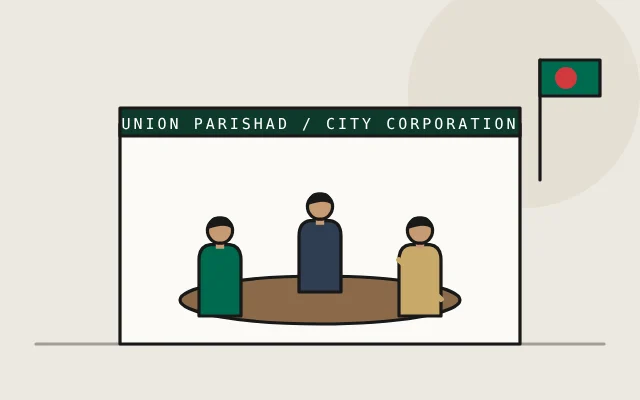
When a social, cultural or customary dispute arises between hill residents of a district, it must be raised before the local karbari or Mauza Headman, who settles it according to the customs and practices of the community concerned. The CHT Regulation, as amended in 2003, likewise leaves cases arising from the family laws and other customary laws of the hill peoples to the headmen and Circle Chiefs, outside the ordinary civil courts. Hearings are informal, conducted in the community's language, and often aim at reconciliation. Hill District Council regulations may set the procedure and fees.
Where: Karbari or Mauza Headman · Time: Weeks to a few months · Law: s.66(1) and (4) Rangamati Hill District Council Act 1989; s.8(4) Chittagong Hill Tracts Regulation 1900 (as amended by Act No. 38 of 2003) · Documents: Oral or written complaint, Witnesses from the community
Tip: Ask for the headman's decision to be written down and signed; you will need it for any appeal.
 Step 5 · Customary route
Appeal to the Circle Chief
A party dissatisfied with the karbari's or headman's decision can appeal to the Circle Chief: the Chakma Chief, the Bohmong Chief or the Mong Chief, depending on the circle in which the dispute arose. The Circle Chief hears the parties and decides according to the customary law of the community. Circle Chiefs also sit on the Land Commission for disputes in their circle and play a long-standing role in land administration under the 1900 Regulation, including recommendations on settlement and on the appointment of headmen.
Where: Circle Chief (Chakma, Bohmong or Mong Circle) · Time: 1-6 months · Law: s.66(2) Rangamati Hill District Council Act 1989; Chittagong Hill Tracts Regulation 1900 · Documents: Headman's decision, Grounds of appeal
Tip: Check which circle the land lies in before appealing. A Circle Chief can hear an appeal only for disputes in his own circle.
- Step 6 · Customary route
Final customary appeal to the Divisional Commissioner
From the Circle Chief's decision, a further appeal lies to the Divisional Commissioner of Chattogram, whose decision is final. Before deciding, the Commissioner must consult at least three wise persons from the community concerned, nominated by him. This is the end of the customary ladder; the ordinary civil courts do not hear appeals from it. Any challenge after that is by writ in the High Court Division on grounds of jurisdiction or fairness.
Where: Divisional Commissioner, Chattogram · Time: 2-6 months · Law: s.66(3) Rangamati Hill District Council Act 1989 · Documents: Circle Chief's decision, Appeal petition
Tip: Propose suitable community advisers in writing; the Commissioner must consult at least three before deciding.
 Step 7 · Land Commission route
Application to the Land Commission
The Land Commission was created to settle land disputes arising from the conflict and the 1997 Accord. Its jurisdiction, as amended in 2016, covers disputes over returned refugees' land and over illegally settled or occupied land, decided according to the region's laws, customs and practice; it can determine rights, restore possession and cancel settlements or occupation, including of fringe land, made contrary to them. The applicant writes the application in Bangla on plain paper and signs or thumb-prints it. It may be amended once, with permission, before disposal.
The Commission's functions are confined to the Chittagong Hill Tracts.
Where: CHT Land Dispute Resolution Commission · Time: Filing 1 day · Law: s.6(1)(a)-(c) and (2) CHT Land Dispute Resolution Commission Act 2001; s.9(1)-(2) CHT Land Dispute Resolution Commission Act 2001 · Documents: Application in Bangla on plain paper, signed or thumb-printed, Description and schedule of the land, Supporting documents
Tip: Keep a stamped copy of the application. With applications pending for years, proof of the filing date matters.
 Step 8 · Land Commission route
Respondents and notice
Every application must name as respondents the Deputy Commissioner of the district, the holder of the disputed settlement and, as far as the applicant knows, the person currently in possession. The Commission serves notice on each with a copy of the application. Anyone not named can apply to be added as a respondent, giving reasons, and the Commission may add him or her.
Some land is outside this jurisdiction: land acquired according to the region's laws, customs and practice, and the Kaptai hydro-electric project and Betbunia satellite station areas, apart from homesteads, fringe land, hillocks and hills.
Where: CHT Land Dispute Resolution Commission · Time: 1-3 months · Law: s.10(1)-(3) CHT Land Dispute Resolution Commission Act 2001; s.6(1)(c) proviso CHT Land Dispute Resolution Commission Act 2001 · Documents: Notices with copies of the application, Applications to be added as respondent
Tip: Name the current occupier even if you are unsure of his title; leaving him out invites delay when he applies to be added later.
 Step 9 · Land Commission route
Records, local inquiry and site visit
To do its work, the Commission can direct any government or statutory body to supply information, data and documents, and can order any of its officers to report after a local inquiry, inspection or survey; they must comply. The Commission, its Chairman or an authorised member may visit the disputed land. Applicants should expect records from the Deputy Commissioner's office, the survey and settlement authorities, the Hill District Council and the headman to be called for, and should press for a survey where boundaries are disputed.
Where: CHT Land Dispute Resolution Commission · Time: Months · Law: s.6(3)-(4) CHT Land Dispute Resolution Commission Act 2001 · Documents: Requisitioned records, Inquiry and survey reports, Site visit notes
Tip: Offer the Commission a sketch map with landmarks the headman recognises; formal maps of hill land are often incomplete.
 Step 10 · Land Commission route
Evidence under flexible rules
When exercising its core functions the Commission is not bound by the Evidence Act 1872 and may take and record evidence as the circumstances require. A witness may give evidence in a language other than Bangla, through an interpreter, with the evidence recorded in Bangla. The Commission can require anyone to appear, give evidence and produce documents, and need only record the substance of oral evidence. The Oaths Act applies. This flexibility suits disputes that rest on customary rights and oral history rather than registered deeds.
Where: CHT Land Dispute Resolution Commission · Time: Months · Law: s.11(1)-(5) CHT Land Dispute Resolution Commission Act 2001 · Documents: Witness statements, Documents produced on notice
Tip: Bring elders and neighbours who know the customary history of the land; their oral evidence is admissible and often decisive.
 Step 11 · Land Commission route
Composition, quorum and how decisions are made
The Commission consists of a retired Supreme Court judge as Chairman, the Chairman of the CHT Regional Council or a Council member he nominates, the Chairman of the relevant Hill District Council, the relevant Circle Chief or his nominee, and the Divisional Commissioner of Chattogram or a nominated Additional Divisional Commissioner. A meeting needs the Chairman and three other members. The Chairman tries to reach a unanimous decision with the members present; failing that, the decision of the majority present, including the Chairman, prevails. Every decision must be in writing.
The Commission's term is three years from the Chairman's appointment, extendable after consulting the Regional Council.
Where: CHT Land Dispute Resolution Commission · Time: Each sitting · Law: s.3(2) CHT Land Dispute Resolution Commission Act 2001 (as amended 2016); s.5 CHT Land Dispute Resolution Commission Act 2001; s.7(3)-(6) CHT Land Dispute Resolution Commission Act 2001 (as amended 2016) · Documents: Notice of meeting to all members, Minutes
Tip: The 2016 amendment replaced the Chairman's sole decision with a majority rule; older commentary describing a Chairman's casting decision is out of date.
 Step 12 · Land Commission route
Decision, finality and implementation
A Commission decision on a matter within its core functions is deemed a decree of a civil court. No appeal or revision lies against it to any court or authority, and its validity or correctness cannot be questioned. The Commission implements its decisions like civil court decrees, through its own staff or, where needed, through government authorities, all of which must comply. Contempt of the Commission is punishable as contempt of a civil court.
In practice, the latest reports seen describe more than 22,000 applications pending, rules still not finalised and meetings disrupted in 2025, so no hearing date can be predicted.
Where: CHT Land Dispute Resolution Commission · Time: Uncertain: rules and hearings still awaited · Law: s.16 CHT Land Dispute Resolution Commission Act 2001; s.17 CHT Land Dispute Resolution Commission Act 2001; s.19 CHT Land Dispute Resolution Commission Act 2001 · Documents: Written decision, Implementation order
Tip: While a Commission application is pending, keep evidence of possession up to date and record any new encroachment with the headman and police.
- Step 13 · Civil court route and records
Civil suit before the Joint District Judge
Since the 2003 amendment of the CHT Regulation, Rangamati, Khagrachari and Bandarban each form a separate civil jurisdiction under its own District Judge. The Joint District Judge, as the court of original jurisdiction, tries all civil cases according to the existing laws, customs and usages of the district, except cases arising from the family laws and other customary laws of the hill peoples, which belong to the headmen and Circle Chiefs.
A Chittagong Hill Tracts land dispute under ordinary law, such as a claim on a registered sale or a lease, is therefore filed here by plaint under the Code of Civil Procedure.
Where: Joint District Judge's Court (hill district) · Time: Filing 1-2 weeks · Law: s.8(3)-(4) Chittagong Hill Tracts Regulation 1900 (as amended by Act No. 38 of 2003); Order VII Code of Civil Procedure 1908; Court-fees Act 1870 · Documents: Plaint with schedule of land, Title and possession documents, Court fee, Council approval for any transfer relied on
Tip: Check first whether the dispute falls within the Commission's jurisdiction; a civil suit over a matter the Commission is set up to decide risks a jurisdictional objection.
- Step 14 · Civil court route and records
Trial, decree and the 2026 procedure changes
The suit follows the Code of Civil Procedure: summons, written statement, issues, evidence and judgment. Since the CPC (Amendment) Act 2026, evidence-in-chief may be given on affidavit, adjournments are capped, summons can be served by SMS and e-mail, and a decree can be executed within the original suit. The court applies the district's laws, customs and usages, so customary evidence and the headman's testimony remain relevant. A decree for possession or declaration of title is then executed through the same court with the help of the Deputy Commissioner's office.
Where: Joint District Judge's Court (hill district) · Time: 1-4 years · Law: Code of Civil Procedure 1908 (as amended by the CPC (Amendment) Act 2026); s.8(4) Chittagong Hill Tracts Regulation 1900 · Documents: Affidavits of evidence, Certified copies of records, Decree
Tip: Plead any custom you rely on expressly and call witnesses to prove it. A court will not assume a local custom that is not pleaded and proved.
 Step 15 · Civil court route and records
Updating records and possession after a decision
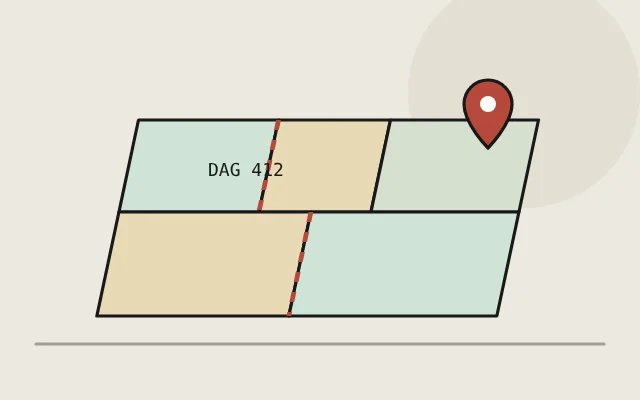
Whatever the forum, a decision has to be reflected in the land records and on the ground. The successful party applies to the Deputy Commissioner's or AC Land office to record the change and pays land development tax, which in the hill districts is collected through the Hill District Council. Where possession must be restored, the Commission or the civil court directs the officials concerned, and the Hill District Councils oversee the work of headmen, surveyors and the AC Land. Any later transfer of the land again needs the Council's prior approval.
Where: Deputy Commissioner's and AC Land offices (Rangamati, Khagrachari, Bandarban) · Time: 1-6 months · Law: s.64(2) and s.65 Rangamati Hill District Council Act 1989; s.17 CHT Land Dispute Resolution Commission Act 2001 · Documents: Decision or decree, Application to update records, Tax receipts
Tip: Ask for the headman's endorsement of the restored boundaries in writing once possession is delivered.
Walk through it from your side
Pick your side. The step-by-step journey above and the full-screen player will then show what you do at every stage.
Claimant
You want your right to the land recognised and possession restored or protected. You must show your claim through settlement papers, the headman's evidence, tax receipts and proof of customary use, and choose the right forum for the kind of dispute. Your biggest risk is filing in the wrong forum, and, before the Land Commission, years of delay while rules and hearings are awaited.
Identify which of the three roads applies
You explain the dispute to a lawyer familiar with CHT law or a community adviser: whether it concerns a returned refugee's land, an illegal settlement or dispossession, a customary matter between hill residents, or an ordinary civil claim. Bring a description of the land and its possession history.
Watch outChoosing the wrong forum can cost years; settle how the dispute is characterised before filing.
Gather records, settlement papers and the headman's evidence
You collect settlement (bandobosto) papers and kabuliyat, the headman's written statement, tax receipts, any record-of-rights entry, evidence of jum or homestead use and, if you are a returned refugee, the documents issued on your return.
Watch outAsk the headman for a written statement early; headmen change and memories of boundaries fade.
Check the Hill District Council approval rule
You check whether any transfer or settlement of the land was made with the Hill District Council's prior approval, as section 64 requires, and whether the land falls within an exception such as a reserved forest or land recorded in the Government's name.
Watch outA transfer made without approval may support your challenge, so obtain the Council's records.
Customary dispute before the karbari or headman
For a social, cultural or customary dispute between hill residents, you raise it before the local karbari or Mauza Headman, with your witnesses from the community. Ask for the decision to be written down and signed.
Watch outWithout a written decision, an appeal to the Circle Chief is difficult.
Appeal to the Circle Chief
If dissatisfied, you appeal to the Circle Chief of the circle where the dispute arose, with the headman's decision and your grounds of appeal.
Watch outCheck which circle the land lies in; a Circle Chief hears appeals only for his own circle.
Final customary appeal to the Divisional Commissioner
From the Circle Chief's decision you may appeal to the Divisional Commissioner of Chattogram, whose decision is final. You can propose suitable community advisers in writing for the Commissioner to consult.
Watch outThis is the end of the customary ladder; afterwards only a writ on jurisdiction or fairness is possible.
Application to the Land Commission
For a dispute over a returned refugee's land or illegal settlement or dispossession, you write an application in Bangla on plain paper, sign or thumb-print it, describe the land and attach your documents, and file it with the Land Commission. Keep a stamped copy.
Watch outWith applications pending for years, proof of your filing date matters.
Respondents and notice
You name as respondents the Deputy Commissioner, the holder of the disputed settlement and, as far as you know, the current occupier. Make sure their addresses are correct so notices can be served.
Watch outLeaving out the current occupier invites delay when he applies to be added later.
Records, local inquiry and site visit
You support the Commission's inquiry by pointing to the records it should call for and offering a sketch map with landmarks the headman recognises. Press for a survey where boundaries are disputed, and attend any site visit.
Watch outFormal maps of hill land are often incomplete; a clear sketch map helps.
Evidence under flexible rules
You bring elders and neighbours who know the customary history of the land, and any documents you hold. Witnesses may speak in their own language through an interpreter.
Watch outOral evidence of custom is admissible; prepare your witnesses on dates and boundaries.
Composition, quorum and how decisions are made
You follow the Commission's sittings and check that decisions are taken by a lawful quorum of the Chairman and three members, by unanimity or a majority including the Chairman, and are recorded in writing.
Watch outA decision taken without a lawful quorum or majority may be open to a writ.
Decision, finality and implementation
If the Commission decides in your favour, you seek implementation through its officers or the government authorities, which must comply. While the application is pending, keep evidence of your possession or dispossession up to date.
Watch outNo appeal or revision lies against a Commission decision; only a writ on narrow grounds remains.
Civil suit before the Joint District Judge
For an ordinary civil claim, such as one based on a registered sale or lease, you file a plaint before the Joint District Judge of the hill district, with the schedule of land, title documents, any Council approval and the court fee.
Watch outCheck first whether the dispute falls within the Commission's jurisdiction, or you risk a jurisdictional objection.
Trial, decree and the 2026 procedure changes
You give evidence, which may now be on affidavit, and prove any custom you rely on with witnesses such as the headman. Attend every date, as adjournments are capped.
Watch outA custom that is not pleaded and proved will not be assumed by the court.
Updating records and possession after a decision
After a favourable decision, you apply to the Deputy Commissioner's or AC Land office to record the change, pay land development tax through the Hill District Council and ask for the headman's written endorsement of the restored boundaries.
Watch outAny later transfer of the land will again need the Council's prior approval.
Respondent / occupier
You want your possession, settlement or purchase upheld as lawful under the region's laws, customs and practice. You must produce your settlement or transfer papers, any Hill District Council approval and evidence of your occupation. Your biggest risk is a transfer or settlement made without the Council's prior approval, or contrary to custom, which the Commission can cancel.
Identify which of the three roads applies
If you hear that your possession or settlement may be challenged, take advice on which forum could hear the dispute and gather your settlement papers, any Council approval and evidence of how long and on what basis you have occupied the land.
Watch outDo not assume a registered deed alone protects you; the Council's prior approval and customary rights also matter.
Gather records, settlement papers and the headman's evidence
You assemble your own records: the settlement or lease, the basis on which it was granted, tax receipts, improvements made and witnesses to your possession. Ask the headman for a statement of what he knows.
Watch outGaps in how a settlement was granted are a common ground for cancellation; check your papers carefully.
Check the Hill District Council approval rule
If you bought, leased or were settled on the land, you confirm that the Council's prior approval was obtained and keep a copy. If it was not, take advice on regularising the position where the law allows.
Watch outA missing Council approval is the commonest title defect in the hill districts.
Customary dispute before the karbari or headman
You attend before the karbari or headman, present your account and witnesses, and consider any reconciliation proposed. Ask for a written, signed decision whatever the outcome.
Watch outRefusing to take part does not stop the headman deciding; put your side forward.
Appeal to the Circle Chief
If the other side appeals, you respond before the Circle Chief with the headman's decision and your witnesses. If you lost before the headman, you may appeal yourself.
Watch outKeep copies of everything filed; you will need them if the matter goes further.
Final customary appeal to the Divisional Commissioner
You respond to the appeal before the Divisional Commissioner, or appeal yourself if you lost before the Circle Chief. You may also propose community advisers for the Commissioner to consult.
Watch outThe Commissioner must consult at least three community wise persons; if he does not, that may ground a writ.
Application to the Land Commission
You may learn that an application has been filed concerning land you hold. Take advice on whether the dispute falls within the Commission's jurisdiction and preserve evidence of your settlement and possession.
Watch outAcquired land and the Kaptai and Betbunia areas, apart from homesteads, fringe land, hillocks and hills, are outside the Commission's jurisdiction.
Respondents and notice
On receiving notice, you prepare your reply with your settlement papers and evidence of possession. If you have an interest but were not named, you can apply, giving reasons, to be added as a respondent.
Watch outIf you are not named but hold an interest, apply promptly to be added rather than waiting for a decision against the land.
Records, local inquiry and site visit
You cooperate with any local inquiry, inspection or survey, attend the site visit and point out the boundaries and improvements you rely on. Make sure the records of your settlement are before the Commission.
Watch outObstructing an inquiry or survey is likely to count against you, and contempt of the Commission is punishable as contempt of a civil court.
Evidence under flexible rules
You present your witnesses and documents on the basis and length of your possession and the grant of your settlement, and question the other side's account of custom.
Watch outThe Commission is not bound by the Evidence Act, so do not rely on technical objections alone.
Composition, quorum and how decisions are made
You follow the sittings in the same way and keep a record of who attended and how any decision was taken.
Watch outNote any irregularity in composition or procedure at the time; it is the main ground for any later writ.
Decision, finality and implementation
If the decision goes against you, you comply with implementation or consider a writ on narrow grounds such as lack of jurisdiction or denial of a hearing. While the application is pending, avoid new construction or transfers that could complicate matters.
Watch outResisting implementation can be punished as contempt of a civil court.
Civil suit before the Joint District Judge
You are served with the summons and file a written statement setting out your title or possession and any objection that the dispute belongs to the Commission or the customary forums.
Watch outRaise any objection to jurisdiction at the earliest stage, in your written statement.
Trial, decree and the 2026 procedure changes
You give your evidence, cross-examine the plaintiff's witnesses and prove any custom or settlement you rely on. Keep your contact details current, as summons can now be served by SMS and e-mail.
Watch outMissing a date can lead to the case proceeding without you.
Updating records and possession after a decision
If the decision goes against you, you hand over possession as directed and cooperate with the record changes, or pursue any appeal, revision or writ available within time.
Watch outRemaining in possession against a decree or Commission decision can lead to enforcement and contempt proceedings.
What if…? How the Chittagong Hill Tracts land dispute can change course
Choose a scenario. The map animates the route up the hierarchy and, where a case is sent back, down to the lower court and up again.
What if a party appeals the Joint District Judge's decree?
- 1District Judge's Court (hill district)
Appeal to the District Judge of the hill district
The CHT Regulation provides that an appeal against any order, judgment or decree of the Joint District Judge lies to the District Judge of that hill district. The appeal rehears facts and law on the record, and under the 2026 CPC amendments the appellate court is expected to decide the case itself where the record is sufficient, rather than remanding. Ordinary appeal periods under the Limitation Act apply.
1-2 yearss.8(5) Chittagong Hill Tracts Regulation 1900 (as amended by Act No. 38 of 2003)Order XLI Code of Civil Procedure 1908
Where it ends up: The District Judge affirms, varies or reverses the decree; further challenge lies only by revision in the High Court Division.
What if the appellate decision is wrong in law?
- 1High Court Division
Civil revision in the High Court Division
There is no second appeal. A party aggrieved by the District Judge's appellate decree can apply to the High Court Division for civil revision under section 115 of the Code. The High Court Division asks whether an error of law has resulted in an erroneous decision causing a failure of justice, including a failure to apply the district's customs and usages where the Regulation requires it.
1-3 yearss.115(1) Code of Civil Procedure 1908
Where it ends up: The Rule is discharged or made absolute and the decree corrected or set aside.
Can a forum reconsider its own decision?
- 1High Court Division
Review: limited and mostly in the courts
The 2001 Act gives the Land Commission no express power to review its decisions, and its decisions cannot be questioned by appeal or revision. In the civil courts, a party can seek review under Order XLVII of the Code, including review of a High Court Division revisional judgment, on the narrow grounds of new evidence, an error apparent on the record or another sufficient reason. The Appellate Division reviews its own judgments under Article 105.
3-12 monthss.16 CHT Land Dispute Resolution Commission Act 2001s.114 and Order XLVII rule 1 Code of Civil Procedure 1908Article 105 Constitution of Bangladesh
Where it ends up: Review is exceptional; most corrections come through appeal, revision or writ.
Can a Land Commission decision be challenged, or referred to a higher court?
- 1High Court Division
No appeal, revision or reference: writ only
Section 16 bars any appeal or revision against a Commission decision to any court or authority and forbids questioning its validity, and the Act provides no reference procedure. The High Court Division's constitutional writ jurisdiction under Article 102 cannot be removed by statute, so a party can still petition on narrow grounds such as acting outside jurisdiction, a decision not taken by a lawful quorum or majority, or denial of a hearing. The same route applies to the Divisional Commissioner's final customary decision.
1-3 yearss.16 CHT Land Dispute Resolution Commission Act 2001s.7(3)-(5) CHT Land Dispute Resolution Commission Act 2001Article 102 Constitution of Bangladesh
Where it ends up: The writ is discharged, leaving the decision final, or the decision is declared to be without lawful authority.
What if the High Court Division sends the suit back?
- 1High Court Division
High Court Division remands the suit
Where the courts below failed to take essential evidence, such as the headman's testimony on customary boundaries or a survey report, the High Court Division may set aside the decrees in revision and send the suit back to the Joint District Judge. Remand is a last resort, used only where the record cannot support a decision; because the remand order is the High Court Division's own, it can be challenged only by a petition for leave to appeal to the Appellate Division.
Order on the day of judgments.115(1) Code of Civil Procedure 1908CPC (Amendment) Act 2026 (appellate courts to decide where the record suffices) - 2Joint District Judge's Court (hill district)
Retrial and a new decree
The Joint District Judge restores the suit, takes the further evidence or decides the point as directed, and passes a fresh decree. That decree carries a fresh appeal to the District Judge, and from there the case can return to the High Court Division in revision.
6-18 monthss.8(4)-(5) Chittagong Hill Tracts Regulation 1900Order XX Code of Civil Procedure 1908
Where it ends up: The suit returns to the Joint District Judge, is decided again and may climb back through the District Judge to the High Court Division.
Can the case reach the Appellate Division?
- 1Appellate Division of the Supreme Court
Civil petition for leave to appeal
Against the High Court Division's judgment, in revision or in a writ against the Commission or a customary decision, the aggrieved party can file a civil petition for leave to appeal in the Appellate Division. Leave is granted where a substantial question of law arises, such as the reach of the Commission's jurisdiction or how the CHT Regulation interacts with general land law. If leave is granted, the appeal is heard on the record.
1-3 yearsArticle 103 Constitution of BangladeshSupreme Court of Bangladesh (Appellate Division) Rules 1988
Where it ends up: The Appellate Division's decision is final and binds all courts under Article 111.
How the Chittagong Hill Tracts land dispute moves up the court hierarchy
A Chittagong Hill Tracts land dispute has three separate ladders. The customary ladder runs from the karbari or Mauza Headman to the Circle Chief and then to the Divisional Commissioner of Chattogram, whose decision, taken after consulting at least three community elders, is final.
The Land Commission ladder has one rung: the Commission, chaired by a retired Supreme Court judge with the Regional Council, Hill District Council, Circle Chief and Divisional Commissioner represented, decides disputes over refugees' land and illegal settlement or dispossession, and its decision is deemed a civil court decree with no appeal or revision.
The civil ladder runs from the Joint District Judge of each hill district, who has no fixed upper pecuniary limit under the Regulation, to the District Judge on appeal, with facts and law reheard, and then to the High Court Division in revision on law only. The High Court Division can review the customary and Commission decisions only by writ, and the Appellate Division hears appeals by leave.
- Appellate DivisionAppellate Division of the Supreme Court
- High Court DivisionHigh Court Division
- Appellate levelDivisional Commissioner, Chattogram · District Judge's Court (hill district)
- First instanceCircle Chief (Chakma, Bohmong or Mong Circle) · CHT Land Dispute Resolution Commission · Joint District Judge's Court (hill district)
- Start · outside courtDeputy Commissioner's and AC Land offices (Rangamati, Khagrachari, Bandarban) · Karbari or Mauza Headman
Where your case is heard
Addresses are for Dhaka. Every district has equivalent courts at its own district judgeship.
Supreme Court of Bangladesh (Appellate Division and High Court Division)
Supreme Court of Bangladesh, Shahbag, Ramna, Dhaka-1000Hears appeals, revisions, references, writ petitions under Article 102, company matters and death references (High Court Division), and appeals by leave from the High Court Division (Appellate Division).
Both Divisions sit in the Supreme Court complex; many High Court Division benches sit in the Annex Building. Check the daily cause list for the bench and court room. Postal contact is the Registrar General, Supreme Court of Bangladesh, Ramna, Dhaka-1000.
Office of the Divisional Commissioner, Chattogram Division
Chattogram (exact address not confirmed)The senior revenue and administrative office for Chattogram Division, which hears certain revenue and land appeals and revisions, including some from the hill districts.
Address could not be confirmed from an official source. Check the current address before visiting.
District Judge and Joint District Judge Courts, Chittagong Hill Tracts
District court premises at Rangamati, Khagrachari and Bandarban (no single address)Civil courts of the three hill districts, which hear civil suits and appeals within their jurisdiction, subject to the special laws that apply to the hill tracts.
File in the court of the district where the land lies. Some land disputes in the hill districts belong to the Land Dispute Resolution Commission rather than the civil courts, so take advice on the right forum first.
Circle Chief (Chakma, Bohmong or Mong Circle)
Where this happens depends on your district or the office concerned. Ask us for the exact courtroom and address.
Chittagong Hill Tracts Land Dispute Resolution Commission
Khagrachari (exact address not confirmed)Decides disputes over land in the three hill districts under the Chittagong Hill Tracts Land Dispute Resolution Commission Act 2001, applying the laws, customs and practices of the hill tracts.
Address could not be confirmed from an official source. The head office is at the Khagrachari district headquarters, with branch offices in the other hill districts where they have been set up. Check the current address before visiting.
Deputy Commissioner and AC (Land) offices, Chittagong Hill Tracts
Rangamati, Khagrachari and Bandarban district headquarters and upazilas (no single address)Handle land administration, revenue and records in the three hill districts, alongside the hill district councils and the traditional mouza headmen and circle chiefs.
Go to the office for the district and upazila where the land lies. Land rules in the hill districts differ from the rest of the country, so ask the office which authority deals with the particular matter.
Karbari or Mauza Headman
Where this happens depends on your district or the office concerned. Ask us for the exact courtroom and address.
How long each stage takes
These are indicative ranges based on typical Dhaka practice. Adjournments, case backlogs and appeals can stretch them.
Documents checklist and key terms
Tick off what you have. Your ticks stay saved in this browser. Bring the list to your first meeting with your lawyer.
- CHT Land Dispute Resolution Commission
- The body created by the 2001 Act, following the 1997 Accord, to decide land disputes in the hill districts according to their laws, customs and practice.
- Mauza Headman
- The traditional head of a mauza (revenue unit) who assists in land administration and settles customary disputes.
- Karbari
- The traditional head of a hill village (para), the first forum for customary disputes.
- Circle Chief
- The traditional chief of the Chakma, Bohmong or Mong Circle, who hears customary appeals and sits on the Land Commission for disputes in his circle.
- Fringe land
- Land around Kaptai Lake exposed when the water level falls, often cultivated seasonally and the subject of settlement disputes.
- Jum
- Shifting hill cultivation, practised under customary rights that may not appear in formal records.
- Hill District Council approval
- The prior approval required by s.64 of the 1989 Acts for most settlements and transfers of land in a hill district.
- CHT Accord
- The agreement of 2 December 1997 between the Government and the Parbatya Chattagram Jana Samhati Samiti, on which the Commission is based.
Chittagong Hill Tracts land dispute: common questions
Which forum hears a Chittagong Hill Tracts land dispute?
Who sits on the Land Commission?
How do I apply to the Land Commission?
Can I appeal a Land Commission decision?
Has the Land Commission started deciding cases?
Do the ordinary civil courts work in the hill districts?
Do I need permission to buy land in the hill districts?
How long does a Chittagong Hill Tracts land dispute take?
Law and sources
- Chittagong Hill Tracts Land Dispute Resolution Commission Act 2001 (Act No. 53 of 2001, as amended 2016) — Laws of Bangladesh
- Chittagong Hill-tracts Regulation 1900 (as amended by Act No. 38 of 2003) — Laws of Bangladesh
- Rangamati Hill District Council Act 1989, ss.64-66 — Laws of Bangladesh
- Chittagong Hill Tracts Regional Council Act 1998 — Laws of Bangladesh
- Family Courts Act 2023, s.1(2) (not applicable in the three hill districts) — Laws of Bangladesh
- The Daily Star, 4 August 2019 — Land disputes in CHT: 22,000 complaints gather dust
- Hill Voice, 28 November 2024 — Current status of implementation of the CHT Accord of 1997: Part 9
- bdnews24 (Bangla), 17 October 2025 — Land Commission meeting postponed
This Case Journey is a general guide to procedure in Bangladesh as of October 2026. It is not legal advice. Procedure, fees and time limits change, and every case turns on its own facts. Timelines are indicative. Speak to a lawyer about your own matter.
Run this case from outside Bangladesh
You can usually start and run this case without travelling. You sign a power of attorney abroad, the Bangladesh High Commission or Embassy attests it, and your attorney and lawyer act for you in Dhaka. Some steps, such as giving evidence in person, may still need you or a commission. See how a case runs through a power of attorney →
Want to know where your case stands?
Book a consultation. A TRW lawyer will place your matter on this map, explain the next step and the realistic timeline, and tell you what to prepare.











