
Mortgage suit in Bangladesh: the full journey, step by step
A mortgage suit in Bangladesh is how a mortgagor gets land back by paying off the debt (redemption), or how a private mortgagee enforces the security by sale or, for some mortgages, by foreclosure, under the Transfer of Property Act 1882 and Order XXXIV of the Code of Civil Procedure.
The court first passes a preliminary decree fixing the amount due and a date to pay, then a final decree that ends the right to redeem, orders a court sale or returns the property. Banks and financial institutions use the Artha Rin Adalat instead, and usufructuary mortgages of agricultural land are capped at seven years by the State Acquisition and Tenancy Act 1950.
- Where it starts
- The civil court where the mortgaged property lies, chosen by the amount secured or claimed: Civil Judge (up to Tk 15…
- Main law
- Transfer of Property Act 1882 ss.58-60, 62, 67-69, 76, 83, 91-92, 96 and 100; Code of Civil Procedure 1908 s.97 and Order XXXIV…
- Typical duration
- Contested suit to preliminary decree: roughly 1.5-4 years; final decree and sale: a further 6-24 months; appeal and…
- Who can file
- The mortgagor or anyone else entitled to redeem (a person with an interest in the property, a surety, or certain…
Mortgage suit in Bangladesh: walk through every stage
Press next, use your arrow keys or tap a court on the map. The gold marker shows where your case is, and the green trail shows the route it has taken. For the immersive version, play it full screen.
Read every step as text
 Step 1 · Before filing
Identify the type of mortgage
Everything in a mortgage suit in Bangladesh depends on the type of mortgage. The Transfer of Property Act recognises six forms: simple mortgage, mortgage by conditional sale, usufructuary mortgage, English mortgage, mortgage by deposit of title deeds (in Dhaka, Narayanganj, Chattogram and notified towns) and anomalous mortgage. The type decides the remedy. Only a mortgagee by conditional sale, or under an anomalous mortgage that allows it, can sue for foreclosure. A usufructuary mortgagee cannot sue for sale or foreclosure as such. A simple, English or title-deed mortgagee sues for sale.
Where: Lawyer's chamber · Time: 1-2 weeks · Law: s.58(a)-(g) Transfer of Property Act 1882; s.67 and s.67(a) Transfer of Property Act 1882; s.96 Transfer of Property Act 1882 (title-deed mortgages) · Documents: Mortgage deed (certified copy), Title deeds of the mortgaged property, Loan and repayment records
Tip: Labels in the deed are not decisive. A 'sale with a promise to reconvey' may in law be a mortgage by conditional sale, and for agricultural holdings may be deemed a usufructuary mortgage.
 Step 2 · Before filing
Check that the mortgage was validly made
Where the principal secured is Tk 100 or more, a mortgage other than one by deposit of title deeds must be made by a registered instrument signed by the mortgagor and attested by at least two witnesses. A title-deed mortgage in favour of the Government, a scheduled bank or a financial institution must also be registered, except under the tripartite flat-financing arrangement the Act describes. A mortgage by conditional sale counts as a mortgage only if the condition is written into the same document.
A defective mortgage may leave the lender with only an unsecured money claim.
Where: Lawyer's chamber · Time: 1-3 weeks · Law: s.59 Transfer of Property Act 1882 (as amended); s.58(c) proviso Transfer of Property Act 1882 · Documents: Registered mortgage deed with attestation, Sub-registry search results, Receipts for the loan advanced
 Step 3 · Before filing
Work out limitation and the amount due
Limitation depends on the type of mortgage. A mortgagor's suit to redeem or recover possession may be filed within sixty years from when the right to redeem accrues. A mortgagee's suit for foreclosure or sale also has sixty years from when the money becomes due, but the Privy Council held that this applies to mortgages carrying a right to foreclose or sell in the alternative, such as an English mortgage.
A simple mortgagee's suit for sale falls under the twelve-year article for money charged on immovable property, and the Act expressly treats advances on a deposit of title deeds the same way. A personal claim on the covenant to pay has shorter periods. The lawyer also prepares an account of principal, interest and payments.
Where: Lawyer's chamber · Time: 1-2 weeks · Law: Limitation Act 1908, First Schedule art. 147 (sixty years, foreclosure or sale); Limitation Act 1908, First Schedule art. 148 (sixty years, redemption); Limitation Act 1908, First Schedule art. 132 and Explanation (c) (twelve years, money charged on immovable property, including title-deed mortgages); Limitation Act 1908, First Schedule art. 116; Vasudeva Mudaliar v Srinivasa Pillai (1907, Privy Council): simple mortgage sale suits under art. 132 · Documents: Statement of account, Interest calculation, Limitation note
Tip: Do not assume sixty years. For a simple mortgage or a mortgage by deposit of title deeds, count twelve years from when the money became due.
 Step 4 · Before filing
Tender, demand or deposit in court
Once the principal has become due, the mortgagor may pay or tender the mortgage money and require the mortgagee to return the deed and documents, give back possession if he holds it, and re-transfer the property or register an acknowledgement that the mortgage is discharged. If the mortgagee refuses, the mortgagor can deposit the amount due in the court where a redemption suit could be filed. The court notifies the mortgagee, who can withdraw it on depositing the title documents. A mortgagee intending to sue usually sends a written demand first.
Where: Lawyer's chamber · Time: 2-6 weeks · Law: s.60 Transfer of Property Act 1882; s.83 Transfer of Property Act 1882; s.62 Transfer of Property Act 1882 (usufructuary mortgages) · Documents: Written tender or demand, Proof of delivery, Deposit application and challan (if depositing)
Tip: A recorded tender of the full amount is strong evidence later. Keep the bank draft or deposit receipt.
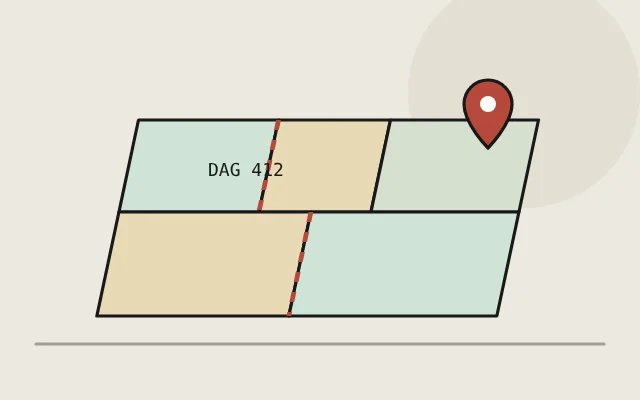 Step 5 · Before filing
Khai-khalashi land: restoration without a suit
For agricultural holdings, the State Acquisition and Tenancy Act 1950 allows only a complete usufructuary mortgage, for at most seven years and registered, and any other usufructuary mortgage by a raiyat is void. An out-and-out sale with an agreement to reconvey, or any transfer giving possession and usufruct for a fixed period, is deemed such a mortgage. If the mortgagee refuses to restore the land after the term, or blocks early redemption, the mortgagor can apply to the Subdivisional Magistrate or the officer the Government has authorised, who orders restoration and can evict the mortgagee.
Where: Land office: AC (Land) and the officer authorised under s.95 SAT Act · Time: 2-6 months · Law: s.95(1)-(5) State Acquisition and Tenancy Act 1950; s.95A State Acquisition and Tenancy Act 1950 · Documents: Application for restoration, Registered mortgage or reconveyance deed, Khatian and tax receipts
Tip: Ask the local land office which officer is currently authorised under s.95(4); the original 'Subdivisional Magistrate' post no longer exists.
 Step 6 · Filing and pleadings
File the mortgage suit
The plaintiff files the mortgage suit in Bangladesh in the civil court where the property lies, chosen by value: a Civil Judge (formerly Assistant Judge) up to Tk 15 lakh, a Senior Civil Judge up to Tk 25 lakh and a Joint District Judge above that. Everyone with an interest in the mortgage security or in the right of redemption must be joined, such as co-owners, heirs, subsequent mortgagees and purchasers. The plaint states the mortgage, the amount claimed or tendered and the relief: redemption, foreclosure or sale.
Since the CPC amendments in force from 8 May 2025 (now Act XXXVI of 2026), the plaint facts are proved by affidavit.
Where: Civil court: Civil Judge, Senior Civil Judge or Joint District Judge · Time: 2-4 weeks to draft and file · Law: Order XXXIV rule 1 CPC; s.19 Civil Courts Act 1887 (as amended 2021); s.7(i) and s.7(ix) Court-fees Act 1870; s.26(2) and Order VII rule 1 CPC (as amended by Act XXXVI of 2026) · Documents: Plaint with affidavit, Mortgage deed, Statement of account, Court fee
Tip: Missing a subsequent mortgagee or purchaser is a classic error. The decree will not bind a necessary party who was left out.
 Step 7 · Filing and pleadings
Summons, written statement and interim orders
Summons can now be served by SMS and electronic messaging as well as by post. The defendant files a written statement, commonly disputing the amount due, the interest rate, the validity or registration of the mortgage, or whether the transaction was really a sale. Where the property is at risk, the court can appoint a receiver to collect rents or grant an injunction against waste or transfer. A transfer made while the suit is pending cannot defeat the eventual decree.
Where: Civil court: Civil Judge, Senior Civil Judge or Joint District Judge · Time: 2-5 months · Law: Order V rule 9(3) CPC (as amended 2026); Order VIII, Order XXXIX and Order XL CPC; s.52 Transfer of Property Act 1882 · Documents: Written statement, Receiver or injunction application (if needed)
 Step 8 · Trial and preliminary decree
Issues and mediation
The court frames issues, such as the nature of the mortgage, the amount due, whether the right to redeem survives, and whether the plaintiff is entitled to sale or foreclosure. It may refer the suit to mediation under section 89A. Many mortgage disputes are really about the figure, so mediation often ends with a compromise decree fixing a payment schedule, with sale or foreclosure only on default. A mortgagee in possession who has taken rents and profits must account for them, which often narrows the gap.
Where: Civil court: Civil Judge, Senior Civil Judge or Joint District Judge · Time: 2-6 months · Law: Order XIV CPC; s.89A CPC; Order XXIII rule 3 CPC · Documents: Issues framed, Mediation report or compromise petition
 Step 9 · Trial and preliminary decree
Evidence and taking accounts
Examination-in-chief is now given on affidavit, followed by cross-examination. The parties prove the deed, the advance and the repayments. A mortgagee who took possession must show how the property was managed and what rents and profits were collected, because the law requires him to manage it prudently, collect the income and apply it to the mortgage. Where the figures are complex, the court can appoint a commissioner to examine the accounts. The adjournment cap, cut from six to four by the 2026 amendments, limits delays.
Where: Civil court: Civil Judge, Senior Civil Judge or Joint District Judge · Time: 6-18 months · Law: Order XVIII rule 4A CPC (inserted by Act XXXVI of 2026); s.76 Transfer of Property Act 1882; Order XXVI rules 11-12 CPC; Order XVII rule 1(3) CPC (as amended 2026) · Documents: Affidavits in chief, Account books and receipts, Commissioner's account report
 Step 10 · Trial and preliminary decree
The preliminary decree
If the plaintiff succeeds, the court first passes a preliminary decree. It orders an account of principal, interest and costs due on the decree date, or declares that amount, and fixes a date, within six months of confirming the account or declaring the amount, by which it must be paid into court. In a redemption suit the mortgagor pays; in a foreclosure or sale suit the mortgagor may pay to save the property. The court can extend the date for good cause before the final decree.
A party who does not appeal the preliminary decree cannot challenge it later.
Where: Civil court: Civil Judge, Senior Civil Judge or Joint District Judge · Time: 1-3 months after arguments · Law: Order XXXIV rules 2, 4 and 7 CPC; s.97 Code of Civil Procedure 1908 · Documents: Preliminary decree, Account confirmed by the court
Tip: Diarise the payment date in the preliminary decree. Missing it, without applying for extension, is the most common way borrowers lose their property.
 Step 11 · Final decree
Payment within the time fixed
If the amount due, with later costs and interest, is paid into court by the date fixed, the court on application passes a final decree, or an order, directing the mortgagee to return the mortgage deed and documents, to re-transfer the property free of the mortgage if required, and to put the mortgagor in possession if necessary. This ends the mortgage. Where a sale had already taken place, the mortgagor must also deposit five per cent of the purchase money as compensation to the purchaser before the order is made.
Where: Civil court: Civil Judge, Senior Civil Judge or Joint District Judge · Time: 1-3 months · Law: Order XXXIV rules 3(1), 5(1)-(2) and 8(1)-(2) CPC · Documents: Challan for payment into court, Application for final decree
- Step 12 · Final decree
Final decree on default
If payment is not made, the decree-holder applies for a final decree. In a foreclosure suit, the court declares the mortgagor and everyone claiming under him debarred from all right to redeem and, if necessary, orders possession, and all liability under the mortgage is then discharged. In a sale suit, the court orders the property, or enough of it, to be sold and the proceeds applied to the debt, with any surplus paid to the mortgagor. In a redemption suit, default leads to sale or foreclosure depending on the mortgage type.
Where: Civil court: Civil Judge, Senior Civil Judge or Joint District Judge · Time: 2-6 months · Law: Order XXXIV rules 3(2)-(3), 5(3) and 8(3) CPC · Documents: Application for final decree, Final decree
 Step 13 · Sale, balance and possession
Court sale of the mortgaged property
A final decree for sale is carried out through the court's execution machinery. The court issues a sale proclamation stating the property, its encumbrances and other material facts, and the sale is held by public auction. Under the 2026 amendments execution can be applied for in the record of the suit itself. The judgment-debtor can still stop the sale by paying the full amount before the sale is confirmed.
Outside the narrow cases where section 69 of the Transfer of Property Act allows a sale without the court, a private mortgagee must use this court sale.
Where: Civil court: Civil Judge, Senior Civil Judge or Joint District Judge · Time: 3-12 months · Law: Order XXI rules 64-73 CPC; Order XXI rule 104(1) CPC (inserted 2026); s.69 Transfer of Property Act 1882 · Documents: Execution application, Sale proclamation, Valuation report
- Step 14 · Sale, balance and possession
Balance decree if the sale falls short
If the net sale proceeds do not cover what is due, the mortgagee can apply for a decree for the balance, but only if the balance is legally recoverable from the mortgagor personally, for example under a covenant to pay in a simple mortgage. That balance decree is enforced like any money decree. Under the 2026 amendments the court can detain the judgment-debtor in civil prison for up to six months, releasing him if a quarter of the amount is deposited with a bond for the rest within sixty days.
Where: Civil court: Civil Judge, Senior Civil Judge or Joint District Judge · Time: 2-6 months · Law: Order XXXIV rule 6 CPC; s.68 Transfer of Property Act 1882; Order XXI rule 30A CPC (inserted 2026) · Documents: Application for balance decree, Sale accounts
 Step 15 · Sale, balance and possession
Sale certificate and possession
Once the sale is confirmed, the court grants the purchaser a sale certificate, which serves as the purchaser's title document, and delivers possession. Where the judgment-debtor or anyone claiming under him resists, the court can appoint a person and, if necessary, direct the police to put the purchaser in possession. In a foreclosure, the mortgagee obtains possession under the final decree in the same way. A redeeming mortgagor obtains possession and the return of documents.
Where: Civil court: Civil Judge, Senior Civil Judge or Joint District Judge · Time: 1-6 months · Law: Order XXI rules 94-95 CPC; Order XXI rule 104(2) CPC (inserted 2026); s.94A CPC (inserted 2026) · Documents: Sale certificate, Writ of delivery of possession
- Step 16 · Sale, balance and possession
Update the land records
The final step is to bring the land records into line with the result. A purchaser at a court sale, a foreclosing mortgagee or a redeeming mortgagor applies to the Assistant Commissioner (Land) for mutation, with the sale certificate or certified decree, so that the khatian and land development tax record show the right holder. A redeeming mortgagor should also have the registered acknowledgement or re-transfer noted, so that the mortgage no longer appears as a live encumbrance on searches.
Where: Land office: AC (Land) and the officer authorised under s.95 SAT Act · Time: 1-3 months · Law: s.143 State Acquisition and Tenancy Act 1950; s.60(c) Transfer of Property Act 1882 · Documents: Mutation application, Sale certificate or certified decree, Re-transfer deed or acknowledgement (on redemption)
Walk through it from your side
Pick your side. The step-by-step journey above and the full-screen player will then show what you do at every stage.
Plaintiff
As mortgagor you want the property back free of the mortgage on paying what is truly due; as mortgagee you want the debt paid or the security enforced by sale or, for some mortgages, foreclosure. Either way you must prove the mortgage, its type and the account, and join everyone with an interest in the property. Your biggest risks are using the wrong remedy for the mortgage type and the wrong limitation article, which can be twelve years rather than sixty.
Identify the type of mortgage
You take your lawyer the mortgage deed, any agreement to reconvey and the title documents. Together you identify the type of mortgage, since that decides whether you can redeem, sue for sale or foreclose, and whether a bank lender means the Artha Rin Adalat instead.
Watch outThe label in the deed is not decisive; a 'sale with a promise to reconvey' may in law be a mortgage.
Check that the mortgage was validly made
Your lawyer checks that the mortgage was made by a registered deed signed by the mortgagor and attested by two witnesses where required, and that any condition to reconvey is in the same document.
Watch outA defective mortgage may leave a lender with only an unsecured money claim, so check this before choosing reliefs.
Work out limitation and the amount due
Your lawyer works out which limitation article applies to your mortgage and prepares a clear account of principal, interest and payments from the deed and receipts.
Watch outDo not assume sixty years; a simple or title-deed mortgagee's sale suit is subject to twelve years.
Tender, demand or deposit in court
As mortgagor, once the principal is due you tender the full amount and ask for the deed, possession and a re-transfer or registered acknowledgement; if refused, you can deposit the money in court. As mortgagee, you send a written demand before suing.
Watch outKeep the bank draft or deposit receipt; a recorded tender is strong evidence later.
Khai-khalashi land: restoration without a suit
For an agricultural khai-khalashi mortgage, once the term (at most seven years) ends, or for early redemption, you apply to the authorised revenue officer for restoration of the land if the mortgagee refuses to return it.
Watch outCheck locally which officer is currently authorised under section 95; the old post no longer exists.
File the mortgage suit
You file the plaint in the civil court where the property lies, in the court whose limit fits the amount, joining co-owners, heirs, later mortgagees and purchasers. You state the mortgage, the amount claimed or tendered and the relief sought, and prove the plaint facts by affidavit.
Watch outLeaving out a necessary party means the decree will not bind them.
Summons, written statement and interim orders
You make sure summons is served and proved. If the property is at risk of waste or transfer, you ask for an injunction or a receiver to collect rents while the suit runs.
Watch outA transfer during the suit is subject to the decree, but an injunction or receiver gives more practical protection.
Issues and mediation
You help frame issues on the type of mortgage, the amount due and the relief, and consider mediation, which often ends with a compromise decree and a payment schedule.
Watch outAny compromise should say exactly what happens on default, including sale or foreclosure.
Evidence and taking accounts
You give evidence on affidavit proving the deed, the advance and the payments, and ask the court to appoint an accounts commissioner if the figures are complex.
Watch outWitnesses and documents must be ready on the dates fixed; adjournments are limited.
The preliminary decree
After the preliminary decree, you check the account, the amount declared and the date fixed for payment. If you disagree with the figure, you appeal this decree.
Watch outDisputes about the amount cannot be raised later against the final decree if you do not appeal now.
Payment within the time fixed
If you are the redeeming mortgagor, you pay the amount into court by the date fixed and apply for a final decree or order for return of the deed, re-transfer and possession.
Watch outIf a sale has already happened, you must also deposit five per cent of the purchase money for the purchaser.
Final decree on default
If payment is not made, you apply as decree-holder for the final decree: foreclosure where the mortgage allows it, or sale with the proceeds applied to the debt.
Watch outApply promptly; delay can let the other side argue for further extensions.
Court sale of the mortgaged property
You apply for execution of the sale decree in the suit record, help settle the sale proclamation with accurate details of the property and encumbrances, and follow the auction.
Watch outErrors in the proclamation can lead to the sale being set aside later.
Balance decree if the sale falls short
If the net proceeds do not cover the debt, you apply for a balance decree, but only if the balance is recoverable from the mortgagor personally, for example under a covenant to pay.
Watch outWithout a personal covenant, the shortfall may not be recoverable at all.
Sale certificate and possession
After confirmation, you or the purchaser obtain the sale certificate and apply for delivery of possession, asking the court to appoint a person and direct police help if there is resistance.
Watch outKeep the sale certificate safe; it is the purchaser's title document.
Update the land records
With the sale certificate or certified decree, you apply to the AC (Land) for mutation so that the khatian and land tax record show the new position. A redeeming mortgagor also has the re-transfer or acknowledgement noted.
Watch outSkipping mutation leaves the mortgage showing as a live encumbrance on searches.
Defendant
You want the account settled fairly: as mortgagee, full payment of principal, interest and costs before giving up the security; as mortgagor, a correct figure, credit for rents and payments, and time to pay. You can challenge the validity or registration of the mortgage, whether it is really a sale, the interest and the limitation period. Your biggest risk, as mortgagor, is missing the payment date in the preliminary decree, which can cost you the property.
Identify the type of mortgage
If you expect a suit, you gather the mortgage deed, receipts for payments made or received and any correspondence, and take advice on the type of mortgage and what remedies the other side really has.
Watch outIf you are a usufructuary mortgagee, you cannot sue for sale or foreclosure as such; check your own position too.
Check that the mortgage was validly made
You have the registration, attestation and wording of the deed examined, as defects can be a strong defence to a sale or foreclosure claim, or can support an argument that the transaction was an outright sale.
Watch outRaise any defect in registration or attestation clearly in your written statement, or it may be treated as waived.
Work out limitation and the amount due
You assemble your own record of payments, rents collected and interest, and note dates that may support a limitation defence, such as when the money fell due.
Watch outLimitation must be pleaded with dates; it is a strong defence if the wrong article was assumed.
Tender, demand or deposit in court
If a tender is made, you consider it carefully with your lawyer; if the figure is correct, accepting it and returning the documents avoids a suit. If you are the mortgagor receiving a demand, check the figure and respond in writing.
Watch outRefusing a proper tender can cost you interest and costs later.
Khai-khalashi land: restoration without a suit
If you hold farmland under such a mortgage, you check the term, whether the mortgage was registered and complete, and what is owed on any early redemption. You attend the officer's hearing with your documents.
Watch outA non-complying usufructuary mortgage of a raiyat's holding is void, and you can be evicted after the term.
File the mortgage suit
When served, you give your lawyer the plaint and your records. Your lawyer checks valuation, court fee, the court chosen, the parties joined and whether the relief matches the mortgage type.
Watch outNote the service date; your written statement time runs from it.
Summons, written statement and interim orders
You file a written statement disputing, where justified, the amount due, the interest rate, the validity or registration of the mortgage, or whether it was a sale. You oppose an unjustified receiver or injunction.
Watch outSelling or encumbering the property during the suit will not defeat the eventual decree.
Issues and mediation
You consider mediation seriously, especially if the real dispute is the figure. As a mortgagee in possession, you prepare to account for rents and profits; as mortgagor, you ask for credit for them.
Watch outAgreeing a schedule you cannot meet leads quickly to a final decree on default.
Evidence and taking accounts
You prove your own payments and, as mortgagee in possession, how you managed the property and applied the income. You cross-examine on inflated interest or missing credits.
Watch outA mortgagee in possession who cannot show proper management may be charged with what should have been collected.
The preliminary decree
As mortgagor, you diarise the payment date and arrange funds; if you need more time, apply for extension with good cause before the final decree. As mortgagee, check the account and appeal if it is wrong.
Watch outMissing the payment date without applying for extension is the most common way borrowers lose property.
Payment within the time fixed
If the mortgagor pays into court on time, you, as mortgagee, return the deed and documents, re-transfer if required and give up possession as ordered.
Watch outDelay in complying after payment can lead to execution and costs against you.
Final decree on default
If you cannot pay in time, you can still oppose the final decree with any good cause for extension. After a final decree for sale, you may still pay the full amount before the sale is confirmed.
Watch outIn foreclosure, a final decree ends your right to redeem completely.
Court sale of the mortgaged property
You check the sale proclamation for errors in the description, value or encumbrances and object in time. You can still stop the sale by paying the full amount before confirmation.
Watch outObjections to a sale must be made within the short periods the CPC allows, so act quickly.
Balance decree if the sale falls short
You check whether the balance is truly recoverable from you personally under the deed, and challenge the application if not. If a balance decree is passed, you can pay or propose terms.
Watch outA balance decree is enforced like any money decree, including civil detention for up to six months.
Sale certificate and possession
If the sale is confirmed, you hand over possession as ordered, or, if you have appealed, seek a stay in time. As a redeeming mortgagor, you obtain possession and your documents.
Watch outResisting delivery of possession can lead to police-assisted execution and costs.
Update the land records
You check that the mutation reflects the final outcome and nothing more, and object to any error. If you redeemed, make sure the discharge is recorded so the property can be sold or mortgaged again.
Watch outAn unrecorded discharge causes problems at your next sale or loan.
What if…? How the mortgage suit in Bangladesh can change course
Choose a scenario. The map animates the route up the hierarchy and, where a case is sent back, down to the lower court and up again.
What if a party appeals the preliminary or final decree?
- 1District Judge's Court
First appeal to the District Judge
Both the preliminary decree and the final decree are appealable. An appeal from a Civil Judge or Senior Civil Judge lies to the District Judge, and from a Joint District Judge to the District Judge up to Tk 5 crore, within thirty days. The appeal rehears facts and law, including the nature of the mortgage and the account. Disputes about the amount due must be raised against the preliminary decree; they cannot be raised for the first time against the final decree.
6-24 monthss.21 Civil Courts Act 1887 (as amended 2021)s.96 and s.97 CPCLimitation Act 1908, First Schedule art. 152 - 2High Court Division
First appeal to the High Court Division above Tk 5 crore
Where a Joint District Judge decided a mortgage suit valued above Tk 5 crore, the first appeal goes directly to the High Court Division within ninety days. Filing an appeal does not stop the final decree or the sale automatically. The appellant must apply for a stay, which may be granted on condition of depositing part of the amount decreed.
2-4 yearss.21 Civil Courts Act 1887Limitation Act 1908, First Schedule art. 156Order XLI rule 5 CPC
Where it ends up: The appellate court affirms, varies or reverses the decree; the first appeal is the last rehearing of facts.
What if the appellate decision is wrong in law?
- 1High Court Division
Civil revision in the High Court Division
Second appeals were abolished in 1978. Against the District Judge's appellate decree, the aggrieved party may apply to the High Court Division for revision, showing an error of law resulting in an erroneous decision and a failure of justice. Typical issues are treating an out-and-out sale as a mortgage or the reverse, misapplying the sixty-year limitation period, or ignoring section 95 of the SAT Act. The court issues a Rule but does not reweigh the evidence.
1-3 yearss.115(1) Code of Civil Procedure 1908 - 2District Judge's Court
Revision of orders in the suit or execution
Orders from which no appeal lies, such as refusing to extend time under the preliminary decree, can be revised by the District Judge, with a further revision to the High Court Division only by leave on an important question of law. Many orders in the sale proceedings, such as refusing to set aside a sale, are separately appealable as miscellaneous appeals.
3-12 monthss.115(2)-(4) Code of Civil Procedure 1908Order XLIII rule 1 CPC
Where it ends up: The High Court Division discharges the Rule or corrects the decree.
Can the court review its own decree?
- 1Civil court: Civil Judge, Senior Civil Judge or Joint District Judge
Review by the same court
A party who has not appealed may ask the court that passed the decree to review it, on new and important evidence not available earlier despite due diligence, an error apparent on the face of the record, such as an arithmetical error in the account, or another sufficient reason. The application must be made within ninety days. Clerical and arithmetical slips can also be corrected at any time under the court's power to amend decrees.
2-9 monthss.114 and Order XLVII rule 1 CPCs.152 CPCLimitation Act 1908, First Schedule art. 173 - 2Appellate Division of the Supreme Court
Review in the higher courts
The High Court Division may review its own judgment in a first appeal or revision on the same narrow grounds. The Appellate Division may review its own judgment under Article 105 of the Constitution, within thirty days, on grounds such as an error apparent on the record. Review is never a disguised appeal and is usually heard by the same judges.
3-12 monthsOrder XLVII CPCArticle 105 Constitution; Order XXVI Supreme Court (Appellate Division) Rules 1988
Where it ends up: The review is refused, or the decree is corrected on the point raised.
Can a legal question be referred to the High Court Division?
- 1Civil court: Civil Judge, Senior Civil Judge or Joint District Judge
No reference from the trial court
Order XLVI allows a reference only in a suit or appeal whose decree is not itself subject to appeal, or in executing such a decree. The decree in a mortgage suit is appealable, so the trial court cannot refer a doubtful question such as whether a particular transaction is caught by section 95A of the SAT Act; it decides the point, which then goes up by appeal and revision, while interlocutory orders go by revision under section 115.
Within the trials.113 and Order XLVI rule 1 CPCs.115 CPC - 2High Court Division
Reference from the District Judge's appeal
A District Judge hearing the first appeal, whose decree can be challenged only in revision, may refer a genuine doubt on a question of law, and then decides the appeal in line with the High Court Division's answer.
6-18 monthsOrder XLVI rules 1-3 CPCs.115(1) CPC
Where it ends up: The point is settled on appeal and revision or, on a reference from the District Judge's appeal, by the High Court Division's opinion.
What if the case is sent back for a fresh hearing?
- 1District Judge's Court
Appellate court remands the suit
Where the trial court passed a decree without taking a proper account, without deciding the nature of the transaction, or without joining a necessary party, the appellate court may set it aside and remand the suit. Since the 2026 amendments it must decide the case itself where the record is sufficient, so remand is a last resort. A remand order is challenged by revision in the High Court Division, not by appeal.
Order on the day of judgmentOrder XLI rules 23, 24 (as amended 2026) and 25 CPCOrder XLIII rule 1(u) CPCs.115(1) CPC - 2Civil court: Civil Judge, Senior Civil Judge or Joint District Judge
Fresh account and the road back up
The trial court restores the suit, takes the account or evidence directed, and passes a fresh preliminary decree with a new payment date. That decree can again be appealed to the District Judge and then revised in the High Court Division. Interest usually continues to run, so delay is costly for the mortgagor.
6-18 monthsOrder XLI rule 23 CPCOrder XXXIV rules 2, 4 and 7 CPCs.96 CPC
Where it ends up: The case returns up the hierarchy with a corrected preliminary decree.
What if the lender is a bank or financial institution?
- 1Artha Rin Adalat (bank and financial institution loans)
Artha Rin Adalat instead of a mortgage suit
When the mortgagee is a bank or financial institution, recovery goes to the Artha Rin Adalat under the Artha Rin Adalat Act 2003, not to an ordinary mortgage suit. Before suing, the lender must sell the mortgaged security, or try to, under the Act's own power of sale, and can seek the District Magistrate's help to take possession. The Adalat's decree is executed by sealed-tender auction and, if that fails, by vesting the property in the lender.
1-3 yearss.12 Artha Rin Adalat Act 2003s.33 Artha Rin Adalat Act 2003 - 2District Judge's Court
Appeals with deposits
Appeals from the Artha Rin Adalat lie to the District Judge for decrees of Tk 50 lakh or less, within thirty days, and to the High Court Division above that, within sixty days. Either appeal requires the borrower to deposit half the decretal amount first, and a later revision needs a larger deposit. A borrower who wants to redeem a bank mortgage usually does so by paying or rescheduling the loan.
1-3 yearss.41 Artha Rin Adalat Act 2003s.42 Artha Rin Adalat Act 2003
Where it ends up: The bank's claim is decided in the Artha Rin Adalat, with deposit-based appeals and revision instead of the ordinary mortgage-suit route.
Can the case reach the Appellate Division?
- 1Appellate Division of the Supreme Court
Civil petition for leave to appeal
A party who loses in the High Court Division may file a civil petition for leave to appeal within sixty days. Leave is granted where a substantial question of law arises, such as whether a transaction is a mortgage by conditional sale or an out-and-out sale. If leave is granted, the appeal is heard on the record, and the Appellate Division may stay a pending sale on terms.
1-3 yearsArticle 103 Constitution of BangladeshOrder XIII rule 1 Supreme Court (Appellate Division) Rules 1988Article 111 Constitution of Bangladesh
Where it ends up: The Appellate Division's decision is final, subject only to review under Article 105.
How the mortgage suit in Bangladesh moves up the court hierarchy
A mortgage suit in Bangladesh starts in the civil court where the property lies, chosen by the amount secured or claimed under section 19 of the Civil Courts Act 1887 as amended in 2021: a Civil Judge up to Tk 15 lakh, a Senior Civil Judge up to Tk 25 lakh, and a Joint District Judge above that. The two civil-judge courts were called Assistant Judge and Senior Assistant Judge until the Civil Courts (Amendment) Act 2026. Both the preliminary and the final decree can be appealed.
A first appeal, which rehears facts and law, lies to the District Judge, except that appeals from a Joint District Judge in suits above Tk 5 crore go to the High Court Division. There is no second appeal; the High Court Division corrects errors of law through civil revision, and the Appellate Division hears appeals only by leave. Bank and financial-institution mortgages follow the separate Artha Rin Adalat route, and seven-year khai-khalashi mortgages of agricultural land can be ended through the revenue officer under the SAT Act.
- Appellate DivisionAppellate Division of the Supreme Court
- High Court DivisionHigh Court Division
- Appellate levelDistrict Judge's Court
- First instanceCivil court: Civil Judge, Senior Civil Judge or Joint District Judge · Artha Rin Adalat (bank and financial institution loans)
- Start · outside courtLawyer's chamber · Land office: AC (Land) and the officer authorised under s.95 SAT Act
Where your case is heard
Addresses are for Dhaka. Every district has equivalent courts at its own district judgeship.
Supreme Court of Bangladesh (Appellate Division and High Court Division)
Supreme Court of Bangladesh, Shahbag, Ramna, Dhaka-1000Hears appeals, revisions, references, writ petitions under Article 102, company matters and death references (High Court Division), and appeals by leave from the High Court Division (Appellate Division).
Both Divisions sit in the Supreme Court complex; many High Court Division benches sit in the Annex Building. Check the daily cause list for the bench and court room. Postal contact is the Registrar General, Supreme Court of Bangladesh, Ramna, Dhaka-1000.
Court of the District and Sessions Judge, Dhaka (Dhaka Judge Court)
Dhaka Judge Court premises, 16 Johnson Road, Sadarghat, DhakaSeat of the Dhaka District Judge and Additional District Judges (civil appeals, probate, district-level civil and sessions work outside the metropolitan area) and the civil courts of first instance (Joint District Judge, Senior Civil/Assistant Judge courts).
Official judiciary portal gives '16 Johnson Road, Sadarghat, Dhaka'. Many civil courts (Additional District Judge courts, Joint District Judge and Senior Assistant Judge courts, Artha Rin Adalat No.1, insolvency court) are in the new 8-storey District Judge Court building in the same premises. The 2026 judgeship list names the first-instance civil courts 'Senior Civil Judge' / 'Civil Judge' (formerly Senior Assistant Judge / Assistant Judge); some pages still use the old names. Every district has an equivalent court at its district judgeship.
Artha Rin Adalat (Money Loan Courts), Dhaka
New 8-storey District Judge Court building, Dhaka Judge Court premises, 16 Johnson Road, Sadarghat, DhakaTries suits by banks and financial institutions to recover loans, and execution cases, under the Artha Rin Adalat Ain 2003.
Dhaka has Artha Rin Adalat Nos. 1-7. The official floor plan places Artha Rin Adalat No. 1 on the 5th floor (office on the 6th floor) of the new District Judge Court building; the locations of Nos. 2-7 are not published. Every district has an Artha Rin Adalat (often a Joint District Judge holding additional charge).
Lawyer's chamber
Where this happens depends on your district or the office concerned. Ask us for the exact courtroom and address.
Assistant Commissioner (Land) offices, Dhaka
Upazila or revenue circle land office for the area where the land lies, Dhaka (no single address)Hears mutation (namjari) applications, issues mutation records (DCR), collects land development tax and corrects records for land in its upazila or circle.
Go to the AC Land office for the upazila or revenue circle where the land is, not where you live. Mutation applications are filed online through the Ministry of Land's e-mutation system, with a hearing at the AC Land office. Appeals go to the Additional Deputy Commissioner (Revenue) at the Dhaka DC Office.
How long each stage takes
These are indicative ranges based on typical Dhaka practice. Adjournments, case backlogs and appeals can stretch them.
Documents checklist and key terms
Tick off what you have. Your ticks stay saved in this browser. Bring the list to your first meeting with your lawyer.
- Mortgagor and mortgagee
- The borrower who gives the property as security and the lender who receives the security.
- Redemption
- The mortgagor's right to get the property and documents back by paying the mortgage money; a suit to enforce it is a suit for redemption.
- Foreclosure
- A decree permanently debarring the mortgagor from redeeming, available only for mortgages by conditional sale and certain anomalous mortgages.
- Preliminary decree
- The first decree in a mortgage suit, which settles the amount due and fixes a date for payment.
- Final decree
- The decree passed after the payment date that either releases the property or orders foreclosure or sale.
- Usufructuary mortgage
- A mortgage in which the lender takes possession and keeps the rents and profits in place of interest or repayment.
- Khai-khalashi
- The common name for a complete usufructuary mortgage of agricultural land, which the SAT Act limits to seven years.
- Mortgage by deposit of title deeds
- A mortgage created by handing title documents to the lender with intent to create security, in the towns the Act lists or notifies.
Mortgage suit in Bangladesh: common questions
What is a mortgage suit in Bangladesh?
Is there really a sixty-year limitation period?
Can a private lender simply sell my mortgaged land?
What happens if I miss the payment date in the preliminary decree?
My family gave farmland as khai-khalashi. When do we get it back?
Where is a mortgage suit in Bangladesh filed?
What if the sale does not cover the whole debt?
How long does a mortgage suit in Bangladesh take?
Law and sources
- Transfer of Property Act 1882 (ss.58-60, 62, 67-68, 76, 83, 91-92, 96) — Laws of Bangladesh
- Code of Civil Procedure 1908 (s.97; Order XXXIV) — Laws of Bangladesh
- Code of Civil Procedure (Amendment) Act 2026 (Act XXXVI of 2026) — Laws of Bangladesh
- State Acquisition and Tenancy Act 1950 (ss.95, 95A, 143) — Laws of Bangladesh
- Limitation Act 1908 (First Schedule arts. 116, 132, 147, 148) — Laws of Bangladesh
- Court-fees Act 1870 (s.7(i), (ix)) — Laws of Bangladesh
- Civil Courts Act 1887 (ss.19, 21, as amended) — Laws of Bangladesh
- Artha Rin Adalat Act 2003 — Laws of Bangladesh
This Case Journey is a general guide to procedure in Bangladesh as of October 2026. It is not legal advice. Procedure, fees and time limits change, and every case turns on its own facts. Timelines are indicative. Speak to a lawyer about your own matter.
Run this case from outside Bangladesh
You can usually start and run this case without travelling. You sign a power of attorney abroad, the Bangladesh High Commission or Embassy attests it, and your attorney and lawyer act for you in Dhaka. Some steps, such as giving evidence in person, may still need you or a commission. See how a case runs through a power of attorney →
Want to know where your case stands?
Book a consultation. A TRW lawyer will place your matter on this map, explain the next step and the realistic timeline, and tell you what to prepare.











