
Pauper suit in Bangladesh: suing without paying court fee, step by step
A pauper suit in Bangladesh lets a person who cannot afford the court fee on a plaint ask the civil court for permission to sue without paying it, under Order XXXIII of the Code of Civil Procedure. The court examines the applicant's means and the claim, hears the opposite party and the Government Pleader, and either registers the application as the plaint or refuses it.
If the pauper wins, the unpaid fee is recovered from the losing side; if the pauper loses, the court orders the pauper to pay it, and legal aid offers a parallel route to free help.
- Where it starts
- The civil court that would hear the suit itself, chosen by value: Civil Judge (up to Tk 15 lakh), Senior Civil Judge…
- Main law
- Code of Civil Procedure 1908, Order XXXIII rules 1-16, Order XLIV, ss.47, 89A, 96, 113, 114, 115 and 149 (as amended by Act No.…
- Typical duration
- Pauper application: about 2-8 months to an order. The suit itself then runs like any civil suit, usually 2-5 years at…
- Who can file
- Any person who does not have enough means to pay the court fee on the plaint, or, where no fee is prescribed, who owns…
Pauper suit in Bangladesh: walk through every stage
Press next, use your arrow keys or tap a court on the map. The gold marker shows where your case is, and the green trail shows the route it has taken. For the immersive version, play it full screen.
Read every step as text
 Step 1 · Before applying
Check whether you count as a pauper
The test in Order XXXIII is not general poverty. A person is a pauper when he does not have sufficient means to pay the court fee prescribed for the plaint in the suit he wants to bring. Where the suit carries no prescribed fee, the test is whether he owns property worth more than Tk 5,000, leaving out necessary clothing and the very property the suit is about.
Because the court fee in a money or property claim is ad valorem, a person of modest means suing for a large sum may qualify, while a small claim may not justify the application.
Where: Lawyer's chamber · Time: 1-2 weeks · Law: Order XXXIII rule 1 and Explanation, Code of Civil Procedure 1908; s.7 and Schedule I Court-fees Act 1870 · Documents: List of income, savings and property, Estimate of the court fee the plaint would attract
Tip: Work out the actual court fee first. The question for the court is whether you can pay that figure, not whether you are poor in general.
 Step 2 · Before applying
Consider legal aid alongside the application
Legal aid is a separate route. Under the Legal Aid Services Act 2000, a person who is financially insolvent or otherwise unable to obtain justice can apply to the District Legal Aid Office for advice, a panel lawyer and help with the incidental costs of a case. Whether legal aid will also meet the court fee is for the Legal Aid Office to decide, so many applicants use both: a panel lawyer drafts and argues the pauper application.
The 2026 amendment also lets the Legal Aid Office mediate certain disputes before any suit is filed, and in notified districts that mediation is compulsory for the listed disputes.
Where: District Legal Aid Office · Time: 1-4 weeks · Law: s.2 Legal Aid Services Act 2000 (as substituted by Act No. 45 of 2026); ss.21A and 21B Legal Aid Services Act 2000 · Documents: Legal aid application form, National ID, Proof of income or a certificate of insolvency, if available
Tip: Ask the Legal Aid Office early. Free representation is often worth more than the court-fee saving, and the two can be combined.
 Step 3 · Before applying
Draft the application with a property schedule
The application for permission to sue as a pauper must contain everything a plaint would contain: parties, facts, cause of action, jurisdiction, valuation and relief. It must also annex a schedule of every item of movable and immovable property the applicant owns, with its estimated value, and be signed and verified like a pleading. The schedule matters most, because concealing property is the commonest reason for refusal.
For limitation, the suit counts as instituted on the day the pauper application is made, but the ordinary period for the claim still applies, so file well within it.
Where: Lawyer's chamber · Time: 1-3 weeks · Law: Order XXXIII rule 2 Code of Civil Procedure 1908; Order VII rule 1 Code of Civil Procedure 1908; s.3 Explanation and First Schedule, Limitation Act 1908 · Documents: Application in the form of a plaint, Schedule of property with values, Verification, Documents supporting the claim
Tip: List everything, including a share in inherited land or jewellery. An omission found later can lead to refusal or dispaupering.
 Step 4 · The pauper application and inquiry
Present the application in person
The application is filed in the court that would try the suit, chosen by value: a Civil Judge for claims up to Tk 15 lakh, a Senior Civil Judge up to Tk 25 lakh and a Joint District Judge above that. Unusually, the applicant must present it personally. Only if the court exempts him from appearing can an authorised agent present it, and that agent must be able to answer all material questions and can be examined in the same way. No court fee is paid on the application itself.
Where: Court of the Civil Judge / Senior Civil Judge (formerly Assistant / Senior Assistant Judge) · Time: 1 day · Law: Order XXXIII rule 3 Code of Civil Procedure 1908; s.19 Civil Courts Act 1887 (as amended 2021; courts renamed by Act No. 12 of 2026) · Documents: Pauper application, Vakalatnama, Identity documents
Tip: Attend in person on the filing day. A filing by a clerk or relative without an exemption is a ground for rejection.
 Step 5 · The pauper application and inquiry
Preliminary examination by the court
If the application is in proper form, the court may examine the applicant about the merits of the claim and about his property, or order an absent applicant to be examined on commission.
The court must reject the application at this stage if it was not framed or presented properly, if the applicant is plainly not a pauper, if he fraudulently disposed of property within two months before applying, if the facts disclose no cause of action, or if he has made an agreement giving someone else an interest in the subject-matter, such as a funder taking a share.
Where: Court of the Civil Judge / Senior Civil Judge (formerly Assistant / Senior Assistant Judge) · Time: 2-6 weeks · Law: Order XXXIII rules 4 and 5 Code of Civil Procedure 1908 · Documents: Record of examination, Application and schedule
Tip: Be ready to explain any recent sale or gift of property. A transfer just before applying is treated with suspicion.
 Step 6 · The pauper application and inquiry
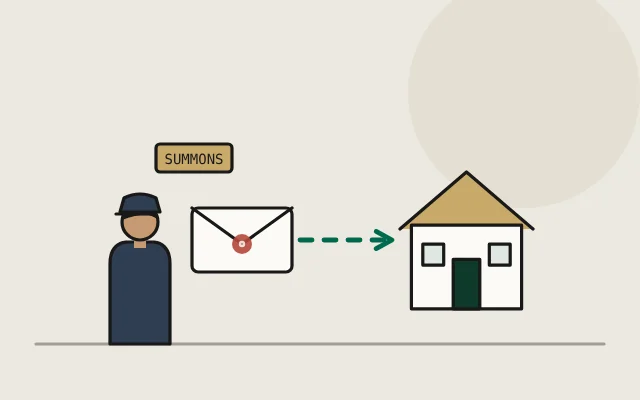
Notice to the opposite party and the Government Pleader
If the court sees no reason to reject, it fixes a day to receive evidence on whether the applicant is a pauper and gives at least ten days' clear notice to the proposed defendant and to the Government Pleader. Both may oppose. The Government Pleader appears because the State is giving up revenue, and the defendant often opposes because a pauper plaintiff can litigate without the usual financial risk. Process fees for these notices must be paid by the applicant.
Where: Court of the Civil Judge / Senior Civil Judge (formerly Assistant / Senior Assistant Judge) · Time: 2-6 weeks · Law: Order XXXIII rule 6 Code of Civil Procedure 1908 · Documents: Notices, Process fees
Tip: Give the defendant's correct address and phone number so service is not delayed.
 Step 7 · The pauper application and inquiry
Inquiry into pauperism
On the fixed day the court examines the witnesses each side produces, may examine the applicant, and records a memorandum of the evidence. It then hears argument on whether the applicant falls within any of the grounds for refusal. Alternatively, the court may grant the application directly if the applicant files a certificate from a local government representative, such as a Union Parishad chairman or ward councillor, stating that he is a pauper within Order XXXIII, and the court is satisfied that this is true.
Where: Court of the Civil Judge / Senior Civil Judge (formerly Assistant / Senior Assistant Judge) · Time: 1-3 months · Law: Order XXXIII rules 7 and 7A Code of Civil Procedure 1908 · Documents: Witness evidence on means, Certificate from a local government representative (rule 7A), Bank statements or land records
Tip: A rule 7A certificate can save months, but the court is not bound by it; bring supporting evidence as well.
 Step 8 · The pauper application and inquiry
Order: granted or refused
If permission is granted, the application is numbered and registered and is treated as the plaint. The suit then proceeds like any other, except that the plaintiff pays no court fee on petitions, vakalatnamas or other steps, only process fees. If permission is refused, that refusal bars a second pauper application on the same claim. The applicant can still sue in the ordinary way, but only after paying the costs the Government and the opposite party incurred in opposing, and must then pay the full court fee.
Where: Court of the Civil Judge / Senior Civil Judge (formerly Assistant / Senior Assistant Judge) · Time: Same day as the hearing or within a few weeks · Law: Order XXXIII rules 8, 15 and 16 Code of Civil Procedure 1908; s.149 Code of Civil Procedure 1908 · Documents: Order on the application, Registered suit number
Tip: If refused close to the limitation deadline, ask at once for time to pay the fee under s.149; delay can make the claim time-barred.
 Step 9 · The suit as a pauper
Summons, written statement and mediation
After registration, the defendant is summoned, including by SMS, voice call or messaging service under the 2026 amendments, and files a written statement. The court must then mediate the dispute itself or refer it to the lawyers, the Legal Aid Officer or a panel mediator, with sixty days to finish, extendable by thirty. A settlement leads to a compromise decree against which no appeal or revision lies. Mediation suits a pauper plaintiff well, because it ends the case quickly and cheaply.
Where: Court of the Civil Judge / Senior Civil Judge (formerly Assistant / Senior Assistant Judge) · Time: 3-6 months · Law: Order V rule 9(3) Code of Civil Procedure 1908 (as amended by Act No. XXXVI of 2026); Order VIII rule 1 Code of Civil Procedure 1908; s.89A Code of Civil Procedure 1908 · Documents: Summons, Written statement, Mediation report or settlement agreement
Tip: Ask for the Legal Aid Officer as mediator; there is no mediator's fee when the court or the Legal Aid Officer mediates.
- Step 10 · The suit as a pauper
Guard against dispaupering
Pauper status can be withdrawn during the suit. The defendant or the Government Pleader may apply, giving the plaintiff seven days' clear written notice, to have the plaintiff dispaupered if he behaves vexatiously or improperly in the suit, if his means turn out to be enough to pay, or if he has made an agreement giving someone else an interest in the subject-matter. If dispaupered, the plaintiff must pay the court fees that would otherwise have been payable, and the case can continue only on that basis.
Where: Court of the Civil Judge / Senior Civil Judge (formerly Assistant / Senior Assistant Judge) · Time: 1-3 months · Law: Order XXXIII rules 9 and 11 Code of Civil Procedure 1908 · Documents: Dispaupering application, Evidence of means or conduct, Reply
Tip: Report a genuine improvement in means honestly; concealment invites a dispaupering order and an adverse view of your evidence.
 Step 11 · The suit as a pauper
Issues, evidence and hearing
The court frames issues and the trial proceeds as in any civil suit. Examination-in-chief is given on affidavit and the witness is then cross-examined. Each party may get no more than four adjournments before the peremptory hearing. The pauper plaintiff can summon witnesses, but must still pay their expenses unless the court directs otherwise. Bringing a pauper suit in Bangladesh gives no advantage on the merits: the plaintiff must prove the claim in the usual way.
Where: Court of the Civil Judge / Senior Civil Judge (formerly Assistant / Senior Assistant Judge) · Time: 8-24 months · Law: Order XIV rule 1 Code of Civil Procedure 1908; Order XVIII rule 4A Code of Civil Procedure 1908; Order XVII rule 1(3) Code of Civil Procedure 1908 (as amended by Act No. XXXVI of 2026) · Documents: Affidavits of examination-in-chief, Exhibits, Witness summonses
Tip: Ask the Legal Aid Office whether it can meet witness and certified-copy costs as incidental expenses.
 Step 12 · Decree and the unpaid court fee
Judgment: if the pauper wins
If the plaintiff succeeds, the court calculates the court fee that would have been payable had he not sued as a pauper. That sum is recoverable by the Government from whichever party the decree orders to pay it, normally the losing defendant, and it is a first charge on the subject-matter of the suit. In practice this means a successful plaintiff in a pauper suit in Bangladesh does not pay the fee, but the decree must say clearly who bears it.
Where: Court of the Civil Judge / Senior Civil Judge (formerly Assistant / Senior Assistant Judge) · Time: Judgment after arguments; decree within seven days · Law: Order XXXIII rule 10 Code of Civil Procedure 1908; Order XX rules 1 and 5A Code of Civil Procedure 1908 · Documents: Judgment, Decree stating the court fee and who must pay it
Tip: Check that the decree fixes the defendant's liability for the court fee; otherwise the Government may look to the subject-matter.
- Step 13 · Decree and the unpaid court fee
If the pauper loses, withdraws or abandons
If the plaintiff fails in the suit, is dispaupered, withdraws the suit, or has it dismissed because he did not pay process fees for service or did not appear at the hearing, the court orders him, and any co-plaintiff added later, to pay the court fees that would have been due. If the suit abates on the plaintiff's death, the fee is recoverable from his estate. The Government may apply for these orders at any time, and disputes over them are decided by the executing court.
Where: Court of the Civil Judge / Senior Civil Judge (formerly Assistant / Senior Assistant Judge) · Time: With the decree or on a later application · Law: Order XXXIII rules 11, 11A, 12 and 13 Code of Civil Procedure 1908; s.47 Code of Civil Procedure 1908 · Documents: Order for payment of court fees
Tip: A pauper suit is not risk-free. A weak claim can leave you liable for the full court fee and the defendant's costs.
 Step 14 · Decree and the unpaid court fee
Recovery of the court fee by the Collector
When an order for payment of the court fee is made, the court sends a copy of the decree or order to the Collector, the Deputy Commissioner of the district. The Collector may recover the amount from the person or property liable as if it were an arrear of land revenue, in practice through the Collector's certificate procedure for public demands, without affecting any other method of recovery. This is separate from the decree-holder's own execution in the pauper suit in Bangladesh and runs in favour of the Government.
Where: Deputy Commissioner (Collector)'s office · Time: 3-12 months · Law: Order XXXIII rule 14 Code of Civil Procedure 1908 · Documents: Copy of the decree or order, Collector's demand
Tip: If you are the losing defendant, pay the assessed fee promptly; recovery as land revenue can lead to attachment of land.
 Step 15 · Decree and the unpaid court fee
Execute the decree
A successful pauper plaintiff executes the decree like any other decree-holder. Since the 2026 amendments, execution can be sought by an application in the original suit record rather than a separate case, the court can direct the police and other authorities to assist, and a money judgment-debtor can be detained in civil prison for up to six months. A pauper plaintiff who wants to file execution without paying fees should ask the court to confirm that his exemption extends to the execution application.
Where: Court of the Civil Judge / Senior Civil Judge (formerly Assistant / Senior Assistant Judge) · Time: 3-18 months · Law: Order XXI rules 30A and 104 Code of Civil Procedure 1908 (as amended by Act No. XXXVI of 2026); s.94A Code of Civil Procedure 1908 · Documents: Execution application, Certified decree, Details of the judgment-debtor's assets
Tip: Identify the defendant's bank accounts and land early; execution is where most pauper plaintiffs lose momentum.
Walk through it from your side
Pick your side. The step-by-step journey above and the full-screen player will then show what you do at every stage.
Pauper applicant (plaintiff)
You want the court's permission to sue without paying the court fee now, and then a decree on your claim. You must show that you cannot pay the fee for this particular plaint, disclose all your property honestly and set out a real cause of action. Your biggest risk is an incomplete property schedule, which can lead to refusal or to dispaupering later.
Check whether you count as a pauper
You list your income, savings, land, jewellery and any share in inherited property, and your lawyer works out the court fee the plaint would attract. You then decide together whether you genuinely lack the means to pay that figure, not whether you are poor in general.
Watch outDo not apply if you could in fact pay the fee; the court and the Government Pleader will test your means.
Consider legal aid alongside the application
You visit the District Legal Aid Office with your NID and any proof of low income, and ask for a panel lawyer and help with incidental costs. If your dispute is a listed one in a notified district, you also ask about pre-case mediation before any suit is filed.
Watch outWhether legal aid will pay the court fee itself is for the Legal Aid Office to decide, so do not assume it.
Draft the application with a property schedule
Your lawyer drafts the application in the form of a plaint, with the parties, facts, cause of action, valuation and relief, and annexes a schedule of every item of property you own with estimated values. You sign and verify it like a pleading.
Watch outLeaving out a share in land or valuables is the commonest reason for refusal and can later lead to dispaupering.
Present the application in person
You go to the court that would try the suit, chosen by value, and present the application in person with your lawyer, your NID and the vakalatnama. If you cannot attend, you first ask the court to exempt you and authorise an agent who knows the facts.
Watch outA filing by a clerk or relative without an exemption is a ground for rejection.
Preliminary examination by the court
You answer the court's questions about your claim and your property, and explain any recent sale or gift. If you were exempted from attending, you may be examined on commission instead.
Watch outAny transfer of property within two months before applying will be looked at closely as a possible fraudulent disposal.
Notice to the opposite party and the Government Pleader
You pay the process fees for the notices and give the correct addresses and phone numbers of the defendant so that service is not delayed. You start preparing witnesses who can speak to your means.
Watch outUnpaid process fees can stall the application at the notice stage.
Inquiry into pauperism
You produce your witnesses and supporting papers, such as bank statements, land records and, if you have one, a certificate from a Union Parishad chairman or ward councillor that you are a pauper. You may be examined again.
Watch outThe court is not bound by a local government certificate, so bring supporting evidence as well.
Order: granted or refused
If permission is granted, your application becomes the plaint and the suit proceeds. If it is refused, you decide quickly with your lawyer whether to seek revision, or to pay the opposing costs and the full court fee and sue in the ordinary way.
Watch outIf refused close to the limitation deadline, ask at once for time to pay the court fee, as delay can make the claim time-barred.
Summons, written statement and mediation
You attend the court-led mediation after the written statement, preferably with the Legal Aid Officer or the court as mediator, and come with a realistic settlement figure. A settlement ends the case quickly and the compromise decree cannot be appealed.
Watch outMake sure any settlement deals with who bears the unpaid court fee.
Guard against dispaupering
You keep your conduct in the suit proper and tell your lawyer honestly about any real improvement in your means. If a dispaupering application is filed, you reply with evidence within the time given.
Watch outIf you are dispaupered, you must pay the court fees that would otherwise have been due before the suit can continue.
Issues, evidence and hearing
You file your examination-in-chief on affidavit, supply a copy to the defendant and attend for cross-examination with your documents. You prove your claim in the usual way; pauper status gives no advantage on the merits.
Watch outEach side has a strict cap on adjournments before the peremptory hearing, so keep witnesses ready.
Judgment: if the pauper wins
If you win, you check that the decree calculates the court fee you would have paid and states clearly who must pay it, normally the losing defendant. You obtain a certified copy for execution.
Watch outIf the decree is silent on who bears the fee, the Government may look to the subject-matter of the suit.
If the pauper loses, withdraws or abandons
If you lose, withdraw, or the suit is dismissed for non-payment of process fees or non-appearance, you can expect an order to pay the court fees that would have been due. You discuss with your lawyer whether an appeal, possibly as a pauper, has real prospects.
Watch outA pauper suit is not risk-free: a weak claim can leave you liable for the full court fee and the defendant's costs.
Recovery of the court fee by the Collector
If the decree orders the defendant to pay the fee, recovery is the Collector's task, not yours. If an order was made against you, you can approach the Collector's office to understand the amount and how it can be paid.
Watch outIgnoring a Collector's demand can lead to attachment of land.
Execute the decree
You apply for execution in the original suit record with a certified decree and details of the defendant's bank accounts, land and other assets. You ask the court to confirm whether your fee exemption covers the execution application.
Watch outIdentify assets early; execution is where many successful plaintiffs lose momentum.
Defendant (opposite party)
You want the claim tested fairly and, where the facts justify it, the pauper application refused so that the plaintiff bears the normal cost of suing. You may show that the applicant has enough means, has hidden or transferred property, or has no cause of action, and you must then defend the claim on its merits. Your biggest risk is treating the pauper stage as the whole case and neglecting your defence to the claim itself.
Check whether you count as a pauper
You probably do not yet know a claim is coming. If a dispute is brewing, you keep your contracts, receipts, letters and payment records together and take early advice on the claim and any limitation defence.
Consider legal aid alongside the application
If the Legal Aid Office invites you to pre-case mediation, you attend with your documents and a clear view of what settlement you could accept. You can take your own lawyer's advice before agreeing to anything.
Watch outA mediation agreement certified by the Chief Legal Aid Officer is binding and enforceable like a decree, so read it carefully before signing.
Draft the application with a property schedule
You are not yet a party, but you keep evidence of anything the applicant owns or has recently sold or gifted, such as land records, rent receipts or business interests, in case you later need to oppose the application.
Present the application in person
You will normally hear nothing at filing. If you expect a claim, you can ask a lawyer to watch the court's cause list so that you learn of the application early.
Preliminary examination by the court
The court examines the application without you at this stage. You use the time to gather information on the applicant's means and on any agreement giving someone else, such as a funder, an interest in the claim.
Notice to the opposite party and the Government Pleader
You receive notice of the day fixed to hear evidence on pauperism, at least ten days ahead. You appoint a lawyer, decide whether to oppose, and collect evidence such as land records, bank details or witnesses who know the applicant's circumstances.
Watch outIf you intend to oppose, appear on the fixed day with your evidence; the Government Pleader's stance does not replace your own.
Inquiry into pauperism
Your lawyer cross-examines the applicant's witnesses and produces your own evidence that the applicant has sufficient means, has hidden property or has no cause of action. You then argue the grounds for refusal.
Watch outKeep your opposition to the legal grounds for refusal; personal attacks without evidence carry little weight.
Order: granted or refused
If permission is granted, you prepare to defend the suit on its merits. If it is refused, you ask the court to fix your costs of opposing, which the applicant must pay before suing in the ordinary way.
Watch outA grant is not a finding on the merits; your defence to the claim is still fully open.
Summons, written statement and mediation
You file your written statement within the time allowed, answering every allegation and raising defences such as limitation. You then take part in the mediation in good faith and consider whether a settlement costs less than a contested trial.
Watch outMissing the written statement deadline can lead to the suit proceeding ex parte against you.
Guard against dispaupering
If you learn that the plaintiff's means have improved, that someone else has taken an interest in the claim, or that the plaintiff is acting vexatiously, you may apply to dispauper, giving seven days' clear written notice.
Watch outBack a dispaupering application with evidence; an unsupported application can be rejected with costs.
Issues, evidence and hearing
You file your own affidavit evidence and exhibits, cross-examine the plaintiff and witnesses, and test the claim on liability and amount.
Watch outAsking for repeated adjournments can lead to costs and, ultimately, to the suit being heard ex parte against you.
Judgment: if the pauper wins
If you lose, you note that the decree will usually order you to pay the plaintiff's unpaid court fee to the Government as well as costs, and you consider an appeal within the time allowed.
Watch outThe court fee is a first charge on the subject-matter of the suit, so it can affect property in dispute.
If the pauper loses, withdraws or abandons
If you win, you ask the court to award your costs and ensure the decree or a later order deals properly with the plaintiff's liability for the court fee.
Recovery of the court fee by the Collector
If you are liable for the court fee under the decree, you pay the assessed amount promptly when the Collector's demand arrives, or raise any genuine dispute about it before the executing court.
Watch outRecovery as an arrear of land revenue can lead to attachment of your land.
Execute the decree
You pay or settle the decree if you can, or raise genuine objections in the executing court. If detention in civil prison is sought for a money decree, you can obtain release by depositing at least a quarter of the amount with a bond for the rest.
Watch outObstructing execution can lead the court to call in law enforcement agencies.
What if…? How the pauper suit in Bangladesh can change course
Choose a scenario. The map animates the route up the hierarchy and, where a case is sent back, down to the lower court and up again.
What if the court refuses permission to sue as a pauper?
- 1District Judge's Court
Revision to the District Judge
An order refusing permission is not among the appealable orders listed in Order XLIII, so no appeal lies. The applicant may apply to the District Judge in revision under section 115(2), on an error of law that produced a wrong order and a failure of justice, such as ignoring the property schedule or applying the wrong test of means. The District Judge may transfer the revision to an Additional District Judge.
3-12 monthss.115(2) and (3) Code of Civil Procedure 1908Order XLIII rule 1 Code of Civil Procedure 1908 (refusal not listed) - 2High Court Division
Further revision with leave
Against the District Judge's revisional order, the High Court Division can be approached only with its leave, which it grants on an important question of law resulting in an erroneous decision and a failure of justice. Meanwhile, to protect limitation, the applicant may choose to pay the fee and sue in the ordinary way after paying the opposing parties' costs.
6-24 monthss.115(4) Code of Civil Procedure 1908Order XXXIII rule 15 Code of Civil Procedure 1908
Where it ends up: The refusal is upheld, or the application is restored and the suit proceeds as a pauper suit.
What if the losing side appeals the decree, or the pauper wants to appeal without a fee?
- 1District Judge's Court
Appeal, including a pauper appeal
A decree of a Civil Judge or Senior Civil Judge, and of a Joint District Judge up to Tk 5 crore, is appealed to the District Judge within thirty days; above Tk 5 crore it goes to the High Court Division within ninety days. A party unable to pay the appeal fee may apply to appeal as a pauper, and the Limitation Act fixes thirty days from the decree for that application. The court rejects it unless the decree appears wrong in law or unjust.
1-3 yearss.96 Code of Civil Procedure 1908s.21 Civil Courts Act 1887Order XLIV rules 1 and 2 Code of Civil Procedure 1908Articles 152, 156 and 170 Limitation Act 1908 - 2High Court Division
No second appeal: revision
Second appeals were abolished in 1978. Against the District Judge's appellate decree, the only route to the High Court Division is civil revision under section 115(1), limited to errors of law that caused a failure of justice. If the appellant was a pauper below, no fresh inquiry into means is needed unless the court directs one.
1-3 yearss.115(1) Code of Civil Procedure 1908Order XLIV rule 2 proviso Code of Civil Procedure 1908
Where it ends up: The appellate court affirms, varies or reverses the decree, and its findings of fact are final.
Can the same court reconsider its order or decree?
- 1Court of the Civil Judge / Senior Civil Judge (formerly Assistant / Senior Assistant Judge)
Review under Order XLVII
A party who has not appealed may ask the same court to review its decree, or an unappealable order such as a dispaupering order, within ninety days. Grounds are new and important evidence not available despite due diligence, a mistake or error apparent on the face of the record, or another sufficient reason. A wrongly calculated court fee under rule 10 is a typical error that review can correct.
2-6 monthss.114 and Order XLVII rule 1 Code of Civil Procedure 1908Article 173 Limitation Act 1908
Where it ends up: The review is rejected, or the order or decree is corrected on the specific point.
Can a point of law be referred to the High Court Division?
- 1High Court Division
Reference: rarely available here
Order XLVI allows a subordinate court to refer a doubtful question of law to the High Court Division only in a suit or appeal whose decree is not subject to appeal. A pauper suit's decree is normally appealable, so a reference is seldom possible. Questions of law, such as whether a company can sue as a pauper, are instead taken up through revision or appeal.
6-18 monthss.113 Code of Civil Procedure 1908Order XLVI rules 1 to 3 Code of Civil Procedure 1908 - 2Court of the Civil Judge / Senior Civil Judge (formerly Assistant / Senior Assistant Judge)
Decision in line with the opinion
Where a reference is made, the trial court may stay the suit or proceed with it, but no decree can be executed until the High Court Division's opinion arrives. The trial court then disposes of the case in conformity with that opinion, including the question of who bears the unpaid court fee. The resulting decree follows the ordinary appeal and revision route.
1-3 monthsOrder XLVI rules 2 and 3 Code of Civil Procedure 1908
Where it ends up: The suit is decided in line with the High Court Division's opinion, or, more often, the point goes up later by revision or appeal.
What if the appeal court sends the case back?
- 1District Judge's Court
Remand to the trial court
If the trial court disposed of the suit on a preliminary point, such as limitation, and the District Judge reverses that finding, the appellate court may remand the suit for trial on the remaining issues. Since the 2026 amendment it must decide the case itself where the evidence on record is enough, so remand is reserved for real gaps. The remand order is challenged by revision under section 115(1), not by appeal.
Order with the appellate judgmentOrder XLI rules 23, 24 and 25 Code of Civil Procedure 1908 (rule 24 as amended by Act No. XXXVI of 2026)Order XLIII rule 1(u) and s.115(1) Code of Civil Procedure 1908 - 2Court of the Civil Judge / Senior Civil Judge (formerly Assistant / Senior Assistant Judge)
Retrial and a fresh decree
The trial court restores the suit under its original number, takes evidence on the remanded issues and passes a fresh decree, again dealing with who bears the unpaid court fee. That decree can go back up to the District Judge on appeal and on to the High Court Division in revision.
6-18 monthsOrder XLI rule 23 Code of Civil Procedure 1908Order XXXIII rules 10 and 11 Code of Civil Procedure 1908
Where it ends up: The case returns to the trial court and then climbs the hierarchy again on the fresh decree.
Can the case reach the Appellate Division?
- 1Appellate Division of the Supreme Court
Civil petition for leave to appeal
Against a High Court Division judgment in revision or first appeal, the aggrieved party may file a civil petition for leave to appeal within sixty days. Leave is granted on a substantial question of law. If leave is granted, the appeal is heard on the record. The Appellate Division can review its own judgment under Article 105.
1-3 yearsArticle 103 Constitution of BangladeshSupreme Court of Bangladesh (Appellate Division) Rules 1988Article 105 Constitution of Bangladesh
Where it ends up: The Appellate Division's decision is final, and the decree is executed in the court of first instance.
How the pauper suit in Bangladesh moves up the court hierarchy
A pauper suit in Bangladesh starts in the same court that would hear the suit if the fee were paid. Under section 19 of the Civil Courts Act 1887, as amended in 2021, a Civil Judge hears suits valued up to Tk 15 lakh, a Senior Civil Judge up to Tk 25 lakh and a Joint District Judge above that without limit; the 2026 amendment renamed the Assistant Judges but kept the limits.
An order refusing permission to sue as a pauper is not appealable and goes to the District Judge in revision, then to the High Court Division only with leave. Once the suit is decided, appeals follow value: to the District Judge from Civil Judges and Senior Civil Judges, and from a Joint District Judge up to Tk 5 crore; above that to the High Court Division. A first appeal rehears facts and law.
There is no second appeal, so the High Court Division corrects errors of law in revision, and the Appellate Division hears the case last, by leave.
- Appellate DivisionAppellate Division of the Supreme Court
- High Court DivisionHigh Court Division
- Appellate levelDistrict Judge's Court
- First instanceCourt of the Civil Judge / Senior Civil Judge (formerly Assistant / Senior Assistant Judge)
- Start · outside courtLawyer's chamber · District Legal Aid Office · Deputy Commissioner (Collector)'s office
Where your case is heard
Addresses are for Dhaka. Every district has equivalent courts at its own district judgeship.
Supreme Court of Bangladesh (Appellate Division and High Court Division)
Supreme Court of Bangladesh, Shahbag, Ramna, Dhaka-1000Hears appeals, revisions, references, writ petitions under Article 102, company matters and death references (High Court Division), and appeals by leave from the High Court Division (Appellate Division).
Both Divisions sit in the Supreme Court complex; many High Court Division benches sit in the Annex Building. Check the daily cause list for the bench and court room. Postal contact is the Registrar General, Supreme Court of Bangladesh, Ramna, Dhaka-1000.
Court of the District and Sessions Judge, Dhaka (Dhaka Judge Court)
Dhaka Judge Court premises, 16 Johnson Road, Sadarghat, DhakaSeat of the Dhaka District Judge and Additional District Judges (civil appeals, probate, district-level civil and sessions work outside the metropolitan area) and the civil courts of first instance (Joint District Judge, Senior Civil/Assistant Judge courts).
Official judiciary portal gives '16 Johnson Road, Sadarghat, Dhaka'. Many civil courts (Additional District Judge courts, Joint District Judge and Senior Assistant Judge courts, Artha Rin Adalat No.1, insolvency court) are in the new 8-storey District Judge Court building in the same premises. The 2026 judgeship list names the first-instance civil courts 'Senior Civil Judge' / 'Civil Judge' (formerly Senior Assistant Judge / Assistant Judge); some pages still use the old names. Every district has an equivalent court at its district judgeship.
Lawyer's chamber
Where this happens depends on your district or the office concerned. Ask us for the exact courtroom and address.
District Legal Aid Office, Dhaka
Dhaka Judge Court premises, Johnson Road, DhakaGives free legal advice and a panel lawyer to people who cannot afford one, and runs mediation before and during a case under the Legal Aid Services Act 2000.
The office is headed by the District Legal Aid Officer, a Senior Assistant Judge in the Dhaka judgeship; the room and floor were not confirmed. Pre-case mediation is compulsory for some disputes in districts notified under the 2026 amendment to the Legal Aid Services Act. National legal aid helpline: 16430. Check the current address before visiting.
Office of the Deputy Commissioner (District Magistrate), Dhaka
Dhaka (exact address not confirmed)District administration: land revenue and record-correction appeals, certificate cases, acquisition, executive magistracy and mobile courts for Dhaka district.
The official street address could not be read from dhaka.gov.bd (its contact pages did not load); the judiciary portal confirms office phone 02-223389786. Confirm the address before visiting. Every district has a Deputy Commissioner's office at the district headquarters.
How long each stage takes
These are indicative ranges based on typical Dhaka practice. Adjournments, case backlogs and appeals can stretch them.
Documents checklist and key terms
Tick off what you have. Your ticks stay saved in this browser. Bring the list to your first meeting with your lawyer.
- Pauper
- Under Order XXXIII, a person without sufficient means to pay the court fee on the plaint, or, where no fee is prescribed, owning property worth no more than Tk 5,000 apart from clothing and the suit property.
- In forma pauperis
- Latin for suing 'as a pauper', without paying court fees in advance.
- Government Pleader
- The lawyer who represents the Government in the district civil courts and may oppose a pauper application to protect court-fee revenue.
- Dispaupering
- An order withdrawing pauper status during the suit, after which the plaintiff must pay the court fees.
- First charge
- A priority claim: the unpaid court fee is paid out of the suit property before other claims.
- Arrear of land revenue
- The basis on which the Collector recovers the unpaid court fee under Order XXXIII rule 14, in practice through the certificate procedure used for public demands.
- Legal aid
- Free advice, a panel lawyer and help with case costs under the Legal Aid Services Act 2000, available through the District Legal Aid Office.
- Revision
- A challenge to an unappealable order or decree on an error of law causing a failure of justice, under section 115 of the Code.
Pauper suit in Bangladesh: common questions
What is a pauper suit in Bangladesh?
Do I have to be completely destitute?
Can the Government or the defendant oppose my application?
Is the court fee waived for good?
What happens if my application is refused?
Can I appeal as a pauper?
How does legal aid fit in with a pauper suit in Bangladesh?
How long does a pauper suit in Bangladesh take?
Law and sources
- Code of Civil Procedure 1908, First Schedule (Orders and rules), updated April 2026, Laws of Bangladesh
- Code of Civil Procedure 1908 (as amended by Act No. XXXVI of 2026), Laws of Bangladesh
- Code of Civil Procedure (Amendment) Act 2026 (Act No. XXXVI of 2026), Laws of Bangladesh
- Civil Courts Act 1887 (ss.19, 21 and 25, as amended 2021 and 2026), Laws of Bangladesh
- Limitation Act 1908, Laws of Bangladesh
- Court-fees Act 1870, Laws of Bangladesh
- Legal Aid Services Act 2000 (Act No. 6 of 2000), laws.sayed.app mirror
- Legal Aid Services (Amendment) Act 2026 (Act No. 45 of 2026), Laws of Bangladesh
This Case Journey is a general guide to procedure in Bangladesh as of October 2026. It is not legal advice. Procedure, fees and time limits change, and every case turns on its own facts. Timelines are indicative. Speak to a lawyer about your own matter.
Run this case from outside Bangladesh
You can usually start and run this case without travelling. You sign a power of attorney abroad, the Bangladesh High Commission or Embassy attests it, and your attorney and lawyer act for you in Dhaka. Some steps, such as giving evidence in person, may still need you or a commission. See how a case runs through a power of attorney →
Want to know where your case stands?
Book a consultation. A TRW lawyer will place your matter on this map, explain the next step and the realistic timeline, and tell you what to prepare.











