
Real estate developer dispute in Bangladesh: the full journey, step by step
A real estate developer dispute in Bangladesh, whether a flat buyer facing late handover, defects or a missing deed, or a landowner whose joint-venture building has stalled, is governed by the Real Estate Development and Management Act 2010.
The Act fixes the developer's duties, gives buyers a refund with 15 per cent compensation when no other rate was agreed, and requires the parties first to try settlement and then arbitration under section 36 before going to court.
Alongside, buyers can complain to DNCRP, landowners and buyers can prosecute the Act's offences before a Magistrate, and civil courts, or Commercial Courts for joint-venture disputes where notified, decide claims for specific performance and money.
- Where it starts
- Negotiation with the developer, then a notice to go to arbitration under s.36 of the Real Estate Development and…
- Main law
- Real Estate Development and Management Act 2010 (Act 48 of 2010) ss.4-18, 19-36; Arbitration Act 2001 ss.42 and 44; Consumer…
- Typical duration
- Settlement and arbitration: about 3-12 months. Criminal complaint: 6-24 months. Contested civil suit: roughly 2-4 years…
- Who can file
- A flat or plot buyer who has an allotment letter or agreement with the developer; a landowner under a joint venture…
Real estate developer dispute in Bangladesh: walk through every stage
Press next, use your arrow keys or tap a court on the map. The gold marker shows where your case is, and the green trail shows the route it has taken. For the immersive version, play it full screen.
Read every step as text
 Step 1 · Documents and the developer's duties
Read the allotment papers and agreement
The first task is to collect and read every document. Under the 2010 Act, the prospectus or allotment letter must break down the saleable area, the agreement must set out the detailed terms of development and sale, and the contract must list the fittings and fixtures to be used. A developer may not advertise or sell before the project is approved and it has authority to execute the transfer deed, and must show buyers the approval and the land title documents. Missing or vague documents shape the whole real estate developer dispute in Bangladesh.
Where: Lawyer's chamber · Time: 1-2 weeks · Law: s.6(1)-(4) Real Estate Development and Management Act 2010; s.8(1)-(2) Real Estate Development and Management Act 2010; s.18(1) Real Estate Development and Management Act 2010 · Documents: Allotment letter and prospectus, Buyer-developer agreement, Payment receipts and bank records, Approved plan and approval number
Tip: Pay only through the bank, as the Act requires, and keep every receipt. Cash payments are the hardest to prove later.
 Step 2 · Documents and the developer's duties
Identify the developer's breach
The Act lists specific duties. The developer must hand over possession and complete the deed and registration within three months of full payment, connect water, electricity, gas and sewerage before handover (unless utility providers delay despite proper applications), repair construction defects for at least two years and maintain the building for at least one year. It may not deviate from the approved plan, reduce common space, charge more than the agreed price, take interest before the flat is ready, or mortgage an allotted flat without the buyer's consent.
Where: Lawyer's chamber · Time: 1-3 weeks · Law: s.9(1)-(2) Real Estate Development and Management Act 2010; ss.11-13 Real Estate Development and Management Act 2010; s.16 Real Estate Development and Management Act 2010 · Documents: Handover letter or notice of delay, Engineer's defect report, Photographs, Correspondence with the developer
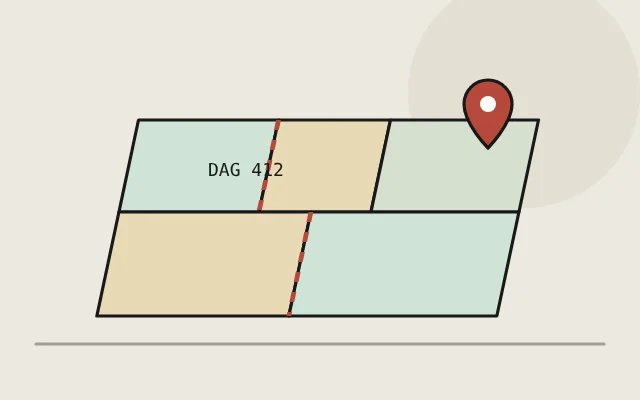 Step 3 · Documents and the developer's duties
Landowner and developer: joint venture disputes
A landowner and a developer must sign a written joint venture agreement stating each side's share, the power of attorney for selling the developer's share, and the start and finish dates. Either side can fall into breach. A landowner who fails to hand over the land on time, or cancels the registered power of attorney without 30 days' notice, commits an offence, and so does a developer who fails to deliver the landowner's share on time.
If the landowner will not sign deeds for the developer's flats within 15 days of a written request, the developer may execute them itself.
Where: Lawyer's chamber · Time: 1-4 weeks to assess · Law: s.10(1)-(3) Real Estate Development and Management Act 2010; s.9(3)-(5) Real Estate Development and Management Act 2010; ss.28-30 Real Estate Development and Management Act 2010 · Documents: Joint venture agreement, Registered power of attorney, Notices exchanged
 Step 4 · Documents and the developer's duties
Work out the statutory money remedies
If the developer fails to hand over within the agreed time, it must refund everything paid, with the compensation the agreement fixes, within six months by account-payee cheque. Where the agreement fixes no rate, compensation is 15 per cent of the total paid, payable with the refund in up to three instalments within six months. If the parties agree to extend the handover date, compensation is still due.
A buyer who simply withdraws gets a refund less 10 per cent within three months, and a buyer whose allotment is cancelled after notice gets the money back within three months.
Where: Lawyer's chamber · Time: 1 week · Law: s.15(1)-(3) Real Estate Development and Management Act 2010; s.14(3) and s.17 Real Estate Development and Management Act 2010 · Documents: Statement of payments with dates, Agreement clause on delay compensation, Any supplementary agreement extending time
Tip: Compensation runs until the date of full payment, so a developer who pays late owes more. Calculate it carefully before negotiating.
 Step 5 · Settlement and arbitration under s.36
Try settlement with the developer first
Section 36 of the Act requires the buyer, developer or landowner, when a dispute arises over the Act's main offences or a breach of their agreement, first to try to settle it between themselves. In practice this means a written demand, a meeting with the developer's management and, often, a settlement agreement fixing a new handover date with compensation, or a refund schedule. REHAB, the developers' trade association, sometimes helps resolve complaints against member companies, but its involvement is voluntary and not binding. Any settlement should be written and signed.
Where: Lawyer's chamber · Time: 1-3 months · Law: s.36(1) Real Estate Development and Management Act 2010; s.15(1) proviso Real Estate Development and Management Act 2010 · Documents: Demand letter, Minutes of meetings, Signed settlement or supplementary agreement
 Step 6 · Settlement and arbitration under s.36
Give notice to go to arbitration
If settlement fails because the other side will not cooperate, the aggrieved party sends written notice stating its intention to refer the dispute to an arbitral tribunal under the Arbitration Act 2001. The recipient must join in constituting the tribunal within 30 days of receiving the notice. If the agreement contains its own arbitration clause, that clause usually decides the number of arbitrators and the procedure. The notice should identify the dispute, the relief sought and the proposed arbitrator.
Where: Arbitral tribunal under s.36 of the 2010 Act · Time: 30 days for the other side to respond · Law: s.36(2)-(3) Real Estate Development and Management Act 2010; Arbitration Act 2001 · Documents: Notice of arbitration with postal proof, Copy of the agreement and arbitration clause
 Step 7 · Settlement and arbitration under s.36
Arbitration and the binding award
Once the tribunal is formed, it hears the parties' claims and evidence under the Arbitration Act 2001 and makes an award, for example ordering handover and registration by a date, a refund with 15 per cent compensation, or payment for defects. The 2010 Act says that, notwithstanding the Arbitration Act, an award of a tribunal the parties formed binds them and anyone claiming through them, and that no party may object to it in any court. The award is then enforced through the court as if it were a decree.
Where: Arbitral tribunal under s.36 of the 2010 Act · Time: 3-9 months · Law: s.36(4) Real Estate Development and Management Act 2010; s.44 Arbitration Act 2001 · Documents: Statements of claim and defence, Evidence and expert reports, Signed award
Tip: Because objections to the award are so limited, choose the arbitrator carefully and present the whole case the first time.
 Step 8 · Consumer, regulatory and criminal routes
Complain to DNCRP
Construction is a 'service' under the Consumer Rights Protection Act 2009, so a buyer can complain to DNCRP that a developer failed to supply a promised service properly in exchange for the price paid. The complaint must be made within thirty days of the cause of action. After a hearing, DNCRP can impose an administrative fine, and the complainant receives a quarter of any fine collected. Developers often settle at the hearing. DNCRP cannot order handover or registration, so it works best as leverage alongside the main claim.
Where: Directorate of National Consumer Rights Protection (DNCRP) · Time: 1-3 months · Law: s.2(22) Consumer Rights Protection Act 2009; s.45 and s.60 Consumer Rights Protection Act 2009; s.76 Consumer Rights Protection Act 2009 · Documents: Written complaint, Agreement and receipts, Evidence of the failure
- Step 9 · Consumer, regulatory and criminal routes
Raise registration and plan issues with RAJUK
Under the 2010 Act, the 'authority' for an area is the relevant city development authority, RAJUK in Dhaka, or the city corporation, municipality, cantonment board or National Housing Authority elsewhere. Developers must register with it, and a project needs approval before sale. Building outside the approved plan is both an offence under the Act and a matter for RAJUK's building-control powers. A buyer or landowner who suspects an unapproved project or plan deviation can ask RAJUK to confirm the registration and plan, and to inspect.
Where: RAJUK (the 'authority' for Dhaka under the 2010 Act) · Time: 1-6 months · Law: s.4 and s.5 Real Estate Development and Management Act 2010; s.18(5) and s.26 Real Estate Development and Management Act 2010 · Documents: Written application or complaint, Project name and plan approval number, Photographs of deviations
 Step 10 · Consumer, regulatory and criminal routes
Criminal complaint before the Magistrate
The Act creates specific offences, including selling a promised flat to someone else (up to 3 years or Tk 20 lakh), using inferior materials, building outside the approved plan, failing to hand over the landowner's share, and the 'fraudulent offence' of abandoning a project without compensating the landowner or buyer (up to 2 years or Tk 20 lakh). These offences are bailable, compoundable and non-cognizable, so the case starts with a complaint petition before a Metropolitan or first class Magistrate, who tries it summarily.
Cheating under section 420 of the Penal Code may also be alleged.
Where: Metropolitan Magistrate's Court (offences under the 2010 Act) · Time: 6-24 months · Law: ss.19-31 Real Estate Development and Management Act 2010; ss.32-33 Real Estate Development and Management Act 2010; s.420 and s.406 Penal Code 1860 · Documents: Complaint petition, Agreement, receipts and correspondence, Engineer's report (for materials or plan cases)
 Step 11 · Consumer, regulatory and criminal routes
Conviction and the victim's share of the fine
If the developer is convicted, the Magistrate can impose any punishment the Act allows. Where a company commits the offence, the owner, director or officer with whose knowledge and participation it was committed is personally liable. When a fine is collected, the court may order up to half of it to be paid to the affected landowner or buyer. Because the offences are compoundable, many prosecutions end in a compromise in which the developer pays or hands over, and the case is withdrawn.
Where: Metropolitan Magistrate's Court (offences under the 2010 Act) · Time: 1-3 months after trial · Law: s.31 Real Estate Development and Management Act 2010; s.34 and s.35 Real Estate Development and Management Act 2010 · Documents: Judgment, Application for share of fine, Compromise petition (if settled)
 Step 12 · Civil suit
File the civil suit
If the arbitral tribunal is not formed within the 30 days, any party may file a suit in the competent court. A buyer typically sues for specific performance, meaning execution and registration of the sale deed and delivery of possession, or for a refund with compensation and damages.
Section 21A bars specific performance of a contract for sale of immovable property unless it is registered and the balance price is deposited in court when the suit is filed, and the suit must be brought within one year of the date fixed for performance or of notice of refusal. Practice differs on how this applies to flat allotment agreements, so a money claim is often the safer course. Joint venture and construction disputes may go to a Commercial Court where one has been notified for the area.
Where: Civil court (Joint District Judge, or by value) or Commercial Court where notified · Time: 2-4 weeks to draft and file · Law: s.36(5) Real Estate Development and Management Act 2010; s.12 and s.21A(a)-(b) Specific Relief Act 1877; s.54A Transfer of Property Act 1882; s.2(d)(5), (10) and s.7(1) Commercial Courts Act 2026; s.19 Civil Courts Act 1887 (as amended 2021); Limitation Act 1908, First Schedule art. 113 (one year, as amended 2004) · Documents: Plaint with affidavit, Agreement and receipts, Arbitration notice and proof of no response, Court fee
Tip: In a Commercial Court, a suit without an urgent interim relief must first go through pre-suit mediation if the government has made rules for it.
- Step 13 · Civil suit
Stop the flat being sold or mortgaged
Where a developer may sell the buyer's flat to someone else or mortgage it, the plaintiff applies for a temporary injunction. The court considers whether there is a prima facie case, irreparable loss and the balance of convenience. A transfer made while the suit is pending cannot defeat the plaintiff's eventual decree. The Act separately bars a developer from selling a mortgaged flat to a buyer and requires any mortgage to be released before the transfer deed is executed, so a bank search is useful evidence.
Where: Civil court (Joint District Judge, or by value) or Commercial Court where notified · Time: 2-8 weeks · Law: Order XXXIX rules 1-2 CPC; s.52 Transfer of Property Act 1882; s.16 Real Estate Development and Management Act 2010 · Documents: Injunction application with affidavit, Sub-registry and bank search results
 Step 14 · Civil suit
Mediation, evidence and trial
After the written statement, the civil court may refer the dispute to mediation, and a Commercial Court can, if both sides agree, allow mediation that must finish within thirty days, extendable by thirty more. Many developer disputes settle here with a fixed handover schedule. If not, examination-in-chief is given on affidavit and cross-examined. The plaintiff proves payments, the agreed dates and the breach, often with an engineer's report on defects or deviations, and the developer usually blames approvals, utility providers or the landowner.
Where: Civil court (Joint District Judge, or by value) or Commercial Court where notified · Time: 6-24 months · Law: s.89A CPC; s.7(2) Commercial Courts Act 2026; Order XVIII rule 4A CPC (inserted by Act XXXVI of 2026) · Documents: Mediation report, Affidavits in chief, Engineer's report
- Step 15 · Decree and enforcement
Judgment and decree
The court may decree specific performance, directing the developer, and where necessary the landowner, to execute and register the sale deed and deliver possession within a set time. It may instead decree a refund with the agreed compensation or the statutory 15 per cent, damages for defects or delay, and costs. In a joint venture case it can order delivery of the landowner's share. Certified copies should be obtained at once, because appeal time runs from the decree.
Where: Civil court (Joint District Judge, or by value) or Commercial Court where notified · Time: 1-3 months after arguments · Law: s.12 Specific Relief Act 1877; s.15 Real Estate Development and Management Act 2010; Order XX CPC · Documents: Judgment, Decree, Application for certified copies
 Step 16 · Decree and enforcement
Enforce the decree or award
If the developer does not comply, the decree-holder applies for execution, which under the 2026 amendments can be made in the record of the suit. Where the developer refuses to sign the deed, the court can execute and register it on its behalf, and then deliver possession, with police help if needed. Money decrees are enforced by attaching bank accounts and other flats, and by civil detention of up to six months. An arbitral award under section 36 is enforced the same way.
This is often the longest stage of a real estate developer dispute in Bangladesh.
Where: Civil court (Joint District Judge, or by value) or Commercial Court where notified · Time: 3-12 months · Law: Order XXI rules 34-35 CPC; Order XXI rules 30A and 104 CPC (inserted 2026); s.44 Arbitration Act 2001 · Documents: Execution application, Certified decree or award, List of the developer's assets
Walk through it from your side
Pick your side. The step-by-step journey above and the full-screen player will then show what you do at every stage.
Buyer or landowner
You want what the agreement promised (handover, registration, the landowner's share, defect repairs) or your money back with the agreed compensation or the statutory 15 per cent. You must prove the agreement, your payments and the developer's breach, and follow the section 36 route of settlement and then notice of arbitration before suing. Your biggest risks are unprovable cash payments, and losing time: specific performance has a one-year limit and a deposit requirement.
Read the allotment papers and agreement
You gather the prospectus or allotment letter, the agreement, payment receipts and bank records, and any joint venture agreement and power of attorney. Your lawyer checks what was promised on area, fittings, dates and price.
Watch outPayments made in cash without receipts are very hard to prove; collect every bank record now.
Identify the developer's breach
With your lawyer you identify the breach: late handover or registration, missing utilities, defects, plan deviation, reduced common space, overcharging or an undisclosed mortgage. Take photographs and, if needed, an engineer's report.
Watch outNote the date you made full payment; the three-month handover and registration duty runs from it.
Landowner and developer: joint venture disputes
As landowner, you check the joint venture agreement for shares, dates and the power of attorney, and record the developer's delays in delivering your share. Do not cancel a registered power of attorney without at least 30 days' notice.
Watch outCancelling the power of attorney without notice, or failing to hand over the land on time, is an offence by the landowner.
Work out the statutory money remedies
You work out your statutory money remedy: refund of everything paid with the agreed compensation, or 15 per cent if no rate was agreed, within six months, and compensation even if you agreed an extension.
Watch outCompensation runs until full payment, so calculate it to the actual payment date before negotiating.
Try settlement with the developer first
You send a written demand and meet the developer's management to try settlement, as section 36 requires. Any settlement, such as a new handover date with compensation or a refund schedule, must be written and signed.
Watch outKeep proof of your settlement efforts; you will need it to show the next step was justified.
Give notice to go to arbitration
If settlement fails, you send written notice of your intention to refer the dispute to an arbitral tribunal under the Arbitration Act 2001, identifying the dispute, the relief and your proposed arbitrator.
Watch outIf the other side does not join in forming the tribunal within 30 days, you may file a suit; keep proof of the notice and its delivery.
Arbitration and the binding award
You present your full case to the tribunal with documents, payment proof and any engineer's report, and ask for handover and registration, a refund with compensation, or payment for defects.
Watch outObjections to the award in court are barred, so present everything the first time.
Complain to DNCRP
If you paid for construction, you complain to DNCRP within thirty days of the cause of action, with the agreement and payment proof, and attend the hearing.
Watch outDNCRP cannot order handover or registration, so keep your main claim moving.
Raise registration and plan issues with RAJUK
You ask RAJUK, or the relevant authority outside Dhaka, to confirm the developer's registration and the approved plan, and request an inspection if you suspect deviation.
Watch outGet any confirmation in writing; it is useful evidence in arbitration or court.
Criminal complaint before the Magistrate
For the Act's offences, such as selling your flat to someone else, inferior materials or abandoning the project, you file a complaint petition before a Metropolitan or first class Magistrate with your documents.
Watch outA criminal case puts pressure on the developer but does not itself give you the flat or a refund.
Conviction and the victim's share of the fine
If the developer is convicted and fined, you ask the court to order up to half the fine collected to be paid to you. You can also agree to compound the case in exchange for payment or handover.
Watch outMake sure any compromise is recorded and its terms are enforceable before withdrawing.
File the civil suit
If no tribunal was formed within 30 days, you file a suit for specific performance or for a refund with compensation and damages. For specific performance you check registration, deposit the balance price in court on filing and sue within one year.
Watch outMissing the deposit or the one-year limit can defeat a specific performance claim.
Stop the flat being sold or mortgaged
If the developer may sell or mortgage your flat, you apply for a temporary injunction and obtain a bank search to show any mortgage.
Watch outAct quickly; a sale to an innocent buyer makes recovery of the flat much harder.
Mediation, evidence and trial
You consider mediation and a fixed handover schedule with compensation. If not settled, you give evidence on affidavit proving payments, dates and breach, often with an engineer's report.
Watch outHave your engineer and documents ready; adjournments are limited.
Judgment and decree
After judgment you obtain certified copies and check the decree's terms on execution and registration of the deed, possession, refund and compensation, and the time allowed.
Watch outIf you lose, appeal time runs from the decree.
Enforce the decree or award
If the developer does not comply, you apply for execution in the suit record, asking the court to execute and register the deed, deliver possession with police help if needed, or attach bank accounts and other flats for money.
Watch outGive the court specific asset details; general requests move slowly.
Developer
You want to complete the project or resolve the claim on fair terms, showing that delays were caused by approvals, utility providers or the landowner, and that what you built matches the approved plan and agreement. You must keep clear records of approvals, payments received and correspondence. Your biggest risk is ignoring the statutory refund and compensation duties and the section 36 notice: compensation keeps running until payment, and several breaches are criminal offences.
Read the allotment papers and agreement
You assemble the project approval, land title documents, the developer registration, the agreements and a ledger of every payment received from the buyer or the landowner arrangements.
Watch outSelling or advertising before approval is itself prohibited, so make sure your approval dates are clear.
Identify the developer's breach
You review the complaint against your obligations: handover and registration timing, utility applications, defect repairs and maintenance, and any plan changes and their approvals.
Watch outIf utility providers caused delay, keep proof that you applied properly and on time.
Landowner and developer: joint venture disputes
You check whether the landowner handed over the land on time and has signed deeds for your flats; if not, you send a written request and, after 15 days, may execute them yourself as the Act allows.
Watch outFailing to deliver the landowner's share on time is an offence by the developer.
Work out the statutory money remedies
You calculate your refund and compensation exposure under section 15 and plan how to pay it, by account-payee cheque and within six months, if handover cannot be achieved.
Watch outAgreeing an extension does not remove the duty to pay compensation.
Try settlement with the developer first
You engage genuinely in settlement, offering a realistic handover date with compensation or a refund schedule, and put any agreement in writing.
Watch outRefusing to co-operate gives the other side the right to move straight to arbitration.
Give notice to go to arbitration
On receiving the notice, you nominate your arbitrator and join in constituting the tribunal within 30 days, following any arbitration clause in the agreement.
Watch outIf you do not join within 30 days, the other side can take the dispute to court instead.
Arbitration and the binding award
You present your full defence and evidence, including approvals, utility applications and the landowner's role, and argue the correct compensation figure.
Watch outOnce made, the award binds you and is enforceable as a decree, with very limited room to challenge it.
Complain to DNCRP
You attend the DNCRP hearing with your records and explanation, and consider whether settling there resolves the complaint efficiently.
Watch outAn administrative fine can be cited by the buyer in later proceedings.
Raise registration and plan issues with RAJUK
You keep your registration current and your approved plans and any approved changes ready to show the authority on request.
Watch outBuilding outside the approved plan is an offence and a building-control matter.
Criminal complaint before the Magistrate
If a complaint is filed, you instruct a criminal lawyer, appear and seek bail, since the offences are bailable, and prepare your defence or consider compounding the case by settlement.
Watch outDirectors with knowledge of and participation in an offence can be personally liable.
Conviction and the victim's share of the fine
You decide whether to defend to verdict or to compound by settling. If convicted, you consider an appeal to the Sessions Judge within the limits for summary trials.
Watch outA compromise you do not honour can leave you exposed to fresh proceedings.
File the civil suit
When served, you have your lawyer check whether the section 36 route was followed, whether the agreement meets section 21A, limitation, valuation and the choice of court.
Watch outRaise any arbitration or section 36 objection at the outset, not after the merits are argued.
Stop the flat being sold or mortgaged
You oppose an unjustified injunction with evidence of your position, and avoid selling or mortgaging the disputed flat while the suit is pending.
Watch outA transfer during the suit is subject to the decree, and selling a mortgaged flat to a buyer is prohibited.
Mediation, evidence and trial
You consider whether mediation can fix a realistic handover schedule. At trial your witnesses explain delays caused by approvals, utilities or the landowner, supported by documents.
Watch outBlaming others without documentary proof rarely persuades the court.
Judgment and decree
You obtain certified copies and decide promptly whether to comply, settle or appeal. If refund and compensation are ordered, note that compensation continues until payment.
Watch outAn appeal does not stay execution automatically; apply for a stay if you appeal.
Enforce the decree or award
You comply within the time given, or, if you have appealed, obtain a stay. If you face a money decree, consider paying or proposing terms to avoid attachment or civil detention.
Watch outNon-compliance can lead to the court executing the deed in your place, attachment and civil detention.
What if…? How the real estate developer dispute in Bangladesh can change course
Choose a scenario. The map animates the route up the hierarchy and, where a case is sent back, down to the lower court and up again.
What if the losing side appeals?
- 1District Judge's Court
First appeal from the civil court
An appeal from a Civil Judge or Senior Civil Judge lies to the District Judge. From a Joint District Judge it goes to the District Judge where the value is up to Tk 5 crore, within thirty days, and to the High Court Division above that, within ninety days. The first appeal rehears facts and law. A conviction by a Magistrate under the 2010 Act or the Penal Code is appealed to the Sessions Judge, subject to the limits on appeals in summary trials.
6-24 monthss.21 Civil Courts Act 1887 (as amended 2021)s.96 and Order XLI CPCLimitation Act 1908, First Schedule arts. 152 and 156s.408 Code of Criminal Procedure 1898 - 2High Court Division
Appeal from a Commercial Court
A final judgment of a Commercial Court is appealed directly to a commercial appeal bench of the High Court Division constituted by the Chief Justice, within sixty days. No appeal lies against its other orders, although revision and review remain available under the principles of the Code of Civil Procedure. Execution is not stayed automatically, so the appellant must apply for a stay.
1-3 yearss.3(4) and s.6(1)-(2) Commercial Courts Act 2026Order XLI rule 5 CPC
Where it ends up: The appellate court affirms, varies or reverses the decree; the first appeal is the last rehearing of the facts.
What if a decision is wrong in law?
- 1High Court Division
Civil revision in the High Court Division
Second appeals were abolished in 1978. Against the District Judge's appellate decree, the aggrieved party may apply to the High Court Division for revision on an error of law resulting in an erroneous decision and a failure of justice, such as misreading section 15 of the 2010 Act or wrongly holding a suit barred by section 36. The court issues a Rule and may grant a conditional stay, but does not reweigh evidence.
1-3 yearss.115(1) Code of Civil Procedure 1908 - 2District Judge's Court
Revision of interlocutory and criminal orders
Non-appealable orders of the trial court, such as refusing a commission to inspect the building, can be revised by the District Judge, with a further revision to the High Court Division only by leave. In the criminal case, orders of the Magistrate, including dismissal of the complaint, can be challenged in criminal revision before the Sessions Judge or the High Court Division.
6-18 monthss.115(2)-(4) Code of Civil Procedure 1908ss.435, 439 and 439A Code of Criminal Procedure 1898
Where it ends up: The High Court Division discharges the Rule or corrects the decision.
Can the court review its own decision?
- 1Civil court (Joint District Judge, or by value) or Commercial Court where notified
Review by the same court
A party who has not appealed may ask the court that passed the decree to review it, on new and important evidence not available earlier despite due diligence, an error apparent on the face of the record, or another sufficient reason. The application must be filed within ninety days. The Commercial Courts Act expressly preserves review of Commercial Court orders under the principles of the Code.
3-9 monthss.114 and Order XLVII rule 1 CPCLimitation Act 1908, First Schedule art. 173s.6(1) proviso Commercial Courts Act 2026 - 2Appellate Division of the Supreme Court
Review in the higher courts
The High Court Division may review its own judgment on the same narrow grounds. The Appellate Division may review its own judgment under Article 105 of the Constitution, within thirty days, on grounds such as an error apparent on the record. A Magistrate cannot review a signed criminal judgment on the merits.
3-12 monthsArticle 105 Constitution; Order XXVI Supreme Court (Appellate Division) Rules 1988s.369 Code of Criminal Procedure 1898
Where it ends up: The review is refused, or the decision is corrected on the narrow point raised.
Can a legal question be referred to the High Court Division?
- 1Civil court (Joint District Judge, or by value) or Commercial Court where notified
No reference from the trial court
Order XLVI allows a reference only in a suit or appeal whose decree is not itself subject to appeal, or in executing such a decree. The decree in a civil suit against a developer is appealable, so the trial court cannot refer a doubtful question such as whether section 36(4) of the 2010 Act validly shuts out every court objection to an award; it decides the point, which then goes up by appeal and revision, while interlocutory orders go by revision under section 115. In criminal matters the CrPC reference provisions have been omitted.
Within the trials.113 and Order XLVI rule 1 CPCs.115 CPCss.432-434 Code of Criminal Procedure 1898 (omitted) - 2High Court Division
Reference from the District Judge's appeal
A District Judge hearing the first appeal, whose decree can be challenged only in revision, may refer a genuine doubt on a question of law, and then decides the appeal in line with the High Court Division's answer.
6-18 monthsOrder XLVI rules 1-3 CPCs.115(1) CPC
Where it ends up: The point is settled on appeal and revision or, on a reference from the District Judge's appeal, by the High Court Division's opinion.
What if the case is sent back for retrial?
- 1District Judge's Court
Appellate court remands the suit
Where the trial court decided without considering the arbitration bar, refused an engineer's inspection that was clearly needed, or failed to decide the compensation claim, the appellate court may set the decree aside and remand. Since the 2026 amendments an appellate court must decide the case itself where the record is sufficient, so remand is a last resort. A remand order is challenged by revision in the High Court Division, not by appeal.
Order on the day of judgmentOrder XLI rules 23, 24 (as amended 2026) and 25 CPCOrder XLIII rule 1(u) CPCs.115(1) CPC - 2Civil court (Joint District Judge, or by value) or Commercial Court where notified
Retrial and the road back up
The trial court restores the suit, takes the evidence or decides the issue as directed, and passes a fresh decree. That decree can again be appealed and then taken to the High Court Division in revision. Statutory compensation under section 15 continues to run until payment, so delay increases the developer's liability.
6-18 monthsOrder XLI rule 23 CPCs.15(3) Real Estate Development and Management Act 2010s.96 CPC
Where it ends up: The case returns up the hierarchy with a fresh decree.
Can an arbitral award under section 36 be challenged?
- 1District Judge's Court
The statutory bar on objections
Under the Arbitration Act 2001 a domestic award can ordinarily be challenged before the District Judge within sixty days on limited grounds. Section 36(4) of the 2010 Act, however, says that an award of a tribunal the parties formed binds them and that no party may raise an objection to it in any court, notwithstanding the Arbitration Act. Once the challenge window has passed, the award is enforced as if it were a decree of the court.
Award enforced within monthss.36(4) Real Estate Development and Management Act 2010s.42 and s.44 Arbitration Act 2001 - 2High Court Division
Writ only for fundamental defects
A party who says the tribunal had no jurisdiction, was not properly constituted, or decided in breach of natural justice may test that in the High Court Division, usually by writ under Article 102, though the scope is narrow and untested in many respects. Arguing the merits again is not possible.
1-2 yearsArticle 102 Constitution of Bangladesh
Where it ends up: In most cases the award stands and is enforced; only jurisdictional defects can realistically be raised.
Can the case reach the Appellate Division?
- 1Appellate Division of the Supreme Court
Civil petition for leave to appeal
A party who loses in the High Court Division may file a civil petition for leave to appeal within sixty days. Leave is granted where a substantial question of law arises, such as the effect of section 36 on court jurisdiction or the interplay between the 2010 Act and section 21A of the Specific Relief Act. If leave is granted, the appeal is heard on the record, and the decision binds all courts.
1-3 yearsArticle 103 Constitution of BangladeshOrder XIII rule 1 Supreme Court (Appellate Division) Rules 1988Article 111 Constitution of Bangladesh
Where it ends up: The Appellate Division's decision is final, subject only to review under Article 105.
How the real estate developer dispute in Bangladesh moves up the court hierarchy
A real estate developer dispute in Bangladesh is meant to start outside court: section 36 of the 2010 Act requires the parties to try settlement and then arbitration, and only if the arbitral tribunal is not formed within thirty days may a party go to court. The civil suit is filed where the property lies, chosen by value: a Civil Judge up to Tk 15 lakh, a Senior Civil Judge up to Tk 25 lakh and a Joint District Judge above that.
Joint venture and construction disputes may instead go to a Commercial Court where one has been notified. A first appeal, rehearing facts and law, lies to the District Judge up to Tk 5 crore and to the High Court Division above it; Commercial Court judgments go straight to the High Court Division within sixty days. There is no second appeal. The High Court Division corrects errors of law in revision, and the Appellate Division hears appeals by leave. Offences under the Act are tried summarily by a Magistrate, with appeal to the Sessions Judge.
- Appellate DivisionAppellate Division of the Supreme Court
- High Court DivisionHigh Court Division
- Appellate levelDistrict Judge's Court
- First instanceMetropolitan Magistrate's Court (offences under the 2010 Act) · Civil court (Joint District Judge, or by value) or Commercial Court where notified
- Start · outside courtLawyer's chamber · Arbitral tribunal under s.36 of the 2010 Act · Directorate of National Consumer Rights Protection (DNCRP) · RAJUK (the 'authority' for Dhaka under the 2010 Act)
Where your case is heard
Addresses are for Dhaka. Every district has equivalent courts at its own district judgeship.
Supreme Court of Bangladesh (Appellate Division and High Court Division)
Supreme Court of Bangladesh, Shahbag, Ramna, Dhaka-1000Hears appeals, revisions, references, writ petitions under Article 102, company matters and death references (High Court Division), and appeals by leave from the High Court Division (Appellate Division).
Both Divisions sit in the Supreme Court complex; many High Court Division benches sit in the Annex Building. Check the daily cause list for the bench and court room. Postal contact is the Registrar General, Supreme Court of Bangladesh, Ramna, Dhaka-1000.
Court of the District and Sessions Judge, Dhaka (Dhaka Judge Court)
Dhaka Judge Court premises, 16 Johnson Road, Sadarghat, DhakaSeat of the Dhaka District Judge and Additional District Judges (civil appeals, probate, district-level civil and sessions work outside the metropolitan area) and the civil courts of first instance (Joint District Judge, Senior Civil/Assistant Judge courts).
Official judiciary portal gives '16 Johnson Road, Sadarghat, Dhaka'. Many civil courts (Additional District Judge courts, Joint District Judge and Senior Assistant Judge courts, Artha Rin Adalat No.1, insolvency court) are in the new 8-storey District Judge Court building in the same premises. The 2026 judgeship list names the first-instance civil courts 'Senior Civil Judge' / 'Civil Judge' (formerly Senior Assistant Judge / Assistant Judge); some pages still use the old names. Every district has an equivalent court at its district judgeship.
Chief Metropolitan Magistrate Court, Dhaka
19 Johnson Road, Dhaka-1100Takes cognisance of and tries criminal cases arising in Dhaka Metropolitan Police areas (Metropolitan Magistrate courts), hears bail, remand and FIR/complaint matters, and sends sessions-triable cases to the Metropolitan Sessions Judge.
Metropolitan Magistrate courts are spread over the CMM court main building (floors 2-9) and the CJM court building (courts 29-37 on the 8th and 9th floors). Check the court number on the cause list. Each metropolitan city (Chattogram, Khulna, Rajshahi, Sylhet, Barishal, Rangpur, Gazipur) has its own CMM court.
Lawyer's chamber
Where this happens depends on your district or the office concerned. Ask us for the exact courtroom and address.
Arbitral tribunal under s.36 of the 2010 Act
Where this happens depends on your district or the office concerned. Ask us for the exact courtroom and address.
Directorate of National Consumer Rights Protection (DNCRP), Head Office
TCB Bhaban, 1 Karwan Bazar, Dhaka-1215Receives and decides consumer complaints and imposes administrative fines under the Consumer Rights Protection Act 2009.
The official page gives this building for the National Consumer Complaint Centre, on the 12th floor (phone 02-55013218, nccc@dncrp.gov.bd). Complaints can also be lodged at DNCRP divisional and district offices.
Rajdhani Unnayan Kartripakkha (RAJUK), Head Office
RAJUK Bhaban, Motijheel, DhakaApproves building plans and land use in the Dhaka area under the Town Improvement Act 1953 and building rules, and issues notices and carries out demolition of unauthorised construction.
The official website could not be reached when checked, so the street address was not verified. Many plan-approval and enforcement matters are handled by RAJUK's zonal offices. Check the current address before visiting.
How long each stage takes
These are indicative ranges based on typical Dhaka practice. Adjournments, case backlogs and appeals can stretch them.
Documents checklist and key terms
Tick off what you have. Your ticks stay saved in this browser. Bring the list to your first meeting with your lawyer.
- Allotment letter
- The developer's letter allocating a specific flat or plot to a buyer, which must describe the saleable area.
- Joint venture agreement (JVA)
- The written agreement between a landowner and a developer setting out each side's share and the construction timetable.
- Saleable area
- The flat area plus the buyer's share of common space for which the buyer pays.
- Common space
- Shared areas such as lift lobbies, stairs, generator rooms and guard rooms, which the developer may not reduce.
- Handover
- Delivery of possession of the finished flat, with deed execution and registration within three months of full payment.
- Section 36 arbitration
- The 2010 Act's compulsory route of settlement and then an arbitral tribunal before going to court.
- Non-cognizable offence
- An offence for which the police cannot arrest without a warrant; the case begins with a complaint to a Magistrate.
- REHAB
- The Real Estate and Housing Association of Bangladesh, the developers' trade body.
Real estate developer dispute in Bangladesh: common questions
My developer is years late. What am I entitled to?
Do I have to go to arbitration before suing?
Can I file a criminal case against the developer?
Can DNCRP help with a real estate developer dispute in Bangladesh?
What can a landowner do if the developer abandons the building?
Can the developer cancel my allotment for late instalments?
Which court hears a real estate developer dispute in Bangladesh?
How long does a real estate developer dispute in Bangladesh take?
Law and sources
- Real Estate Development and Management Act 2010 (Act 48 of 2010) — Laws of Bangladesh
- Arbitration Act 2001 (ss.42, 44) — Laws of Bangladesh
- Consumer Rights Protection Act 2009 (ss.2(22), 45, 60) — Laws of Bangladesh
- Commercial Courts Act 2026 (Act 23 of 2026) — Laws of Bangladesh
- Specific Relief Act 1877 (ss.12, 21A) — Laws of Bangladesh
- Transfer of Property Act 1882 (ss.52, 54A, 59) — Laws of Bangladesh
- Code of Civil Procedure (Amendment) Act 2026 (Act XXXVI of 2026) — Laws of Bangladesh
- Penal Code 1860 (ss.406, 420) — Laws of Bangladesh
This Case Journey is a general guide to procedure in Bangladesh as of October 2026. It is not legal advice. Procedure, fees and time limits change, and every case turns on its own facts. Timelines are indicative. Speak to a lawyer about your own matter.
Run this case from outside Bangladesh
You can usually start and run this case without travelling. You sign a power of attorney abroad, the Bangladesh High Commission or Embassy attests it, and your attorney and lawyer act for you in Dhaka. Some steps, such as giving evidence in person, may still need you or a commission. See how a case runs through a power of attorney →
Want to know where your case stands?
Book a consultation. A TRW lawyer will place your matter on this map, explain the next step and the realistic timeline, and tell you what to prepare.











