
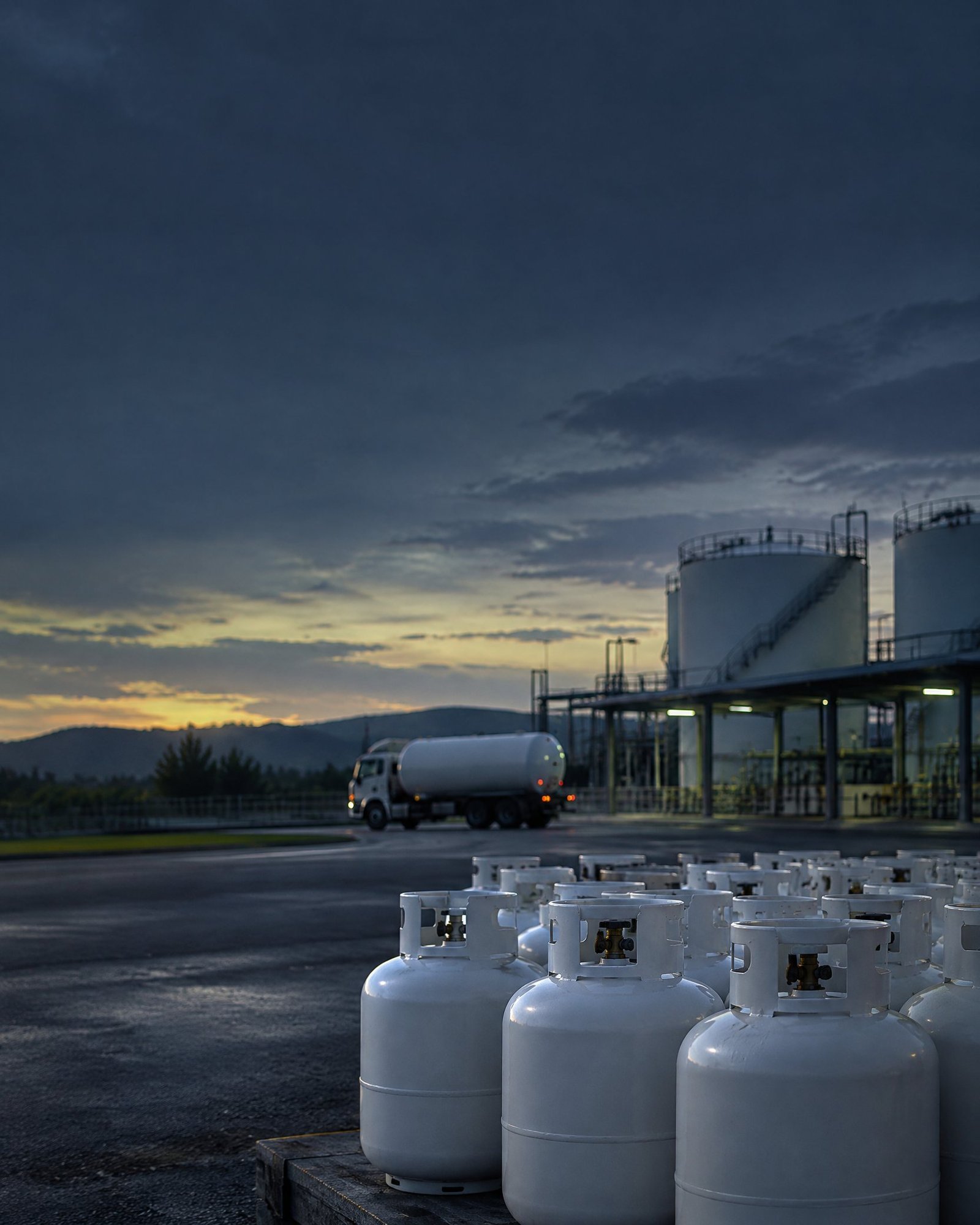
LPG Distribution and Petroleum Licensing in Bangladesh
Legal advice for importers, bottlers, LPG distribution companies, autogas operators, filling stations, dealers and investors on BERC licensing, explosives and storage approvals, safety, environmental clearance, pricing, dealership agreements, acquisitions and regulatory disputes and safety incidents in Bangladesh's petroleum sector.

- Map the licences
- Prepare the applications
- Document the business
- Protect the operation
How LPG distribution and petroleum licensing work in Bangladesh
Liquefied petroleum gas has become one of Bangladesh's main household and commercial fuels as new piped gas connections have been restricted. Most supply is imported and handled by private operators who run import terminals, storage, bottling plants and LPG distribution networks reaching dealers and retailers across the country, while state companies remain important in petroleum products. Every stage of that chain is licensed, and safety rules are strict because the products are hazardous. We advise operators and investors on the framework as part of our regulatory practice in Bangladesh, from first licence to transactions and disputes.
Two regulators sit at the centre. The Bangladesh Energy Regulatory Commission (BERC), established under the Bangladesh Energy Regulatory Commission Act 2003, issues licences for activities such as import, storage, bottling, marketing and distribution of LPG and certain petroleum products, and it now sets LPG prices on a regular basis. The Department of Explosives, under the Ministry of Power, Energy and Mineral Resources, licenses the storage and handling of petroleum and LPG under the Petroleum Act 2016 and the applicable gas cylinder and LP gas rules, including approvals for cylinders, storage premises and filling stations. Both regulators matter for LPG distribution.
Other approvals are layered on top. A bottling plant or terminal needs land and building permissions, environmental clearance from the Department of Environment, fire safety approval from the Fire Service and Civil Defence, a factory licence where applicable and, for import facilities, port and customs arrangements. Importers need import registration and must comply with Bangladesh Bank rules on letters of credit. Foreign investors must also register with Invest Bangladesh. Missing one approval can delay commissioning or expose the operator to penalties, so we map the full permit list at the start of each LPG distribution or petroleum project.
Commercial arrangements matter as much as licences. LPG distribution operators appoint distributors and dealers, lease or sell cylinders, supply autogas stations and enter into terminal access, throughput and supply agreements. Petroleum product retailing through filling stations usually involves dealership agreements with state-owned marketing companies. These contracts must reflect regulatory requirements on pricing, safety, cylinder ownership and record-keeping, and they need clear termination, territory and liability terms. Competition law also applies, particularly to exclusive arrangements and price coordination. Our corporate lawyers in Bangladesh draft and negotiate these agreements and advise on acquisitions in the sector.
Regulatory relationships continue after licensing. BERC reviews compliance with licence conditions and price orders, the Department of Explosives inspects storage and cylinders, and accidents can lead to investigations, licence action and civil or criminal liability. Operators may also need to challenge decisions they consider unlawful, such as pricing orders or refusals to renew. Our team, including Barrister Tahmidur Rahman on energy transactions and Adv Syed Wahid on litigation, supports clients through inspections, enforcement, tariff proceedings and writ petitions, and we work with counsel in the UAE, Singapore and India, which are common sources of LPG supply and capital.
Core workstreams
Four clear stages
- 01Map the licences
- 02Prepare the applications
- 03Document the business
- 04Protect the operation
Talk to a partner
Consultations in Dhaka or by video. Scope, team and fees are agreed in writing first.
Book →How we support LPG and petroleum businesses

BERC licensing and renewals
- Map the licences
- Prepare the applications
- Document the business
- Protect the operation
Explosives and storage approvals
- Map the licences
- Prepare the applications
- Document the business
- Protect the operation
Project permits and plant development
- Map the licences
- Prepare the applications
- Document the business
- Protect the operation
Distribution, dealer and supply contracts
- Map the licences
- Prepare the applications
- Document the business
- Protect the operation
Investment and transactions
- Map the licences
- Prepare the applications
- Document the business
- Protect the operation
Pricing, enforcement and disputes
- Map the licences
- Prepare the applications
- Document the business
- Protect the operation
BERC licensing and renewals
We advise on the BERC licences needed for import, storage, bottling, marketing, LPG distribution and other petroleum activities, prepare applications, and respond to BERC queries and hearings. We also handle renewals, amendments for new capacity or locations, transfers on change of ownership and compliance with licence conditions, so that operations can expand without regulatory gaps or avoidable suspension of business activity. We keep licence records organised for audits and due diligence.
Explosives and storage approvals
We assist with Department of Explosives licences for petroleum and LPG storage, cylinder filling and handling, approval of cylinder designs and imports, and licences for filling stations and autogas outlets. We coordinate technical submissions with engineers, help clients prepare for inspections and advise on corrective actions where an inspector raises concerns about layout, distances, equipment or record-keeping at a site. Storage compliance underpins every safe LPG distribution network.
Project permits and plant development
For new terminals, storage depots and bottling plants, we prepare a permit roadmap covering land, building approvals, environmental clearance, fire safety, factory licensing, port access and utilities. We review EPC, equipment supply and operation contracts, and we advise on the sequencing of approvals so that construction and commissioning follow a realistic timetable without exposing the project to stop-work orders. Early planning reduces the risk of delay to LPG distribution start dates.
Distribution, dealer and supply contracts
We draft and negotiate LPG distribution agreements, dealer and retailer terms, cylinder deposit and exchange arrangements, autogas supply contracts, terminal access and throughput agreements, and import supply contracts with foreign traders. We address price adjustment in light of regulated prices, credit, territory, exclusivity, safety obligations, cylinder ownership, insurance, termination and dispute resolution, reflecting both regulatory and competition law requirements. Template agreements can be prepared for national dealer networks.
Investment and transactions
We advise investors and lenders on acquisitions, joint ventures and financing of LPG and petroleum businesses, including regulatory due diligence on licences, safety records, environmental compliance, land and litigation. We structure deals so that licences can be transferred or retained, obtain required approvals, and draft security packages over plant, cylinders and receivables that reflect regulatory constraints on assets used in licensed activities. We also assess the value and enforceability of LPG distribution contracts and dealer networks during due diligence.
Pricing, enforcement and disputes
We advise on BERC price determinations, submissions in pricing proceedings and compliance with price orders by distributors and retailers. When regulators inspect, issue show-cause notices, impose penalties or suspend licences, we prepare responses and represent clients. We also act in disputes with dealers, suppliers and partners, accident-related claims and judicial review of regulatory decisions in the High Court Division. We also handle consumer complaints about LPG distribution, including overcharging allegations.
Partner-led, on every matter.
Trade, Competition & Regulation matters at TRW are led by partners, supported by associates, with one responsible lawyer from first advice to final outcome.
Meet the firm →



01Which licences are needed to start an LPG distribution business in Bangladesh?
It depends on where the business sits in the chain. An importer and bottler typically needs BERC licences for import, storage, bottling and marketing, Department of Explosives licences for storage and cylinder filling, environmental clearance, fire safety approval, factory and trade licences, and import registration. A distributor or dealer handling filled cylinders needs its own trade licence and, above specified quantities, a storage licence from the Department of Explosives, and may need BERC registration or licensing depending on the activity. We prepare a tailored licence map for each LPG distribution business model before investment begins.
02What is the role of BERC in LPG distribution?
BERC licenses energy businesses, including those that import, store, bottle, market and distribute LPG, and sets licence conditions on matters such as safety, reporting and service. Since 2021, BERC has also determined consumer prices for LPG on a periodic basis, following a court direction, and operators must comply with those price orders. BERC can inspect licensees, impose penalties and hear disputes involving licensees and consumers. We advise on licence applications, submissions in price proceedings and compliance with BERC orders across the LPG distribution chain. Price compliance is a frequent inspection focus, so we monitor each new order.
03Do LPG retailers need a licence to store cylinders?
Small retailers holding a limited number of filled cylinders may be exempt from a storage licence, but above the quantities specified in the applicable rules a licence from the Department of Explosives is required, along with conditions on premises, ventilation, distances and fire safety. A trade licence from the local authority is also needed. Thresholds and conditions should be checked against the current rules for each site. Operators that supply retailers should require evidence of compliance in their dealer agreements, since unsafe storage by dealers can cause serious accidents and reputational harm to the brand.
04How is a petroleum filling station or autogas station licensed?
A filling station generally needs a licence from the Department of Explosives for storage and dispensing of petroleum, approval of its layout and equipment, environmental clearance, fire safety approval, land and building permissions and a trade licence. Many stations operate as dealers of state-owned marketing companies under dealership agreements. Autogas stations require approvals for LPG storage and dispensing, and conversion workshops have their own requirements. Road and highway authorities may also be involved for some roadside sites. We help investors and dealers obtain approvals and negotiate dealership terms. Station sites need careful title due diligence.
05Can a foreign company invest in LPG distribution in Bangladesh?
Yes. Foreign investment in LPG import, storage, bottling and distribution is generally permitted, and several operators have foreign shareholders or partners. The investor must register with Invest Bangladesh, comply with Bangladesh Bank rules on capital inflows, loans and repatriation, and ensure that the operating company holds or obtains all sector licences. Acquisitions of existing operators require careful due diligence, as licences may be subject to approval on change of ownership, and larger deals may need merger clearance from the Bangladesh Competition Commission. We advise on structuring, approvals and transaction documents. Timing of approvals often drives the deal timetable.
06What safety obligations apply to LPG cylinders?
Cylinders must meet approved design standards, and their import, manufacture, filling, testing and requalification are regulated under the gas cylinder and LP gas rules administered by the Department of Explosives. Operators must keep records of cylinders, test them at prescribed intervals, remove defective cylinders from use and train staff and dealers. Accidents involving cylinders can lead to criminal investigation, licence action and compensation claims. We help operators review their safety compliance, cylinder management procedures and contractual arrangements with dealers, and advise immediately after incidents on evidence, cooperation with authorities and liability. Training records are often examined.
07Can we challenge a BERC pricing order?
BERC price determinations follow a public process, and operators can make submissions before an order is issued. After an order is made, the legislation provides for review in certain circumstances, and decisions may be challenged in the High Court Division by writ petition where there are grounds such as lack of authority, procedural unfairness or irrationality. Courts generally give weight to the regulator's expertise. A challenge needs a strong legal basis and evidence, and it may affect the operator's regulatory relationship. We advise on submissions, review applications and litigation strategy. Timing of any challenge is important.
08What should an LPG distribution agreement include?
A distribution agreement should cover territory and exclusivity, supply volumes and forecasting, pricing mechanisms that reflect regulated prices, credit and security, cylinder ownership, deposits and exchange, branding, safety and storage obligations, record-keeping, insurance, compliance with BERC and Department of Explosives requirements, termination rights and dispute resolution. Exclusivity and resale price clauses should be reviewed for competition law risk. Clear allocation of responsibility for accidents and regulatory breaches is essential. We draft agreements that work commercially and remain defensible if the regulator or a court examines them. We also review existing LPG distribution agreements against new regulatory orders.
From first call to resolution.
- 01
Map the licences
We review the planned activity, sites and corporate structure and set out every licence and approval required, including BERC, explosives, environmental, fire safety and investment registration, with realistic sequencing for LPG distribution and petroleum projects of every size.
- 02
Prepare the applications
We prepare and review applications and supporting documents, coordinate with engineers and consultants on technical drawings and safety reports, and engage with regulators to answer queries and arrange inspections at each LPG distribution site or plant.
- 03
Document the business
We draft supply, distribution, dealer, terminal and construction contracts, align them with licence conditions and price orders, and set up a compliance calendar for renewals, reporting, cylinder testing and inspections. Staff receive simple, practical checklists for daily LPG distribution operations.
- 04
Protect the operation
We support clients during inspections, enforcement, incidents and disputes, advise on licence amendments as the business grows, and represent clients in regulatory hearings, arbitration and proceedings in the High Court Division. Contact us as soon as an inspection notice or incident report arrives so that the first response is considered.

“Demonstrates an extraordinary command over both domestic litigation and international arbitration.”
The Legal 500 Asia Pacific, Bangladesh: Dispute resolution, client feedback
Related reading.
Power and Energy Law in Bangladesh 2026: BERC, Power Contracts and Energy Deals
Energy Company Registration in Bangladesh: 2026 Guide
Fire License in Bangladesh: Fire Service Licence Process, Building Clearance and Penalties in 2026
Environmental Compliance in Bangladesh 2026: ECC Renewal, ETPs, Inspections and Penalties
All insights →
Who sets LPG prices in Bangladesh?
Do LPG distribution companies need environmental clearance?
How long does a BERC licence last?
Can an LPG distribution dealer be terminated without notice?
What happens after an LPG accident?
Is autogas regulated differently from cylinder LPG?
Can we import LPG directly from foreign suppliers?
How do we start a project with TRW?
Build a licensed, defensible LPG and fuel business
Speak with the partners about LPG distribution in Bangladesh or across borders.
Book a consultation →











