
Rail, Metro and Urban Transit in Bangladesh
Legal support for rail, metro and urban transit projects in Bangladesh, including metro rail lines, mainline and cross-border railways, bus rapid transit and station developments, for contractors, rolling stock and systems suppliers, operators, consultants, lenders and investors working with public transport authorities and funding agencies.

- Review the framework
- Bid and negotiate
- Administer the contract
- Resolve and close out
Urban transit and rail projects in Bangladesh
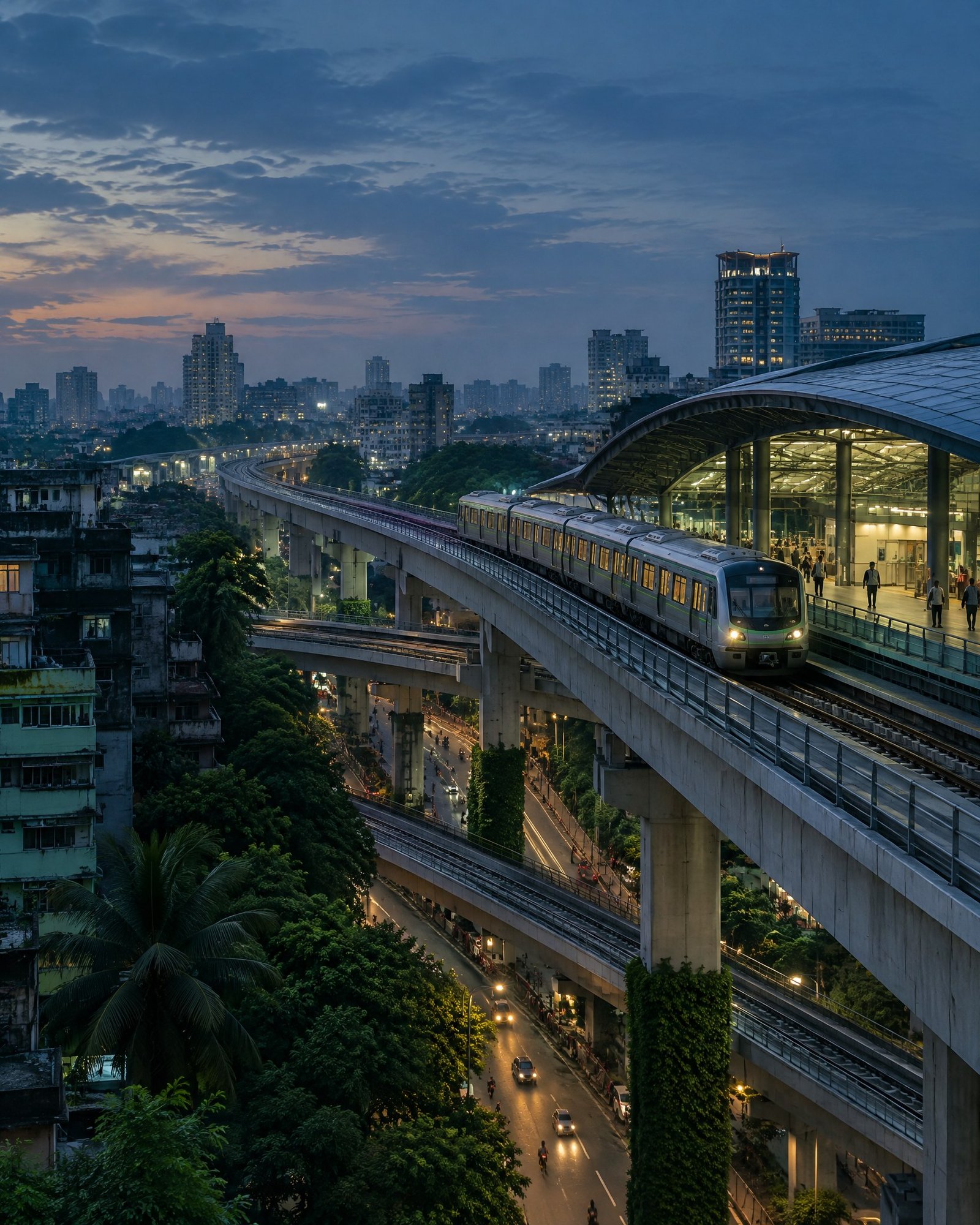
Dhaka's first metro line changed daily travel for many commuters and showed what modern urban transit can do for a congested city. Further metro lines, bus rapid transit, mainline railway expansion and new cross-border rail links are planned or under construction, largely funded by development partners and delivered through large construction and systems contracts. These projects bring together state agencies, international contractors, local subcontractors, consultants and lenders under demanding timetables. We advise participants on the legal framework and their contracts, as part of our projects and infrastructure practice in Bangladesh, with support from our disputes team.
Several public bodies are involved. Dhaka Mass Transit Company Limited, a state-owned company, implements and operates the metro rail lines under the Metro Rail Act 2015 and the Road Transport and Highways Division. Bangladesh Railway, under the Ministry of Railways, owns and operates the national network under railway legislation dating back to 1890 and newer rules. The Dhaka Transport Coordination Authority plans and coordinates transport in the capital, and bus rapid transit has been implemented through dedicated state companies. Understanding each body's powers, approval chain and funding source is essential for anyone working on urban transit.
Most major rail and metro contracts are funded by development partners such as the Japan International Cooperation Agency, the Asian Development Bank and the World Bank, or through government-to-government credit lines from countries including China and India. Funding agreements often decide the procurement rules, eligible bidders, contract forms, dispute processes and integrity requirements, overriding parts of the domestic public procurement regime. Contractors therefore need to read the loan agreement framework alongside the tender documents. We advise bidders and contractors on these interactions, including debarment risk under development bank integrity rules, and where domestic procurement law still applies.
Urban transit projects carry distinctive risks. Construction takes place in dense city areas with utilities, traffic and neighbouring buildings; land acquisition and resettlement can delay access; systems integration between civil works, track, signalling, power and rolling stock requires tight interface management; and operation and maintenance arrangements must be planned before opening. Payment delays and foreign exchange constraints have also affected urban transit contractors. We help clients identify and allocate these risks in their contracts, keep records that support claims, and manage variations, extensions of time and disputes in a way that preserves working relationships with public employers.
Disputes on rail and urban transit projects typically concern delay, disruption, variations, ground conditions, utility relocation, payment, performance testing, defects and termination. Many contracts based on FIDIC conditions use dispute boards, followed by arbitration. Domestic disputes may proceed under the Arbitration Act 2001 or before the courts, including the new commercial courts under the Commercial Courts Act 2026 where they have jurisdiction. Barrister Tahmidur Rahman and Barrister Remura Meheruba Mahbub advise on project contracts and international arbitration, supported by our dispute resolution team. We also work with counsel in the UK, US, UAE, China, India and Singapore.
Core workstreams
Four clear stages
- 01Review the framework
- 02Bid and negotiate
- 03Administer the contract
- 04Resolve and close out
Talk to a partner
Consultations in Dhaka or by video. Scope, team and fees are agreed in writing first.
Book →How we help rail and urban transit clients

Bids, procurement and challenges
- Review the framework
- Bid and negotiate
- Administer the contract
- Resolve and close out
Civil works and EPC contracts
- Review the framework
- Bid and negotiate
- Administer the contract
- Resolve and close out
Rolling stock and systems
- Review the framework
- Bid and negotiate
- Administer the contract
- Resolve and close out
Operations, maintenance and PPPs
- Review the framework
- Bid and negotiate
- Administer the contract
- Resolve and close out
Land, utilities and approvals
- Review the framework
- Bid and negotiate
- Administer the contract
- Resolve and close out
Claims, disputes and enforcement
- Review the framework
- Bid and negotiate
- Administer the contract
- Resolve and close out
Bids, procurement and challenges
We review tender documents and funding agreement requirements for metro, railway and urban transit packages, advise on consortium and joint venture arrangements, local registration and tax, and help prepare compliant bids. Where procurement decisions appear unfair or unlawful, we advise on complaints, review panel appeals and writ proceedings, and on the integrity and sanctions rules of development lenders. We also advise on joint venture exit and replacement.
Civil works and EPC contracts
We negotiate and administer construction contracts for viaducts, tunnels, stations, depots, track and bridges, usually based on FIDIC forms with particular conditions. We focus on site access, ground and utility risk, extensions of time, variations, payment, performance security, delay damages and dispute boards, and support contractors and employers throughout the project with notices, claims and contract administration. Good records support later claims.
Rolling stock and systems
For suppliers of rolling stock, signalling, telecommunications, power supply, fare collection and depot equipment, we advise on supply and integration contracts, testing and commissioning, warranties, spare parts, technology transfer, intellectual property, customs and tax. We help suppliers manage interface obligations with civil contractors and other systems providers, which often drive delays and claims on urban transit projects. Clear drafting reduces later disputes over defects.
Operations, maintenance and PPPs
We advise on operation and maintenance contracts, concession and PPP structures for transit lines and stations, now handled through Invest Bangladesh following the 2026 merger of the former PPP Authority, and on transit-oriented property development around stations. Key issues include performance regimes, fare and revenue risk, availability payments, staff transfer, asset condition and handback at the end of the term. Urban transit PPPs need careful risk allocation.
Land, utilities and approvals
Rail and metro alignments depend on land acquisition, resettlement, utility relocation and approvals from city corporations, development authorities and other agencies. We advise on the legal process for acquisition and compensation, agreements with utility owners, environmental and social requirements of lenders, and the contractual consequences when access to land or utility relocation is late. Early planning of access and relocation reduces costly delay and disruption.
Claims, disputes and enforcement
We prepare and defend claims for delay, disruption, variations, payment and termination, and represent clients before dispute boards, in arbitration and before the Bangladesh courts. We work alongside international claims consultants and arbitration counsel, advise on Bangladesh law issues such as limitation and liquidated damages, and enforce awards and judgments against counterparties in Bangladesh. Early advice often narrows the issues in dispute and saves cost.
Partner-led, on every matter.
Projects & Real Estate matters at TRW are led by partners, supported by associates, with one responsible lawyer from first advice to final outcome.
Meet the firm →



01Who are the main employers and public bodies on urban transit and rail projects in Bangladesh?
For metro rail in Dhaka, the main employer is Dhaka Mass Transit Company Limited, a state-owned company operating under the Metro Rail Act 2015. Railway projects are usually procured by Bangladesh Railway or through project offices under the Ministry of Railways. Bus rapid transit has been delivered through dedicated state companies, and the Dhaka Transport Coordination Authority has a planning and coordination role. Funding agencies also influence procurement and contract administration. We help clients identify the correct employer entity, its authority to contract and the approvals behind its payment obligations before they sign. This avoids disputes about authority later.
02Do Bangladesh public procurement rules apply to donor-funded rail projects?
Partly. Where a project is funded by a development partner, the loan or credit agreement often requires the use of the lender's procurement rules or standard bidding documents, and those requirements generally take priority over conflicting domestic rules. The national public procurement law and rules continue to apply where they are not displaced, and to government-funded projects. Government-to-government credit lines may impose their own conditions, such as eligible contractors from the lending country. We review the funding framework for each package, explain which rules apply and how complaints or challenges would be handled. Bidders should confirm this early, before pricing.
03What are the biggest contractual risks on urban transit civil works in Dhaka?
Common risks include delayed access to land, unidentified utilities and their relocation, unforeseen ground conditions, traffic management restrictions, damage to neighbouring buildings, design changes by the employer, interface problems with systems contractors, and payment delays. FIDIC-based contracts provide mechanisms for many of these, but particular conditions frequently shift risk to the contractor. Compliance with notice requirements is critical, because late notices can defeat valid claims. We review risk allocation before signing and support contract administration during the works so that entitlements are preserved and properly documented. Urban transit contractors should keep detailed contemporaneous records from mobilisation onwards, including photographs.
04How should rolling stock, signalling and systems suppliers manage interface risk?
Systems suppliers depend on civil works, track, power and other systems being ready on time and built to agreed interfaces. Their contracts should define interface obligations, testing sequences, access to site, responsibility for integration failures and the consequences of delays caused by others. Clear interface management procedures and records are essential. Warranties, performance guarantees and liability caps need careful drafting, because defects and integration problems can surface long after delivery. We review supply and integration contracts and advise suppliers on claims when other parties' delays disrupt testing and commissioning. Clear, agreed interface schedules reduce urban transit disputes considerably.
05Can private investors take part in urban transit through PPPs?
Yes, in principle. Public-private partnership models can be used for transit lines, stations, depots, bus fleets and property development around stations, with procurement now handled through Invest Bangladesh following the merger of the former PPP Authority in August 2026. The viability of a PPP depends on fare policy, government support, demand risk, land value capture and the legal framework for concession rights. Bankability requires clear termination compensation and step-in rights for lenders. We advise investors and lenders on PPP structures, tender documents and negotiation with public authorities. Political support and long-term fare policy matter as much as the contract.
06What can a contractor do when payments from a state employer on a transit project are delayed?
First, check the contract for payment periods, interest on late payment, suspension rights and the dispute process, and make sure invoices and certificates meet every formal requirement. For donor-funded projects, the funding agency may have procedures for disbursement and complaints. Many delays are resolved through formal notices and senior-level meetings, but contractors should preserve their rights by following contractual procedures carefully. If delays persist, claims can be referred to the dispute board and then arbitration. We advise on notices, negotiation strategy and, where needed, formal proceedings and enforcement. Early, structured and documented escalation usually produces better results than silence.
07How are disputes on rail and urban transit projects usually resolved in practice?
Large contracts based on FIDIC conditions usually require referral of disputes to a dispute board or adjudicator first, followed by amicable settlement and arbitration, often under international rules with a seat inside or outside Bangladesh depending on the funding agency and negotiation. Domestic disputes may be resolved under the Arbitration Act 2001 or by the courts. Decisions of public authorities may be challenged by writ in the High Court Division. Bangladesh is a party to the New York Convention. We plan dispute strategy early, preserve evidence and coordinate with international counsel where needed. Disputes benefit from early, structured preparation.
08Does land acquisition affect urban transit project timetables?
Very often. Alignments for metro lines, depots, stations and railway extensions require land acquisition, resettlement of occupants and relocation of utilities, all of which take time and can be challenged in court. Development lenders also require compliance with their environmental and social safeguards. When access to land is late, contractors may be entitled to extensions of time and additional costs under their contracts, provided notices and records are in order. We advise employers on the acquisition process and contractors on protecting their entitlements when land is not available as planned. Early planning of land handover reduces later disputes.
From first call to resolution.
- 01
Review the framework
We first identify the employer, funding source, applicable procurement rules and contract form, and explain the legal framework, approvals and the key risks for the client's role in the rail or transit project before any commitment is made.
- 02
Bid and negotiate
We support bid preparation and pricing, consortium agreements and clarifications, and negotiate contract terms on risk allocation, payment, security, delay and disputes before the client commits to the project so that its obligations are clear and priced from the start.
- 03
Administer the contract
During the works, we advise on notices, variations, extensions of time, payment, interfaces, claims and records, helping the client to protect its entitlements while keeping the project moving forward and relationships workable throughout the urban transit project.
- 04
Resolve and close out
We handle dispute board referrals, negotiations, arbitration and court proceedings, and advise on completion, taking over, defects liability, release of securities and final account settlement at the end of the project, so the client can close it cleanly.

“Demonstrates an extraordinary command over both domestic litigation and international arbitration.”
The Legal 500 Asia Pacific, Bangladesh: Dispute resolution, client feedback
Related reading.

Infrastructure Projects in Bangladesh: G2G, PPP and Project Development Law
EPC Contracts in Bangladesh (2026): FIDIC, O&M, G2G Projects and Contractor Debarment
Unpaid on a Bangladesh Infrastructure Project? Protecting Claims Before Deadlines Expire

Land Acquisition in Bangladesh: 2026 Guide
All insights →
Which law governs metro rail construction and operation in Bangladesh?
Are urban transit contracts in Bangladesh usually based on FIDIC forms?
Can foreign contractors work on rail and metro projects in Bangladesh?
What tax issues usually affect foreign rail and metro contractors?
What is transit-oriented development around urban transit stations?
Can project decisions by urban transit authorities be challenged?
Does sanctions or debarment risk arise on donor-funded rail projects?
Can TRW act for both employers and contractors on transit projects?
Keep your transit project on track, legally
Speak with the partners about Urban transit in Bangladesh or across borders.
Book a consultation →











