
Nari o Shishu case process in Bangladesh: from FIR or complaint to the Tribunal's verdict and appeal
The Nari o Shishu case process in Bangladesh is the special procedure under the Nari o Shishu Nirjatan Daman Ain 2000 for rape, dowry violence, abduction, trafficking-related and other serious offences against women and children, tried by a dedicated Tribunal presided over by a District and Sessions Judge.
The 2025 reforms, effective from 25 March 2025 and enacted by Act No. 85 of 2026, shortened investigation and trial deadlines, created Child Violence Prevention Tribunals for child rape, strengthened victim protection and cut the appeal period to 30 days. This journey follows a case from the police station or a direct complaint through investigation, bail, trial, judgment, appeal and the Appellate Division.
- Where it starts
- Any police station (the officer in charge must record the FIR), or a sworn complaint directly to the Nari o Shishu…
- Main law
- Nari o Shishu Nirjatan Daman Ain 2000 (as amended in 2003, 2020 and by Act No. 85 of 2026), especially ss.9-11, 17-22, 24-32B…
- Typical duration
- By statute, investigation takes 15 or 30 working days (extendable by 15) and trial 180 working days, or 90 working days…
- Who can file
- The victim, a family member or any person with knowledge can lodge an FIR; a complaint to the Tribunal requires an…
Nari o Shishu case process in Bangladesh: walk through every stage
Press next, use your arrow keys or tap a court on the map. The gold marker shows where your case is, and the green trail shows the route it has taken. For the immersive version, play it full screen.
Read every step as text
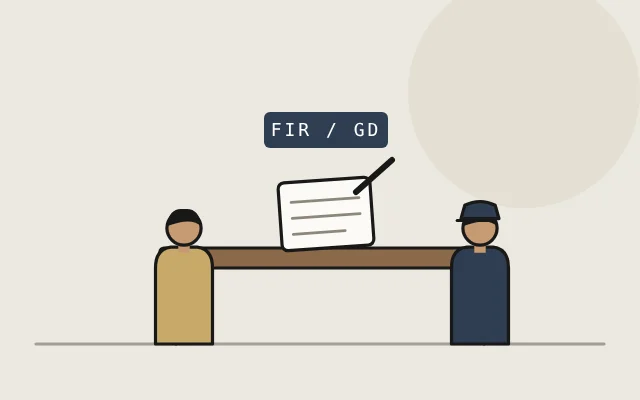 Step 1 · Reporting, medical care and protection
Report to the police: the FIR must be recorded
The Nari o Shishu case process in Bangladesh usually begins at a police station. Since 2025, section 25A requires the officer in charge to record the complaint as an FIR at once when the complainant arrives with initial evidence. The officer must also arrange the victim's medical examination and treatment. A station cannot turn the complainant away because the incident happened in another station's area. It must record the statement, arrange the medical examination and forward the case with the diary to the correct station.
All offences under the Act are cognizable (s.19(1)), so the police can arrest without a warrant.
Where: Police station (Officer-in-Charge and Investigating Officer) · Time: Same day · Law: s.25A Nari o Shishu Nirjatan Daman Ain 2000 (inserted 2025); s.19(1) Nari o Shishu Nirjatan Daman Ain 2000; s.154 CrPC 1898 · Documents: Written ejahar, National ID or birth certificate of victim, Any photos, messages or torn clothing
Tip: Keep clothing and other physical evidence in a paper bag, not plastic, and do not wash before the medical examination if possible.
 Step 2 · Reporting, medical care and protection
Medical examination and DNA sampling
The victim, and the accused when produced by police, are examined at a government hospital or a recognised private hospital using up-to-date methods. There is no fee when the victim attends a government hospital or is brought by the police. The duty doctor must examine the victim quickly and, within 72 hours of the examination, give the certificate free to the victim or family and to the investigating officer.
In rape cases the investigating officer may arrange a DNA test under the DNA Act 2014, with or without consent, but needs the approval of the Tribunal or Magistrate. One-Stop Crisis Centres in major government hospitals provide medical, police and legal support in one place.
Where: Government hospital / One-Stop Crisis Centre · Time: Same day; certificate within 72 hours · Law: s.32(1)-(3) Nari o Shishu Nirjatan Daman Ain 2000 (amended 2025); s.32A Nari o Shishu Nirjatan Daman Ain 2000; DNA Act 2014 · Documents: Medical certificate, DNA sample records, Hospital admission or treatment papers
Tip: Ask for the medical certificate in writing; a delay beyond 72 hours can be reported to the Tribunal, which may direct action against the doctor.
 Step 3 · Reporting, medical care and protection
Victim's statement and protection orders
The investigating officer may ask a first-class Magistrate to record the statement of the victim or an eyewitness promptly. The Magistrate can record it at the scene or any suitable place, including a hospital (s.22). The statement goes into the investigation report and can be used in evidence if the witness later dies or cannot be found, though it cannot be the sole basis of a conviction.
The Magistrate or Tribunal can also order safe custody outside jail for a woman or child, after considering her view, and can make orders to protect the complainant, victim and witnesses.
Where: Chief Metropolitan Magistrate Court, Dhaka (remand, statements) · Time: 1-7 days · Law: s.22 Nari o Shishu Nirjatan Daman Ain 2000; s.164 CrPC 1898; ss.20(8), 31, 32B Nari o Shishu Nirjatan Daman Ain 2000 · Documents: Recorded statement, Safe custody or protection order
Tip: A victim should not be sent to jail 'for safety'; since 2025 safe custody must be outside jail at a government-designated place or with a suitable person or organisation.
 Step 4 · Reporting, medical care and protection
If police refuse: complaint directly to the Tribunal
If the police refuse to accept the case, the complainant may file a complaint with the Tribunal, supported by an affidavit stating the refusal. The Tribunal examines the complainant. If it is satisfied, it directs a Magistrate or another person to inquire, and that person must report within seven working days. If not satisfied, it rejects the complaint. On the report, the Tribunal takes cognizance if the refusal and prima facie evidence are shown, and rejects the complaint otherwise.
Since 2025, in suitable cases the Tribunal can instead order the officer in charge to treat the complaint as an FIR.
Where: Nari o Shishu Nirjatan Daman Tribunal, Dhaka · Time: Filing same day; inquiry 7 working days · Law: s.27(1A)-(1D) Nari o Shishu Nirjatan Daman Ain 2000 · Documents: Complaint petition, Affidavit of police refusal, Supporting documents
Tip: Record exactly when and to whom you went at the police station; the affidavit of refusal is the gateway to a direct complaint.
 Step 5 · Investigation
Arrest, remand and first bail hearing
An arrested accused must be produced before a Magistrate within 24 hours. The investigating officer may seek police remand under section 167 CrPC, which is capped at 15 days in total in police custody, with medical checks before and after. Because the Tribunal is deemed a Court of Session, the CrPC applies except where the Act differs (s.25(1)). Bail at this stage is restricted by section 19, which applies to the Tribunal or the court with jurisdiction.
Magistrates are therefore cautious, and most bail applications for main accused go to the Tribunal or the High Court Division.
Where: Chief Metropolitan Magistrate Court, Dhaka (remand, statements) · Time: Within 24 hours; remand of 1-7 days is common · Law: s.61 CrPC 1898; s.167(2), (2A) CrPC 1898 (as amended by Act XI of 2026); s.25(1) Nari o Shishu Nirjatan Daman Ain 2000; s.19 Nari o Shishu Nirjatan Daman Ain 2000 · Documents: Forwarding report, Remand prayer, Bail petition, Medical report of accused
Tip: The complainant's lawyer should attend the first production to be heard on bail; s.19(2) makes that hearing a condition of bail for the main accused.
 Step 6 · Investigation
Investigation within strict working-day limits
Speed is built into the Nari o Shishu case process in Bangladesh. Under section 18, as amended in 2025, the investigation must finish within 15 working days if the accused was caught in the act. Otherwise it must finish within 30 working days (formerly 60) from the first information or the order to investigate. If that is not possible, the investigating officer must report the reasons with the case diary before the deadline. The Tribunal or Magistrate may then allow 15 more working days, or the minimum time needed where a DNA test is pending.
Unexcused delay is recorded as misconduct. These limits apply instead of the general 60-working-day limit in section 173B CrPC. In rape cases under section 9, the investigating officer cannot be transferred by administrative order.
Where: Police station (Officer-in-Charge and Investigating Officer) · Time: 15 or 30 working days, plus 15 on extension · Law: s.18(1), (2), (6), (10) Nari o Shishu Nirjatan Daman Ain 2000 (amended 2025); ss.156-161 CrPC 1898; s.173B CrPC 1898 (general limit, displaced by s.18(1)) · Documents: Case diary, Delay report with reasons, Seizure lists, Witness statements
Tip: Victims can ask the Tribunal or Magistrate to replace a slow or biased investigating officer under s.18(9).
 Step 7 · Investigation
Police report, naraji and further investigation
The investigating officer submits a charge sheet or final report. If the complainant files a naraji (objection) against it, the Tribunal may appoint a new investigating officer for further investigation, which must finish within 15 working days of the order. After reviewing the report, the Tribunal can direct that a person named as accused be treated as a witness in the interest of justice. If the investigation was deliberately or negligently flawed, it can direct action against the investigating officer and, since 2025, against a superior who directed the flaw.
Where: Nari o Shishu Nirjatan Daman Tribunal, Dhaka · Time: 1-3 months · Law: s.18(3), (7), (8) Nari o Shishu Nirjatan Daman Ain 2000; s.173 CrPC 1898 · Documents: Charge sheet or final report, Naraji petition, Order for further investigation
Tip: File the naraji with specific, documented gaps, for example witnesses not examined or DNA not collected; the Tribunal can then order a new officer.
 Step 8 · Cognizance and bail
Cognizance by the Tribunal
The Tribunal takes cognizance on the written report of a police officer not below sub-inspector, or of an authorised person (s.27(1)). It can also take cognizance against a person not recommended in the report if it records reasons (s.27(1C)). The case is heard by the Tribunal where the offence or part of it was committed, or where an accused was found. Connected offences can be tried together. Child rape cases go to a Child Violence Prevention Tribunal where one has been set up (s.26A, inserted 2025). Otherwise the regular Tribunal hears them.
Where: Nari o Shishu Nirjatan Daman Tribunal, Dhaka · Time: 1-3 months after the report · Law: ss.26, 26A, 27(1)-(3) Nari o Shishu Nirjatan Daman Ain 2000 · Documents: Order taking cognizance, Warrants for absent accused
Tip: Check which Tribunal number in Dhaka has the case; there are several, and child-rape cases may be routed to a separate tribunal.
 Step 9 · Cognizance and bail
Bail under the section 19 restrictions
Bail is the most contested stage of the Nari o Shishu case process in Bangladesh. The main and directly accused cannot be granted bail unless the complainant has had a chance to be heard and the Tribunal, or the court with jurisdiction, is satisfied on the strength of the accusation, as section 19(2) requires. A woman, a child or a sick or infirm accused may be bailed if justice will not be hampered (s.19(3)). Other accused, such as people alleged to have helped, may be bailed with recorded reasons (s.19(4)).
If the Tribunal refuses, the accused may apply to the High Court Division under section 498 CrPC.
Where: Nari o Shishu Nirjatan Daman Tribunal, Dhaka · Time: 1 hearing to several months · Law: s.19(2)-(4) Nari o Shishu Nirjatan Daman Ain 2000 (amended 2025); s.498 CrPC 1898 · Documents: Bail petition, Notice to complainant, Bail bond and sureties
Tip: Under s.35, simple-hurt dowry cases under s.11(c) are now tried by a first-class Magistrate and are compoundable, so different bail rules apply there.
 Step 10 · Trial before the Tribunal
Framing of charge and trial in absentia
The Tribunal follows the Sessions procedure in the CrPC. The prosecutor opens the case, the court hears discharge arguments, frames the charge and asks the accused to plead. If the accused is absconding, the Tribunal can direct him to appear within a set period through IT-based notice, a Bengali national daily or other means. If he does not appear, it can try him in his absence. An accused who absconds after appearing or after bail can be tried in absence without that notice.
Where: Nari o Shishu Nirjatan Daman Tribunal, Dhaka · Time: 1-3 months · Law: ss.265C-265E CrPC 1898; s.21 Nari o Shishu Nirjatan Daman Ain 2000 (substituted 2025) · Documents: Charge framed, Notice or newspaper publication for absent accused
Tip: Absconding helps no one: the trial can proceed without the accused, and evidence goes unchallenged.
 Step 11 · Trial before the Tribunal
Witnesses, day-to-day hearing and in-camera trial
Once hearing begins, it must continue every working day until it ends (s.20(2)). Summons for witnesses go to the officer in charge of the witness's local police station, who must ensure attendance. A copy may also go by registered post to the witness and the Superintendent or Commissioner of Police (s.24). Rape trials can be held in camera (s.20(6)). Since 2025, distant witnesses can testify through information technology (s.24(4)), and the Tribunal can award witnesses travel and time allowances. Child witnesses are dealt with under the Children Act 2013 as far as possible.
Where: Nari o Shishu Nirjatan Daman Tribunal, Dhaka · Time: 3-18 months · Law: ss.20(2), 20(6), 20(7), 24, 32B Nari o Shishu Nirjatan Daman Ain 2000; s.265F CrPC 1898 · Documents: Witness summons, Medical and DNA reports, Deposition sheets
Tip: Ask for an in-camera hearing in sexual offence cases; it reduces the pressure on the victim and is expressly allowed.
 Step 12 · Trial before the Tribunal
Expert evidence, presumptions and the defence case
Reports of government doctors, chemical examiners, DNA and other experts can be admitted if the expert is dead or cannot be produced, but they cannot be the sole basis of conviction (s.23). Since 2025, where the victim lacked capacity to consent, the Tribunal may presume there was no consent (s.24A). In rape cases it may decide on the medical certificate and circumstantial evidence where it considers that appropriate (s.20(9)). The accused is then examined under section 342 CrPC, may call defence evidence, and both sides argue.
Where: Nari o Shishu Nirjatan Daman Tribunal, Dhaka · Time: 1-4 months · Law: ss.20(9), 23, 24A Nari o Shishu Nirjatan Daman Ain 2000; s.342 CrPC 1898 · Documents: Expert reports, Record of s.342 examination, Defence documents
Tip: The defence should test the chain of custody of DNA samples carefully; gaps in labelling or storage are a common line of challenge.
 Step 13 · Trial before the Tribunal
Trial deadlines and accountability
The Tribunal must finish the trial within 180 working days of receiving the case. Rape cases under section 9 must finish within 90 working days of the charge being framed (s.20(3A), inserted 2025). If a case is not disposed of in time, the Tribunal reports the reasons to the Supreme Court within 30 days, and the Public Prosecutor and police report to the Government. For a rape case, the judge must explain the delay within three working days. A public official responsible for delay can face misconduct action.
Where: Nari o Shishu Nirjatan Daman Tribunal, Dhaka · Time: 180 working days (90 from charge in rape cases) · Law: s.20(3), (3A), (4) Nari o Shishu Nirjatan Daman Ain 2000; s.31A Nari o Shishu Nirjatan Daman Ain 2000 · Documents: Delay report to the Supreme Court, Explanation in rape cases
Tip: These deadlines are directory; missing them does not end the case or entitle the accused to acquittal, but they can be used to press for early dates.
 Step 14 · Judgment and sentence
Judgment, sentence and compensation
The Tribunal delivers judgment as a Court of Session. Penalties are heavy. Rape is punishable with death or rigorous imprisonment for life plus fine (s.9(1), death added in 2020), and many offences carry minimum sentences. A fine can be paid to the victim as compensation and is recoverable from the convict's present or future property. If the accusation is proved false and vexatious, the Tribunal can order the complainant to compensate the accused and can impose up to two years' imprisonment (s.17(3)). A separate prosecution under section 17(1) can carry up to seven years.
This is the end of the first-instance Nari o Shishu case process in Bangladesh.
Where: Nari o Shishu Nirjatan Daman Tribunal, Dhaka · Time: 1-2 months after arguments · Law: ss.9, 15, 16, 17 Nari o Shishu Nirjatan Daman Ain 2000; s.265K CrPC 1898 · Documents: Judgment and sentence, Certified copy application, Compensation order
Tip: Apply for the certified copy on the day of judgment: the appeal period is now only 30 days.
 Step 15 · Judgment and sentence
Death sentence goes to the High Court Division
If the Tribunal sentences an accused to death, it must immediately send the record to the High Court Division under section 374 CrPC, and the sentence cannot be carried out without that court's approval (s.29). The convict is informed of the right to appeal, which for death sentences runs for seven days under the Limitation Act. The convict should also appeal under section 28. Any other conviction or acquittal is challenged only by appeal under section 28.
Where: Nari o Shishu Nirjatan Daman Tribunal, Dhaka · Time: Immediately after sentence · Law: s.29 Nari o Shishu Nirjatan Daman Ain 2000; s.374 CrPC 1898; Art.150 Limitation Act 1908 · Documents: Death reference record, Warrant of commitment
Tip: Lodge the regular appeal as well as relying on the reference, so every ground is argued with full preparation.
Walk through it from your side
Pick your side. The step-by-step journey above and the full-screen player will then show what you do at every stage.
Victim / complainant
You want the offence recorded, properly investigated within the Act's working-day limits, and tried before the Tribunal, with protection for you and your witnesses. Your FIR, medical certificate, statement and witnesses are the core of the case, and your lawyer before the Tribunal is treated as a public prosecutor. Your biggest risk is lost evidence, especially medical and DNA evidence not collected promptly, or missing the bail hearing at which you are entitled to be heard.
Report to the police: the FIR must be recorded
You go to any police station with the victim's NID or birth certificate and any photos, messages or clothing, and ask the officer in charge to record the FIR at once and arrange medical examination. The station cannot turn you away because the incident happened elsewhere.
Watch outKeep clothing in a paper bag, not plastic, and avoid washing before the medical examination if possible.
Medical examination and DNA sampling
The victim attends a government hospital or One-Stop Crisis Centre for free examination and treatment. Ask for the medical certificate in writing, which must be given free within 72 hours, and keep all hospital papers and DNA sample records.
Watch outA delay beyond 72 hours in giving the certificate can be reported to the Tribunal.
Victim's statement and protection orders
The victim gives a statement to a Magistrate, which can be recorded at a hospital or other suitable place. If you need protection or safe custody, ask the Magistrate or Tribunal, and make sure any safe custody is outside jail.
Watch outA victim should not be sent to jail 'for safety'; since 2025 safe custody must be outside jail.
If police refuse: complaint directly to the Tribunal
If the police refuse to take the case, your lawyer files a complaint with the Tribunal supported by an affidavit stating the refusal, with supporting documents. Record exactly when and to whom you went at the police station.
Watch outThe affidavit of refusal is the gateway to a direct complaint, so make it specific.
Arrest, remand and first bail hearing
Your lawyer attends the first production before the Magistrate so you can be heard on bail, which section 19(2) makes a condition of bail for the main accused. Tell the court of any threats.
Watch outIf you are not heard, raise it promptly before the Tribunal or the court dealing with bail.
Investigation within strict working-day limits
You follow the investigation and give the investigating officer witnesses and evidence promptly. If the officer is slow or biased, ask the Tribunal or Magistrate to replace them under section 18(9).
Watch outThe investigation should finish within 15 or 30 working days, plus 15 on extension, so press if it stalls.
Police report, naraji and further investigation
If the police file a final report or leave out an accused, your lawyer files a naraji listing specific, documented gaps, such as witnesses not examined or DNA not collected, and asks for a new investigating officer.
Watch outFurther investigation must finish within 15 working days of the order.
Cognizance by the Tribunal
You check which Tribunal has the case, including whether a child rape case has gone to a Child Violence Prevention Tribunal, and keep in touch with the Public Prosecutor and your lawyer about dates.
Bail under the section 19 restrictions
Your lawyer attends every bail hearing and addresses the strength of the accusation, threats and the risk to witnesses. Ask that you receive notice of any bail application.
Watch outBail for the main accused requires that you have had a chance to be heard, so keep your contact details current.
Framing of charge and trial in absentia
Your lawyer and the prosecutor present the case for framing the charge. If the accused is absconding, ask the Tribunal to direct notice so the trial can proceed in absence.
Witnesses, day-to-day hearing and in-camera trial
The victim and witnesses attend when summoned. Ask for an in-camera hearing in a sexual offence case, testimony by video link for distant witnesses, and witness allowances where needed.
Watch outHearing must continue day to day, so be ready to attend on consecutive working days.
Expert evidence, presumptions and the defence case
Your lawyer ensures the medical, DNA and expert reports are before the Tribunal and relies, where relevant, on the presumption about lack of capacity to consent.
Watch outExpert reports cannot alone be the basis of a conviction, so other evidence matters too.
Trial deadlines and accountability
If the trial is overrunning the 180 working days, or 90 from charge in a rape case, your lawyer can use the deadlines to press for early dates.
Watch outThese deadlines are directory, so delay does not end the case.
Judgment, sentence and compensation
You attend judgment. If the accused is convicted and a fine imposed, ask about the order for compensation from it. Apply for the certified copy on the day of judgment.
Watch outThe appeal period is now only 30 days.
Death sentence goes to the High Court Division
If a death sentence is passed, the record goes to the High Court Division for confirmation and the State defends it. Stay in contact with the Public Prosecutor and your lawyer.
Accused
You want your liberty protected and the accusation tested fairly, ending in discharge or acquittal if the evidence does not prove it. The prosecution must prove its case beyond reasonable doubt; you are entitled to a lawyer, to seek bail within the limits of section 19, and to challenge every witness and expert report. Your biggest risk is absconding or not engaging, since the Tribunal can try you in your absence and the evidence then goes unchallenged.
Report to the police: the FIR must be recorded
If you learn an FIR has been or may be lodged against you, take legal advice at once and obtain a copy of the FIR through your lawyer. Collect documents and the names of people who can confirm your account.
Watch outDo not contact the victim, complainant or witnesses about the case; it can be treated as intimidation and harm any bail application.
Medical examination and DNA sampling
If you are produced for medical examination or DNA sampling, cooperate with the doctor, and ask your lawyer to check that any DNA test has the approval of the Tribunal or Magistrate and that samples are properly labelled.
Watch outNote any irregularity in how samples were taken or recorded, as chain of custody may matter at trial.
Victim's statement and protection orders
Your lawyer notes that a statement recorded under section 22 cannot alone be the basis of a conviction. Comply strictly with any protection order covering the complainant, victim or witnesses.
Watch outBreaching a protection order will count heavily against you, including on bail.
If police refuse: complaint directly to the Tribunal
If a direct complaint is filed, your lawyer can follow the Magistrate's inquiry, which must report within seven working days, and later point out any lack of prima facie evidence when the Tribunal considers cognizance.
Watch outThe Tribunal can also order the police to treat the complaint as an FIR, so be ready for either route.
Arrest, remand and first bail hearing
If arrested, you must be produced before a Magistrate within 24 hours. Your lawyer opposes police remand, which is capped at 15 days in total with medical checks, and plans the bail application, which usually goes to the Tribunal or the High Court Division.
Watch outReport any ill-treatment in custody to the Magistrate so a medical examination is recorded.
Investigation within strict working-day limits
Through your lawyer, you can give the investigating officer documents or witnesses that support your account. If a DNA test is pending, keep track of extensions granted for it.
Watch outUnexcused delay is the officer's misconduct, but does not in itself end the case against you.
Police report, naraji and further investigation
Your lawyer reads the charge sheet or final report carefully. If a final report clears you, appear to support it; where you were named but the evidence is weak, ask the Tribunal to consider treating you as a witness in the interest of justice.
Watch outThe Tribunal can take cognizance against a person not recommended in the report if it records reasons.
Cognizance by the Tribunal
If the Tribunal takes cognizance against you and you are not before it, appear through your lawyer promptly to seek bail. Check which Tribunal has the case.
Watch outWarrants usually issue against absent accused after cognizance.
Bail under the section 19 restrictions
Your lawyer applies for bail, addressing the strength of the accusation, and relying where relevant on section 19(3) for a woman, child, sick or infirm accused, or section 19(4) for others. If refused, apply to the High Court Division under section 498.
Watch outNotice to the complainant is required for bail of the main accused, so make sure it is given.
Framing of charge and trial in absentia
Your lawyer argues for discharge where the record does not support the charge. Appear at every date; if you abscond, the Tribunal can try you in your absence.
Watch outAbsconding after appearance or bail allows trial in absence without further notice.
Witnesses, day-to-day hearing and in-camera trial
Your lawyer cross-examines each witness, including the doctor and the investigating officer, carefully and respectfully. Attend every working day of the hearing.
Watch outMissing a hearing while on bail can lead to cancellation of bail.
Expert evidence, presumptions and the defence case
You answer the incriminating evidence in your section 342 examination and decide with your lawyer whether to call defence evidence. Test the chain of custody of DNA samples carefully.
Watch outGaps in labelling or storage of samples are a common line of challenge, but must be raised in evidence.
Trial deadlines and accountability
Your lawyer tracks the deadlines and asks for timely hearings. Missing them does not entitle you to acquittal, but they help you press against long adjournments, especially if you remain in custody.
Judgment, sentence and compensation
You attend judgment. If acquitted, you are released; if the accusation was false and vexatious, the Tribunal can order compensation. If convicted, apply that day for the certified copy and instruct your lawyer on appeal.
Watch outThe appeal period is now only 30 days.
Death sentence goes to the High Court Division
If you are sentenced to death, appeal within seven days under section 28 as well as relying on the automatic reference, so every ground is argued with full preparation.
Watch outRelying only on the death reference narrows your options if the seven-day appeal window passes.
What if…? How the Nari o Shishu case process in Bangladesh can change course
Choose a scenario. The map animates the route up the hierarchy and, where a case is sent back, down to the lower court and up again.
What if the convicted accused or the complainant appeals?
- 1High Court Division
Appeal to the High Court Division within 30 days
Any party aggrieved by an order, judgment or sentence of the Tribunal can appeal to the High Court Division within 30 days. That includes the convict, and the complainant or the State against an acquittal. The period was reduced from 60 days by the 2025 amendment, effective 25 March 2025. The appeal rehears facts and law on the record. The High Court Division may confirm, reverse or alter the decision, or order a retrial, and it can grant bail pending appeal.
2-6 years in Dhakas.28 Nari o Shishu Nirjatan Daman Ain 2000 (amended by Act No. 85 of 2026)ss.423, 426 CrPC 1898
Where it ends up: The High Court Division's appellate judgment replaces the Tribunal's decision, subject to the Appellate Division.
What if a party challenges an interim order of the Tribunal?
- 1High Court Division
Revision or s.561A in the High Court Division
The Tribunal is deemed a Court of Session, so its interim orders go directly to the High Court Division. Examples include taking cognizance, framing charge, rejecting a direct complaint under s.27(1A) or refusing further investigation. The challenge is by criminal revision under sections 435 and 439 CrPC or by an application under section 561A. The High Court Division may stay proceedings, but given the strict trial deadlines it rarely does so without a clear legal error.
6-24 monthss.25(1) Nari o Shishu Nirjatan Daman Ain 2000ss.435, 439 CrPC 1898s.561A CrPC 1898
Where it ends up: The order is upheld or set aside, and the trial continues before the Tribunal.
Can the Tribunal or a higher court review its own judgment?
- 1Nari o Shishu Nirjatan Daman Tribunal, Dhaka
No review in the Tribunal or High Court Division
Once the Tribunal signs its judgment it cannot alter or review it, except to correct a clerical error (section 369 CrPC, applied by section 25). The same bar applies to the High Court Division's criminal judgments. Errors must be corrected by appeal under section 28 or by the Appellate Division, which is why the shortened 30-day appeal period must be watched closely.
Not applicables.369 CrPC 1898s.25 Nari o Shishu Nirjatan Daman Ain 2000 - 2Appellate Division of the Supreme Court
Article 105 review in the Appellate Division
After the Appellate Division decides an appeal or leave petition, a party may seek review under Article 105 within 30 days, but only for an error apparent on the face of the record. In death cases, this is usually the last judicial step before a mercy petition to the President.
3-12 monthsArt.105 ConstitutionOrder XXVI Supreme Court (Appellate Division) Rules 1988
Where it ends up: The Appellate Division's review order is final.
How is a death sentence confirmed?
- 1High Court Division
Death reference before a Division Bench
The High Court Division hears the death reference under section 374 CrPC together with the convict's appeal or jail appeal. It reassesses all the evidence, including medical and DNA reports. It may confirm the death sentence, substitute another sentence such as life imprisonment, acquit, or order further inquiry, additional evidence or a new trial. Without its confirmation the death sentence cannot be executed.
3-8 years in Dhakas.29 Nari o Shishu Nirjatan Daman Ain 2000ss.374-376 CrPC 1898 - 2Nari o Shishu Nirjatan Daman Tribunal, Dhaka
Order sent back to the Tribunal
The High Court Division's order is sent down to the Tribunal, which issues the appropriate warrant to the jail authority under section 381 CrPC. If the sentence is commuted, for example to life imprisonment, the convict leaves the condemned cell. If the death sentence is confirmed, the convict can appeal to the Appellate Division as of right within 30 days of the High Court Division's judgment.
1-2 monthss.381 CrPC 1898Art.103(2)(b) Constitution
Where it ends up: The death sentence is confirmed or commuted, or a retrial is ordered.
What if the High Court Division orders a retrial?
- 1High Court Division
Conviction set aside and case remanded
If the trial was defective, the High Court Division may set the judgment aside and send the case back to the Tribunal for retrial or for specific steps. Examples include a charge framed under the wrong section, a key witness or the DNA report not properly proved, or incriminating circumstances not put to the accused under section 342. The full record then returns to the Tribunal with directions.
Order on appeals.423(1)(b) CrPC 1898s.376(b) CrPC 1898 - 2Nari o Shishu Nirjatan Daman Tribunal, Dhaka
Retrial before the Tribunal
The Tribunal follows the remand directions. It may frame a fresh charge, recall witnesses or take the missing evidence, and then hears arguments and delivers a new judgment. The case should be heard on consecutive working days, as section 20(2) requires. In practice, remanded cases still compete with new filings, so both sides should press the Tribunal for early, fixed dates.
6-24 monthss.20(2) Nari o Shishu Nirjatan Daman Ain 2000ss.265D-265K CrPC 1898 - 3High Court Division
Fresh appeal within 30 days
The new judgment can again be appealed to the High Court Division within 30 days under section 28, using a fresh certified copy. If a death sentence is passed again, a fresh reference is required under section 374 CrPC. The case therefore climbs back up for a second appellate review, and the High Court Division checks whether its remand directions were followed.
2-5 yearss.28 Nari o Shishu Nirjatan Daman Ain 2000s.374 CrPC 1898
Where it ends up: The case goes back down to the Tribunal for retrial and returns to the High Court Division on a new appeal.
How does a Nari o Shishu case reach the Appellate Division?
- 1Appellate Division of the Supreme Court
Appeal as of right or criminal petition for leave
If the High Court Division confirms a death sentence, or itself imposes death or life imprisonment, the convict can appeal to the Appellate Division as of right within 30 days. In all other cases, such as acquittal on appeal or a reduced sentence, the aggrieved party files a criminal petition for leave to appeal within 30 days, or 60 days for the Government against an acquittal. A convict in jail can file a jail petition.
2-5 yearsArt.103(2)(b), (3) ConstitutionOrders XXIII and XXIV Supreme Court (Appellate Division) Rules 1988
Where it ends up: The Appellate Division's decision is final, subject only to review.
What if the Tribunal refuses bail?
- 1High Court Division
Bail application in the High Court Division
An accused refused bail by the Tribunal may apply to the High Court Division under section 498 CrPC. Since 2025, section 19 expressly binds any court with jurisdiction, so the High Court Division also hears the complainant and applies the same test. It may issue a Rule, grant interim bail or refuse. The State or complainant can challenge a grant in the Appellate Division by leave.
1-6 monthss.19(2)-(4) Nari o Shishu Nirjatan Daman Ain 2000s.498 CrPC 1898 - 2Nari o Shishu Nirjatan Daman Tribunal, Dhaka
Bail bond executed before the Tribunal
If the High Court Division grants bail, the accused executes the bail bond with sureties before the Tribunal, which then issues the release order to the jail. The accused must attend every hearing afterwards, because absconding after bail allows the Tribunal to try him in his absence under section 21 and can lead to cancellation of the bail and forfeiture of the bonds.
1-7 daysss.499-500 CrPC 1898s.21 Nari o Shishu Nirjatan Daman Ain 2000
Where it ends up: The accused is released on bail through the Tribunal, or stays in custody until trial.
How the Nari o Shishu case process in Bangladesh moves up the court hierarchy
The Nari o Shishu case process in Bangladesh has a shortened ladder. The first judicial forum for the trial is the Nari o Shishu Nirjatan Daman Tribunal itself. There is one in every district headquarters, and Dhaka has several. Each is presided over by a District and Sessions Judge or an Additional District and Sessions Judge, and since 2025 Child Violence Prevention Tribunals can be set up for child rape. Magistrates play only a supporting role, through remand, recording statements and early bail.
The exception is dowry-related simple hurt under section 11(c), which section 35 now sends to a first-class Magistrate. The value or seriousness of the offence does not change the forum, because every scheduled offence goes to the Tribunal. The Tribunal is deemed a Court of Session, so there is no intermediate appeal. Every appeal goes straight to the High Court Division under section 28, now within 30 days, and the High Court Division rehears facts and law. Death sentences also go there as references under section 29. The Appellate Division sits at the top.
It hears appeals as of right in death and life cases, and other matters by leave.
- Appellate DivisionAppellate Division of the Supreme Court
- High Court DivisionHigh Court Division
- First instanceChief Metropolitan Magistrate Court, Dhaka (remand, statements) · Nari o Shishu Nirjatan Daman Tribunal, Dhaka
- Start · outside courtPolice station (Officer-in-Charge and Investigating Officer) · Government hospital / One-Stop Crisis Centre
Where your case is heard
Addresses are for Dhaka. Every district has equivalent courts at its own district judgeship.
Supreme Court of Bangladesh (Appellate Division and High Court Division)
Supreme Court of Bangladesh, Shahbag, Ramna, Dhaka-1000Hears appeals, revisions, references, writ petitions under Article 102, company matters and death references (High Court Division), and appeals by leave from the High Court Division (Appellate Division).
Both Divisions sit in the Supreme Court complex; many High Court Division benches sit in the Annex Building. Check the daily cause list for the bench and court room. Postal contact is the Registrar General, Supreme Court of Bangladesh, Ramna, Dhaka-1000.
Chief Metropolitan Magistrate Court, Dhaka
19 Johnson Road, Dhaka-1100Takes cognisance of and tries criminal cases arising in Dhaka Metropolitan Police areas (Metropolitan Magistrate courts), hears bail, remand and FIR/complaint matters, and sends sessions-triable cases to the Metropolitan Sessions Judge.
Metropolitan Magistrate courts are spread over the CMM court main building (floors 2-9) and the CJM court building (courts 29-37 on the 8th and 9th floors). Check the court number on the cause list. Each metropolitan city (Chattogram, Khulna, Rajshahi, Sylhet, Barishal, Rangpur, Gazipur) has its own CMM court.
Nari-o-Shishu Nirjatan Daman Tribunals, Dhaka
Dhaka Judge Court premises, 16 Johnson Road, Sadarghat, DhakaTry offences of rape, dowry violence, trafficking of women and children, acid-related and other offences under the Nari-o-Shishu Nirjatan Daman Ain 2000.
Dhaka has Tribunals Nos. 1-9, each presided over by a District and Sessions Judge-level judge and listed under the Dhaka judgeship. Their exact buildings in the Dhaka court area are not published. Every district has at least one such tribunal.
Dhaka Metropolitan Police (DMP) Headquarters
36 Minto Road, DhakaHeadquarters of the Dhaka Metropolitan Police; FIRs are lodged at the local police station, not here.
Emergency: 999. For a case, go to the police station with jurisdiction over the place of occurrence.
Government hospital / One-Stop Crisis Centre
Where this happens depends on your district or the office concerned. Ask us for the exact courtroom and address.
How long each stage takes
These are indicative ranges based on typical Dhaka practice. Adjournments, case backlogs and appeals can stretch them.
Documents checklist and key terms
Tick off what you have. Your ticks stay saved in this browser. Bring the list to your first meeting with your lawyer.
- Nari o Shishu Tribunal
- The special court under s.26 of the 2000 Act that tries offences against women and children; it is deemed a Court of Session.
- Child Violence Prevention Tribunal
- A tribunal created by s.26A (2025) to try child rape cases in districts and metropolitan areas.
- Working day
- A day on which the court or office is open; the Act's time limits are counted in working days, not calendar days.
- Safe custody
- Protective custody of a woman or child outside jail, ordered under s.31 after considering her view.
- Naraji petition
- The complainant's objection to a police report; the Tribunal may then appoint a new investigating officer.
- Death reference
- The mandatory referral of a death sentence to the High Court Division for confirmation under s.29 and s.374 CrPC.
- In-camera trial
- A hearing held in a closed courtroom, permitted in rape cases under s.20(6).
- Section 25A duty
- The officer in charge's duty, added in 2025, to record a complaint as an FIR immediately and arrange the victim's medical care.
Nari o Shishu case process in Bangladesh: common questions
Can the police refuse to take a Nari o Shishu case?
How long does the Nari o Shishu case process in Bangladesh take?
Is the medical examination free?
What is the deadline to appeal?
Can an accused get bail in a Nari o Shishu case?
Can a Nari o Shishu case be settled by compromise?
What happens if someone files a false Nari o Shishu case?
What changed in the Nari o Shishu case process in Bangladesh in 2025?
Law and sources
- Nari o Shishu Nirjatan Daman Ain 2000 (as amended up to Act No. 85 of 2026)
- The Code of Criminal Procedure, 1898
- The Limitation Act, 1908
- The Constitution of the People's Republic of Bangladesh
- Prothom Alo: Govt moves to speed up child rape case trials, introduces special tribunal
- TBS: Advisory Council to approve ordinance to fast-track rape trials
- Dhaka Tribune: Laws to be amended for speedy rape trials
This Case Journey is a general guide to procedure in Bangladesh as of October 2026. It is not legal advice. Procedure, fees and time limits change, and every case turns on its own facts. Timelines are indicative. Speak to a lawyer about your own matter.
Run this case from outside Bangladesh
You can usually start and run this case without travelling. You sign a power of attorney abroad, the Bangladesh High Commission or Embassy attests it, and your attorney and lawyer act for you in Dhaka. Some steps, such as giving evidence in person, may still need you or a commission. See how a case runs through a power of attorney →
Want to know where your case stands?
Book a consultation. A TRW lawyer will place your matter on this map, explain the next step and the realistic timeline, and tell you what to prepare.











