
Parents maintenance case in Bangladesh: the full journey, step by step
A parents maintenance case in Bangladesh is a criminal complaint by a father or mother against a son or daughter who fails to provide the maintenance, care and company required by the Parents Maintenance Act 2013.
The case is tried by a first-class Judicial Magistrate or a Metropolitan Magistrate, the offence is cognizable, bailable and compoundable, and the court can send the complaint to a Union Parishad Chairman, member, Mayor or Councillor for settlement. On conviction the child faces a fine of up to Tk 1 lakh, or up to three months' imprisonment if the fine is not paid, with appeal to the Sessions Judge.
- Where it starts
- Written complaint by the father or mother to the Magistrate's court: in Dhaka city the Chief Metropolitan Magistrate's…
- Main law
- Parents Maintenance Act 2013 (Act No. 49 of 2013) ss.2-8; Code of Criminal Procedure 1898 (ss.200-204, 242-245, 345, 386, 408…
- Typical duration
- Conciliation settlements: often 1-3 months; a contested trial: roughly 6-18 months before a Magistrate; an appeal or…
- Who can file
- Only the father or mother may make the written complaint that allows a court to take cognizance (s.7(2)); the case may…
Parents maintenance case in Bangladesh: walk through every stage
Press next, use your arrow keys or tap a court on the map. The gold marker shows where your case is, and the green trail shows the route it has taken. For the immersive version, play it full screen.
Read every step as text
 Step 1 · Before going to court
Understand what the law requires of children
The Parents Maintenance Act 2013 obliges every child to ensure the maintenance of his or her parents. 'Maintenance' means food, clothing, medical care, residential facilities and companionship. Where there are several children, they must arrange it among themselves. A child must not force a parent to live in an old-age home or elsewhere against the parent's will, must keep track of the parent's health and arrange treatment, and must visit regularly. If a parent lives separately, each child must pay a reasonable amount from his or her income regularly.
A parents maintenance case in Bangladesh is brought when these duties are ignored.
Where: Lawyer's chamber · Time: 1-2 weeks · Law: s.2(kha) Parents Maintenance Act 2013 (maintenance); s.3(1)-(7) Parents Maintenance Act 2013 · Documents: National ID cards of the parent and children, List of children with addresses and occupations
Tip: The duty is on each child individually; a parent can name only the children who have failed in their duty.
 Step 2 · Before going to court
Identify the respondents and gather evidence
The Act applies to a 'child' who is a capable and solvent son or daughter, so the parent must show that each child named has the means to help. Evidence of jobs, businesses, land, rent or remittances is collected, together with proof of the parent's needs, such as medical prescriptions and bills, and of the neglect itself, such as eviction from the family home or long periods without contact or money. The same duty extends to grandparents when the relevant parent has died.
A spouse, child or close relative of the son or daughter who obstructs or refuses to cooperate can also be prosecuted.
Where: Lawyer's chamber · Time: 2-4 weeks · Law: s.2(gha) Parents Maintenance Act 2013 (child); s.4 Parents Maintenance Act 2013; s.5(2) Parents Maintenance Act 2013 · Documents: Evidence of each child's income or assets, Medical prescriptions and bills, Evidence of eviction or neglect, Names of neighbours or local representatives who know the facts
Tip: Write down dates: when support stopped, when the parent was told to leave, when the last visit was. A clear timeline persuades both the conciliator and the court.
 Step 3 · Before going to court
Pre-case mediation in notified districts
Disputes about parents' maintenance under section 8 of the 2013 Act are listed in the Schedule to the Legal Aid Services Act 2000, added in 2026. In districts where the mandatory mediation provisions have been brought into force, the parent must first apply to the district legal aid office, which calls the children and tries to reach an agreement. A mediated agreement signed by the parties and the mediator and certified by the Chief Legal Aid Officer is binding and has effect as a court decree or final order.
If mediation fails, the parent receives a report that must accompany the complaint.
Where: District Legal Aid Office (pre-case mediation) · Time: About 1-2 months · Law: ss.21B and 21C Legal Aid Services Act 2000 (inserted by Act 45 of 2026); Schedule item 6, Legal Aid Services Act 2000 · Documents: Mediation application, Evidence summary, Mediation report (if no settlement)
Tip: Even outside notified districts, the legal aid office can provide a free lawyer to a parent who cannot afford one.
 Step 4 · Complaint and cognizance
File the written complaint
Although the offence is cognizable, a court cannot take cognizance of it except on the written complaint of the child's father or mother. The complaint is therefore filed by petition at the complaint registry of the Chief Metropolitan Magistrate's court in Dhaka city, or the Chief Judicial Magistrate's court in a district. Notwithstanding the general Code, offences under the Act are triable by a first-class Judicial Magistrate or a Metropolitan Magistrate. The petition names each child and any obstructing relative, sets out which duties were breached and lists the witnesses.
Where: Metropolitan / Judicial Magistrate's Court · Time: 1-2 weeks to draft and file · Law: s.6 and s.7(1)-(2) Parents Maintenance Act 2013; s.190(1)(a) Code of Criminal Procedure 1898; s.204(1A) Code of Criminal Procedure 1898 · Documents: Petition of complaint, List of witnesses, Supporting documents, Legal aid mediation report (where required)
Tip: The parent should sign the complaint personally. A complaint signed only by a sibling or other relative is open to challenge under s.7(2).
 Step 5 · Complaint and cognizance
Examination on oath and the Magistrate's first order
The Magistrate examines the parent on oath, together with any witnesses present, and records the substance. He may then issue process against the children, postpone process and have the complaint inquired into, or dismiss it if there is no sufficient ground. In parents' maintenance cases Magistrates often use their power under section 8 at this stage and send the complaint for conciliation. For an elderly or unwell parent, the lawyer can ask the court to make the examination as convenient as possible and to fix short dates.
Where: Metropolitan / Judicial Magistrate's Court · Time: 1 day to 1 month · Law: s.200 Code of Criminal Procedure 1898; ss.202-204 Code of Criminal Procedure 1898; s.8(1) Parents Maintenance Act 2013 · Documents: Recorded statement, Order sheet
Tip: Bring at least one witness on the first day; an early, corroborated statement makes dismissal under section 203 unlikely.
 Step 6 · Conciliation or trial
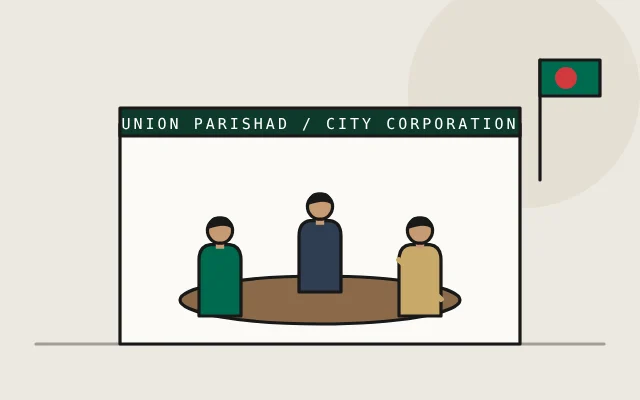
Conciliation by the Chairman, Mayor or Councillor
The court may send the complaint for settlement to the Union Parishad Chairman or member, the City Corporation or Paurashava Mayor or Councillor, or any other suitable person. The conciliator gives both sides a hearing and settles the complaint, and a complaint settled in this way is treated as disposed of by the competent court. In practice the settlement fixes a monthly sum from each child, arrangements for medical costs and residence, and a visiting schedule.
Settlement is the most common outcome of a parents maintenance case in Bangladesh, because it keeps the family relationship intact.
Where: Union Parishad / Paurashava / City Corporation (conciliation under s.8) · Time: 1-3 months · Law: s.8(1)-(2) Parents Maintenance Act 2013 · Documents: Court's referral order, Written settlement signed by the parties, Conciliator's report to the court
Tip: Make sure the settlement is written, signed and filed with the court, with specific amounts and dates; vague promises are hard to enforce.
 Step 7 · Conciliation or trial
Compounding before the court
The offence is compoundable, so the parent can settle with the child before the court at any stage. Compounding has the effect of an acquittal. Since the 2026 amendment to the Code of Criminal Procedure, where both sides agree to compound, the court can facilitate the settlement or refer it to the Legal Aid Officer or the parties' lawyers. If satisfied that a lawful agreement has been made, the court can keep it on the record and pass orders needed to implement its terms.
This gives a parent a stronger way to hold a child to promised payments.
Where: Metropolitan / Judicial Magistrate's Court · Time: 1-2 months · Law: s.6 Parents Maintenance Act 2013; s.345(6) and (8) Code of Criminal Procedure 1898 (sub-section (8) added by Act XI of 2026) · Documents: Compromise petition, Signed agreement on payments and care
Tip: Ask the court to record the agreement under section 345(8) rather than simply withdrawing the complaint.
 Step 8 · Conciliation or trial
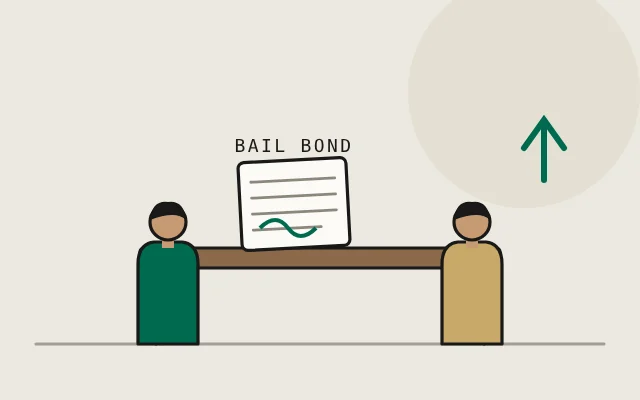
Appearance of the accused and bail
If there is no settlement, the accused child appears on summons, or is produced if a warrant was issued. The offence is bailable, so bail is a right on furnishing the bond the court requires. The Magistrate may dispense with personal attendance in suitable cases. The complainant parent must attend on the dates fixed; in a case instituted on complaint, the Magistrate must acquit the accused if the complainant does not appear, unless he thinks it proper to adjourn the hearing. A parent who is ill should tell the court in advance through the lawyer.
Where: Metropolitan / Judicial Magistrate's Court · Time: 1-3 months · Law: s.6 Parents Maintenance Act 2013; s.496 Code of Criminal Procedure 1898; s.205 and s.247 Code of Criminal Procedure 1898 (s.247 as amended by Act XI of 2026) · Documents: Bail bond, Appearance and attendance petitions
Tip: Non-appearance of the complainant is the commonest way these cases fail; plan transport and medical support for every date.
- Step 9 · Conciliation or trial
Charge and plea
After hearing both sides on the record, the Magistrate frames a formal charge if there is ground to presume the offence, specifying which duty under section 3 or section 4 was breached, and asks whether the accused admits it. If the accused admits the offence and shows no sufficient cause, he or she can be convicted on that admission. Otherwise the case proceeds to evidence. At this stage an accused often offers payment terms, and the court can still record a compromise.
Where: Metropolitan / Judicial Magistrate's Court · Time: 1-2 months · Law: ss.242-243 Code of Criminal Procedure 1898; s.5(1) Parents Maintenance Act 2013 · Documents: Charge, Plea recorded
Tip: Ask the court to frame the charge precisely; a charge that does not identify the breached duty invites a later challenge.
 Step 10 · Conciliation or trial
Trial: evidence of both sides
The parent gives evidence and calls witnesses, such as neighbours or local representatives, and produces medical bills and evidence of the child's means. The accused can cross-examine, call evidence and explain, for example that the parent refused an offer to live together, that the child lacks means, or that the siblings agreed a different arrangement. The court decides whether the accused, being a capable and solvent son or daughter, failed to perform any duty under the Act, or whether a relative obstructed or refused to cooperate in providing maintenance.
Where: Metropolitan / Judicial Magistrate's Court · Time: 3-9 months · Law: ss.244-245 Code of Criminal Procedure 1898; ss.2(gha), 3 and 5 Parents Maintenance Act 2013 · Documents: Witness evidence, Medical and financial documents, Evidence of the child's income
Tip: Evidence of the child's income is as important as evidence of neglect, because the duty rests on a capable and solvent child.
 Step 11 · Judgment and after
Judgment and sentence
If the court finds the offence proved, it can impose a fine of up to Tk 1 lakh, with imprisonment of up to three months if the fine is not paid; the Act does not provide a substantive prison term. The same penalty applies to an abetting spouse, child or close relative.
When imposing a fine, the court may order all or part of it to be paid to a person as compensation for loss caused by the offence where substantial compensation is recoverable in a civil court, which can help a parent left without support. Otherwise the fine goes to the State.
Where: Metropolitan / Judicial Magistrate's Court · Time: 1 month after evidence closes · Law: s.5(1)-(2) Parents Maintenance Act 2013; s.245 Code of Criminal Procedure 1898; s.545(1)(b) and (2) Code of Criminal Procedure 1898 · Documents: Judgment, Order on fine and any compensation
Tip: Ask the court specifically to consider an order under section 545; it is not made automatically.
 Step 12 · Judgment and after
Recovery of the fine
If the fine is not paid, the court can issue a warrant to attach and sell the offender's movable property, or a warrant to the Collector to recover it by civil process against movable or immovable property. If the sentence includes imprisonment in default and the offender serves it, a recovery warrant is normally no longer issued. Where the court has ordered part of the fine to be paid as compensation and the case is appealable, payment is held back until the appeal period expires or the appeal is decided.
Where: Metropolitan / Judicial Magistrate's Court · Time: 1-6 months · Law: s.386 Code of Criminal Procedure 1898; s.545(2) Code of Criminal Procedure 1898 · Documents: Recovery warrant, Details of the offender's property
Tip: Give the court details of the child's property or employer; a recovery warrant needs something to attach.
 Step 13 · Judgment and after
After the case: continuing duties
The duties under the Act continue after a conviction or settlement, so a fresh failure to maintain can lead to a new complaint. Settlements recorded by the court under section 345(8), or certified by the legal aid office, can be enforced through the court. Families often find that a written arrangement shared among all the children, with a named person responsible for medical emergencies, prevents a repeat dispute. A parents maintenance case in Bangladesh works best as leverage for a lasting family arrangement rather than as punishment.
Where: Lawyer's chamber · Time: Ongoing · Law: s.3 Parents Maintenance Act 2013; s.21C Legal Aid Services Act 2000; s.345(8) Code of Criminal Procedure 1898 · Documents: Copy of the settlement or judgment, Record of payments received
Tip: Keep a simple record of every payment and visit; it is the best evidence if the arrangement breaks down.
Walk through it from your side
Pick your side. The step-by-step journey above and the full-screen player will then show what you do at every stage.
Parent (complainant)
You want regular support, medical care, a home and contact from your children, ideally through a lasting family arrangement. You must show that each child you name is capable and solvent and has failed in a duty under section 3 or 4. Your biggest risk is missing hearing dates, because in a complaint case the Magistrate must acquit if you do not appear, unless he adjourns.
Understand what the law requires of children
You meet a lawyer or legal aid officer with your NID and a list of your children, their addresses and occupations, and identify which duties each child has failed to perform.
Watch outThe duty rests on each child individually, so name only those who have failed in it.
Identify the respondents and gather evidence
You gather evidence of each child's income or assets, your medical needs and bills, and the neglect, such as eviction or long periods without contact, and write down a timeline.
Watch outWithout evidence that a child is capable and solvent, the complaint against that child is likely to fail.
Pre-case mediation in notified districts
In a notified district you apply first to the district legal aid office for mediation, with a summary of your evidence. If it fails, keep the report for your complaint.
Watch outA certified mediated agreement has effect as a decree or final order, so make sure the terms are specific.
File the written complaint
You sign and file the written complaint at the Chief Metropolitan or Chief Judicial Magistrate's court, naming each child and any obstructing relative, the duties breached and your witnesses.
Watch outSign the complaint yourself; one signed only by a sibling or other relative is open to challenge.
Examination on oath and the Magistrate's first order
You give your statement on oath, ideally with a witness present, and ask for short dates and convenient arrangements if you are elderly or unwell.
Watch outWithout a corroborated statement, the complaint may be dismissed under section 203.
Conciliation by the Chairman, Mayor or Councillor
You attend the conciliation before the Chairman, member, Mayor or Councillor and agree specific monthly sums, medical arrangements, residence and visits, recorded in writing.
Watch outVague promises are hard to enforce; insist on amounts and dates in a signed settlement filed with the court.
Compounding before the court
You can compound the case with your child at any stage. Ask the court to record the agreement under section 345(8) so that it can pass orders implementing its terms.
Watch outSimply withdrawing the complaint leaves you with no court-recorded arrangement to enforce.
Appearance of the accused and bail
You attend every hearing date, with transport and medical support planned, and tell the court in advance through your lawyer if you are ill.
Watch outIf you miss a date, the Magistrate must acquit the accused unless he adjourns.
Charge and plea
Your lawyer asks the court to frame the charge precisely, identifying which duty under section 3 or 4 was breached.
Trial: evidence of both sides
You give evidence, call neighbours or local representatives, and produce medical bills and evidence of the child's means.
Watch outEvidence of the child's income is as important as evidence of neglect.
Judgment and sentence
If the offence is proved, ask the court specifically to consider directing part of the fine to you as compensation under section 545.
Watch outA compensation order is not made automatically.
Recovery of the fine
You give the court details of the child's property or employer so that a recovery warrant can be executed.
After the case: continuing duties
You keep a record of every payment and visit, and consider a written arrangement among all the children with someone named for medical emergencies.
Watch outA fresh failure to maintain can lead to a new complaint.
Son or daughter (accused)
You want the complaint resolved fairly, ideally by an agreed arrangement for your parent's care, and no conviction where you have done what the law requires or lack the means. You can explain your circumstances at conciliation, seek bail as of right, test the evidence and show your means and the support you have given. Your biggest risk is ignoring the summons or the conciliator, which turns a family dispute into a criminal conviction and fine.
Understand what the law requires of children
If you sense your parent is unhappy with the support given, take advice early on your duties under the Act and discuss a fair arrangement with your siblings before any complaint is made.
Identify the respondents and gather evidence
Keep records of the support you give, such as money transfers, medical bills paid and visits, and of your own income and obligations.
Watch outNot keeping records of support makes it harder to show later that you met your duties.
Pre-case mediation in notified districts
If the legal aid office calls you, attend and make a realistic offer of money, care and visits. An agreement here avoids a criminal case.
Watch outRefusing to attend leaves your parent free to file a complaint.
File the written complaint
If you learn a complaint has been filed, instruct a lawyer and check that it was made in writing by your father or mother, since the court acts only on such a complaint.
Examination on oath and the Magistrate's first order
At this stage the Magistrate decides whether to issue process or refer the complaint for conciliation. Your lawyer can watch the record and prepare your response.
Conciliation by the Chairman, Mayor or Councillor
You attend the conciliation and explain your means and circumstances honestly. Offer a concrete, affordable plan agreed where possible with your siblings.
Watch outA settlement you cannot keep may lead to a fresh complaint, so agree only what you can pay.
Compounding before the court
You can settle by compounding, which has the effect of an acquittal. Sign only a written agreement on payments and care that you can keep.
Appearance of the accused and bail
You appear on the summons and apply for bail, which is a right for this bailable offence on giving the bond required. You may ask to be excused from personal attendance in suitable cases.
Watch outNot appearing on summons can lead to a warrant.
Charge and plea
You hear the charge and decide whether to plead guilty or not guilty after advice. You can still propose payment terms and a compromise.
Watch outAdmitting the charge can lead to conviction on that admission, so take advice first.
Trial: evidence of both sides
You cross-examine and give your own evidence, for example that you lack means, that your parent refused an offer to live together, or that siblings agreed a different arrangement.
Judgment and sentence
If convicted, you may ask the court to take your means into account in fixing the fine, and decide promptly with your lawyer whether to appeal.
Watch outThe appeal period to the Sessions Judge is thirty days, and no appeal lies where the only sentence is a fine of Tk 5,000 or less.
Recovery of the fine
You pay the fine within the time allowed. If you cannot pay at once, raise it with the court through your lawyer.
Watch outIf the fine is unpaid, you may serve up to three months' imprisonment in default, or face attachment of your property.
After the case: continuing duties
You keep to the settlement or continuing duties, keep records of support given, and work with your siblings on a shared arrangement for your parent's care.
Watch outYour duties continue after the case ends, so a later lapse can lead to a new complaint.
What if…? How the parents maintenance case in Bangladesh can change course
Choose a scenario. The map animates the route up the hierarchy and, where a case is sent back, down to the lower court and up again.
What if the convicted child, or the parent, appeals?
- 1Sessions Judge's Court (Metropolitan Sessions Judge in Dhaka)
Appeal to the Sessions Judge
A person convicted by a Metropolitan Magistrate or first-class Judicial Magistrate may appeal to the Sessions Judge, in Dhaka the Metropolitan Sessions Judge, within thirty days. No appeal lies where the only sentence is a fine of Tk 5,000 or less, as raised by the 2026 amendment. A complainant parent may appeal an acquittal to the Sessions Judge within sixty days, but only on an error of law that has caused a failure of justice. The appeal rehears facts and law on the record.
6-12 monthss.408 Code of Criminal Procedure 1898s.413 Code of Criminal Procedure 1898 (as amended by Act XI of 2026)s.417(2)-(3) Code of Criminal Procedure 1898Limitation Act 1908, First Schedule Art 154
Where it ends up: The Sessions Judge confirms, alters or reverses the decision, or orders a retrial.
What if the complaint is dismissed, or an order is wrong in law?
- 1Sessions Judge's Court (Metropolitan Sessions Judge in Dhaka)
Criminal revision before the Sessions Judge
A parent whose complaint is dismissed under section 203, or a child who says process should never have issued, can apply in revision to the Sessions Judge, who examines the correctness, legality and propriety of the order. The Sessions Judge's decision on a party's revision is final as to that party. Where an appeal lies but is not brought, revision is not available to the party who could have appealed.
3-9 monthsss.435, 436 and 439A Code of Criminal Procedure 1898s.439(5) Code of Criminal Procedure 1898 - 2High Court Division
Section 561A in the High Court Division
Because a second revision is barred, a party still aggrieved may apply to the High Court Division under section 561A to prevent abuse of process or secure the ends of justice, for example where the complaint was not made by the parent as section 7(2) requires.
6-18 monthss.561A Code of Criminal Procedure 1898s.439(4) Code of Criminal Procedure 1898
Where it ends up: The order is upheld, set aside or sent back for further inquiry, or the proceeding is quashed.
Can the Magistrate review the judgment?
- 1Metropolitan / Judicial Magistrate's Court
Criminal review barred below the Appellate Division
Once a criminal court has signed its judgment, it cannot alter or review it except to correct a clerical error, so a Magistrate cannot reopen a conviction or acquittal under the 2013 Act. Mistakes are corrected only by appeal or revision before a higher court. The High Court Division likewise has no power to review its criminal judgments. Only the Appellate Division may review its own judgment, under Article 105, within thirty days.
Not applicables.369 Code of Criminal Procedure 1898Article 105 Constitution of Bangladesh
Where it ends up: The judgment stands unless changed on appeal or revision, or reviewed by the Appellate Division of its own judgment.
Is there a reference to the High Court Division?
- 1High Court Division
No reference; quashing as the safety valve
Offences under the 2013 Act are punishable only with a fine, so there is no death reference, and the Code of Criminal Procedure provides no general reference by a Magistrate on a question of law. Legal questions, such as whether the accused is a 'capable and solvent' child or whether a grandparent's claim falls under section 4, reach the High Court Division through revision followed by section 561A, or on appeal from a Sessions Court.
6-18 monthss.561A Code of Criminal Procedure 1898ss.2(gha) and 4 Parents Maintenance Act 2013
Where it ends up: The High Court Division decides the legal point when it is brought up by an aggrieved party.
What if the case is sent back to the Magistrate?
- 1Sessions Judge's Court (Metropolitan Sessions Judge in Dhaka)
Further inquiry or retrial ordered
On revision against a dismissal, the Sessions Judge may direct the Magistrate to make further inquiry into the complaint, for example where witnesses named by the parent were never examined. On appeal against conviction, the Sessions Judge may reverse the finding and order a retrial. The record then goes back down.
Order on the day of judgments.436 Code of Criminal Procedure 1898s.423(1)(b) Code of Criminal Procedure 1898 - 2Metropolitan / Judicial Magistrate's Court
Fresh inquiry or trial and a new decision
The Magistrate holds the further inquiry or retrial as directed, often after another attempt at conciliation under section 8, and gives a fresh decision. That decision can again be taken to the Sessions Judge in revision or appeal, so the case climbs back up.
3-9 monthsss.202-204 and 242-245 Code of Criminal Procedure 1898s.8 Parents Maintenance Act 2013
Where it ends up: The case returns to the Sessions Judge if a party challenges the fresh decision.
Can the case reach the Appellate Division?
- 1Appellate Division of the Supreme Court
Criminal petition for leave to appeal
A party aggrieved by a High Court Division decision under section 561A, or in a criminal revision or appeal, may file a criminal petition for leave to appeal in the Appellate Division within thirty days. Leave is granted only on a substantial question of law or a grave failure of justice, so few parents maintenance cases go this far. If leave is granted, the appeal is heard on the record.
1-2 yearsArticle 103 Constitution of BangladeshSupreme Court of Bangladesh (Appellate Division) Rules 1988
Where it ends up: The Appellate Division's decision is final and binds all courts under Article 111.
How the parents maintenance case in Bangladesh moves up the court hierarchy
A parents maintenance case in Bangladesh is a criminal case at the Magistrate tier. The parent's written complaint goes to the Chief Metropolitan Magistrate in Dhaka city or the Chief Judicial Magistrate in a district. The case is tried by a Metropolitan Magistrate or a first-class Judicial Magistrate, because the Parents Maintenance Act 2013 confines trial to those courts. There is no value threshold: the only penalty is a fine of up to Tk 1 lakh, with up to three months' imprisonment in default.
In notified districts, mediation at the legal aid office comes first, and at any stage the court may send the complaint to a Chairman, member, Mayor or Councillor for settlement. An appeal against conviction lies to the Sessions Judge, the Metropolitan Sessions Judge in Dhaka, unless the fine is Tk 5,000 or less, and the appeal rehears facts and law. A complainant may appeal an acquittal on law. Revision lies to the Sessions Judge, after which the High Court Division can intervene under section 561A. The Appellate Division hears matters only by leave.
- Appellate DivisionAppellate Division of the Supreme Court
- High Court DivisionHigh Court Division
- Appellate levelSessions Judge's Court (Metropolitan Sessions Judge in Dhaka)
- First instanceMetropolitan / Judicial Magistrate's Court
- Start · outside courtLawyer's chamber · District Legal Aid Office (pre-case mediation) · Union Parishad / Paurashava / City Corporation (conciliation under s.8)
Where your case is heard
Addresses are for Dhaka. Every district has equivalent courts at its own district judgeship.
Supreme Court of Bangladesh (Appellate Division and High Court Division)
Supreme Court of Bangladesh, Shahbag, Ramna, Dhaka-1000Hears appeals, revisions, references, writ petitions under Article 102, company matters and death references (High Court Division), and appeals by leave from the High Court Division (Appellate Division).
Both Divisions sit in the Supreme Court complex; many High Court Division benches sit in the Annex Building. Check the daily cause list for the bench and court room. Postal contact is the Registrar General, Supreme Court of Bangladesh, Ramna, Dhaka-1000.
Court of the Metropolitan Sessions Judge, Dhaka
40-45 Johnson Road, Dhaka-1100Tries sessions-triable offences from Dhaka metropolitan police stations and hears criminal appeals and revisions from Metropolitan Magistrates; Additional and Joint Metropolitan Sessions Judges also sit as Metropolitan Special Tribunals.
The Metropolitan Sessions Judge sits on the 2nd floor of the main building; Additional and Joint Metropolitan Sessions Judge courts are in the main building and the tin-shed building in the same compound. The Metropolitan Sessions Judge, Dhaka also holds the post of Senior Special Judge, Dhaka. Help line published by the court: 01335-145002.
Chief Metropolitan Magistrate Court, Dhaka
19 Johnson Road, Dhaka-1100Takes cognisance of and tries criminal cases arising in Dhaka Metropolitan Police areas (Metropolitan Magistrate courts), hears bail, remand and FIR/complaint matters, and sends sessions-triable cases to the Metropolitan Sessions Judge.
Metropolitan Magistrate courts are spread over the CMM court main building (floors 2-9) and the CJM court building (courts 29-37 on the 8th and 9th floors). Check the court number on the cause list. Each metropolitan city (Chattogram, Khulna, Rajshahi, Sylhet, Barishal, Rangpur, Gazipur) has its own CMM court.
Lawyer's chamber
Where this happens depends on your district or the office concerned. Ask us for the exact courtroom and address.
District Legal Aid Office (pre-case mediation)
Where this happens depends on your district or the office concerned. Ask us for the exact courtroom and address.
Dhaka South City Corporation and Dhaka North City Corporation
DSCC: Nagar Bhaban, Dhaka-1000; DNCC: Gulshan Centre Point, Plot 23-26, Road 46, Gulshan-2, Dhaka-1212Municipal bodies: holding tax, trade licences, birth and death registration, and the Arbitration Council (Chairman) functions under the Muslim Family Laws Ordinance 1961 through their zonal/ward offices.
DNCC website: https://dncc.gov.bd. Talaq notices and arbitration council matters are handled by the zonal executive officer's office for the ward concerned, not at the head office. The maps link points to DSCC Nagar Bhaban; for DNCC search the Gulshan address.
How long each stage takes
These are indicative ranges based on typical Dhaka practice. Adjournments, case backlogs and appeals can stretch them.
Documents checklist and key terms
Tick off what you have. Your ticks stay saved in this browser. Bring the list to your first meeting with your lawyer.
- Maintenance (bharan-poshan)
- Under s.2 of the 2013 Act: food, clothing, medical care, residential facilities and companionship.
- Child (santan)
- A capable and solvent son or daughter of the parent, as defined in s.2 of the 2013 Act.
- Cognizable
- An offence for which police may arrest without a warrant; under this Act, however, a court acts only on the parent's written complaint.
- Compoundable
- An offence that the complainant may settle with the accused; compounding has the effect of an acquittal.
- Conciliation
- Settlement of the complaint by a Union Parishad Chairman or member, Mayor, Councillor or other suitable person to whom the court refers it under s.8.
- Petition of complaint
- A written allegation made directly to a Magistrate, as distinct from a first information report at a police station.
- Section 561A
- The High Court Division's inherent power to prevent abuse of the process of court or to secure the ends of justice in criminal matters.
Parents maintenance case in Bangladesh: common questions
Who can file a parents maintenance case in Bangladesh?
What does maintenance include under the 2013 Act?
What is the punishment for not maintaining parents?
Will my son be arrested?
Can the court order a monthly payment?
Can a daughter be prosecuted under the Act?
Is mediation compulsory before going to court?
How long does a parents maintenance case in Bangladesh take?
Law and sources
- Parents Maintenance Act 2013 (Act No. 49 of 2013), Laws of Bangladesh
- Code of Criminal Procedure 1898, Laws of Bangladesh
- Code of Criminal Procedure (Amendment) Act 2026 (Act XI of 2026), Laws of Bangladesh
- Legal Aid Services (Amendment) Act 2026 (Act 45 of 2026), Laws of Bangladesh
- Legal Aid Services Act 2000, Laws of Bangladesh
- Constitution of the People's Republic of Bangladesh (Articles 103 and 105), Laws of Bangladesh
This Case Journey is a general guide to procedure in Bangladesh as of October 2026. It is not legal advice. Procedure, fees and time limits change, and every case turns on its own facts. Timelines are indicative. Speak to a lawyer about your own matter.
Run this case from outside Bangladesh
You can usually start and run this case without travelling. You sign a power of attorney abroad, the Bangladesh High Commission or Embassy attests it, and your attorney and lawyer act for you in Dhaka. Some steps, such as giving evidence in person, may still need you or a commission. See how a case runs through a power of attorney →
Want to know where your case stands?
Book a consultation. A TRW lawyer will place your matter on this map, explain the next step and the realistic timeline, and tell you what to prepare.











