
Rectification of instrument in Bangladesh: the full journey, step by step
Rectification of instrument in Bangladesh is the remedy under section 31 of the Specific Relief Act 1877 for a deed or contract that, through fraud or a mutual mistake, does not say what the parties actually agreed: a wrong plot number, a missing boundary, an extra godown or a misdescribed share.
If both sides agree, they can sign and register a deed of rectification at the sub-registry; if not, a civil suit asks the court to correct the instrument, after which the decree is used to correct the registration and land records. Rectification keeps the deal alive, unlike cancellation, which sets the whole deed aside.
- Where it starts
- Either a registered deed of rectification signed by all parties at the Sub-Registry office, or a suit in the civil…
- Main law
- Specific Relief Act 1877 ss.31-34, 39 and 42; Evidence Act 1872 ss.91-92; Registration Act 1908 s.17
- Typical duration
- Rectification deed by consent: 2-6 weeks. Contested suit: roughly 2-4 years at first instance, with appeal and revision…
- Who can file
- Any party to the instrument or that party's representative in interest, such as an heir or a purchaser from that party
Rectification of instrument in Bangladesh: walk through every stage
Press next, use your arrow keys or tap a court on the map. The gold marker shows where your case is, and the green trail shows the route it has taken. For the immersive version, play it full screen.
Read every step as text
 Step 1 · Diagnose the error and try to fix it by consent
Check that rectification is the right remedy
Section 31 of the Specific Relief Act 1877 lets a party sue to rectify a contract or other written instrument when, through fraud or a mutual mistake of the parties, it does not truly express their intention. Rectification is the right remedy where there was a real agreement and the document records it wrongly. Where there was no valid agreement at all, for example a forged or void deed, the remedy is cancellation under section 39. Where only title is in doubt, it is a declaration under section 42.
Choosing the wrong remedy is a common reason a rectification of instrument in Bangladesh fails.
Where: Lawyer's chamber · Time: 1-2 weeks · Law: s.31 Specific Relief Act 1877; s.39 and s.42 Specific Relief Act 1877 · Documents: Certified copy of the deed or contract, Earlier deeds in the chain of title, Any draft or correspondence showing the real agreement
Tip: A one-sided mistake is not enough. The error must be shared by both parties, or must result from the other side's fraud.
 Step 2 · Diagnose the error and try to fix it by consent
Gather proof of the true agreement
The court will rectify only if the mistake or fraud is clearly proved and it can identify what the parties really intended. Useful evidence includes the registered contract for sale (bainanama), earlier deeds and mutation records, the survey record-of-rights (CS, SA, RS or city survey khatian) and the mouza map, payment receipts, letters and messages, and the deed writer's draft. Section 33 lets the court look at what the instrument was intended to mean and its intended legal effect, not only at the words.
Evidence of fraud or mistake is admissible even against a written document.
Where: Lawyer's chamber · Time: 2-6 weeks · Law: s.33 Specific Relief Act 1877; s.92 proviso (1) Evidence Act 1872; s.54A Transfer of Property Act 1882 · Documents: Bainanama and earlier deeds, Khatian and mouza map, Payment receipts and correspondence, Deed writer's draft or notes
 Step 3 · Diagnose the error and try to fix it by consent
Register a deed of rectification by consent
If everyone who signed the original deed, or their successors, agrees that it contains a mistake, the quickest fix is a deed of rectification. It recites the original deed, identifies the error and states the corrected wording, and it must be signed by all the parties. Because it affects rights in immovable property, it is presented for registration before the Sub-Registrar of the area, with stamp duty and registration fees paid under the current schedules. Once registered, it is read together with the original deed and is used to correct the mutation records.
Where: Sub-Registry office (Sub-Registrar) · Time: 2-6 weeks · Law: s.17(1) Registration Act 1908; Stamp Act 1899 (schedule rates) · Documents: Draft deed of rectification, Certified copy of the original deed, National ID cards and photographs, Stamp duty and fee receipts
Tip: If even one co-sharer or heir refuses to sign, a consent deed will not work for that share. Move to a suit before the limitation period runs.
 Step 4 · Diagnose the error and try to fix it by consent
Send a legal notice asking for correction
Where the other party will not cooperate, the lawyer sends a legal notice identifying the error, attaching the evidence and asking them to join in a deed of rectification within a fixed time. A refusal or silence helps to show the court that the suit was necessary and fixes the point when the dispute became clear. The notice should be sent by registered post with acknowledgement due and kept with the postal receipts.
If the other side has begun to sell or mortgage the property relying on the mistake, the lawyer prepares an urgent injunction application instead of waiting.
Where: Lawyer's chamber · Time: 2-4 weeks · Law: s.31 Specific Relief Act 1877; Order XXXIX rule 1 CPC · Documents: Legal notice, Postal receipts and acknowledgement card, Reply, if any
- Step 5 · Filing the rectification suit
Check limitation, forum and court fee
Limitation is the first legal hurdle. Courts have generally treated a rectification suit as one for relief on the ground of mistake, three years from when the mistake became known to the plaintiff, or on the ground of fraud, three years from when the fraud became known. Where neither article fits, the residuary six years has been argued.
The suit is filed where the property lies, in the court whose pecuniary limit covers the valuation: a Civil Judge up to Tk 15 lakh, a Senior Civil Judge up to Tk 25 lakh, and a Joint District Judge above that. Court fee follows how each relief is valued.
Where: Lawyer's chamber · Time: 1 week · Law: Limitation Act 1908, First Schedule arts. 95 and 96 (three years); Limitation Act 1908, First Schedule art. 120 (six years); s.16 CPC; s.19 Civil Courts Act 1887 (as amended 2021); Court-fees Act 1870 s.7 and Schedule II · Documents: Limitation note with the date of discovery, Valuation statement, Court fee calculation
Tip: Record exactly when and how you discovered the error, for example on a mutation refusal or a survey dispute. That date usually decides limitation.
 Step 6 · Filing the rectification suit
File the plaint
The plaintiff files a plaint naming every party to the instrument and anyone who now claims under it. It sets out the original agreement, the error, how the mistake or fraud happened, when it was discovered and the exact correction sought. The property is described in a schedule with mouza, plot and khatian numbers. The plaint may ask for rectification alone or, as section 34 allows, rectification followed by specific performance of the corrected contract, with declaration or possession where needed.
Since the CPC amendments in force from 8 May 2025 (now Act XXXVI of 2026), the plaint facts are proved by affidavit and the plaint gives the parties' NID, phone and e-mail details.
Where: Civil court: Civil Judge, Senior Civil Judge or Joint District Judge · Time: 1-3 weeks to draft and file · Law: s.31 and s.34 Specific Relief Act 1877; s.26(2) and Order VII rule 1 CPC (as amended by Act XXXVI of 2026); s.25A Civil Courts Act 1887 (renaming of Assistant Judges, 2026) · Documents: Plaint with affidavit, Schedule of property, Certified copy of the instrument, Court fee, List of documents
 Step 7 · Filing the rectification suit
Summons and written statement
The court issues summons, which can now be served by SMS and electronic messaging as well as by post and process server. The defendants file written statements, typically saying the deed records exactly what was agreed, that the plaintiff is out of time, or that a third party bought in good faith. If a defendant does not appear after due service, the court may proceed ex parte. Under the 2026 amendments an ex parte decree cannot be set aside more than once at the instance of the same defendant, so service should be properly proved.
Where: Civil court: Civil Judge, Senior Civil Judge or Joint District Judge · Time: 2-4 months · Law: Order V rule 9(3) CPC (as amended 2026); Order VIII CPC; Order IX rule 13 CPC (as amended 2026) · Documents: Summons and service report, Written statements, Defendants' documents
 Step 8 · Filing the rectification suit
Protect the property while the suit runs
If the other side may sell, mortgage or build on the disputed part, the plaintiff applies for a temporary injunction. The court looks for a prima facie case, irreparable injury and the balance of convenience, and may first grant an ad interim order. Separately, the doctrine of lis pendens means that a transfer made while the suit is pending cannot defeat the plaintiff's rights under the eventual decree. Section 31 itself protects only third parties who acquired rights in good faith and for value, so early action matters.
Where: Civil court: Civil Judge, Senior Civil Judge or Joint District Judge · Time: 2-8 weeks · Law: Order XXXIX rules 1-2 CPC; s.52 Transfer of Property Act 1882; s.31 Specific Relief Act 1877 (protection of bona fide purchasers) · Documents: Injunction application with affidavit, Evidence of threatened transfer, Sketch map of the disputed part
 Step 9 · Trial
Issues and court-annexed mediation
After the written statement, the court frames issues, such as whether there was a mutual mistake or fraud, what the parties really intended, whether the suit is within time and whether any defendant is a bona fide purchaser for value. The court may refer the dispute to mediation under section 89A. A mediated settlement in a rectification suit usually ends with a compromise decree recording the corrected description, or with the parties executing and registering a deed of rectification. Settlements are common where the error is obvious and the dispute is really about money.
Where: Civil court: Civil Judge, Senior Civil Judge or Joint District Judge · Time: 2-6 months · Law: Order XIV CPC; s.89A CPC; Order XXIII rule 3 CPC · Documents: Issues framed, Mediation report or compromise petition
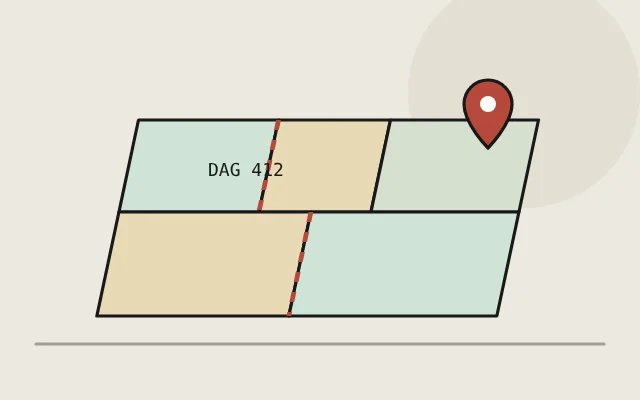 Step 10 · Trial
Local investigation of the land
Many rectification suits are about land: the wrong plot, a missing strip or a mis-stated area. The court can appoint a commissioner, often a surveyor or advocate commissioner, to inspect the land, measure it against the survey map and report what the deed should have described. The report forms part of the record, the parties may file objections, and the commissioner can be examined. A clear survey report is often what persuades the court that the mistake was in the drafting and not in the bargain.
Where: Civil court: Civil Judge, Senior Civil Judge or Joint District Judge · Time: 2-6 months · Law: Order XXVI rules 9 and 10 CPC · Documents: Commission order, Commissioner's report and sketch map, Objections to the report
 Step 11 · Trial
Evidence and the standard of proof
Examination-in-chief is now given on affidavit, followed by cross-examination. The plaintiff calls the attesting witnesses, the deed writer and anyone present at the negotiations, and proves the documents showing the real agreement. Because a registered deed is strong evidence of its own terms, the court requires the mistake or fraud to be clearly proved. Section 32 also requires that the parties intended an equitable and conscientious agreement. The adjournment cap, cut from six to four by the 2026 amendments, limits delays at this stage.
Where: Civil court: Civil Judge, Senior Civil Judge or Joint District Judge · Time: 6-18 months · Law: Order XVIII rule 4A CPC (inserted by Act XXXVI of 2026); Order XVII rule 1(3) CPC (as amended 2026); s.32 Specific Relief Act 1877; ss.91-92 Evidence Act 1872 · Documents: Affidavits in chief, Exhibits, Deed writer's records
 Step 12 · Decree and correcting the records
Judgment and decree of rectification
If the court is satisfied, it rectifies the instrument so that it expresses the parties' real intention, so far as this can be done without harming rights acquired by third parties in good faith and for value. The decree states the corrected wording or description precisely, with the property described as in a decree for immovable property. Where the plaint asked for it, the court then decrees specific performance of the rectified contract. Rectification is discretionary, so delay or the plaintiff's own conduct can lead the court to refuse it.
Where: Civil court: Civil Judge, Senior Civil Judge or Joint District Judge · Time: 1-3 months after arguments · Law: s.31 and s.34 Specific Relief Act 1877; Order XX CPC · Documents: Judgment, Decree with corrected schedule, Application for certified copies
 Step 13 · Decree and correcting the records
Carry the decree into the registration record
A decree is of little use if the sub-registry record still shows the old wording. Where the decree directs a party to execute a deed of rectification and that party refuses, the decree-holder applies to the court, which can execute and register the deed of rectification on the party's behalf. Under the 2026 amendments execution can be sought in the record of the suit itself. Otherwise, the certified decree is presented at the Sub-Registry office so that the correction is noted against the original deed, following the office's practice.
The certified decree should always be kept with the title deeds.
Where: Sub-Registry office (Sub-Registrar) · Time: 1-4 months · Law: Order XXI rule 34 CPC; Order XXI rule 104(1) CPC (inserted 2026); Registration Act 1908 · Documents: Certified decree, Execution application, Deed executed by the court (if any)
Tip: Ask the Sub-Registrar's office in writing how it records a court decree against an earlier deed, and keep its receipt.
- Step 14 · Decree and correcting the records
Correct the mutation and land records
With the registered rectification deed or the certified decree, the owner applies to the Assistant Commissioner (Land) for mutation, so that the khatian and the land development tax record show the correct plot and area. Mutation is a revenue record and does not itself decide title, but buyers and banks rely on it. Where a finally published survey record-of-rights is wrong, the remedy is the Land Survey Tribunal, not mutation. This last step of a rectification of instrument in Bangladesh is often forgotten, and the error then resurfaces at sale.
Where: Assistant Commissioner (Land) office · Time: 1-3 months · Law: s.143 State Acquisition and Tenancy Act 1950; s.145A State Acquisition and Tenancy Act 1950 (Land Survey Tribunal) · Documents: Mutation application, Certified decree or registered rectification deed, Latest khatian and tax receipts
Walk through it from your side
Pick your side. The step-by-step journey above and the full-screen player will then show what you do at every stage.
Plaintiff
You want the instrument corrected so that it records what was really agreed, either by a registered deed of rectification signed by everyone or by a court decree. You must clearly prove a mutual mistake, or fraud by the other side, and show what the true agreement was. Your biggest risks are limitation, usually three years from discovering the error, and a good-faith buyer who has already acquired rights on the strength of the wrong wording.
Check that rectification is the right remedy
You take your lawyer the deed, the earlier title chain and any contract for sale, and explain exactly what is wrong. Together you test whether the error was shared by both sides or caused by the other side's fraud, and whether rectification, cancellation or a declaration is the right remedy.
Watch outA mistake only on your side is not enough for rectification, so be candid with your lawyer from the start.
Gather proof of the true agreement
You collect proof of the real agreement: the registered contract for sale, earlier deeds, mutation records, the survey khatian and mouza map, payment receipts, letters, messages and the deed writer's draft. You identify witnesses who were present when the terms were agreed.
Watch outThe court must be able to see precisely what was intended; vague recollections rarely clear the bar.
Register a deed of rectification by consent
If everyone agrees, you ask all parties to the original deed, or their successors, to sign a deed of rectification reciting the error and the corrected wording, and you present it for registration at the Sub-Registry with the stamp duty and fees paid.
Watch outIf even one co-sharer or heir refuses, the consent route fails for that share; do not let limitation run while you wait.
Send a legal notice asking for correction
Your lawyer sends a legal notice by registered post identifying the error, attaching the evidence and asking the other side to join a rectification deed within a fixed time. If they are moving to sell or mortgage, you prepare an injunction application instead of waiting.
Watch outKeep the postal receipts and acknowledgement; they show the court the suit was necessary.
Check limitation, forum and court fee
Your lawyer fixes the date you discovered the error and checks the three-year limitation articles, values the reliefs for court fee and picks the court where the property lies whose pecuniary limit fits the valuation.
Watch outRecord exactly when and how you learned of the error; that date usually decides limitation.
File the plaint
You file a plaint naming every party to the instrument and anyone claiming under it, setting out the true agreement, the error, how it arose, when you found it and the precise correction sought, with the property scheduled by mouza, plot and khatian. You prove the plaint facts by affidavit.
Watch outLeaving out a necessary party, such as a later buyer, can defeat the decree against them.
Summons and written statement
You make sure summons is properly served, including by SMS or electronic messaging where used, and that proof of service is on the record. You review the written statement to see whether the defence is denial, limitation or good-faith purchase.
Watch outPoorly proved service invites an application to set aside any ex parte decree.
Protect the property while the suit runs
If the other side may sell, mortgage or build on the disputed part, you apply for a temporary injunction showing a prima facie case, irreparable injury and the balance of convenience. You rely on lis pendens for any transfer made after filing.
Watch outAct quickly; a good-faith buyer for value who acquired rights before you moved may be protected.
Issues and court-annexed mediation
You help frame issues on mutual mistake or fraud, true intention, limitation and good-faith purchase. In mediation you consider a compromise decree or a registered rectification deed if the dispute is really about money.
Watch outMake sure any settlement records the corrected wording precisely and is placed before the court.
Local investigation of the land
You ask for a local investigation by a survey or advocate commissioner to measure the land against the survey map and report what the deed should have described. You attend the inspection with your documents and witnesses.
Watch outFile written objections to an unfavourable report promptly, or it is likely to be accepted.
Evidence and the standard of proof
You give evidence-in-chief on affidavit and are cross-examined. You call attesting witnesses, the deed writer and people present at the negotiations, and prove the documents showing the real agreement clearly.
Watch outHave witnesses ready on each date; the adjournment cap leaves little room for delay.
Judgment and decree of rectification
After judgment you obtain certified copies at once. If the decree rectifies the instrument, check that the corrected wording and property description are exact and that any specific performance relief is included.
Watch outIf you lose, the thirty-day appeal period runs from the decree, excluding time to obtain copies.
Carry the decree into the registration record
If the decree directs a party to execute a rectification deed and they refuse, you apply for execution in the suit record and ask the court to execute and register it on their behalf. Otherwise you present the certified decree at the Sub-Registry and ask in writing how it will be noted.
Watch outKeep the certified decree with the title deeds; it is needed at every later sale or mortgage.
Correct the mutation and land records
With the registered rectification deed or certified decree, you apply to the AC (Land) for mutation so that the khatian and land development tax record show the correct plot and area. If the survey record itself is wrong, you take advice on the Land Survey Tribunal.
Watch outSkipping mutation lets the old error resurface when you sell or borrow.
Defendant
You want the instrument to stand as written, or to have any correction limited so that it does not harm rights you hold. You can show that the deed records exactly what was agreed, that any mistake was one-sided, that the suit is out of time, or that you bought in good faith and for value without notice. Your biggest risk is dealing with the property while the suit is pending, which lis pendens and an injunction can undo.
Check that rectification is the right remedy
You may not yet know a correction is sought. If you hold the property under the deed, you keep the original deed, any draft or contract for sale, payment records and the deed writer's details together, and take advice early if the other party raises an error.
Watch outRecords of what was negotiated become hard to reconstruct later, so preserve them now.
Gather proof of the true agreement
You assemble documents showing that the deed reflects the bargain: drafts you approved, correspondence, payment records tied to the area or plot in the deed, and evidence of any later purchase or mortgage made in reliance on it.
Watch outIf you bought from a party to the deed, gather proof of payment and of what you knew at the time to support a good-faith purchaser defence.
Register a deed of rectification by consent
If the error is genuine and agreed, you can sign and register the rectification deed, which avoids a lawsuit and its costs. Your lawyer checks that the corrected wording is limited to the agreed error and does not change anything else.
Watch outRead the corrected schedule carefully before signing; a rectification deed binds you once registered.
Send a legal notice asking for correction
You take advice on the notice and reply in writing, either agreeing to a correction or explaining why the deed is accurate. If you dispute the claim, your lawyer keeps a copy of the notice and reply for the written statement.
Watch outA careless reply can amount to an admission of the mistake, so let your lawyer draft it.
Check limitation, forum and court fee
You keep note of any facts showing the plaintiff knew of the alleged error long ago, such as earlier mutation applications, survey objections or correspondence. These support a limitation defence later.
Watch outLimitation is a strong defence, but it must be pleaded and proved with dates and documents.
File the plaint
When served, you take the plaint to your lawyer, who checks limitation, valuation, the choice of court and whether all necessary parties are joined. You start gathering your documents for the written statement.
Watch outNote the date of service; the time for your written statement runs from it.
Summons and written statement
You file your written statement on time, stating that the deed records the true agreement, that any mistake was one-sided, that the suit is time-barred or that you bought in good faith and for value, and you attach the supporting documents.
Watch outAn ex parte decree can now be set aside only once at your instance, so do not ignore the summons.
Protect the property while the suit runs
You oppose the injunction if it is not justified, showing your own possession, the strength of your case and the harm a freeze would cause. Meanwhile you avoid selling or mortgaging the disputed portion.
Watch outA transfer made while the suit is pending remains subject to the eventual decree.
Issues and court-annexed mediation
You make sure the issues include limitation and any good-faith purchaser defence. You weigh mediation seriously, especially where a payment or an adjustment of area could resolve the dispute without a contested decree.
Watch outAgreeing a correction in mediation without checking the survey can create new errors.
Local investigation of the land
You attend the commissioner's inspection with your own documents and, if useful, your own surveyor, and point out boundaries and possession on the ground. You file objections to the report if it is inaccurate.
Watch outAbsence from the inspection makes it much harder to challenge the report later.
Evidence and the standard of proof
Your witnesses give evidence on affidavit that the deed records the bargain, and your lawyer cross-examines the plaintiff's witnesses on inconsistencies, delay and knowledge. You prove any good-faith purchase.
Watch outAdmissions in cross-examination that terms were misdescribed can decide the case; prepare witnesses carefully.
Judgment and decree of rectification
You obtain certified copies and decide promptly whether to comply, settle or appeal. If the correction affects rights you acquired in good faith, check that the decree protects them as section 31 requires.
Watch outAn appeal does not stay the decree automatically; apply for a stay if a registration step is imminent.
Carry the decree into the registration record
If you are directed to execute a rectification deed, you comply within the time given or, if you have appealed, seek a stay. You check that what is registered matches the decree exactly.
Watch outRefusing to comply does not help; the court can execute the deed in your place.
Correct the mutation and land records
You check that the mutation reflects the decree and nothing more, and raise an objection with the AC (Land) if the record goes beyond what was ordered. You update your own land tax payments to match.
Watch outMutation is a revenue record, so any wider title dispute still belongs in the civil court.
What if…? How the rectification of instrument in Bangladesh can change course
Choose a scenario. The map animates the route up the hierarchy and, where a case is sent back, down to the lower court and up again.
What if the losing side appeals?
- 1District Judge's Court
First appeal to the District Judge
An appeal from a Civil Judge's or Senior Civil Judge's decree lies to the District Judge, who may transfer it to an Additional District Judge. From a Joint District Judge it goes to the District Judge where the value is up to Tk 5 crore. The time limit is thirty days from the decree, excluding the time needed to obtain copies. The first appeal rehears facts and law, including whether the mistake was really mutual.
6-24 monthss.21 Civil Courts Act 1887 (as amended 2021)s.96 and Order XLI CPCLimitation Act 1908, First Schedule art. 152 - 2High Court Division
First appeal to the High Court Division above Tk 5 crore
Where a Joint District Judge decided a suit valued above Tk 5 crore, the first appeal lies directly to the High Court Division within ninety days. It is still a full rehearing on facts and law, heard by a Division Bench on the paper book. Execution of the decree is not stayed automatically, so the appellant applies for a stay where a transfer or registration step is imminent.
2-4 yearss.21 Civil Courts Act 1887Limitation Act 1908, First Schedule art. 156Order XLI rule 5 CPC
Where it ends up: The appellate court affirms, varies or reverses the decree of rectification.
What if the appellate decision is wrong in law?
- 1High Court Division
Civil revision in the High Court Division
Second appeals were abolished in 1978. A party aggrieved by the District Judge's appellate decree applies to the High Court Division for revision, showing an error of law that produced an erroneous decision and a failure of justice. Typical points are applying the wrong limitation article, confusing rectification with cancellation, or ignoring the bona fide purchaser rule. The court issues a Rule but does not reweigh the evidence.
1-3 yearss.115(1) Code of Civil Procedure 1908 - 2District Judge's Court
Revision of interlocutory orders
Orders of the trial court from which no appeal lies, such as refusing a survey commission or an amendment of the plaint, can be revised by the District Judge. A further revision to the High Court Division then needs leave on an important question of law. This keeps most interlocutory disputes at district level.
3-12 monthss.115(2)-(4) Code of Civil Procedure 1908
Where it ends up: The High Court Division discharges the Rule or corrects the decree.
Can the court review its own decree?
- 1Civil court: Civil Judge, Senior Civil Judge or Joint District Judge
Review by the same court
A party who has not appealed may ask the court that passed the decree to review it, on discovery of new and important evidence that could not be produced earlier despite due diligence, a mistake or error apparent on the face of the record, or another sufficient reason. A newly found earlier deed or survey map may qualify if it was genuinely unavailable. The application is filed within ninety days and is usually heard by the same judge.
3-9 monthss.114 and Order XLVII rule 1 CPCLimitation Act 1908, First Schedule art. 173 - 2Appellate Division of the Supreme Court
Review in the Appellate Division
The same Order XLVII grounds apply to a High Court Division judgment in revision or first appeal. At the top, the Appellate Division may review its own judgment under Article 105 of the Constitution, within thirty days, on narrow grounds such as an error apparent on the record. Review is never a second appeal.
3-12 monthsArticle 105 Constitution; Order XXVI Supreme Court (Appellate Division) Rules 1988
Where it ends up: The review is rejected, or the decree is corrected on the narrow point raised.
Can a legal question be referred to the High Court Division?
- 1Civil court: Civil Judge, Senior Civil Judge or Joint District Judge
No reference from the trial court
Order XLVI allows a reference under section 113 only in a suit or appeal whose decree is not itself subject to appeal, or in executing such a decree. The decree in a rectification suit is appealable, so the trial court cannot refer a doubtful question, such as how a recent amendment to registration law affects the suit. It decides the point itself, and the losing side takes it up on first appeal and then in revision. An interlocutory order turning on the point is challenged by revision under section 115.
Within the trials.113 and Order XLVI rule 1 CPCs.115 CPC - 2High Court Division
Reference from the District Judge's appeal
A District Judge hearing the first appeal, whose decree can be challenged only in revision, may refer a genuine doubt on a question of law to the High Court Division. It may pass a decree contingent on the answer, but that decree cannot be executed until the High Court Division's judgment arrives, and the appeal is then decided in conformity with it. References are rare in practice.
6-18 monthsOrder XLVI rules 1-3 CPCs.115(1) CPC
Where it ends up: The point is settled on appeal and revision or, on a reference from the District Judge's appeal, by the High Court Division's opinion.
What if the case is sent back for retrial?
- 1District Judge's Court
Appellate court remands the suit
Where the trial court decided without trying a material issue, such as whether a defendant was a bona fide purchaser, or wrongly refused a survey commission, the appellate court may set the decree aside and send the suit back. Since the 2026 amendments an appellate court must decide the case itself where the evidence on record is sufficient, so remand is a last resort. A remand order is challenged by revision in the High Court Division, not by appeal.
Order on the day of judgmentOrder XLI rules 23, 24 (as amended 2026) and 25 CPCOrder XLIII rule 1(u) CPCs.115(1) CPC - 2Civil court: Civil Judge, Senior Civil Judge or Joint District Judge
Retrial and the road back up
The trial court restores the suit, takes the further evidence or decides the issue as directed, and passes a fresh decree. That decree can again be appealed to the District Judge and, from there, taken to the High Court Division in revision. Evidence already on record stays on file, so the retrial is usually shorter.
6-18 monthsOrder XLI rule 23 CPCs.96 CPCs.21 Civil Courts Act 1887
Where it ends up: The case returns up the hierarchy with a fresh decree on the remanded issue.
Can the case reach the Appellate Division?
- 1Appellate Division of the Supreme Court
Civil petition for leave to appeal
A party who loses in the High Court Division may file a civil petition for leave to appeal within sixty days. Leave is granted where a substantial question of law arises, for example the limitation period for rectification or the line between rectification and cancellation. If leave is granted, the appeal is heard on the record, and the decision binds all courts.
1-3 yearsArticle 103 Constitution of BangladeshOrder XIII rule 1 Supreme Court (Appellate Division) Rules 1988Article 111 Constitution of Bangladesh
Where it ends up: The Appellate Division's decision is final, subject only to review under Article 105.
How the rectification of instrument in Bangladesh moves up the court hierarchy
Rectification of instrument in Bangladesh starts with the parties: if everyone agrees, a registered deed of rectification at the sub-registry solves the problem without a court. Otherwise the suit is filed in the civil court where the property lies, chosen by valuation under section 19 of the Civil Courts Act 1887 as amended in 2021: a Civil Judge (formerly Assistant Judge) up to Tk 15 lakh, a Senior Civil Judge up to Tk 25 lakh, and a Joint District Judge above that.
A first appeal, which rehears facts and law, lies to the District Judge, except that appeals from a Joint District Judge in suits above Tk 5 crore go straight to the High Court Division. There is no second appeal. The High Court Division corrects errors of law through civil revision under section 115, and the Appellate Division hears appeals only by leave. The final decree then flows back down to the Sub-Registrar and the AC (Land) office.
- Appellate DivisionAppellate Division of the Supreme Court
- High Court DivisionHigh Court Division
- Appellate levelDistrict Judge's Court
- First instanceCivil court: Civil Judge, Senior Civil Judge or Joint District Judge
- Start · outside courtLawyer's chamber · Sub-Registry office (Sub-Registrar) · Assistant Commissioner (Land) office
Where your case is heard
Addresses are for Dhaka. Every district has equivalent courts at its own district judgeship.
Supreme Court of Bangladesh (Appellate Division and High Court Division)
Supreme Court of Bangladesh, Shahbag, Ramna, Dhaka-1000Hears appeals, revisions, references, writ petitions under Article 102, company matters and death references (High Court Division), and appeals by leave from the High Court Division (Appellate Division).
Both Divisions sit in the Supreme Court complex; many High Court Division benches sit in the Annex Building. Check the daily cause list for the bench and court room. Postal contact is the Registrar General, Supreme Court of Bangladesh, Ramna, Dhaka-1000.
Court of the District and Sessions Judge, Dhaka (Dhaka Judge Court)
Dhaka Judge Court premises, 16 Johnson Road, Sadarghat, DhakaSeat of the Dhaka District Judge and Additional District Judges (civil appeals, probate, district-level civil and sessions work outside the metropolitan area) and the civil courts of first instance (Joint District Judge, Senior Civil/Assistant Judge courts).
Official judiciary portal gives '16 Johnson Road, Sadarghat, Dhaka'. Many civil courts (Additional District Judge courts, Joint District Judge and Senior Assistant Judge courts, Artha Rin Adalat No.1, insolvency court) are in the new 8-storey District Judge Court building in the same premises. The 2026 judgeship list names the first-instance civil courts 'Senior Civil Judge' / 'Civil Judge' (formerly Senior Assistant Judge / Assistant Judge); some pages still use the old names. Every district has an equivalent court at its district judgeship.
Lawyer's chamber
Where this happens depends on your district or the office concerned. Ask us for the exact courtroom and address.
Sub-Registry offices, Dhaka district
Sub-Registry office for the area where the land lies, Dhaka district (no single address)Register deeds of sale, gift, mortgage, rectification and other instruments under the Registration Act 1908, and keep the registered volumes from which certified copies are issued.
Present the deed at the Sub-Registry office with jurisdiction over the area where the land lies. If a Sub-Registrar refuses to register a deed, the refusal can be challenged before the District Registrar within the time the Registration Act allows. Confirm the office and any online pre-registration steps before going.
Assistant Commissioner (Land) offices, Dhaka
Upazila or revenue circle land office for the area where the land lies, Dhaka (no single address)Hears mutation (namjari) applications, issues mutation records (DCR), collects land development tax and corrects records for land in its upazila or circle.
Go to the AC Land office for the upazila or revenue circle where the land is, not where you live. Mutation applications are filed online through the Ministry of Land's e-mutation system, with a hearing at the AC Land office. Appeals go to the Additional Deputy Commissioner (Revenue) at the Dhaka DC Office.
How long each stage takes
These are indicative ranges based on typical Dhaka practice. Adjournments, case backlogs and appeals can stretch them.
Documents checklist and key terms
Tick off what you have. Your ticks stay saved in this browser. Bring the list to your first meeting with your lawyer.
- Rectification
- A court order correcting a written instrument so that it records what the parties actually agreed.
- Mutual mistake
- A mistake shared by both parties about what the document says; a one-sided mistake is not enough.
- Deed of rectification
- A registered deed, signed by all the original parties, that corrects an error in an earlier deed.
- Cancellation
- The separate remedy under section 39 of the Specific Relief Act that sets aside a void or voidable instrument entirely.
- Bona fide purchaser for value
- A person who bought in good faith, paid for the property and had no notice of the error; section 31 protects their rights.
- Lis pendens
- The rule that a transfer made while a suit about the property is pending cannot defeat the eventual decree.
- Khatian
- The record-of-rights entry showing who holds a plot of land and in what share.
- Mutation (namjari)
- Updating the revenue record to show the new or corrected holder after a transfer or decree.
Rectification of instrument in Bangladesh: common questions
What is rectification of instrument in Bangladesh?
Do I need to go to court to correct a deed?
How is rectification different from cancellation?
What is the time limit for a rectification suit?
Can a buyer who already purchased the land lose it through rectification?
Which court hears a rectification of instrument in Bangladesh?
Can I ask for the corrected contract to be enforced in the same suit?
How long does a rectification of instrument in Bangladesh take?
Law and sources
- Specific Relief Act 1877 (ss.31-34, 39, 42) — Laws of Bangladesh
- Limitation Act 1908 (First Schedule arts. 95, 96, 120, 152, 156) — Laws of Bangladesh
- Registration Act 1908 (s.17) — Laws of Bangladesh
- Transfer of Property Act 1882 (ss.52, 54A) — Laws of Bangladesh
- Code of Civil Procedure 1908 — Laws of Bangladesh
- Code of Civil Procedure (Amendment) Act 2026 (Act XXXVI of 2026) — Laws of Bangladesh
- Civil Courts (Amendment) Act 2026 (Act 12 of 2026) — Laws of Bangladesh
- State Acquisition and Tenancy Act 1950 (ss.143, 145A) — Laws of Bangladesh
This Case Journey is a general guide to procedure in Bangladesh as of October 2026. It is not legal advice. Procedure, fees and time limits change, and every case turns on its own facts. Timelines are indicative. Speak to a lawyer about your own matter.
Run this case from outside Bangladesh
You can usually start and run this case without travelling. You sign a power of attorney abroad, the Bangladesh High Commission or Embassy attests it, and your attorney and lawyer act for you in Dhaka. Some steps, such as giving evidence in person, may still need you or a commission. See how a case runs through a power of attorney →
Want to know where your case stands?
Book a consultation. A TRW lawyer will place your matter on this map, explain the next step and the realistic timeline, and tell you what to prepare.











